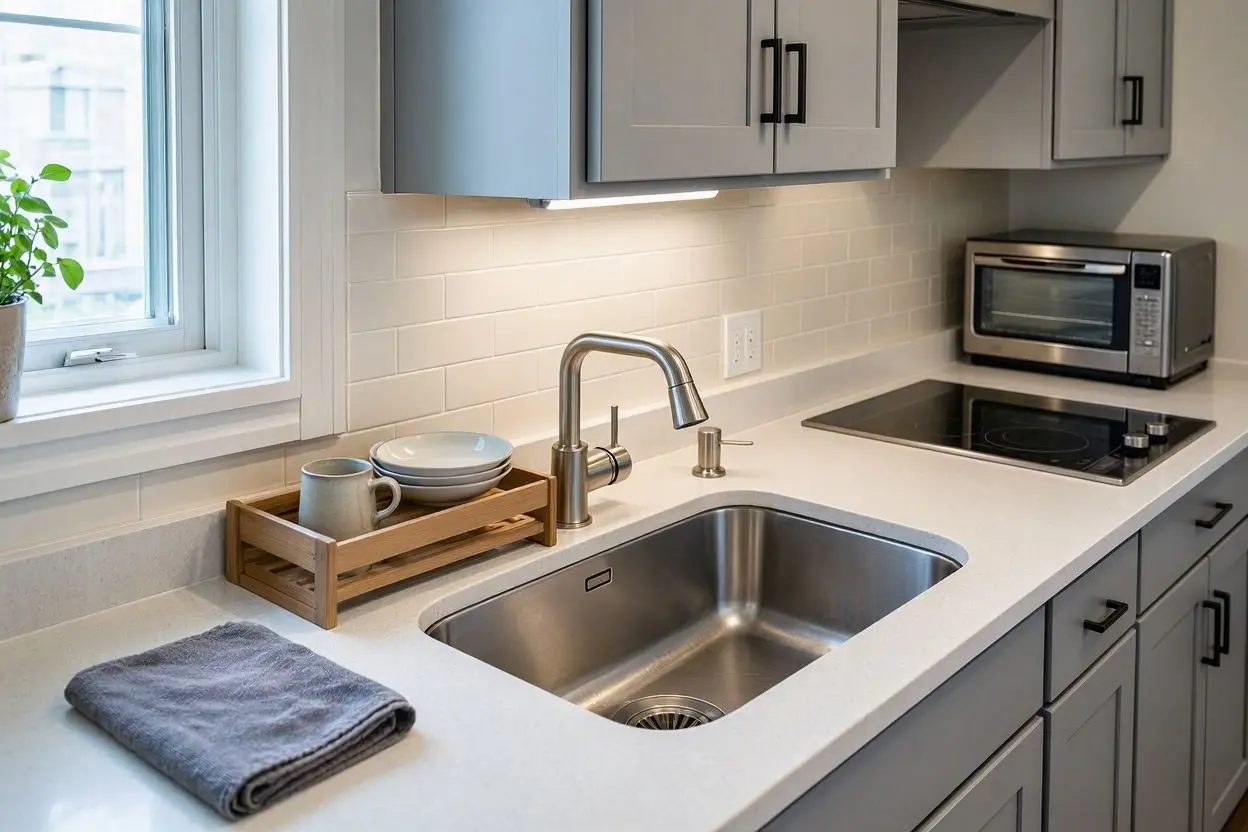
Choosing an undermount sink for a small kitchen takes more than finding the narrowest model available. The sink must fit the cabinet, work with the countertop, leave enough room for plumbing, and still provide enough basin space for everyday cooking.
A well-chosen undermount small kitchen sink can make a compact kitchen feel cleaner and more spacious because the sink rim sits beneath the countertop. However, undermount installation has stricter fitting requirements than a typical top-mount sink.
In this guide, you’ll learn which sink sizes work well in compact kitchens, how cabinet dimensions affect your options, which countertop materials are suitable, and what to check before buying. You’ll also find several small undermount sink options worth considering for different kitchen layouts.
Disclosure: As an Amazon Associate, Tiny Sink Solutions earns from qualifying purchases. This does not affect the price you pay.
Quick Answer
Quick Answer: The best undermount small kitchen sink for a compact kitchen is usually a 21–25 inch single-bowl sink, but the correct size depends on your cabinet width, countertop material, and plumbing layout. Always check the manufacturer’s minimum cabinet size before buying. For example, the KOHLER Strive 23-inch sink requires a 24-inch minimum cabinet, while the KRAUS KHU111-25 requires a 30-inch minimum cabinet.
Best Undermount Small Kitchen Sinks at a Glance
If you already know your cabinet and countertop requirements, the table below provides a quick way to compare suitable options.
| Sink | Best For | Approx. Size | Material | Bowl Style |
|---|---|---|---|---|
| KOHLER Strive 23″ | Best overall | 23″ | 16-gauge stainless steel | Single bowl |
| BLANCO LIVEN 21 Single | 24-inch minimum cabinet | Compact | SILGRANIT composite | Single bowl |
| Karran E-525 | Specialty countertop applications | 23½” | 16-gauge stainless steel | Single bowl |
| KRAUS KHU111-25 | 25-inch sink option | 25″ | 16-gauge stainless steel | Single bowl |
Important: Sink dimensions and minimum cabinet requirements vary by model. Always check the manufacturer’s specifications before ordering, especially when replacing an existing sink.
What Is an Undermount Small Kitchen Sink?
An undermount kitchen sink is installed beneath the countertop rather than sitting on top of it. The countertop edge remains visible around the opening, while the sink rim is attached underneath.
This creates a smooth transition between the countertop and basin. Crumbs, water, and other debris can generally be swept directly into the sink without having to move them over a raised sink rim.
A small undermount kitchen sink uses the same installation concept but has dimensions suited to kitchens where cabinet or countertop space is limited.
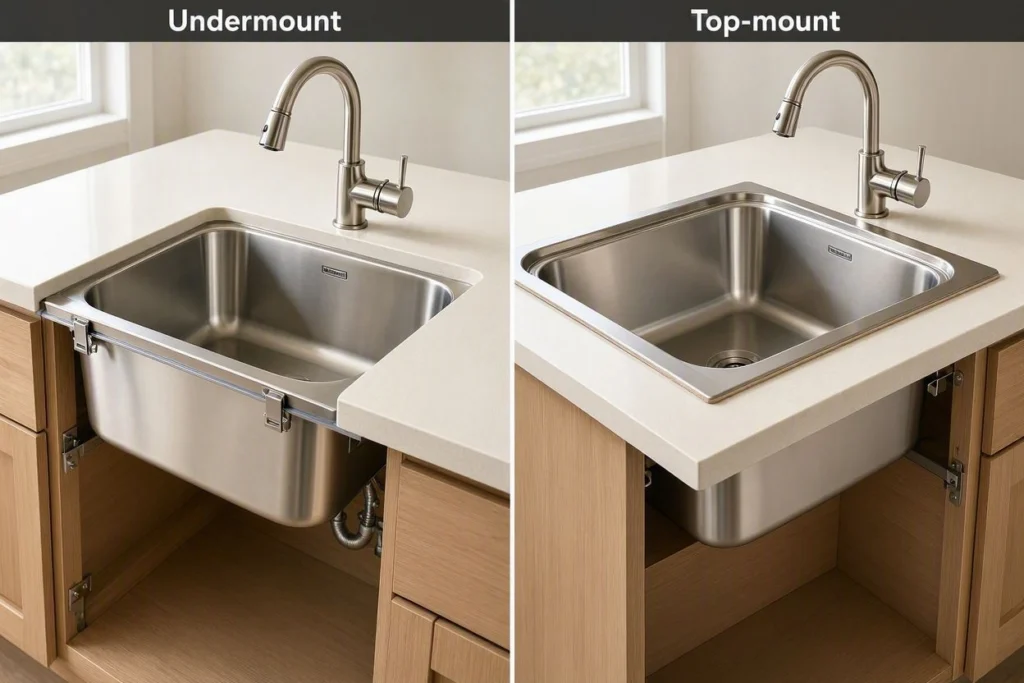
Undermount vs. Top-Mount Sinks
| Feature | Undermount Sink | Top-Mount Sink |
|---|---|---|
| Installation | Beneath countertop | Above countertop |
| Countertop edge | Exposed around opening | Covered by sink rim |
| Cleaning around sink | Generally easier | Raised rim can collect debris |
| Fabrication requirements | More demanding | Usually simpler |
| Common countertop choices | Granite, quartz, solid surface | Wider range |
| Replacement difficulty | Can be higher | Usually easier |
For a compact kitchen, the clean countertop transition can be particularly useful because every available surface matters.
However, an undermount sink is not automatically the best choice for every small kitchen. Cabinet size, countertop material, sink depth, and installation requirements should all be checked before buying.
What Size Is a Small Undermount Kitchen Sink?
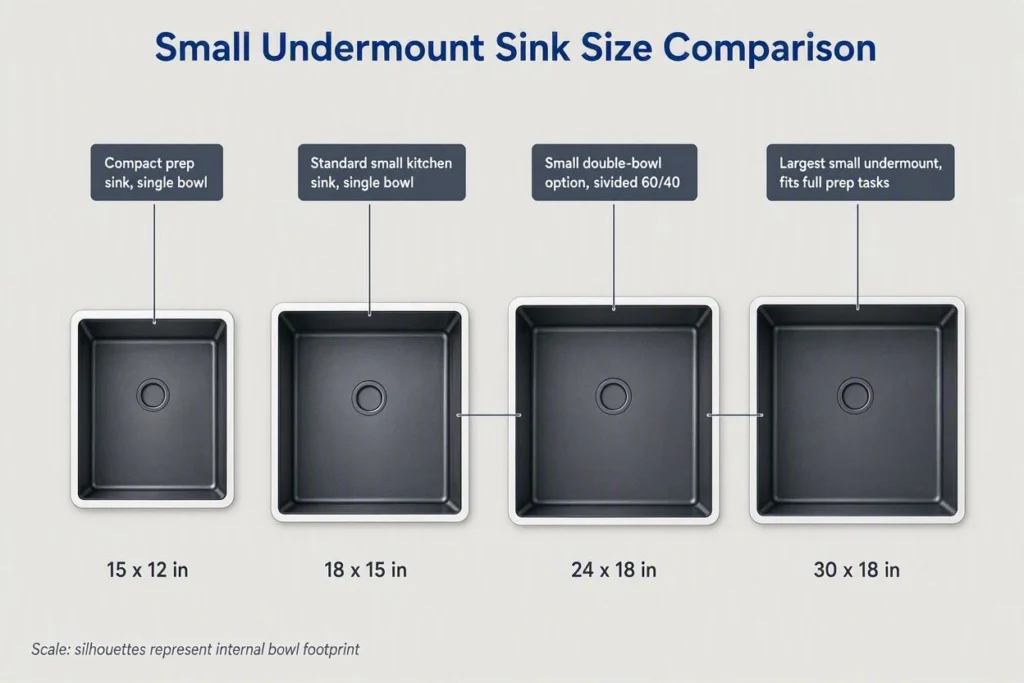
There is no single industry-wide measurement that defines a “small” undermount kitchen sink. In compact kitchens, models around 18 to 27 inches wide can be practical, while some sinks approaching 30 inches may still work in a relatively compact layout if the cabinet and countertop provide enough space.
A useful way to think about available sizes is:
| Sink Width | Typical Application |
|---|---|
| 18–23 inches | Very compact kitchens, prep areas, or limited cabinet space |
| 24–25 inches | Small kitchens where counter space is important |
| 26–27 inches | Compact kitchens needing a larger usable basin |
| 28–30 inches | Larger compact layouts with sufficient cabinet space |
These ranges are practical categories rather than strict industry standards. A sink’s actual installation requirements can differ significantly from another sink with the same overall width.
For example, two sinks that are both 24 inches wide may have different bowl depths, front-to-back dimensions, cutout requirements, or minimum cabinet specifications.
That’s why you should never choose an undermount sink based on width alone.
For a more detailed look at compact sink measurements, see our small kitchen sink dimensions guide.
What Size Undermount Sink Fits a 24-Inch Cabinet?
A 24-inch cabinet does not necessarily accommodate a 24-inch sink.
The manufacturer’s stated minimum cabinet size is the more important specification. The sink also needs sufficient room for the installation hardware, countertop cutout, bowl dimensions, and plumbing underneath.
Some compact undermount sinks are designed for a 24-inch minimum cabinet, while other sinks with similar overall widths require larger cabinets.
If you have a 24-inch cabinet, look for a sink whose specifications specifically confirm compatibility with that cabinet size.
What Size Cabinet Do You Need for a Small Undermount Sink?
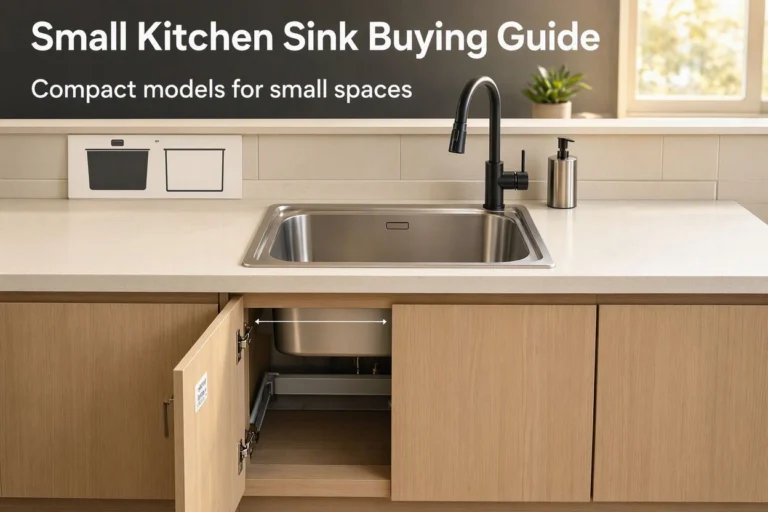
Cabinet size is one of the most important factors when choosing an undermount small kitchen sink. The sink has to fit inside the cabinet opening while leaving enough room for the basin, mounting hardware, plumbing, and countertop cutout.
The minimum cabinet size listed by the sink manufacturer should always take priority over a general size chart.
A sink that is 24 inches wide does not necessarily require a 24-inch cabinet. Its installation specifications may call for a larger cabinet to provide enough structural and plumbing clearance.
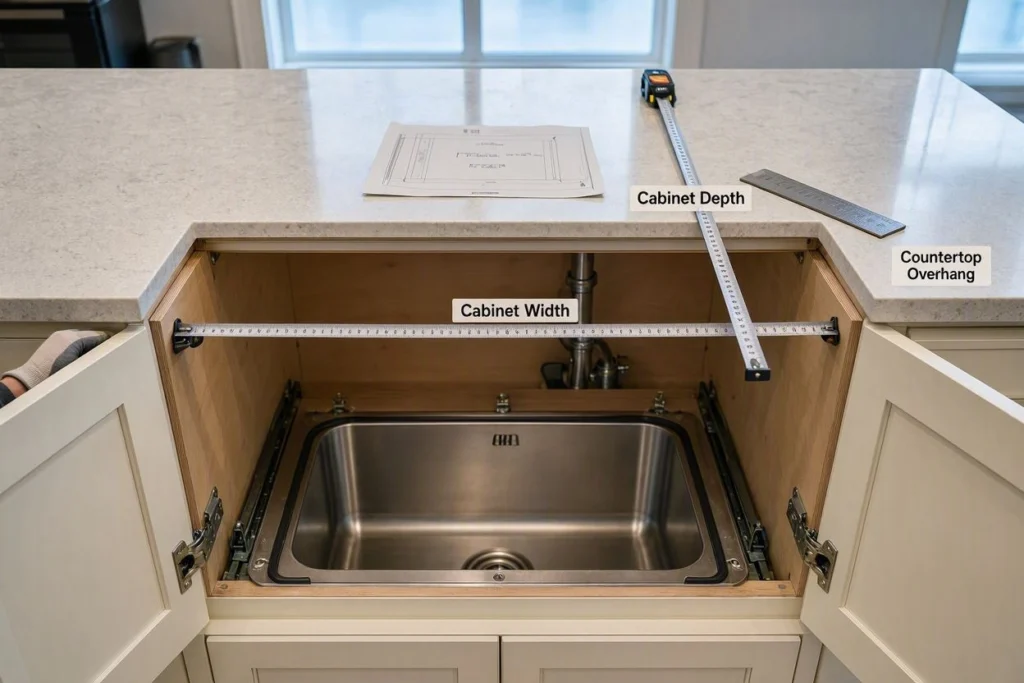
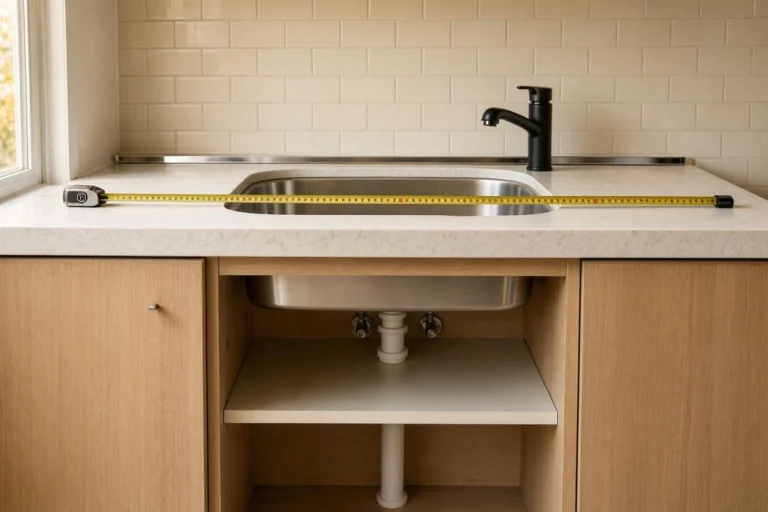
Before ordering, check these measurements:
- Cabinet width — Measure the inside width of the sink base cabinet.
- Sink length and width — Check the complete outside dimensions, not just the bowl opening.
- Minimum cabinet size — Look for this specification in the manufacturer’s installation information.
- Countertop cutout — The required cutout can differ from the sink’s overall dimensions.
- Bowl depth — A deep sink may require additional clearance below the countertop.
- Plumbing space — Make sure the drain and P-trap will not interfere with shelves or drawers.
For a step-by-step measurement process, see our guide on how to measure a cabinet for a replacement kitchen sink.
Don’t Confuse Sink Size With Cutout Size
The sink’s overall dimensions and countertop cutout dimensions are not necessarily identical.
The countertop fabricator uses the manufacturer’s approved specifications to create the opening. With an undermount installation, even a small error in the cutout can affect the sink’s fit and appearance.
If you’re replacing an existing sink, measure the cabinet and existing installation carefully before selecting a new model.
Countertop Requirements for an Undermount Sink
The countertop is just as important as the sink itself.
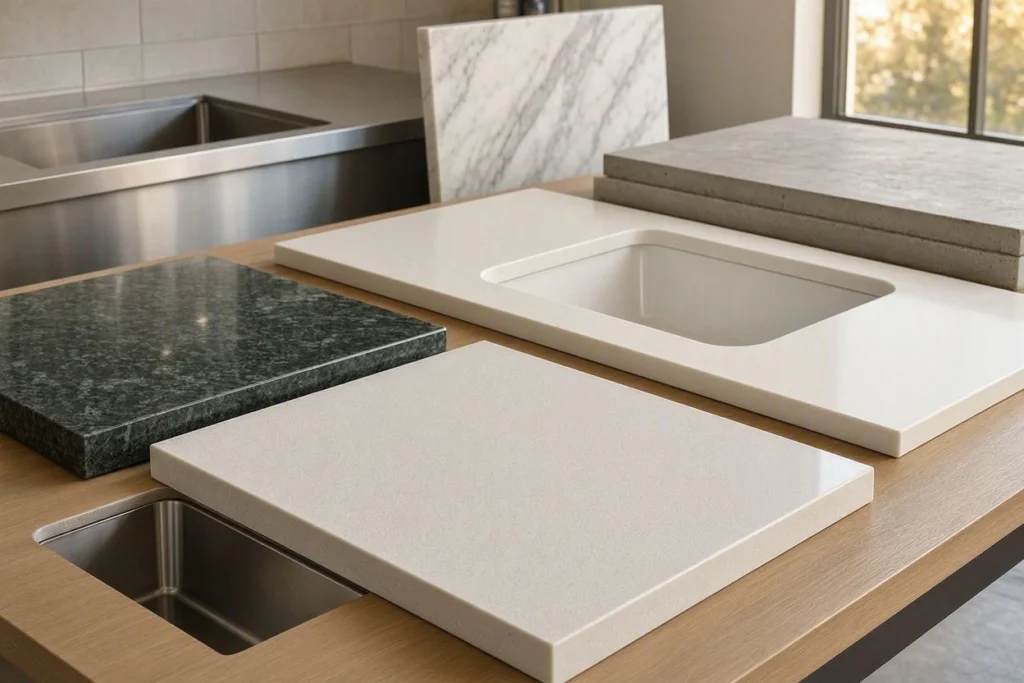
Most conventional undermount sinks are commonly installed with suitable solid countertop materials such as granite, quartz, marble, and solid-surface materials. These materials can provide a stable surface for the sink mounting system and allow the countertop edge to be finished around the opening.
Laminate countertops require more attention. An undermount installation should not be treated as universally compatible with every laminate countertop. Some specialized sink and fabrication systems are designed for laminate applications, so compatibility should be confirmed before installation.
Quartz Countertops
Quartz is a popular choice for undermount sinks because it provides a solid surface that can be fabricated around the sink opening.
The countertop fabricator should follow the sink manufacturer’s specifications for the opening and edge treatment.
Granite Countertops
Granite can also work well with undermount sinks. Because granite is heavy and rigid, professional fabrication and proper sink support are important.
Solid-Surface Countertops
Solid-surface materials are commonly suitable for undermount installations and can provide a clean transition between the sink and countertop.
Laminate Countertops
Laminate requires special consideration. Standard undermount installation methods may not be appropriate for every laminate countertop.
If you have laminate, confirm that the specific sink and countertop fabrication system are designed for undermount installation before purchasing.
Best Materials for a Small Undermount Kitchen Sink
Once the size and installation requirements are confirmed, material becomes the next major decision.
The most common choices include stainless steel, granite composite, and fireclay. Each has different advantages for a compact kitchen.
Stainless Steel
Stainless steel is one of the most practical choices for a small undermount sink.
It is relatively lightweight, durable, and available in many compact dimensions. Its neutral appearance also works with a wide range of kitchen styles.
When comparing stainless steel sinks, consider:
- Steel gauge or thickness
- Sound-dampening pads
- Protective coating
- Bowl depth
- Drain placement
- Overall sink dimensions
A thinner stainless steel sink may cost less, but construction quality involves more than gauge alone. Look at the manufacturer’s specifications and overall design rather than choosing solely by gauge.
Granite Composite
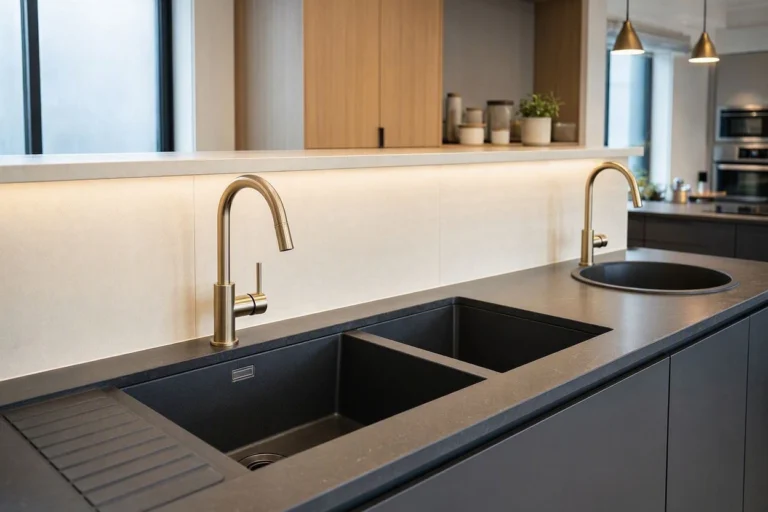
Granite composite sinks combine mineral material with a binding resin to create a dense sink surface.
They can provide a more substantial appearance than stainless steel and are available in several colors. Many homeowners also choose composite sinks because they can complement stone-style countertops.
The main consideration for a compact kitchen is weight. Composite sinks can be considerably heavier than stainless steel, so the cabinet and installation system need to accommodate the sink properly.
Fireclay
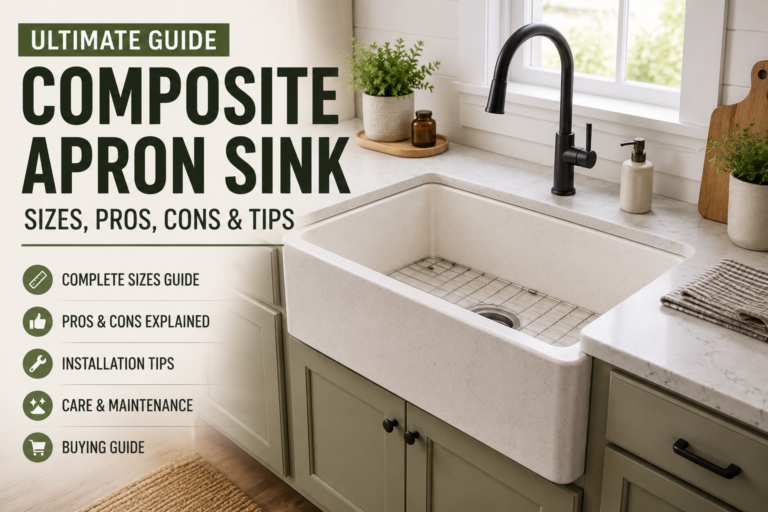
Fireclay sinks are known for their traditional appearance and are particularly popular in farmhouse-style kitchens.
However, they are generally heavier than stainless steel and can require more careful installation planning. Their dimensions and apron-front designs may also make them less suitable for very small cabinets.
For a truly compact kitchen, stainless steel or composite may provide more flexibility unless the design specifically calls for fireclay.
Single Bowl vs. Double Bowl for a Small Kitchen
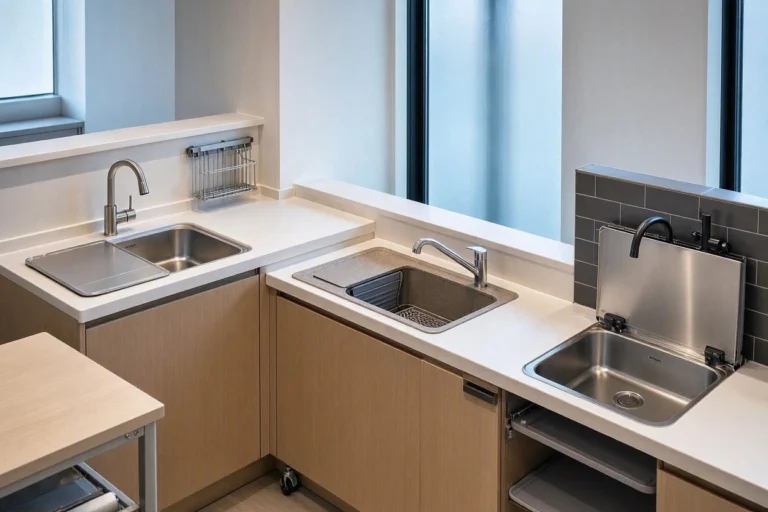
For many compact kitchens, a single-bowl undermount sink makes better use of limited basin space.
A single bowl gives you one larger uninterrupted area for washing pots, pans, baking trays, and other oversized cookware.
A double-bowl sink provides separate compartments, which can be useful for washing and rinsing at the same time. However, dividing a small sink into two bowls can leave each compartment too narrow for larger cookware.
| Feature | Single Bowl | Double Bowl |
|---|---|---|
| Large cookware | Better | More restricted |
| Uninterrupted basin space | Excellent | Limited |
| Washing and rinsing separately | Less convenient | More convenient |
| Compact kitchen use | Often a strong choice | Useful for specific workflows |
| Countertop efficiency | Generally favorable | Depends on configuration |
If your priority is maximizing usable basin space, a single-bowl model is usually worth considering first.
If you frequently wash dishes in one compartment while rinsing in another, a double-bowl design may still be worthwhile.
How Deep Should a Small Undermount Sink Be?
Sink depth affects both usability and installation.
A deeper basin can provide more room for washing dishes and can help contain splashing. However, extra depth also places the bottom of the sink farther below the countertop, which may affect plumbing clearance and ergonomics.
For a compact kitchen, consider:
- Your height and preferred working position
- Available cabinet space below the sink
- Plumbing configuration
- Typical cookware size
- Whether you frequently hand-wash dishes
Rather than choosing the deepest sink available, select a depth that provides useful capacity without creating unnecessary clearance problems.
How to Choose the Best Undermount Small Kitchen Sink
The best undermount sink for a compact kitchen is not necessarily the smallest one. A better choice is a sink that fits the cabinet, works with the countertop, and provides enough basin space for your daily needs.
1. Start With Your Cabinet Size
Measure the cabinet that will support the sink before looking at product dimensions.
Check the manufacturer’s minimum cabinet size for every sink you’re considering. This specification is more useful than simply comparing sink widths.
2. Measure the Available Countertop Space
A small kitchen has limited countertop area, so consider how much workspace the sink will occupy.
A slightly smaller sink may be worthwhile if it leaves enough room for food preparation beside the basin.
On the other hand, choosing an unnecessarily tiny sink can make washing larger cookware frustrating.
3. Check the Manufacturer’s Cutout Specifications
Never assume that the sink’s outside dimensions are the same as the countertop opening.
Undermount sinks require a properly sized cutout, and manufacturers may specify exact dimensions for fabrication.
If the countertop is being installed or modified professionally, give the fabricator the sink’s official specifications rather than relying on measurements from a retailer listing.
4. Choose the Right Bowl Configuration
For most compact kitchens, a single bowl is a strong starting point because it provides one larger usable washing area.
A double bowl can still make sense if you regularly separate washing and rinsing tasks.
5. Consider Sink Depth
A deeper sink provides more vertical capacity but can reduce clearance underneath the countertop.
Before choosing a deep model, check the available cabinet space and plumbing arrangement.
6. Compare Sink Materials
Stainless steel is often attractive for compact kitchens because it combines durability with relatively low weight and a wide range of available sizes.
Granite composite can provide a substantial appearance and different color choices but is heavier.
Fireclay can create a classic appearance but usually requires more careful planning because of its weight and construction.
7. Check Drain Position
Drain placement can affect both plumbing and usable cabinet space.
A centered drain is common, but some sinks use an offset or rear-positioned drain. Depending on the cabinet and plumbing configuration, this can help preserve usable storage space.
Always check the actual sink specification before assuming where the drain will sit.
8. Think About Your Daily Cooking Habits
A sink used mainly for coffee cups and light food preparation doesn’t need the same capacity as one used for large pots and baking trays.
Ask yourself:
- Do you wash large cookware by hand?
- Do you use a dishwasher?
- Do you prepare food directly over the sink?
- Do you need a separate rinsing area?
- How much countertop workspace do you have?
9. Confirm Installation Requirements
Undermount installation generally requires more precise countertop fabrication than a top-mount sink.
Before buying, confirm:
- Countertop compatibility
- Cutout requirements
- Mounting method
- Sink support requirements
- Cabinet clearance
- Plumbing clearance
- Manufacturer installation instructions
For a new countertop, it is usually best to select the sink before the countertop is fabricated.
Pros and Cons of Small Undermount Kitchen Sinks
Pros
- Clean appearance: The sink sits below the countertop for a streamlined look.
- Easy countertop cleanup: Water and crumbs can generally be swept directly into the basin.
- Efficient use of counter space: There is no exposed sink rim sitting on top of the counter.
- Good fit for modern kitchens: Undermount designs pair particularly well with stone and solid-surface countertops.
- Many compact options: Small models are available in different widths, materials, and bowl configurations.
Cons
- More demanding installation: The countertop opening needs to be fabricated accurately.
- Countertop compatibility matters: Not every countertop and sink combination is suitable for conventional undermount installation.
- Cabinet size is critical: The sink must meet the manufacturer’s minimum cabinet requirement.
- Replacement can be more complicated: Changing an undermount sink may involve countertop and mounting considerations.
- Some materials are heavy: Composite and fireclay models may require additional installation planning.
Best Small Undermount Kitchen Sinks
The recommendations below are organized by the type of compact-kitchen need they address. Always compare the current product listing with the manufacturer’s specifications before ordering.
Best Overall: KOHLER Strive 23-Inch
The KOHLER Strive is a strong option for compact kitchens that need a relatively small sink without moving to an extremely limited basin.
The 23-inch model uses 16-gauge stainless steel and is designed for a 24-inch minimum base cabinet. Its rear drain placement can also help preserve usable space.
Best for: Compact kitchens with a 24-inch minimum cabinet
Material: 16-gauge stainless steel
Bowl: Single bowl
Minimum cabinet: 24 inches
Why it stands out:
- Compact overall footprint
- 16-gauge stainless steel construction
- Single-bowl design
- Rear drain placement
- Suitable for a 24-inch minimum base cabinet
Potential drawback: Its compact dimensions still need to be checked against the actual countertop cutout and plumbing configuration.
Best for a 24-Inch Minimum Cabinet: BLANCO LIVEN 21 Single
The BLANCO LIVEN 21 Single is designed with smaller spaces in mind and is an interesting option for homeowners who want a composite sink instead of stainless steel.
It uses BLANCO’s SILGRANIT composite material and supports undermount or drop-in installation. The manufacturer lists a 24-inch minimum cabinet size.
Best for: Compact kitchens and composite-sink fans
Material: SILGRANIT composite
Bowl: Single bowl
Minimum cabinet: 24 inches
Why it stands out:
- Compact design
- Composite construction
- Single-bowl configuration
- Rear-positioned drain
- 24-inch minimum cabinet requirement
Potential drawback: Composite construction is generally heavier than stainless steel, so proper installation and cabinet support matter.
Best Seamless Option: Karran E-525
The Karran E-525 is a compact single-bowl stainless steel sink with a 23½-inch overall length and a 27-inch minimum cabinet requirement.
Its Edge series is particularly notable because Karran markets the design for seamless undermount applications with laminate and solid-surface countertops.
Best for: Specialty countertop applications
Material: 16-gauge stainless steel
Bowl: Single bowl
Minimum cabinet: 27 inches
Why it stands out:
- Compact 23½-inch length
- 16-gauge stainless steel
- Single-bowl design
- Designed for specialized seamless undermount applications
- Interesting option for laminate and solid-surface countertops
Potential drawback: The 27-inch minimum cabinet requirement makes it unsuitable for some very small sink bases.
Best 25-Inch Stainless Steel Option: KRAUS KHU111-25
The KRAUS KHU111-25 is a 25-inch undermount single-bowl sink made from 16-gauge stainless steel.
Its 10-inch-deep bowl provides substantial washing capacity, but there is an important compatibility detail: the manufacturer specifies a 30-inch minimum cabinet.
That makes this model a useful example of why sink width alone should never determine whether a sink will fit your kitchen.
Best for: Compact layouts with a larger sink base
Material: 16-gauge stainless steel
Bowl: Single bowl
Minimum cabinet: 30 inches
Depth: 10 inches
Why it stands out:
- 25-inch overall width
- 16-gauge stainless steel
- Deep single bowl
- Rear-offset drain
- Professional-style construction
Potential drawback: The 30-inch minimum cabinet requirement makes it unsuitable for many truly compact cabinets.
What to Check Before Buying
Before ordering an undermount sink, run through this checklist:
☐ Measure the sink cabinet
☐ Check the sink’s overall dimensions
☐ Confirm the manufacturer’s minimum cabinet size
☐ Compare the required countertop cutout
☐ Confirm countertop compatibility
☐ Choose single or double bowl
☐ Check bowl depth
☐ Check drain position
☐ Consider plumbing clearance
☐ Compare sink materials
☐ Review the manufacturer’s installation instructions
☐ Confirm that the sink suits your daily cooking habits
The most important measurement is not simply the sink’s advertised width. Fit is determined by the complete installation system.
Before purchasing a replacement, compare the new sink’s specifications with your existing cabinet and countertop opening. If you’re installing a new countertop, select the sink before fabrication so the opening can be created according to the manufacturer’s specifications.
Frequently Asked Questions
What is the smallest undermount kitchen sink?
There is no single smallest size for every manufacturer. Compact undermount kitchen sinks are available in widths below 24 inches, but the overall dimensions and minimum cabinet requirement vary by model.
If space is extremely limited, compare the sink’s overall width, front-to-back dimension, bowl depth, and minimum cabinet size rather than looking at width alone.
What size undermount sink fits a 24-inch cabinet?
Some small undermount sinks are specifically designed for a 24-inch minimum cabinet, but not every sink of the same width will fit.
For example, a sink measuring around 23 inches wide may require either a 24-inch or a larger cabinet depending on its design. Always use the manufacturer’s stated minimum cabinet requirement before ordering.
Are undermount sinks good for small kitchens?
Yes. An undermount sink can work very well in a compact kitchen because it provides a clean countertop transition and eliminates the raised rim found on many top-mount sinks.
However, cabinet size, countertop material, cutout dimensions, plumbing clearance, and sink depth all need to work together.
Is a single-bowl sink better for a small kitchen?
A single-bowl sink is often a practical choice for a small kitchen because it provides one larger uninterrupted washing area.
This makes it easier to wash large pots, pans, and baking dishes. A double-bowl sink may be preferable if you regularly wash and rinse dishes separately.
What countertop is best for an undermount sink?
Granite, quartz, and suitable solid-surface countertops are commonly used with undermount sinks.
The important factor is not simply the countertop material but whether the specific countertop and sink installation system are compatible.
If you have laminate, check the sink manufacturer’s requirements carefully because some specialized systems are designed for laminate undermount installations.
Can an undermount sink be installed on laminate?
Some specialized undermount sink systems are designed for laminate countertops, but conventional undermount installation should not be assumed to work with every laminate surface.
Check the sink manufacturer’s installation requirements and confirm that the countertop fabrication method is appropriate before purchasing.
How deep should a small kitchen sink be?
A depth around 7 to 9 inches can be a practical range for many compact kitchens, but the ideal depth depends on the user’s needs and available cabinet clearance.
A deeper sink can provide more basin capacity, but it may reduce clearance underneath the countertop. Consider plumbing, cabinet space, cookware size, and ergonomics before choosing.
Is a small undermount sink difficult to install?
Undermount installation generally requires more precise countertop fabrication than a top-mount sink.
The countertop opening needs to match the manufacturer’s specifications, and the sink must be properly supported and sealed. For a new countertop, it is usually best to select the sink before fabrication begins.
Final Verdict: Which Undermount Small Kitchen Sink Is Best?
The best undermount small kitchen sink is the one that fits your cabinet and countertop without sacrificing the basin space you actually need.
For most compact kitchens, start by measuring the cabinet and checking the manufacturer’s minimum cabinet requirement. Then compare the sink’s overall dimensions, cutout specifications, bowl depth, drain position, and countertop compatibility.
A single-bowl stainless steel sink is often a practical starting point when space is limited because it combines relatively lightweight construction with a large uninterrupted washing area. Composite options can make sense when appearance or material preference is more important.
Most importantly, don’t choose a sink based on its advertised width alone. A 23-inch sink can have very different cabinet requirements from another 23-inch sink.
Before ordering, compare the current Amazon listing with the manufacturer’s specifications, especially the overall dimensions and minimum cabinet size.

Khadija is the writer and founder of Tiny Sink Solution. She creates practical guides about small kitchen sinks, faucets, and compact kitchen maintenance, helping homeowners and renters choose solutions for limited spaces. Some articles contain affiliate links, and as an Amazon Associate, she earns from qualifying purchases at no extra cost to readers
![Top [count] Gardening Blogs - OnToplist.com](https://www.ontoplist.com/images/ontoplist32.png?id=6aa4d0c493161)
7 Comments