Rounded corner vs square kitchen sink designs differ in cleaning convenience, appearance, and usable bowl space. Rounded-corner sinks are generally easier to wipe clean, while square-corner sinks offer a sharp, modern look. Understanding these differences can help you choose the right kitchen sink for your space, cleaning habits, and design preferences.
Quick Answer: Rounded-corner kitchen sinks are generally easier to wipe clean because their curved corners are less likely to trap residue in tight angles. Square-corner sinks offer a sharper, more geometric appearance that suits many modern kitchens. For a practical balance, consider a square-style sink with a modest internal corner radius.
What Is a Rounded-Corner Kitchen Sink?
A rounded-corner kitchen sink has curved transitions between the bowl’s side walls and bottom. Instead of forming a tight angle, the corners follow a noticeable curve.
The amount of curvature varies by manufacturer and model. Some sinks have generously rounded corners, while others use a smaller radius for a contemporary appearance.
Advantages of Rounded-Corner Sinks
- Easier routine cleaning: A sponge or cloth can generally follow curved corners without getting caught in tight angles.
- Less demanding corner maintenance: Broader curves are often easier to wipe thoroughly than very tight corners.
- Versatile appearance: Rounded corners can complement traditional, transitional, and contemporary kitchens.
- Practical for daily use: They are a useful option for households that frequently wash dishes and prepare food in the sink.
Potential Disadvantages
- Softer appearance: Rounded corners may not match an especially angular or minimalist kitchen as closely as square-style corners.
- Potentially less flat-bottom area: In otherwise comparable bowls, a larger corner radius may reduce the flat area at the bottom.
The actual difference depends on the bowl’s dimensions and shape. A rounded-corner sink is not automatically smaller or less spacious than a square-corner model.

What Is a Square-Corner Kitchen Sink?
A square-corner kitchen sink has a more angular bowl shape, with relatively straight sides and tight-radius transitions at the internal corners. Some designs have extremely tight corners, while others use a small radius that softens the angle.
These sinks are popular in contemporary kitchens because their straight lines coordinate with modern cabinetry, simple countertops, and geometric fixtures.
Advantages of Square-Corner Sinks
- Modern appearance: Straight lines create a crisp, geometric look.
- Defined bowl shape: The angular design can emphasize the sink’s interior dimensions.
- Contemporary styling: Square-style bowls work well in many minimalist and industrial-inspired kitchens.
- Potentially more flat-bottom area: A tight-radius design may preserve more flat-bottom area than a comparable bowl with larger curves.
Potential Disadvantages
- Corners may need more attention: Extremely tight internal corners can be harder to wipe thoroughly.
- Residue can accumulate: Food particles, grease, and mineral deposits may collect in corners if cleaning is neglected.
- Maintenance varies by radius: A square-looking sink with a modest radius may be easier to clean than one with nearly sharp internal corners.
A square appearance does not automatically mean difficult maintenance. The internal geometry matters more than the label used to describe the sink.
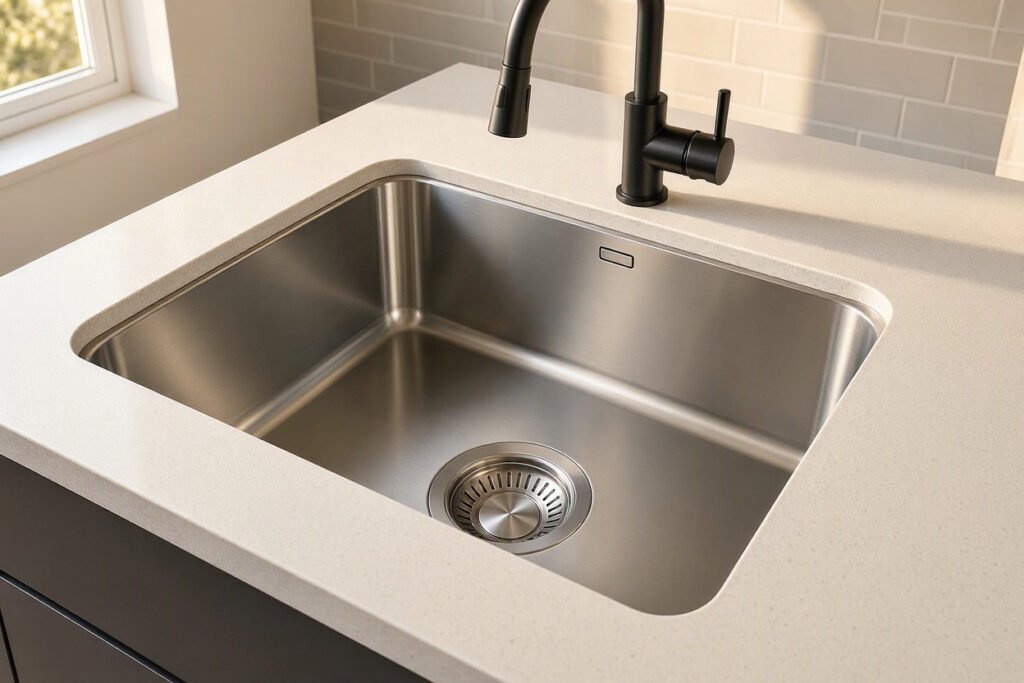
Rounded Corner vs Square Kitchen Sink: Key Differences
The following comparison highlights the main differences to consider when selecting a sink.
| Feature | Rounded-Corner Sink | Square-Corner Sink |
|---|---|---|
| Appearance | Softer, curved lines | Sharp, geometric lines |
| Routine Cleaning | Generally easier around corners | Tight corners may need extra attention |
| Residue Removal | Curves are usually easy to wipe | Depends on the internal corner radius |
| Flat-Bottom Area | May be smaller with a larger radius | May be larger with a tighter radius |
| Kitchen Style | Traditional, transitional, contemporary | Modern, minimalist, industrial |
| Maintenance | Usually straightforward | Regular corner cleaning may be needed |
| Best Reason to Choose | Easy cleaning | Angular, modern appearance |
Important: Compare the actual bowl dimensions, corner radius, and usable interior space before choosing. Two sinks with identical external dimensions can have different internal layouts.
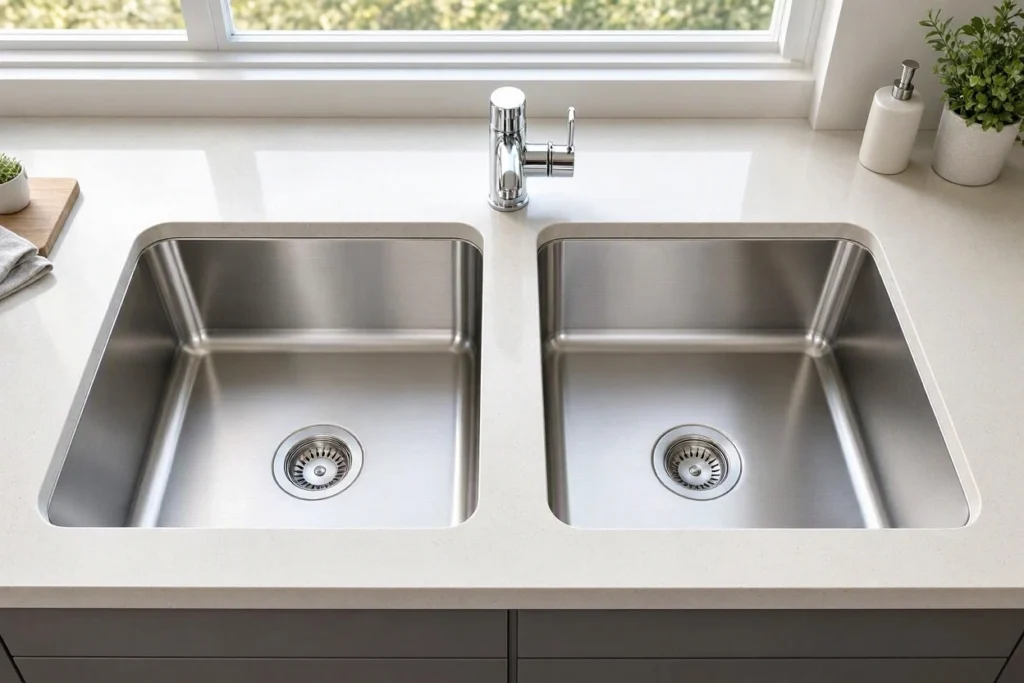
Which Sink Corners Are Easier to Clean?
Rounded corners are generally easier to wipe clean, particularly when the sink has a generous radius. A sponge, cloth, or soft brush can follow the curve without having to reach into a very tight angle.
Square-style sinks can also be easy to maintain, but their internal corners may require more attention. This is especially true when food debris, grease, or hard-water deposits build up.
To maintain either style:
- Rinse away food particles after washing dishes.
- Wipe the corners and bowl regularly.
- Use cleaning products appropriate for the sink material.
- Avoid abrasive pads or harsh chemicals unless the manufacturer specifically permits them.
- Dry the sink when necessary to help reduce water spots.
For stainless steel sinks, follow the manufacturer’s care instructions to avoid scratching or damaging the finish.
The key point is that corner radius matters more than appearance alone. A square-looking sink with a moderate radius may be just as practical to clean as some rounded designs.
Which Design Offers More Usable Bowl Space?
Corner shape can influence the bowl’s usable geometry, but it is only one factor.
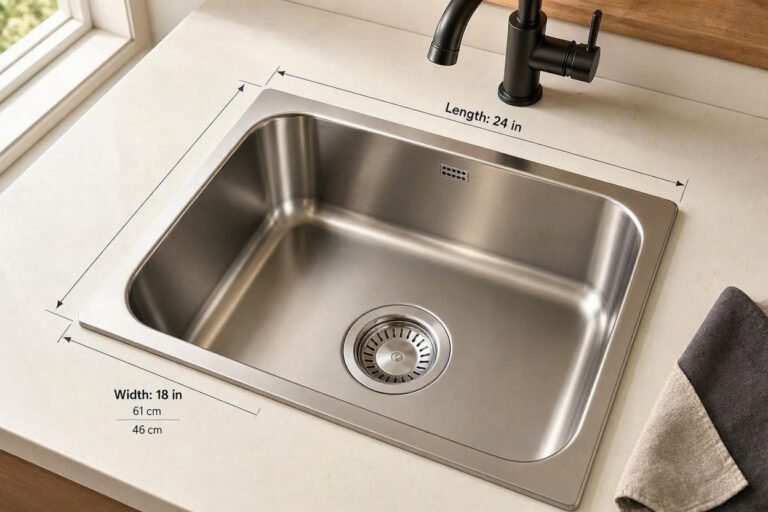
A sink with tighter corners may have a larger flat-bottom area than a similar sink with generous curves. However, overall bowl width, length, depth, wall shape, and drain placement also affect how much room you have for dishes and cookware.
Before comparing models, check:
- Interior bowl width and length
- Bowl depth
- Flat-bottom dimensions, if available
- Drain position
- Minimum cabinet requirements
- Manufacturer’s installation and cutout specifications
For a compact kitchen, start by measuring your available cabinet space rather than choosing a corner style based on appearance alone.
Read our Small Kitchen Sink Dimensions Guide for help understanding sink measurements and fitting considerations.
For additional background on sink capacity and bowl geometry, consult Franke’s official support and FAQ resources. Product specifications should always be checked for the particular model you are considering.
Which Style Looks Better in a Modern Kitchen?
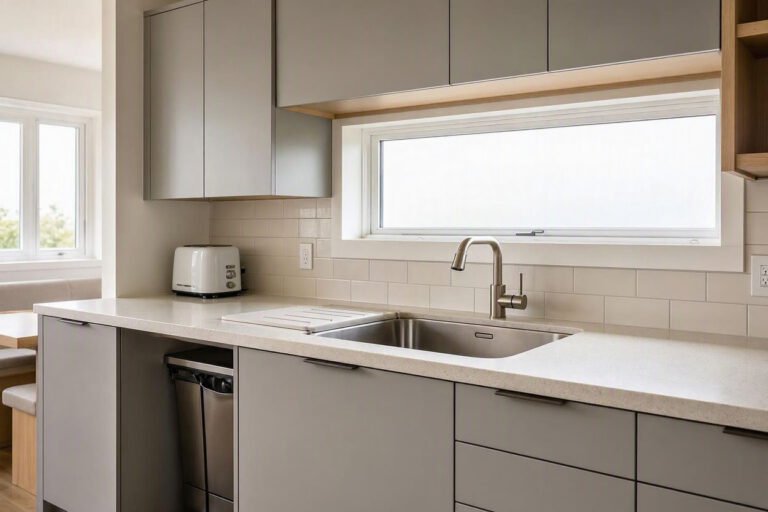
Square-corner sinks often complement minimalist kitchens with straight cabinet lines, flat-front doors, and contemporary faucets. Their angular design can create a coordinated look with other geometric features.
Rounded-corner sinks provide a softer appearance and can suit a wider range of kitchen styles. They may be particularly appealing when you want a contemporary sink without an overly sharp, industrial look.
Consider these factors when making your decision:
- Cabinetry: Straight, minimalist cabinet lines often complement square-style bowls.
- Countertops: Consider how the sink’s shape works with the countertop and surrounding edges.
- Faucet design: Simple geometric faucets can complement square corners, while softer designs may work well with rounded bowls.
- Personal preference: Choose the appearance you will enjoy using every day.
Neither design is inherently more attractive. The best choice is the one that works with your kitchen’s overall design.
Which Corner Style Is Best for a Small Kitchen?
For a small kitchen, prioritize the sink’s overall dimensions and usability before choosing its corner shape.
A compact rounded-corner sink may be a good choice if easy cleaning is your main concern. A tight-radius square-style sink may appeal to you if you prefer a modern appearance and want to compare models with a larger flat-bottom area.
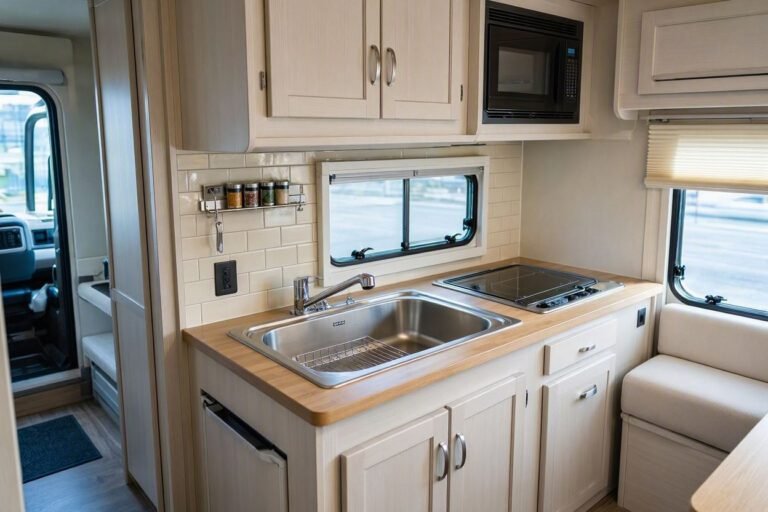
Before purchasing, confirm that the sink fits your cabinet, countertop opening, faucet arrangement, and plumbing. Do not assume that one corner style will automatically save significant space.
Use our Small Kitchen Sink Size Calculator to help evaluate your available space.
Pros and Cons at a Glance
Rounded-Corner Kitchen Sink
Pros
- Generally easier to wipe clean.
- Fewer tight internal corners.
- Works with a variety of kitchen styles.
- Practical for frequent everyday use.
Cons
- Softer lines may not suit every modern design.
- A larger radius may reduce the flat-bottom area in some comparable bowls.
Square-Corner Kitchen Sink
Pros
- Crisp, modern appearance.
- Works well with angular cabinetry.
- Tight-radius designs may offer a larger flat-bottom area.
Cons
- Very tight corners may need more cleaning.
- Food residue can be harder to remove from sharp internal angles.
- Appearance alone does not guarantee greater usable capacity.
How to Choose the Right Sink Corner Style
Use these practical guidelines to make your decision.
- Choose rounded corners if easy cleaning is your priority. A generous radius is often easier to wipe thoroughly.
- Choose square-style corners if you prefer a geometric design. They can complement minimalist and contemporary kitchens.
- Compare the actual corner radius. A slight curve can make a square-looking sink easier to maintain.
- Check the interior dimensions. Do not judge capacity by appearance or external measurements alone.
- Confirm installation compatibility. Check cabinet size, countertop cutout, mounting type, and drain position before buying.
- Follow the care instructions. The right cleaning method depends on the sink’s material and finish.
For more help comparing compact sink designs, see our guide to Best Undermount Small Kitchen Sinks.
Frequently Asked Questions
1. Are rounded-corner kitchen sinks easier to clean?
Generally, yes. Curved corners are usually easier to wipe than extremely tight internal corners. The exact cleaning experience depends on the sink’s radius, finish, material, and maintenance routine.
2. Do square-corner sinks have more usable space?
They may have more flat-bottom area than a comparable sink with a larger corner radius. However, total usable space depends on the complete bowl dimensions and design.
3. What does the corner radius mean on a kitchen sink?
The corner radius describes how rounded the internal corner is. A larger radius creates a more noticeable curve, while a smaller radius produces a tighter, more angular corner.
4. Are zero-radius kitchen sinks difficult to clean?
They can be more challenging because the internal corners are extremely tight. Food residue and grime may require extra attention. Follow the manufacturer’s cleaning instructions and use non-abrasive tools appropriate for the sink material.
5. Which sink corner style is best for a modern kitchen?
Square-style sinks are popular in modern kitchens because of their straight lines and geometric appearance. Rounded-corner models can also look contemporary, particularly when their curves are subtle.
6. Are rounded-corner sinks better for small kitchens?
Not automatically. The best sink for a small kitchen is one that fits the available cabinet and countertop space while providing enough usable bowl capacity. Corner style should be a secondary consideration.
7. Do sink corner shapes affect durability?
Corner shape alone does not determine durability. Material quality, thickness, construction, installation, and care are important factors. Follow the manufacturer’s guidance for the specific sink.
8. Can I replace a rounded-corner sink with a square-corner sink?
Possibly, but check the replacement sink’s dimensions, mounting type, countertop cutout, and cabinet clearance. Different models may require changes to the countertop or installation.
Final Verdict
Rounded-corner and square-corner kitchen sinks can both be practical choices. Rounded corners are generally the better starting point if easy cleaning is your priority, while square-style corners are appealing if you prefer a sharp, modern appearance.
For a balance between appearance and maintenance, consider a sink with a contemporary square shape and a modest internal corner radius. Compare actual dimensions, corner geometry, and cleaning requirements rather than relying on appearance alone.
Get Helpful Sink Tips
Subscribe for practical sink planning tips and helpful resources for small kitchens and compact spaces.
Khadija is the writer and founder of Tiny Sink Solution. She creates practical guides about small kitchen sinks, faucets, and compact kitchen maintenance, helping homeowners and renters choose solutions for limited spaces. Some articles contain affiliate links, and as an Amazon Associate, she earns from qualifying purchases at no extra cost to readers