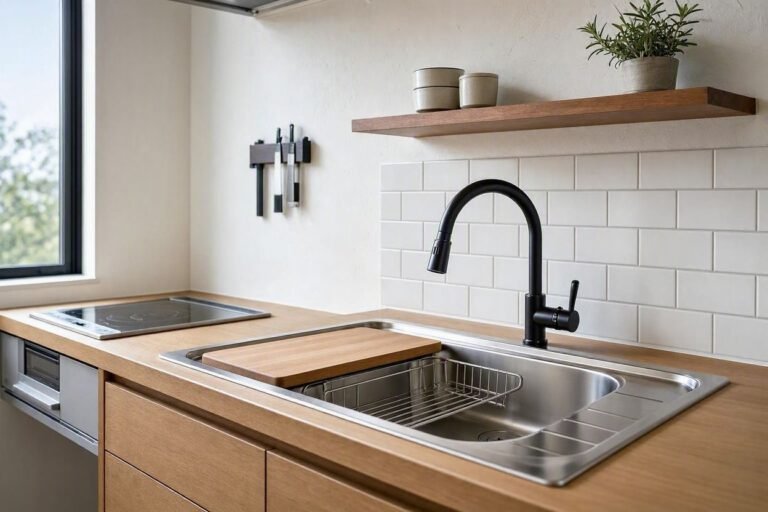
A PVD kitchen sink finish is a decorative surface coating created through a process called physical vapor deposition. It allows manufacturers to offer stainless steel sinks in colors such as gold, bronze, copper, black, and gunmetal, giving kitchens a more distinctive appearance than traditional silver stainless steel.
PVD finishes can provide good surface wear resistance, but they are not completely scratch-proof or maintenance-free. Their performance depends on the coating, the underlying sink material, manufacturing quality, and how the sink is used and cleaned.
In this guide, you’ll learn what a PVD kitchen sink finish is, its benefits and limitations, how it compares with a standard stainless steel finish, and how to care for it.
Quick Answer: Is a PVD Kitchen Sink Finish Worth It?
A PVD kitchen sink finish may be worth considering if you want a colored, contemporary sink with good surface durability. It can complement modern kitchens with matching faucets, cabinet hardware, and countertops.
However, a PVD coating can still be damaged by sharp impacts, abrasive cleaning tools, or unsuitable chemicals. Regular gentle cleaning and drying can help maintain its appearance.
Best for: Homeowners who want a distinctive sink finish and are willing to follow the manufacturer’s care instructions.
What Is a PVD Kitchen Sink Finish?
PVD stands for physical vapor deposition. It is a coating process that deposits a thin layer of material onto a prepared surface in a controlled vacuum environment.
Many colored kitchen sinks use stainless steel as their base material, with PVD applied to create the decorative finish. Depending on the manufacturer, available colors may include:
- Brushed gold
- Champagne gold
- Copper or rose gold
- Bronze
- Gunmetal
- Black or dark metallic finishes
The exact colors, textures, and performance characteristics vary by product.
It’s important to understand that PVD is a coating process, not a type of stainless steel. The base material, sink construction, and coating quality all contribute to the finished product’s performance.
For a technical overview, see Falmec’s sink care and maintenance guide, which explains PVD coating for its sinks.

How Does PVD Coating Work?
PVD coating is applied using specialized equipment under controlled conditions. In simplified terms, the process involves preparing the surface, vaporizing coating material, and depositing that material onto the prepared surface.
The coating provides the intended color and surface characteristics without replacing the sink’s structural metal.
The finished result depends on the coating materials, manufacturing process, and preparation of the underlying surface. For that reason, two sinks described as PVD-coated may not have identical durability or care requirements.
When shopping, check the manufacturer’s specifications rather than relying on the PVD label alone.
Benefits of a PVD Kitchen Sink Finish
1. Distinctive Color Options
One of the main reasons people choose a PVD kitchen sink finish is its appearance. Gold, bronze, copper, and dark metallic finishes can complement modern cabinetry, stone countertops, and coordinated kitchen fixtures.
A colored sink can become a design feature rather than blending into the background like a conventional silver sink.
Before buying, compare the finish with your faucet, cabinet hardware, and countertop. Colors can look different depending on lighting, surface texture, and product photography.
2. Good Surface Wear Resistance
PVD coatings can offer good resistance to surface wear and abrasion. This makes them useful for decorative metal finishes.
However, performance varies by product. A PVD sink should not be described as completely scratch-proof, and everyday kitchen activities can still cause visible marks.
Check the manufacturer’s product information for specific durability claims and warranty coverage.
3. A Contemporary Appearance
A PVD finish can help create a coordinated kitchen design. For example, a gold sink may complement warm wood cabinetry and brass hardware, while a gunmetal or black sink may suit a modern kitchen with contrasting countertops.
The best finish depends on your personal style and the surrounding materials.
4. Potential Resistance to Wear and Corrosion
Depending on the coating system and sink construction, PVD can provide useful resistance to wear and corrosion.
Nevertheless, it does not eliminate every risk associated with moisture, chemical exposure, or physical damage. The base material and manufacturing quality remain important.
Compare the complete product specifications and warranty instead of assuming that every PVD sink will perform the same way.
5. A Kitchen Update Without Changing the Design Style
A colored sink can update the look of a kitchen without requiring a completely different design scheme, provided the new sink fits the existing countertop and cabinet opening.
If you’re replacing an existing sink, measure the countertop cutout, cabinet space, bowl dimensions, and mounting requirements before ordering.
See our guide to small kitchen sink dimensions for help planning the available space.
Limitations of a PVD Kitchen Sink Finish
PVD finishes have advantages, but there are several practical limitations to consider before buying.
1. PVD Is Not Scratch-Proof
PVD may improve surface wear resistance, but sharp knives, heavy cookware, dropped utensils, and abrasive scrubbers can still damage the finish.
A scratch in the coating may be difficult to remove without professional guidance. Avoid assuming that ordinary stainless steel polish or a generic scratch remover is suitable for a colored PVD surface.
2. Cleaning Products Must Be Chosen Carefully
A PVD sink should not automatically be cleaned with every product designed for conventional stainless steel.
Abrasive powders, steel wool, scouring pads, and certain chemicals may damage the finish. The exact restrictions depend on the manufacturer’s instructions.
For example, Carysil’s PVD care and maintenance guide recommends gentle cleaning and warns against abrasive materials and harsh chemicals.
Always consult the care guide for your specific sink before using a new cleaner.
3. Water Spots Can Still Appear
Hard water contains dissolved minerals that can remain on a surface after water evaporates. A PVD coating does not necessarily prevent these marks.
Rinsing away residue and drying the sink with a soft cloth after use can help reduce mineral buildup.
4. Repairs May Be Difficult
If the coating becomes scratched, chipped, or discolored, an at-home repair may not restore its original appearance.
Contact the manufacturer or seller before trying touch-up paint, polishing compounds, or other repair products. An unsuitable repair method may cause additional damage or affect warranty coverage.
5. Quality Varies Between Products
Two sinks advertised as PVD-coated can differ in base material, steel thickness, coating quality, bowl design, accessories, and warranty.
Compare these details before making a decision. Color alone is not a reliable indicator of overall sink quality.
PVD Finish vs. Standard Stainless Steel Finish
The main difference is that a PVD sink has an applied decorative coating, while a standard stainless steel sink generally shows the finished surface of the steel itself.
| Feature | PVD-Finished Sink | Standard Stainless Steel Finish |
|---|---|---|
| Appearance | Decorative colors such as gold, bronze, or gunmetal | Commonly silver, brushed, or polished |
| Surface | Has an applied PVD coating | Typically shows the finished stainless steel surface |
| Scratch resistance | Depends on coating and product quality | Can develop cosmetic scratches during use |
| Cleaning | May require finish-specific care | Follow the manufacturer’s stainless steel care instructions |
| Water spots | Can occur, depending on water quality and finish | Can also occur |
| Repair | Coating damage may be difficult to restore | Repair options depend on the surface finish and type of damage |
| Design flexibility | Useful for coordinated colored fixtures | Suits traditional and contemporary kitchens |
| Best reason to choose it | Decorative color and finish | Familiar metallic appearance |
Neither option is automatically better for every kitchen. A PVD finish may be appealing for its color and surface properties, while standard stainless steel may suit buyers who prefer a traditional metallic look.
If thickness is another concern, see our comparison of 16-gauge vs. 18-gauge stainless steel sinks if that article is published on your site.
How to Clean and Maintain a PVD Kitchen Sink
Regular, gentle cleaning is generally preferable to waiting until residue has accumulated. Manufacturer instructions should always take priority because care requirements vary between products.
Step 1: Rinse Away Food and Debris
Rinse the bowl with water to remove loose food particles before wiping the surface. This helps reduce the risk of rubbing particles across the finish during cleaning.
Step 2: Use Mild Soap and a Soft Cloth
Mix a small amount of mild dish soap with warm water. Clean the surface with a soft, non-abrasive cloth or sponge that is suitable for the finish.
If the sink has a brushed texture, follow the manufacturer’s guidance on wiping direction.
3. Rinse Thoroughly
Rinse away the soap and loosened residue. Leftover cleaning product can leave a film or marks on the surface.
4. Dry the Sink
Use a clean microfiber cloth or another manufacturer-approved soft cloth to dry the sink. This helps minimize standing water, mineral deposits, and water spots.
5. Treat Stubborn Marks Carefully
If a mark remains, check the sink’s care guide before trying a stronger cleaner.
Do not automatically use vinegar, bleach, descaler, stainless steel polish, or abrasive products. Some manufacturers specifically warn against particular chemicals on their PVD finishes.
If you’re unsure whether a cleaner is suitable, contact the manufacturer before using it.
What Should You Avoid on a PVD Sink?
Unless the manufacturer explicitly approves the product or method, avoid:
- Steel wool and wire brushes
- Abrasive scouring pads and powders
- Harsh or highly acidic cleaning chemicals
- Bleach and chlorine-based products
- Aggressive polishing compounds
- Scraping the surface with sharp metal objects
- Leaving chemical residue or corrosive food residue on the surface for extended periods
Care requirements vary. For example, a cleaning method approved for one brand’s finish may not be appropriate for another brand’s coating. Always follow the instructions supplied with your particular sink.
How to Choose a PVD Kitchen Sink
Before purchasing, compare the following details.
| What to Check | Why It Matters |
|---|---|
| Base material and grade | Helps you evaluate the underlying sink construction |
| Coating description | Confirms whether the finish is actually PVD |
| Dimensions and mounting style | Helps ensure the sink fits the cabinet and countertop |
| Bowl depth and configuration | Determines whether the sink suits your daily tasks |
| Finish-care instructions | Identifies suitable cleaners and maintenance methods |
| Warranty | Clarifies coverage, exclusions, and repair options |
| Included accessories | Shows whether racks, grids, strainers, or other items are included |
| Return policy | Helps you understand your options if the finish or dimensions do not meet expectations |
Don’t choose a sink based on product photos alone. Review the specifications, installation requirements, care instructions, and warranty before buying.
You can also use our sink cutout size calculator to help check your countertop opening before choosing a replacement sink.
Should You Buy a Gold or Black PVD Sink?
Gold and black PVD sinks can create a striking focal point, but the best color depends on your kitchen design and maintenance preferences.
A gold finish may complement warm wood tones, brass hardware, and cream-colored counters. Black or gunmetal may suit darker cabinetry, light countertops, or an industrial-style kitchen.
Water spots, fingerprints, and visible residue can vary depending on the surface texture, lighting, and water quality. If possible, view a physical sample or reliable product demonstration before purchasing.
Frequently Asked Questions
1. What does PVD mean on a kitchen sink?
PVD means physical vapor deposition. It is a process used to apply a thin coating to a surface. On many colored stainless steel sinks, it creates the visible decorative finish.
2. Is a PVD kitchen sink finish scratch-proof?
No. PVD finishes may offer good wear and abrasion resistance, but they are not completely scratch-proof. Sharp objects, heavy impacts, and abrasive cleaning tools can still cause damage.
3. Does a PVD sink rust?
PVD does not guarantee that a sink can never corrode or develop rust-related marks. The base material, coating quality, installation, and exposure to chemicals or contaminants all matter.
4. Can I use vinegar to clean a PVD sink?
Do not assume vinegar is safe for every PVD finish. Some manufacturers specifically advise against it. Check the sink’s care instructions before using vinegar or any descaling product.
5. How do I prevent water spots on a PVD sink?
Rinse away soap and food residue, then dry the sink with a soft cloth after use. This can help reduce mineral deposits, particularly in hard-water areas.
6. Can a scratched PVD sink be repaired?
Repair options depend on the type and severity of the damage. A scratch in the coating may not be removable with ordinary polishing. Ask the manufacturer or seller for approved repair guidance.
7. Is a PVD sink better than a regular stainless steel sink?
Neither is universally better. PVD is attractive for its decorative colors and potential surface durability. Standard stainless steel may appeal to buyers who prefer a traditional finish. Compare the complete sink specifications and care requirements.
8. Are PVD kitchen sinks expensive?
Prices vary by brand, size, finish, construction, and included accessories. Compare current listings and warranty terms rather than assuming every PVD sink has the same price premium.
9. How long does a PVD kitchen sink finish last?
There is no single lifespan that applies to every PVD sink. Longevity depends on coating and manufacturing quality, usage, maintenance, chemical exposure, and impact damage. Check the manufacturer’s warranty and care guidance for the specific product.
Final Verdict: Is a PVD Kitchen Sink Finish Right for You?
A PVD kitchen sink finish is worth considering if you want a distinctive colored sink with a modern appearance and potentially good surface wear resistance. Gold, bronze, copper, black, and gunmetal finishes can help coordinate the sink with the rest of your kitchen.
The main trade-off is maintenance. PVD is durable but not indestructible, and some finishes are sensitive to abrasive tools and unsuitable chemicals. Regular gentle cleaning, rinsing, and drying can help preserve the finish.
Before buying, compare the base material, sink dimensions, finish-care instructions, warranty, and overall construction. Choose a sink that fits both your kitchen and your everyday cleaning habits.
Get Helpful Sink Tips
Subscribe for practical sink planning tips and helpful resources for small kitchens and compact spaces.

Khadija is the writer and founder of Tiny Sink Solution. She creates practical guides about small kitchen sinks, faucets, and compact kitchen maintenance, helping homeowners and renters choose solutions for limited spaces. Some articles contain affiliate links, and as an Amazon Associate, she earns from qualifying purchases at no extra cost to readers