A kitchen sink overflow hole is an opening near the upper part of some sink basins that provides an additional path for water to drain when the water level rises. It can help reduce accidental spills, but it does not prevent every overflow or replace the need to turn off the faucet.
Not every kitchen sink has an overflow hole. Whether a sink includes one depends on its design, and the drain assembly must be compatible with that design. Understanding how a kitchen sink overflow hole works can help you choose a replacement sink, select the correct drain, and avoid installation problems.
Quick Answer: A kitchen sink overflow hole helps direct excess water toward the drain when the basin fills to a certain level. Many kitchen sinks are manufactured without one. If your sink has an overflow channel, use a compatible drain assembly designed to connect to it. If it does not, choose a drain designed for a sink without an overflow.
What Is a Kitchen Sink Overflow Hole?
A kitchen sink overflow hole is a small opening located high on the inside wall of a sink basin. In designs that include an overflow system, this opening connects to a passage that carries excess water toward the drainage system.
Unlike the main drain, which sits at the bottom of the basin, the overflow opening provides a secondary route for water. Its purpose is to help manage rising water levels before water spills over the sink’s rim.
Depending on the sink design, the overflow may appear as a small round opening, a narrow slot, or an integrated channel.
How Does a Kitchen Sink Overflow Hole Work?
When water rises high enough to reach the overflow opening, it can enter the secondary passage and travel toward the drain. This provides another route for water to leave the basin.
For example, if someone leaves the faucet running while the main drain is partially blocked, a functioning overflow may help reduce the risk of water spilling over the sink’s edge. However, its ability to handle excess water depends on the overflow’s design, the water flow rate, and whether the passage is clear.
The process generally works in four steps:
- Water rises inside the basin. The water level increases as the faucet runs or the main drain becomes restricted.
- Water reaches the overflow opening. Once the water level reaches the opening, water can enter the overflow passage.
- Water travels toward the drain. The passage connects to a compatible drainage assembly.
- The risk of spilling may decrease. The additional drainage route can help, but it has a limited capacity.
An overflow hole is a backup drainage feature, not a guarantee against flooding. If water rises unexpectedly, turn off the faucet and address the drainage problem.
Do All Kitchen Sinks Have Overflow Holes?
No. Many kitchen sinks are designed without overflow openings. Others include an integrated overflow passage as part of the basin and drainage system.
The presence of an overflow depends on the specific model, not simply on the sink’s material or appearance.
For example, some stainless steel sinks have no overflow, as shown in certain manufacturer specifications. Granite composite and fireclay sinks also vary by model. Always check the product documentation instead of assuming that a particular material includes an overflow.
Before buying a replacement sink or drain, check:
- The manufacturer’s product specifications.
- The inside walls of the basin for an overflow opening.
- The installation manual for an integrated overflow passage.
- The drain assembly requirements for that specific sink.
A sink without an overflow is not necessarily defective or incomplete. It is simply designed to drain through its main outlet.
When Do You Need a Kitchen Sink Overflow Hole?
A kitchen sink overflow hole can provide additional protection against accidental spills, particularly when water is left running or the main drain is restricted. However, not every kitchen requires a sink with this feature.
Consider the following situations.
When an overflow can be useful
An overflow may be useful if:
- You want an additional drainage path when the basin fills.
- Your selected sink model includes an integrated overflow system.
- You are replacing an existing sink and want to retain its original overflow design.
- The manufacturer recommends a particular overflow and drain configuration.
When you can choose a sink without an overflow
A sink without an overflow can also be a practical choice if the design meets your needs and the installation uses the correct drain assembly.
For example, you might prefer a simple single-bowl sink with uninterrupted interior walls or a compact sink designed around a specific basin layout.
However, remember that a sink without an overflow has no secondary opening to help remove rising water. Do not leave the faucet running unattended when the drain is closed or blocked.
Important: An overflow does not replace a properly functioning drain, and it should never be treated as a flood-prevention guarantee.
Kitchen Sinks With vs. Without Overflow Holes
The main difference is whether the sink provides a secondary route for excess water.
| Feature | Sink With Overflow | Sink Without Overflow |
|---|---|---|
| Secondary drainage path | Yes, if the overflow system is connected and clear | No |
| Protection against rising water | May help reduce accidental spills | Relies on the main drain and user intervention |
| Drain compatibility | Requires a compatible overflow drain arrangement | Requires a compatible non-overflow arrangement |
| Maintenance | Main drain and overflow passage may need cleaning | Main drain needs routine cleaning |
| Design | Includes an opening or integrated overflow channel | May have a continuous, uninterrupted basin wall |
| Main limitation | Cannot guarantee prevention of flooding | Has no secondary overflow route |
Neither design is automatically better for every kitchen. Choose based on your preferred sink layout, the manufacturer’s specifications, and the plumbing configuration.
Can You Install a Drain Without an Overflow?
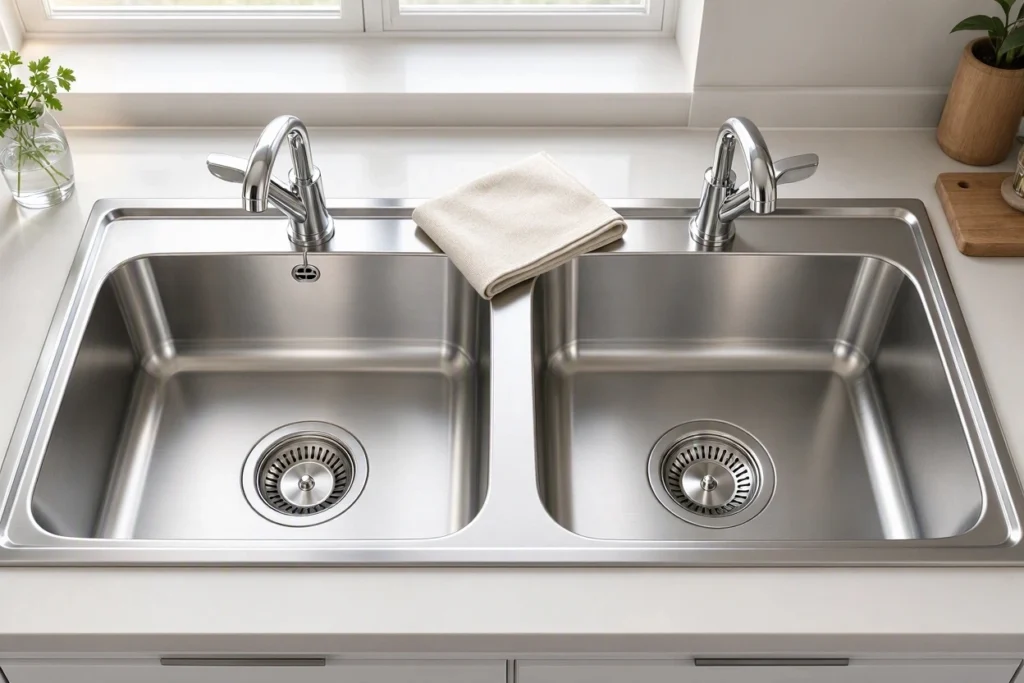
Yes, provided the drain is designed for a sink without an overflow and meets the sink manufacturer’s requirements.
Drain assemblies are not universally interchangeable. An overflow-compatible drain typically has a passage or opening that allows water from the sink’s overflow channel to enter the drainage system. A non-overflow drain is designed for a basin without that secondary channel.
Using the wrong configuration can prevent an overflow system from working properly or cause water to leak beneath the sink.
Before installing a drain, confirm the following:
- Whether the sink has an overflow opening or internal overflow channel.
- Whether the drain assembly is specifically designed for that configuration.
- Whether the drain dimensions, seals, and connections match the sink.
- Whether the installation instructions require a particular gasket or sealing method.
Do not drill an overflow hole into an existing sink simply to add this feature. Creating an opening may damage the basin or compromise its structural integrity and watertight design.
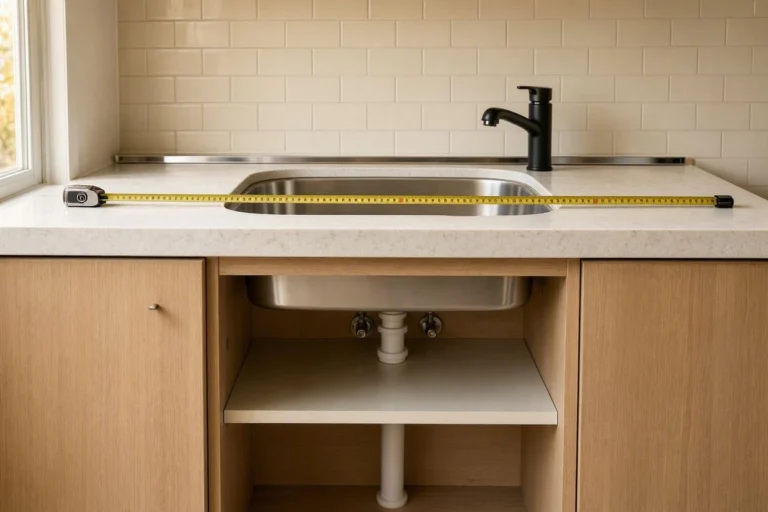
If you are replacing an existing sink, compare its dimensions and drain requirements before ordering a new model. See our guide to small kitchen sink dimensions for help understanding sink measurements.
How to Clean and Maintain a Sink Overflow Hole
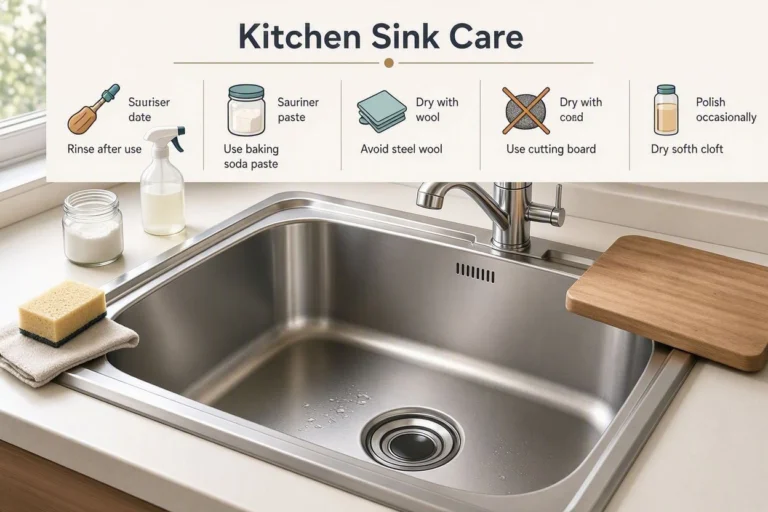
If your sink includes an overflow, occasional cleaning can help prevent residue and debris from restricting the passage.
Although the opening may look clean from the outside, grease, food residue, mineral deposits, and other buildup can accumulate inside an accessible overflow channel.
Use these maintenance steps:
- Inspect the opening. Look for visible residue, discoloration, or signs of blockage.
- Clean the accessible area. Use a soft cloth or a small, soft cleaning brush with a mild cleaner approved for your sink material.
- Rinse carefully. Follow the manufacturer’s cleaning instructions to remove loosened residue without damaging the finish.
- Check for drainage problems. If the overflow remains blocked or water leaks underneath the sink, investigate the passage and its connections.
- Avoid harsh cleaning methods. Do not force sharp objects deep into the passage or use chemicals that could damage seals, finishes, or plumbing components.
Do not assume that pouring a large amount of water into the overflow opening will clear a blockage. Depending on the sink design, this could cause water to collect or leak beneath the cabinet.
If the passage is inaccessible or the blockage persists, consult the sink manufacturer’s maintenance instructions or a qualified plumber.
Common Kitchen Sink Overflow Problems
An overflow system can develop problems if residue accumulates, connections loosen, or components are installed incorrectly.
| Problem | Possible Cause | Recommended Action |
|---|---|---|
| Water drains slowly through the overflow | Buildup or a restricted passage | Clean accessible areas according to the manufacturer’s instructions |
| Unpleasant odor near the opening | Trapped residue or organic buildup | Clean the opening and inspect the accessible passage |
| Water leaks beneath the sink | Loose connection, damaged seal, or incorrect installation | Stop using the sink if the leak continues and inspect the plumbing |
| Overflow does not seem to help | Blocked passage, limited capacity, or incorrect connection | Check the passage and drain configuration |
| New drain does not match the sink | Incompatible overflow and drain designs | Confirm the required drain type before installation |
If you notice water leaking inside the cabinet, dry the area, stop using the sink if the leak continues, and identify the source before resuming normal use.
For other drainage and sink problems, use our Kitchen Sink Troubleshooting Tool to help identify the next step.
Frequently Asked Questions
1. What is the purpose of a kitchen sink overflow hole?
A kitchen sink overflow hole provides a secondary drainage path that may help remove excess water before it spills over the basin’s rim. It works only when the overflow passage and compatible drain connections are clear and functioning correctly.
2. Do kitchen sinks need an overflow hole?
No. Many kitchen sinks are designed without overflow openings. The important considerations are the sink’s intended design, the correct drain assembly, and safe use of the faucet and drain.
3. Where is the overflow hole on a kitchen sink?
When present, the overflow opening is usually near the upper portion of the basin’s interior wall. Some sink models use a less obvious integrated channel, so check the manufacturer’s documentation if you cannot see an opening.
4. Can a kitchen sink overflow hole become clogged?
Yes. Residue, grease, and mineral deposits may restrict an overflow passage. Clean accessible areas with a suitable mild cleaner and a soft brush, following the manufacturer’s guidance.
5. Can I use a drain without overflow on a sink with an overflow hole?
You should use a drain assembly compatible with the sink’s overflow system. An incompatible drain may prevent the overflow from functioning correctly or cause leakage. Check the manufacturer’s installation instructions before fitting a replacement.
6. What happens if my kitchen sink has no overflow hole?
The sink drains through its main drain only. If the drain is blocked or closed while the faucet continues running, water can rise and spill over the rim. Turn off the faucet promptly if the water level rises unexpectedly.
7. Can I add an overflow hole to my existing kitchen sink?
Do not drill a hole into an existing sink without explicit manufacturer approval and an appropriate engineered installation method. Drilling may damage the basin, compromise its finish, or create leaks.
8. Does a kitchen sink overflow hole prevent flooding?
No. It may reduce the risk of some accidental spills, but its capacity is limited. A high-flow faucet, severe blockage, or restricted overflow passage can still allow water to spill over.
9. How often should I clean a kitchen sink overflow hole?
Inspect it periodically and clean it whenever you notice visible residue, an unpleasant odor, or restricted drainage. The appropriate cleaning frequency depends on use and the manufacturer’s maintenance recommendations.
Final Takeaway
A kitchen sink overflow hole can provide a useful secondary drainage path, but it is not essential to every sink design. Some sinks include an integrated overflow system, while others are manufactured without one.
If you are buying or replacing a kitchen sink, check whether the basin has an overflow and choose a compatible drain assembly. Keep any existing overflow passage clean, follow the manufacturer’s installation instructions, and never rely on the overflow as your only protection against an unattended running faucet.
Understanding this small but important feature can help you make a more informed sink choice and avoid unnecessary plumbing compatibility problems.
Get Helpful Sink Tips
Subscribe for practical sink planning tips and helpful resources for small kitchens and compact spaces.

Khadija is the writer and founder of Tiny Sink Solution. She creates practical guides about small kitchen sinks, faucets, and compact kitchen maintenance, helping homeowners and renters choose solutions for limited spaces. Some articles contain affiliate links, and as an Amazon Associate, she earns from qualifying purchases at no extra cost to readers