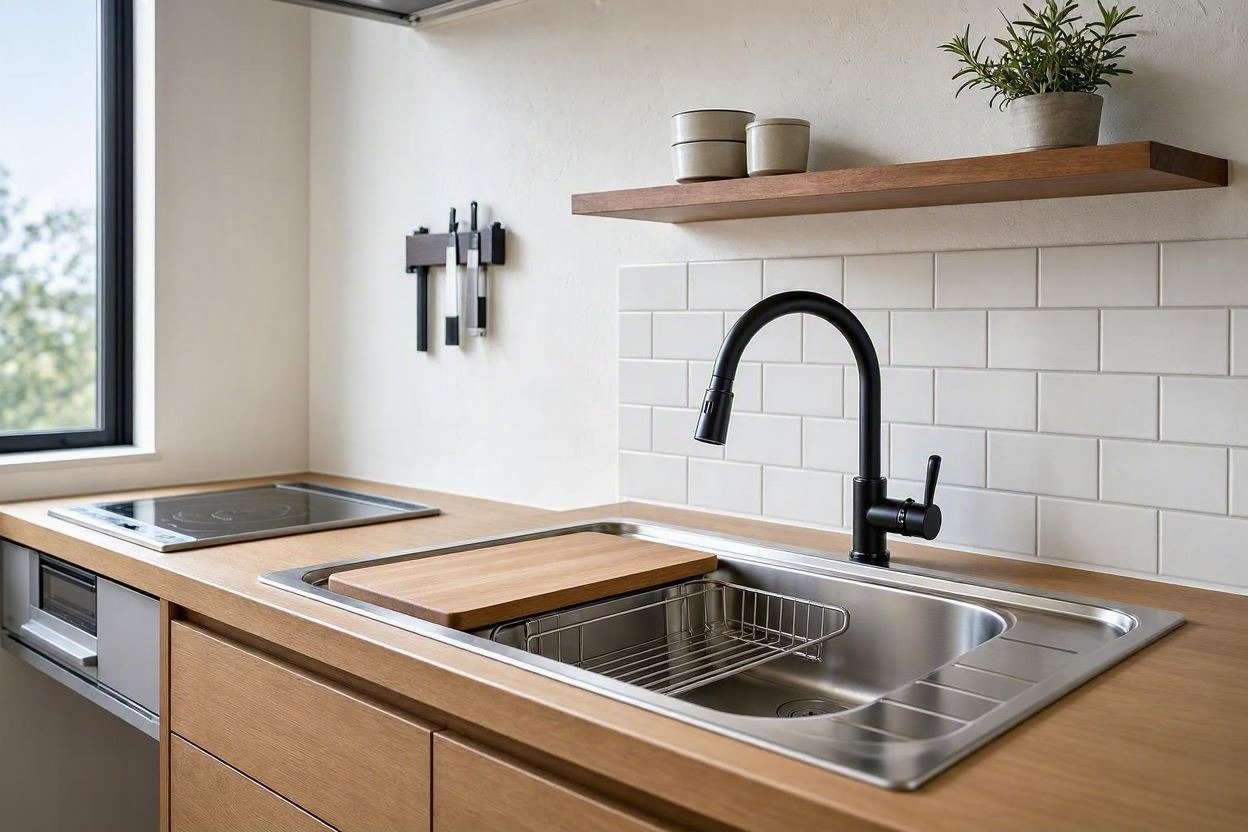
Quick Answer
A Bar Sinks for Small Kitchens can be a practical way to add useful sink space without taking up too much valuable countertop area. Bar sinks can work well for food prep, rinsing, washing glasses, light cleanup, or as a secondary sink in an island or peninsula. The right choice depends on your available cabinet and countertop space, sink dimensions, installation type, faucet placement, and intended use. Before buying, measure your space and compare those measurements with the manufacturer’s installation requirements.
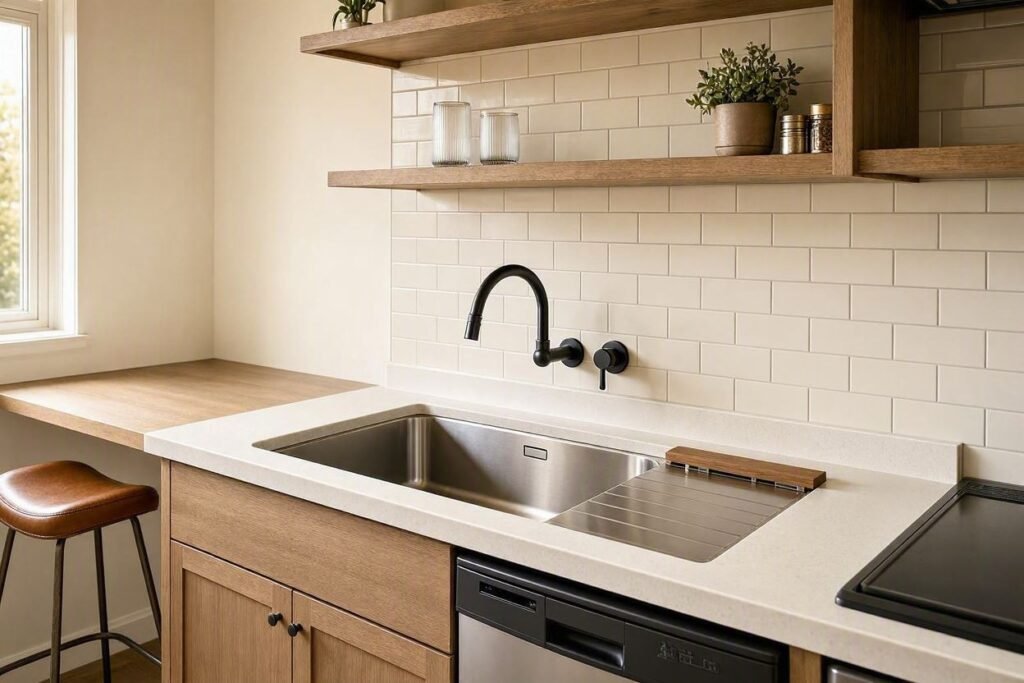
Introduction
In a small kitchen, every inch of usable space matters. A sink needs to be large enough for everyday tasks, but choosing a larger sink can also reduce the countertop area available for food preparation, appliances, and other kitchen activities.
That’s where a bar sink can make sense.
Although bar sinks are commonly associated with home bars and entertaining areas, they can also be useful in compact kitchens. Their smaller footprint can provide a dedicated place for rinsing, food preparation, washing glasses, or handling quick cleanup without taking up as much counter space as a larger kitchen sink.
However, choosing the smallest sink available isn’t always the best solution. You still need to consider cabinet dimensions, countertop space, basin capacity, installation requirements, faucet placement, plumbing, and how you actually use your kitchen.
This guide explains what to look for when choosing a bar sink for small kitchens, including sizes, placement, cabinet compatibility, pros and cons, and three compact bar sink options to compare.
What Is a Bar Sink?
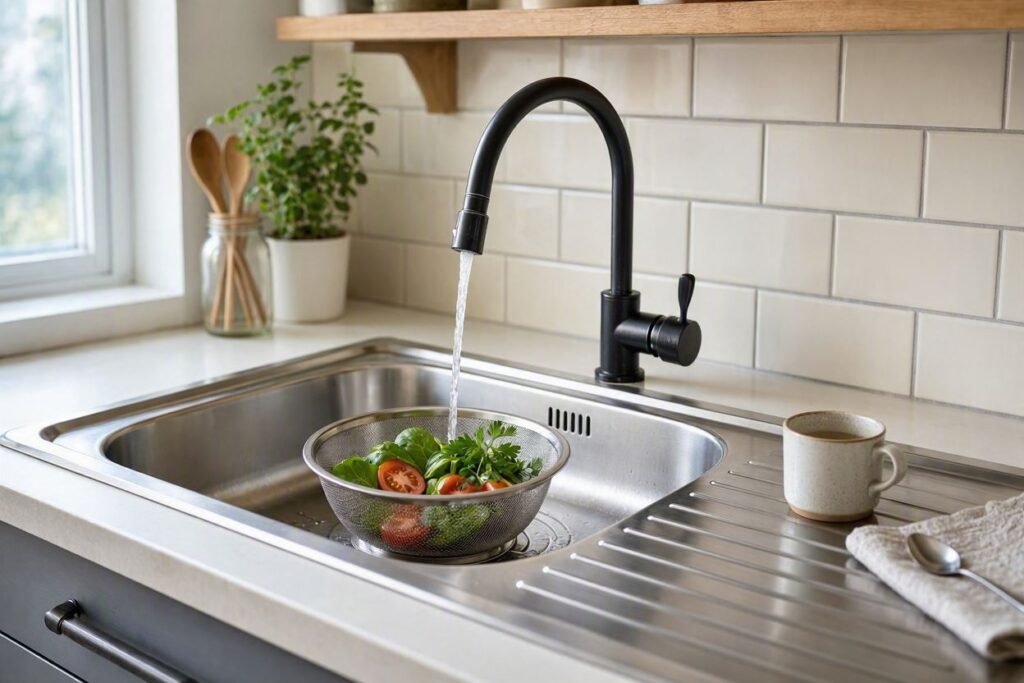
A bar sink is a relatively compact sink designed for lighter tasks such as rinsing food, washing glasses, preparing ingredients, filling containers, or handling small cleanup jobs.
Bar sinks are often used in home bars, entertaining areas, islands, and secondary prep spaces. In a small kitchen, their compact footprint can be useful when you want a sink without giving up too much countertop space.
There isn’t one universal dimension that defines every bar sink. Manufacturers offer different widths, depths, basin configurations, shapes, installation styles, and mounting requirements. That’s why it’s more useful to compare actual dimensions and installation specifications than to choose a sink based only on the term “bar sink.”
What can you use a bar sink for?
Depending on its size and configuration, a bar sink can be useful for:
- Rinsing fruits and vegetables
- Washing glasses and small dishes
- Preparing ingredients
- Filling bottles and containers
- Cleaning small kitchen utensils
- Handling light cleanup
- Creating a dedicated prep area
- Adding a secondary sink to an island or peninsula
Can a bar sink replace a regular kitchen sink?
Sometimes, but not always.
A bar sink may work as the primary sink in a very small kitchen if you mainly rinse food, wash smaller dishes, and perform light cleanup. However, a compact basin can become frustrating if you regularly wash large pots, pans, baking sheets, or a high volume of dishes.
For many kitchens, the better use of a bar sink is as a secondary or task-specific sink rather than a complete replacement for the main kitchen sink.
Why use a bar sink in a small kitchen?
The main advantage is space efficiency. A smaller sink can leave more countertop available for food preparation and everyday kitchen activities.
Bar sinks can be particularly useful in:
- Small kitchen islands
- Narrow countertop areas
- Compact prep stations
- Kitchens that already have a primary sink
- Beverage or entertaining areas
The goal isn’t simply to choose the smallest sink possible. It’s to choose a sink that provides enough capacity for the tasks you actually perform.
Bar Sink vs. Small Kitchen Sink: What’s the Difference?
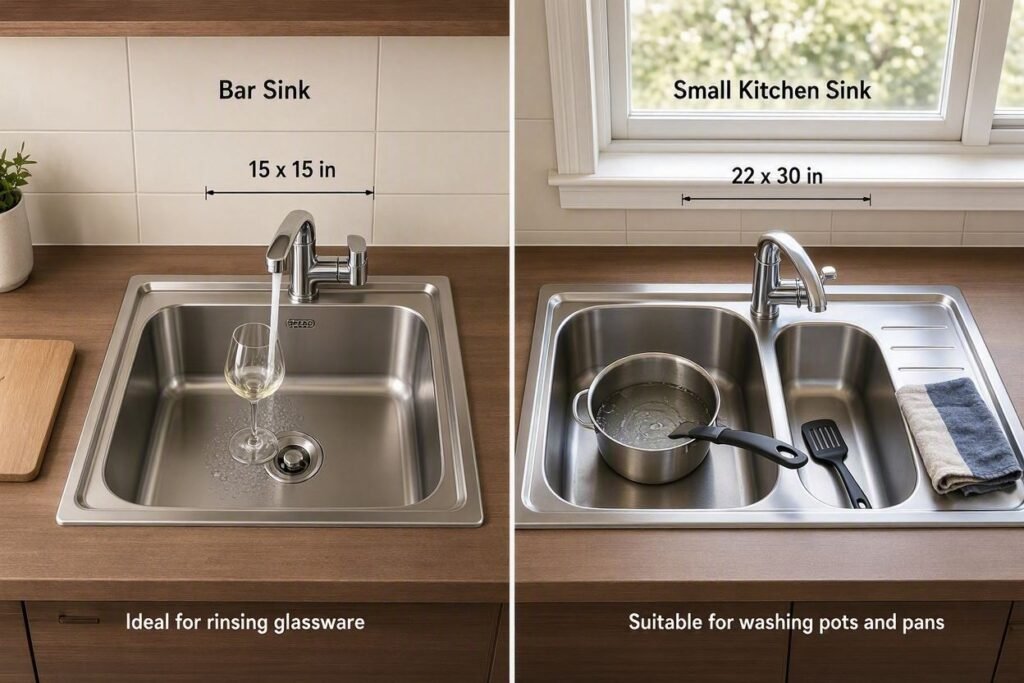
The terms can overlap, but they usually describe different priorities.
| Feature | Bar Sink | Small Kitchen Sink |
|---|---|---|
| Typical use | Light prep, rinsing, drinks, secondary tasks | Everyday cooking and cleanup |
| Footprint | Usually compact | Compact to moderate |
| Capacity | More limited | Usually more versatile |
| Common location | Bar, island, prep area, secondary station | Main kitchen work area |
| Large cookware | Can be difficult | Generally more practical |
| Space saving | Strong advantage | Depends on design |
| Best for | Specialized or lighter tasks | Broader everyday kitchen use |
A bar sink for small kitchens can be a good option when your priority is saving space while maintaining a dedicated sink area.
A small kitchen sink may be the better choice when the sink needs to handle everyday cooking, larger cookware, and regular dishwashing.
The best choice ultimately depends on how you use the kitchen rather than what the sink is called.
What Size Bar Sink Works Best in a Small Kitchen?
There is no single universal size that works for every small kitchen.
The right size depends on the space available and the tasks you expect the sink to handle. Instead of choosing a sink first and trying to make it fit later, measure your available space before shopping.
1. Sink width
Measure the maximum countertop and cabinet space available for the sink.
A wider sink may provide more usable basin space, but it also takes away more countertop area.
2. Front-to-back depth
The front-to-back measurement matters just as much as width in a compact kitchen.
A sink that is too deep for the available countertop can interfere with the backsplash, faucet area, or usable workspace.
3. Basin depth
The outside dimensions of a sink don’t tell you everything about its usable capacity.
Consider how deep the actual basin is and whether that depth suits the tasks you plan to perform.
4. Cabinet dimensions
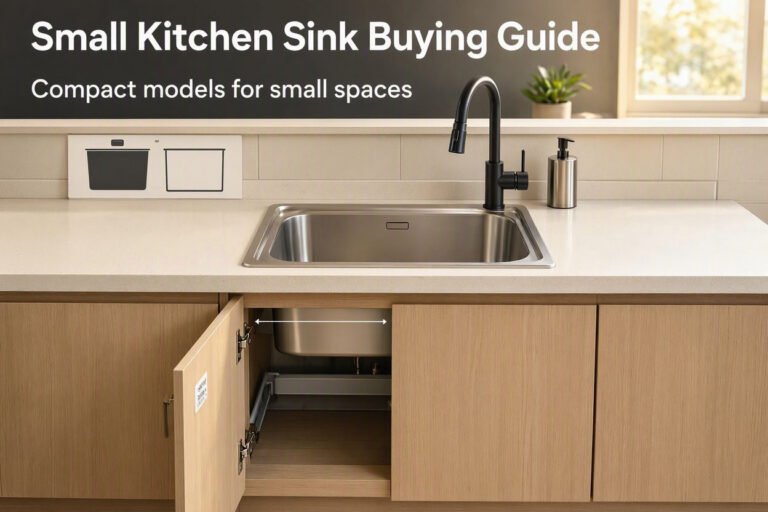
The sink needs to work with the cabinet underneath it. Don’t assume that a compact-looking sink will fit every cabinet.
Measure the cabinet and compare those measurements with the manufacturer’s minimum cabinet requirements.
5. Installation type
Drop-in and undermount sinks can have different installation requirements.
The countertop material, cutout, mounting method, and available space all need to be considered before choosing a sink.
6. Countertop space
Remember that the sink is only one part of your workspace.
A sink that uses almost all of your available counter can make the kitchen less functional, even if the sink itself fits.
Simple measurement checklist
Before choosing a bar sink for small kitchens, measure:
- Cabinet width
- Cabinet depth
- Available countertop width
- Available countertop depth
- Maximum sink width
- Maximum sink depth
- Faucet location
- Drain/plumbing position
- Installation type
- Required countertop cutout
For more information about sink measurements, see our Small Kitchen Sink Dimensions guide.
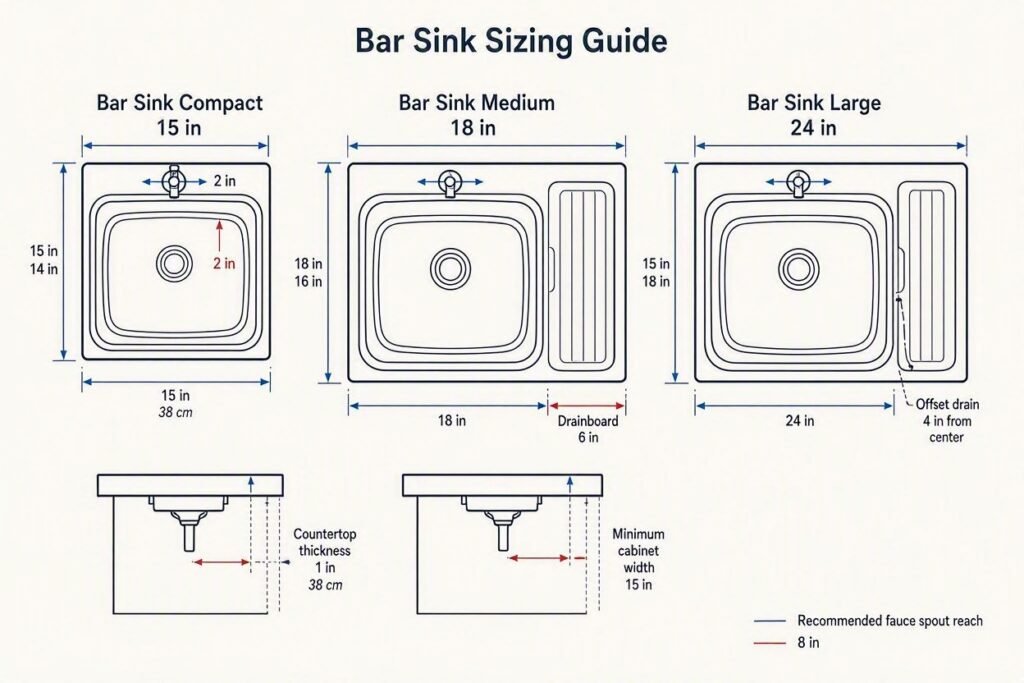
Image 4 — Measurement guide
Suggested image: Sink width, front-to-back depth, and basin depth illustration.
Alt text: bar sink measurements for small kitchen planning
Where Can You Use a Bar Sink in a Small Kitchen?
One of the biggest advantages of a compact sink is flexibility in where it can be installed.
1. As the main sink
In a very small kitchen, a bar sink may serve as the primary sink if your daily tasks are relatively light.
This works best when you don’t regularly need to wash large cookware or handle large amounts of dishes.
2. In a kitchen island
A compact sink can work particularly well in an island because it can provide a dedicated prep area without taking over the entire surface.
Before installation, make sure the island cabinet can accommodate the sink and that water supply, drainage, and other plumbing requirements can be addressed.
3. On a peninsula
A peninsula can provide another practical location for a compact sink.
This can be useful when the main sink is located elsewhere and you want a separate preparation or beverage area.
4. In a dedicated prep area
A small sink can make food preparation more convenient by giving you a nearby place to rinse produce or fill containers.
5. As a secondary sink
If your kitchen already has a primary sink, a bar sink can provide additional functionality without requiring another full-size sink.
6. In a beverage or entertaining area
A compact sink can also be useful near a coffee, beverage, or entertaining station.
The best location depends on your kitchen workflow. Think about where you prepare food, wash items, use appliances, and need countertop space before deciding where the sink should go.
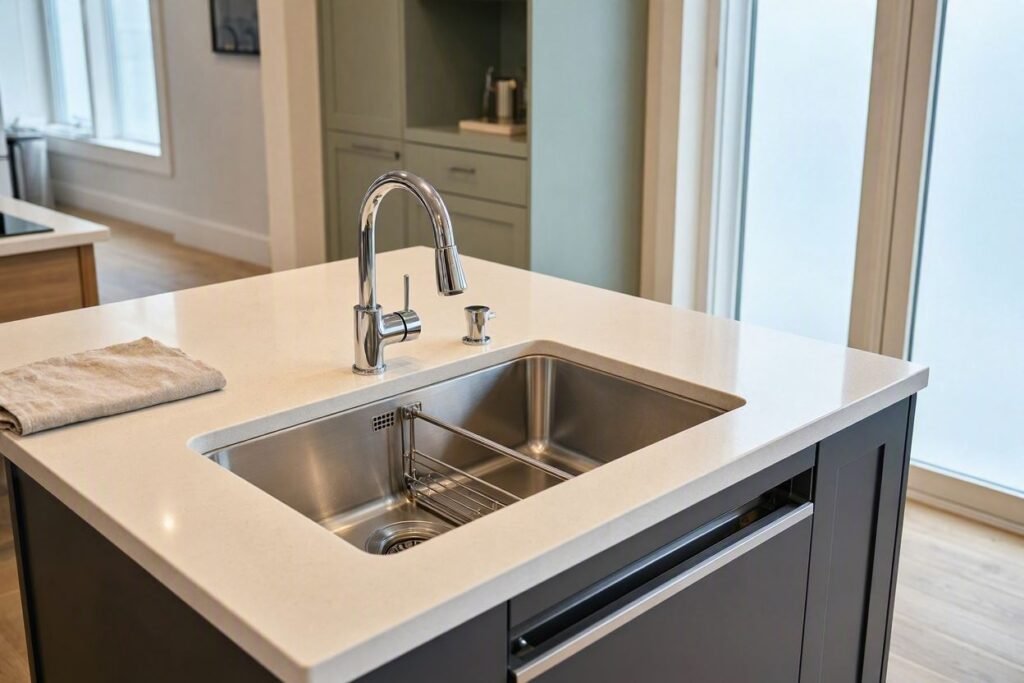
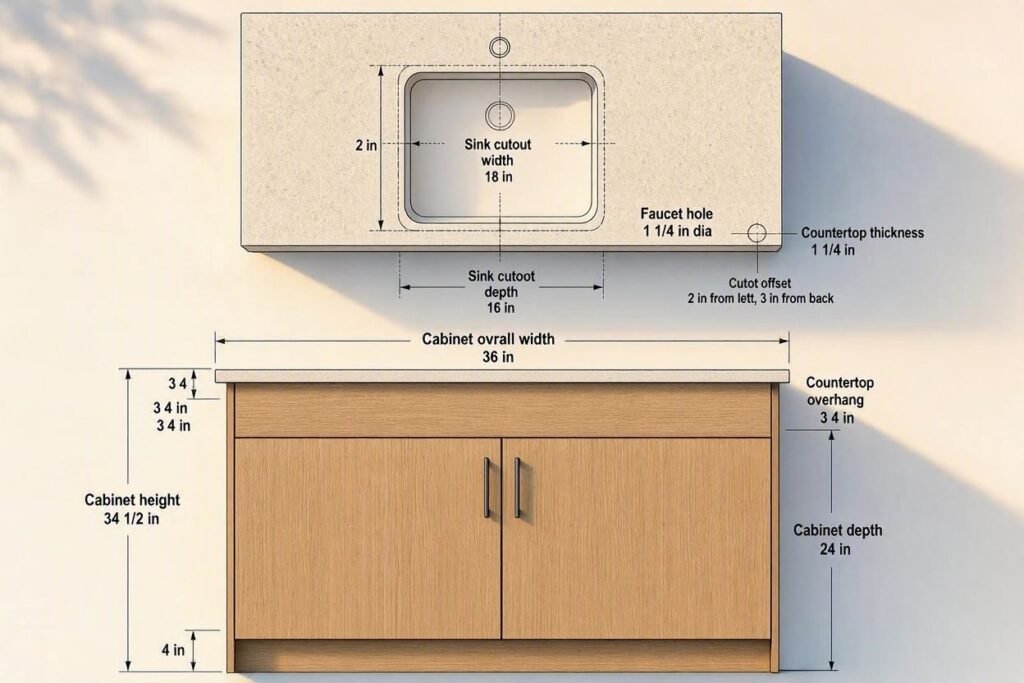
Cabinet & Countertop Requirements for a Bar Sink
A sink can fit the countertop area and still fail to work with the cabinet underneath it. That’s why cabinet compatibility should be checked before buying.
Start with the cabinet
Measure the cabinet width and depth where the sink will be installed.
Then compare those measurements with the sink manufacturer’s installation requirements.
If you want an early planning check, our Cabinet Size Checker can help you evaluate basic sink-to-cabinet compatibility.
The tool is for planning purposes. Always use the manufacturer’s requirements for the final decision.
Check your countertop space
A small kitchen needs enough countertop space around the sink to remain functional.
Consider where you will:
- Prepare food
- Place dishes
- Set down ingredients
- Use small appliances
- Install the faucet
- Access the sink comfortably
Consider the countertop cutout
The sink’s outside dimensions and countertop cutout dimensions are not necessarily identical.
The exact cutout depends on the sink design and installation method.
For early planning, you can use our Sink Cutout Size Calculator.
However, the manufacturer’s cutout template should always be treated as the final reference before cutting the countertop.
Check installation type
Determine whether you are considering:
- Drop-in installation
- Undermount installation
- Another manufacturer-specified installation method
Your countertop material and sink design may affect which installation options are practical.
Don’t forget the faucet
A compact sink still needs room for its faucet and associated plumbing.
Check the faucet configuration, available deck space, mounting location, and clearance around the sink before making your final decision.
Check the plumbing
The location of the water supply and drain can affect installation, particularly when installing a sink in an island or another area that wasn’t originally designed for a sink.
Pros and Cons of a Bar Sink for Small Kitchens
A bar sink can be an excellent space-saving solution, but it isn’t ideal for every kitchen.
Pros
Saves countertop space
A compact sink can leave more room for food preparation and everyday activities.
Useful for food preparation
It can provide a convenient place to rinse ingredients and handle smaller prep tasks.
Works well as a secondary sink
A bar sink can add another useful water station without requiring a full-size kitchen sink.
Good for specialized areas
It can work well in islands, peninsulas, beverage stations, and dedicated prep areas.
Suitable for lighter tasks
For rinsing, washing glasses, and small cleanup jobs, a compact basin can be very practical.
Cons
Limited space for large items
Large pots, pans, baking sheets, and other oversized items may be difficult to wash.
May not work well as a primary sink
If your kitchen handles a lot of dishes or large cookware, a small basin may feel restrictive.
Less flexibility for heavy cleanup
The smaller basin can limit how much you can wash at once.
Installation still requires planning
Cabinet dimensions, countertop cutout, plumbing, faucet placement, and installation method all need to be checked.
Choosing too small can defeat the purpose
Saving space isn’t helpful if the sink becomes too inconvenient for everyday use.
The best bar sink for small kitchens is therefore not necessarily the smallest option. It is the one that balances space savings with the capacity you actually need.
What to Consider Before Buying a Bar Sink
A sink can look perfect online and still be a poor choice for your kitchen if its dimensions or installation requirements don’t match your space.
1. Measure before shopping
Start with your actual kitchen.
Measure:
- Cabinet width
- Cabinet depth
- Available countertop space
- Sink area
- Faucet location
- Plumbing location
Then compare those measurements with the manufacturer’s specifications.
2. Compare the sink’s actual dimensions
Don’t assume that a smaller advertised sink will automatically fit your cabinet.
For example, the three options discussed below have noticeably different footprints:
- 20 × 15 inches
- 15 × 17 inches
- 18 × 18 inches
That difference can matter considerably in a compact kitchen.
3. Check the installation type
The installation method can affect both the countertop cutout and the finished appearance.
Some bar sinks are designed specifically for undermount installation, while others offer both undermount and topmount/drop-in installation.
4. Check the countertop cutout
The sink’s outside dimensions are not necessarily the same as the countertop opening.
This is particularly important when a product provides separate cutout dimensions for different installation methods.
5. Consider the material
The options discussed in this guide also demonstrate the difference in material.
Stainless steel can suit modern and utility-focused spaces, while fireclay offers a different appearance with a glossy white finish.
Material should be considered alongside installation, maintenance, weight, and your overall kitchen design.
6. Think about how you’ll actually use it
If the sink will mainly be used for rinsing vegetables and washing glasses, a compact option may be practical.
If you’re expecting to wash large cookware every day, a larger compact kitchen sink may be a better choice.
7. Don’t choose based on size alone
The smallest sink isn’t automatically the best sink.
Balance:
- Overall dimensions
- Usable basin space
- Cabinet compatibility
- Countertop space
- Installation method
- Faucet configuration
- Plumbing
- Daily use
The goal is to find a bar sink for small kitchens that saves space without becoming too restrictive to use.
3 Bar Sinks for Small Kitchens to Compare
Once you’ve measured your cabinet, countertop, and available sink area, comparing specific options can make the buying process easier.
The three sinks below have different dimensions, materials, and configurations, so they aren’t interchangeable. Instead of ranking them from best to worst, it’s more useful to match each option to a particular kitchen setup.
1. LBTBDBN 20 × 15-Inch Stainless Steel Bar Sink
The LBTBDBN 20 × 15-inch bar sink is a stainless steel option designed for compact kitchen, RV, wet bar, and outdoor applications. The supplied product information lists 18-gauge 304 stainless steel construction, a brushed finish, and a 9-inch depth.
Its 20-inch length makes it somewhat larger than the most compact options in this guide. That can make it worth considering when you have enough countertop and cabinet space but still want a smaller sink than a typical full-size kitchen model.
The undermount design can also be useful if you want the countertop to have a clean, continuous surface around the sink.
Consider this option if: you have enough room for a roughly 20-inch-long sink and prefer a stainless steel undermount configuration.
Before buying: Confirm the required cabinet space, countertop cutout, plumbing, and support requirements for your specific installation.
2. FDUZRH 15 × 17-Inch Stainless Steel Bar Sink
If countertop and cabinet space are especially limited, the FDUZRH 15 × 17-inch bar sink is a more compact option to compare.
The supplied product information lists dimensions of 15 × 17 × 9 inches and stainless steel construction. It also includes a cup-rinser feature and faucet as part of the listed sink package.
One useful detail for small-kitchen planning is the listed 18-inch minimum cabinet base. The product information also provides different cutout dimensions for undermount and topmount installation.
That makes this a good example of why you shouldn’t rely on the sink’s outside dimensions alone when planning a countertop opening.
Consider this option if: you’re working with a tighter space and want a compact sink package with additional workstation-style features.
Before buying: Check the listed cabinet requirement, installation method, cutout dimensions, faucet configuration, and plumbing connections against your actual setup.
3. Miuara 18 × 18-Inch Fireclay Bar Sink
The Miuara 18 × 18-inch fireclay bar sink takes a different approach from the stainless steel options above.
The supplied product information lists an 18 × 18 × 9-inch size, fireclay construction, and a glossy white finish. It is designed for both undermount and topmount/drop-in installation.
Its square footprint may appeal to homeowners who want a compact sink with a traditional white fireclay appearance rather than a stainless steel finish.
The product information also describes a basin that slopes toward the center drain and notes that sufficient support is required because of the sink’s construction.
Consider this option if: you want a compact square sink with a white fireclay finish and flexible mounting options.
Before buying: Check cabinet support, countertop cutout, mounting method, plumbing requirements, and the manufacturer’s installation instructions.
How These Three Bar Sinks Compare
| Option | Listed Size | Material | Installation | May Suit |
|---|---|---|---|---|
| LBTBDBN | 20″ × 15″ × 9″ | 18-gauge 304 stainless steel | Undermount | Compact kitchen, wet bar, RV, or outdoor area |
| FDUZRH | 15″ × 17″ × 9″ | Stainless steel | Undermount or topmount | Tighter spaces and workstation-style use |
| Miuara | 18″ × 18″ × 9″ | Fireclay | Undermount or topmount | Compact spaces where a white fireclay finish is preferred |
These options are not ranked from best to worst. Each one has a different combination of dimensions, material, installation, and features.
Which one should you consider?
For a longer rectangular footprint:
The LBTBDBN may be worth comparing if your available space can accommodate a 20-inch-long sink and you prefer stainless steel.
For a tighter installation:
The FDUZRH is worth considering if its smaller footprint and listed 18-inch minimum cabinet base work with your cabinet.
For a white fireclay look:
The Miuara may be a good option to compare if you prefer an 18-inch square footprint and glossy white fireclay finish.
The important thing is to compare each option with your actual cabinet and countertop measurements rather than choosing based on appearance alone.
Bar Sink vs. Prep Sink: Are They the Same?
Not always.
The terms can overlap because both types of sinks can be compact, but they are often associated with different uses.
A bar sink is traditionally associated with beverage preparation, entertaining, rinsing glasses, and light cleanup.
A prep sink is more commonly associated with food preparation tasks such as:
- Rinsing fruits and vegetables
- Washing ingredients
- Filling cooking containers
- Cleaning small utensils
- Preparing food
In practice, a compact bar sink can function as a prep sink if its size, basin configuration, and installation work for those tasks.
Rather than relying on the label, compare the actual dimensions, basin capacity, depth, installation requirements, cabinet compatibility, faucet setup, and drain configuration.
For a small kitchen, the best sink is the one that fits both the available space and your daily workflow.
How to Choose the Right Bar Sink for Your Small Kitchen
Start with your kitchen rather than starting with a product listing.
Ask yourself these questions:
1. How will you use the sink?
Will you mostly rinse food, wash glasses, prepare ingredients, or clean dishes?
Your answer determines how much basin space you actually need.
2. How much space do you have?
Measure the cabinet and countertop before comparing sink options.
3. Will it be your primary or secondary sink?
A secondary sink can often be smaller because your main sink handles larger tasks.
A primary sink needs to accommodate your everyday cleaning and food-preparation needs.
4. Which installation style works?
Check whether your countertop and cabinet setup support the installation type you want.
5. What basin shape and depth make sense?
Consider both the available space and the types of items you will wash.
6. What about cabinet and plumbing compatibility?
Confirm that the cabinet, drain, water supply, faucet, and surrounding space can accommodate the sink.
7. Will enough countertop space remain?
This is especially important in a small kitchen.
The sink should improve your workflow without eliminating the workspace you need.
A simple decision rule
Think through the choice in this order:
Daily use → Available space → Cabinet compatibility → Installation requirements → Usable countertop space
Then compare suitable products against those requirements.
Always use the manufacturer’s specifications as the final reference for installation and compatibility.
Conclusion
A bar sink for small kitchens can be a practical way to add useful sink space without giving up more countertop area than necessary. The right choice isn’t simply the smallest sink you can find.
The three options discussed in this guide show how different compact sinks can serve different needs. A 20-inch stainless steel sink may make sense when you have more length available, a smaller 15 × 17-inch option may suit a tighter cabinet, while an 18-inch square fireclay sink may appeal to homeowners who want a white finish and flexible mounting options.
Before buying, measure your cabinet and countertop, check the installation method, compare the manufacturer’s cutout requirements, and think about how you’ll actually use the sink.
When those factors line up, a well-chosen compact bar sink can make a small kitchen, island, wet bar, or prep area significantly more functional.
Frequently Asked Questions About Bar Sinks for Small Kitchens
What is a good size for a bar sink in a small kitchen?
There is no single size that works for every small kitchen. The right size depends on cabinet dimensions, countertop space, installation type, and intended use. The options discussed in this guide range from 15 × 17 inches to 20 × 15 inches and 18 × 18 inches, showing how different compact configurations can work in different spaces.
Can a bar sink be used as the main kitchen sink?
Yes, in some small kitchens. A bar sink can work as a primary sink when your daily needs are mostly light rinsing, food preparation, and washing smaller items. It may be less practical if you regularly wash large cookware or large amounts of dishes.
Is a bar sink smaller than a kitchen sink?
Bar sinks are generally designed with a more compact footprint than many primary kitchen sinks, but there is no universal size boundary. Always compare actual dimensions and usable basin space.
Can you install a bar sink in a kitchen island?
Yes. Compact bar sinks can work well in islands, particularly as prep or secondary sinks. Cabinet space, plumbing, faucet placement, countertop cutout, and installation requirements should all be checked first.
Does a bar sink fit in a standard cabinet?
Not necessarily. Cabinet compatibility depends on the actual sink dimensions and the manufacturer’s minimum cabinet requirements. For example, one of the options discussed in this guide lists an 18-inch minimum cabinet base, but you should verify the requirements for the specific sink you’re considering.
What should I measure before buying a bar sink?
Measure cabinet width and depth, available countertop space, sink area, faucet location, plumbing, and the required countertop cutout. The manufacturer’s installation template should be used for the final cutout.
Should I choose a 15-inch, 18-inch, or 20-inch bar sink?
Start with your available space rather than choosing a number first. A 15 × 17-inch sink may suit a tighter location, an 18 × 18-inch sink can provide a square configuration, while a 20 × 15-inch sink may work when you have more length available. Compare the complete dimensions with your cabinet and countertop.
Is a bar sink the same as a prep sink?
Not always. The terms can overlap, but bar sinks are traditionally associated with beverage and entertaining tasks, while prep sinks are generally associated with food preparation. A compact bar sink can function as a prep sink when its size and configuration are suitable.
Is a bar sink good for a small kitchen?
It can be an excellent option when saving countertop space is important and your sink needs are relatively light or task-specific. If you regularly wash large cookware or handle heavy cleanup, a larger compact kitchen sink may be more practical.
Disclosure: As an Amazon Associate, I earn from qualifying purchases. This does not affect the price you pay.

Khadija is the writer and founder of Tiny Sink Solution. She creates practical guides about small kitchen sinks, faucets, and compact kitchen maintenance, helping homeowners and renters choose solutions for limited spaces. Some articles contain affiliate links, and as an Amazon Associate, she earns from qualifying purchases at no extra cost to readers
![Top [count] Gardening Blogs - OnToplist.com](https://www.ontoplist.com/images/ontoplist32.png?id=6aa4d0c493161)