
A noisy kitchen sink can make everyday tasks like washing dishes or rinsing vegetables more frustrating than they need to be. Learning how to reduce kitchen sink noise starts with identifying the source, whether it is a vibrating stainless steel basin, splashing water, loose drain pipes, or a noisy garbage disposal. Fortunately, many common sink noises can be reduced with simple adjustments, such as adding sound-deadening pads, using a protective sink grid, or securing loose components. However, some sounds, including repeated pipe banging or persistent faucet squealing, may indicate a plumbing issue. This guide explains practical solutions to help make your kitchen quieter and more comfortable.
Quick Answer: How Do You Reduce Kitchen Sink Noise?
To reduce kitchen sink noise, first identify where the sound comes from. Sound-deadening pads can help quiet a vibrating stainless steel basin, while a sink grid can soften the clatter of dishes. Securing loose drain pipes or correcting loose mounting hardware may help with rattling. Banging pipes, persistent faucet noise, or unusual garbage disposal sounds can indicate a plumbing or appliance problem that needs separate attention.
Not every noise requires soundproofing. The best fix depends on whether you hear a ringing basin, splashing water, loose components, or noise coming from the plumbing.
Why Is My Kitchen Sink So Noisy?
Kitchen sink noise can come from several sources. Stainless steel bowls may vibrate when water or cookware strikes them, while loose pipes and accessories can rattle. A garbage disposal creates its own mechanical noise, and banging supply pipes may indicate water hammer.
Common causes include:
- Basin vibration: The metal bowl resonates when water or dishes hit it.
- Water splashing: A forceful stream strikes the basin and creates extra noise.
- Loose pipes or fittings: Drain components may rattle against the cabinet or one another.
- Loose mounting hardware: An improperly secured sink may move or vibrate.
- Garbage disposal vibration: The disposal, mounting assembly, or an object inside it may cause unusual sounds.
- Water hammer: Pipes bang when water flow stops or changes abruptly.
- Faucet noise: Whistling, squealing, or rattling may come from the faucet or water supply rather than the sink bowl.
Thicker stainless steel and factory-installed sound-deadening treatments can help reduce basin noise, but they will not solve every plumbing or appliance problem. KOHLER explains how steel thickness and sound-deadening pads affect sink noise in its stainless steel sink installation information.
10 Ways to Reduce Kitchen Sink Noise
1. Add Compatible Sound-Deadening Pads
If your stainless steel sink makes a hollow ringing sound when water runs or dishes touch the basin, sound-deadening pads may help.
These pads are designed to damp some of the vibration produced by the metal. Before adding them, check whether your sink already has factory-installed pads or an underside coating.
How to approach it:
- Identify the sink manufacturer and model if possible.
- Check the installation or care instructions for approved sound-dampening materials.
- Choose a product specifically suitable for your sink and installation.
- Follow the product instructions for placement and application.
- Keep mounting hardware, plumbing connections, and service areas accessible.

Do not assume that every adhesive mat, automotive damping sheet, or insulation product is suitable for a sink. Avoid applying material over connections or using a product that could interfere with the sink mounting system.
Best for: Ringing or drumming sounds from a stainless steel basin.
2. Check Whether the Sink Already Has Sound Insulation
Some sinks include factory-installed sound-deadening pads or other treatments. Before buying extra materials, inspect the visible underside of the sink, if it is safely accessible, and check the manufacturer’s specifications.
For example, Elkay’s sink buying guide discusses how steel thickness and sound-deadening pads can affect noise.
Additional materials may offer little benefit if the existing treatment is already adequate. The right solution depends on the sink’s construction and the source of the noise.
Best for: Homeowners who want to determine whether extra sound treatment is necessary.
3. Use a Sink Grid or Suitable Silicone Mat
Dishes, pans, and utensils can make a loud clattering sound when they strike a hard basin. A properly fitted sink-bottom grid or sink-safe silicone mat creates a buffer between cookware and the sink surface.

Choose an accessory designed for your sink’s dimensions and drain position. Keep the drain opening clear and clean the accessory regularly so food debris does not accumulate underneath it.
A grid or mat can reduce impact noise, but it will not correct loose pipes, water hammer, or a noisy disposal.
Best for: Reducing clanging from dishes and cookware.
4. Check the Sink’s Mounting Hardware
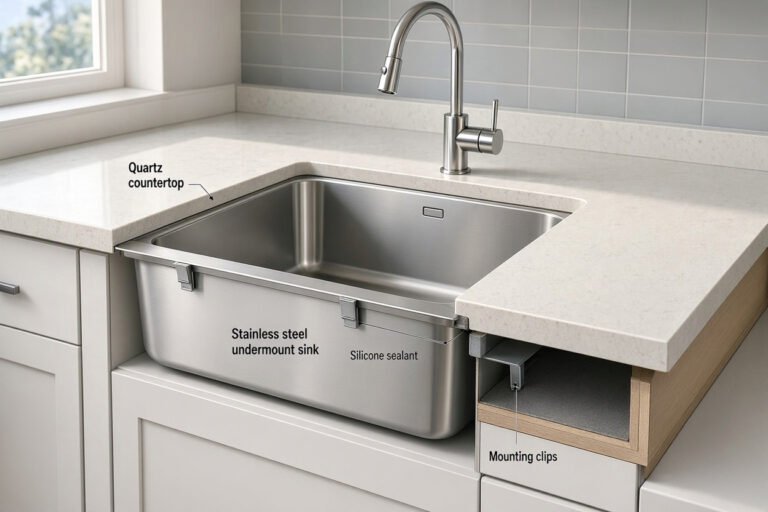
A sink that shifts, rattles, or vibrates unusually may have a mounting or support issue. The correct inspection depends on whether the sink is top-mounted, undermounted, or installed in another configuration.
If the installation instructions permit it, inspect accessible mounting hardware for looseness or visible damage. Tighten components only according to the manufacturer’s instructions. Do not overtighten clips or fasteners.
An undermount sink that is separating from the countertop needs proper repair, not simply extra tightening. If the sink is sagging, moving significantly, or showing signs of failed support or sealant, contact a qualified installer.
Best for: Rattling or movement around the sink rim or mounting area.
5. Secure Loose Drain Pipes
A drain pipe may vibrate or knock against the cabinet, wall, or another pipe. Open the cabinet and listen carefully while the sink drains, without touching moving or potentially leaking components.

Look for visible signs such as:
- Pipes touching cabinet panels.
- Loose or damaged pipe supports.
- Drain components that visibly move or rattle.
- Water stains or leaks around connections.
If an accessible pipe is visibly loose, have the connection or support corrected using suitable plumbing parts. Do not force pipes into position, alter a drain assembly without the necessary knowledge, or cover a leaking connection with soundproofing material.
Best for: Rattling or knocking from the cabinet beneath the sink.
6. Reduce Excessive Splashing From the Faucet
Sometimes the sink itself is not the problem. Water falling from a high faucet or striking the basin at an awkward angle can create a loud splashing sound.
Try directing the stream toward a sloped basin surface rather than a flat metal area. If the faucet has adjustable flow settings, use a lower flow when it is practical. Check the aerator if the stream suddenly becomes irregular or noisy, and follow the faucet manufacturer’s cleaning instructions.
Do not assume that every loud stream means your home’s water pressure is too high. If the faucet whistles or squeals even at normal flow, the faucet or supply may need inspection.
Best for: Splashing or rushing sounds during everyday washing.
7. Inspect the Faucet if It Whistles or Squeals
A whistle, squeal, or vibration that occurs when you turn on the tap may come from the faucet, aerator, cartridge, or water supply. These sounds are different from the hollow ringing of a stainless steel basin.
Try to identify whether the sound occurs with hot water, cold water, or both. If the noise started suddenly, check the manufacturer’s troubleshooting guidance before disassembling the faucet.
If the sound continues, the faucet leaks, or water flow changes unexpectedly, a plumber may need to inspect the fixture and supply connections.
Best for: High-pitched or irregular sounds associated with running water.
8. Troubleshoot a Noisy Garbage Disposal Safely
A garbage disposal can produce normal operating noise, but sudden grinding, metallic rattling, excessive vibration, or humming without normal operation deserves attention.
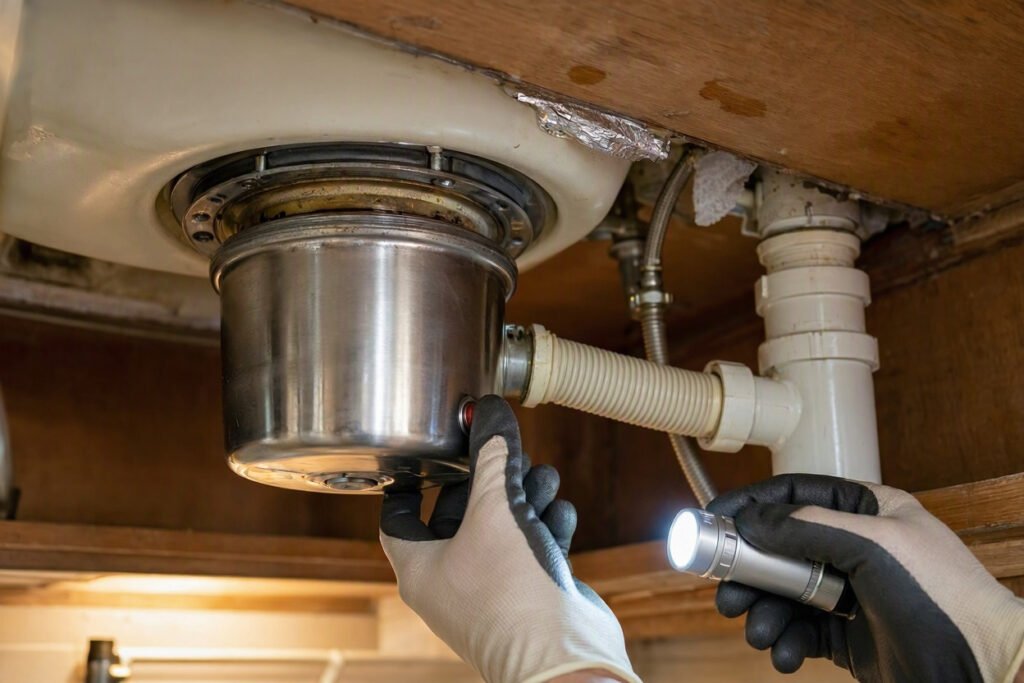
Safety first: Turn the disposal off and disconnect power at the appropriate switch or breaker before inspecting it. Never put your hand inside the disposal, even when it is switched off. Follow the exact manufacturer’s procedure for clearing an obstruction or resetting the unit.
Use a flashlight to look for a visible foreign object, and remove it only with a suitable tool, such as tongs, when the manufacturer’s instructions permit. Do not reach inside the grinding chamber.
If the disposal continues to make unusual noise, leaks, or vibrates excessively, stop using it and contact the manufacturer or a qualified service professional.
For model-specific instructions, consult InSinkErator’s guide to unusual garbage disposal noises.
Best for: Grinding, metallic rattling, or excessive vibration when the disposal runs.
9. Investigate Banging Pipes and Water Hammer
If you hear a sharp bang when a faucet closes or an appliance stops filling, the noise may come from the plumbing rather than the sink. This is commonly called water hammer, which can occur when flowing water stops or changes direction abruptly and creates a pressure wave.
Do not try to solve water hammer by adding sound-deadening pads beneath the basin. A plumber can assess the cause and determine whether pipe supports, a water-hammer arrestor, a valve issue, or another repair is appropriate.
If the pipes bang repeatedly, the sound is severe, or you notice leaks or changes in water flow, arrange a professional inspection.
Best for: Loud banging or knocking in the pipes when water flow stops.
10. Consider a Quieter Sink if Other Fixes Do Not Help
If the sink itself is consistently loud despite suitable accessories and properly secured plumbing, its construction may be part of the problem.
When comparing replacement sinks, consider:
- Material and thickness: Thicker stainless steel is generally less prone to drumming than thinner steel, although construction and installation also matter.
- Factory sound treatment: Check whether the exact model includes sound-deadening pads or another documented treatment.
- Mounting and support: Make sure the sink is compatible with your countertop, cabinet, and installation method.
- Accessories: A fitted bottom grid may reduce the clatter of dishes.
- Installation requirements: Confirm dimensions and mounting instructions before buying a replacement.
See Elkay’s sink buying guide for additional information on sink materials, thickness, and sound.
If you have a compact kitchen, review our small kitchen sink dimensions guide before choosing a replacement. Measure the cabinet, countertop opening, and available clearance rather than relying on the sink’s advertised width alone.
Best for: Persistent basin vibration when practical repairs have not solved the problem.
DIY Fix or Call a Plumber?
| Noise or Symptom | Possible Next Step |
|---|---|
| Dishes clatter against the basin | Try a fitted sink grid or suitable mat. |
| Stainless steel bowl rings when water runs | Check existing sound treatment and manufacturer-approved pads. |
| Visible pipe rattling under the sink | Check for loose supports and arrange repairs if needed. |
| Sink shifts or separates from the countertop | Contact a qualified installer. |
| Faucet whistles or squeals | Check the faucet manufacturer’s troubleshooting instructions. |
| Disposal makes a sudden metallic or grinding noise | Switch it off, disconnect power before inspection, and follow the manufacturer’s safety guidance. Never put your hand inside. |
| Pipes bang when a tap closes | Ask a plumber to assess possible water hammer. |
| Water leaks or flow changes suddenly | Stop using the affected fixture if necessary and arrange prompt inspection. |
These are troubleshooting starting points, not definitive diagnoses. If you cannot identify the source safely, seek professional help.
Common Mistakes to Avoid When Soundproofing a Sink
- Using the wrong material: Not every foam, adhesive pad, or insulation product is suitable for a sink.
- Covering plumbing connections: Soundproofing must not prevent inspection or maintenance.
- Ignoring the type of noise: Basin vibration, disposal noise, and water hammer have different causes.
- Overtightening mounting hardware: Excess force can damage components or compromise the installation.
- Ignoring leaks: A noise fix will not correct a leaking drain or failing sink support.
- Expecting complete silence: Sound treatment can reduce some noises, but running water and appliances will still make sound.
Frequently Asked Questions
How can I make my stainless steel kitchen sink quieter?
Start by checking whether the sink has sound-deadening pads. Manufacturer-approved pads may reduce basin vibration, and a fitted sink grid can soften the impact of dishes. If the sound comes from pipes or a disposal, investigate that source separately.
Do sound-deadening pads really work?
They can help damp vibration from the sink bowl, especially when water or dishes strike stainless steel. The result depends on the sink design, existing treatment, and installation. Pads will not eliminate every sound in the kitchen.
Does a thicker stainless steel sink make less noise?
A thicker stainless steel bowl is generally less prone to drumming than a thinner one. However, the sink’s design, sound treatment, mounting, and plumbing also affect the noise you hear.
Can a sink grid reduce noise?
Yes. A properly fitted grid can reduce the clattering caused by dishes and cookware hitting the basin. It does not fix plumbing vibration or a noisy garbage disposal.
Why does my sink make a loud noise when water runs?
The sound may come from water striking and vibrating the basin, splashing, a noisy faucet, or loose plumbing. Notice whether the sound comes from the bowl, faucet, cabinet, or pipes to help narrow down the cause.
Why do my pipes bang when I turn off the faucet?
A sudden bang may be water hammer, which occurs when water flow stops or changes abruptly and creates a pressure wave. Repeated or severe banging should be assessed by a plumber.
Is expanding spray foam safe under a kitchen sink?
Do not use expanding spray foam around a sink unless the sink or material manufacturer explicitly approves that application. Expanding foam can interfere with plumbing access, mounting components, or other parts of the installation.
Can a garbage disposal make the sink vibrate?
Yes. A disposal can transmit vibration through the sink and its mounting assembly. Sudden metallic or grinding noises may indicate an obstruction or mechanical issue. Turn off and disconnect power before any inspection, never put your hand inside the unit, and follow the manufacturer’s instructions.
Should I replace my sink if it is too noisy?
Not necessarily. Try to identify the source first. A sink grid, approved sound-deadening pads, or correction of a loose component may help. Consider replacement only after evaluating the sink’s condition, construction, and installation.
When should I call a plumber?
Call a plumber if you hear persistent pipe banging, cannot identify the source safely, notice leaks, experience sudden changes in water flow, or suspect a plumbing or mounting problem that you cannot correct according to the manufacturer’s instructions.
Final Thoughts
The best way to reduce kitchen sink noise is to identify what is making the sound before choosing a fix. Sound-deadening pads and sink grids can help with basin vibration and clattering, while loose plumbing, faucet noise, and water hammer need different solutions.
Start with simple, safe checks. Follow the sink and appliance manufacturers’ instructions, and bring in a qualified professional when the noise points to a plumbing, electrical, or installation problem.
Get Helpful Sink Tips
Subscribe for practical sink planning tips and helpful resources for small kitchens and compact spaces.

Khadija is the writer and founder of Tiny Sink Solution. She creates practical guides about small kitchen sinks, faucets, and compact kitchen maintenance, helping homeowners and renters choose solutions for limited spaces. Some articles contain affiliate links, and as an Amazon Associate, she earns from qualifying purchases at no extra cost to readers




One Comment