
Cleaning tips for compact kitchen sinks can help prevent everyday stains, scratches, water spots, and buildup while keeping a small kitchen sink looking clean. Because compact sinks have limited basin space, food residue and water marks can become noticeable quickly. A simple daily routine, occasional deep cleaning, and the right care for your sink material can make maintenance much easier.
Quick answer: The best way to clean a compact kitchen sink is to remove food debris, rinse the basin, clean it with a suitable mild cleaner and soft sponge, rinse thoroughly, and dry the surface. Deep-clean the sink regularly, pay attention to the drain area, and always follow the manufacturer’s care instructions for your specific sink material.
Cleaning Tips for Compact Kitchen Sinks: Daily Routine
For routine cleaning, follow these simple steps:
- Remove food scraps and other debris from the basin.
- Rinse the sink with water.
- Apply a suitable mild cleaner or dish soap.
- Gently wipe the surface with a soft sponge or cloth.
- Rinse thoroughly so cleaner residue doesn’t remain.
- Dry the sink with a clean microfiber cloth.
Drying is particularly useful when your sink is prone to visible water spots. For detailed planning information about choosing the right sink dimensions, see our guide to [small kitchen sink dimensions].
The exact cleaning method can vary by material and finish, so check the manufacturer’s care instructions before using a specialized stain remover or household cleaning solution.
Daily Cleaning Routine for a Small Kitchen Sink
A few minutes of daily care can prevent small amounts of residue from becoming harder-to-remove buildup.
After washing dishes
Remove food particles from the basin and rinse away soap and debris. Don’t leave wet food scraps sitting around the drain or in corners of the sink.
After food preparation
If the sink is used as part of your food-preparation area, rinse away oils, sauces, and food residue soon after use. This is especially helpful in a compact sink where residue can collect quickly because the basin has less surface area.
At the end of the day
Give the sink a quick wash with a suitable cleaner and soft sponge. Rinse thoroughly and wipe the surface dry.
This simple routine can also make your weekly deep cleaning much easier.

Practical sink accessories for small kitchens can also make daily cleanup and drying easier when counter space is limited.
How to Deep Clean a Compact Kitchen Sink
A deeper clean can help address areas that are easy to overlook during daily washing.
Start by removing everything from the sink and clearing away visible debris. Then clean the basin, corners, edges, faucet area, and drain opening.
Step 1: Clean the basin
Use a cleaner appropriate for your sink material and gently work across the surface with a soft sponge or cloth.
Step 2: Pay attention to corners
Compact sinks often have tight corners and edges where food particles or residue can collect. Wipe these areas carefully rather than relying only on a quick rinse.
Step 3: Clean around the drain
Remove visible debris around the drain opening and clean the surrounding surface. A soft brush can help reach narrow areas without requiring aggressive scrubbing.
Step 4: Rinse thoroughly
Don’t leave cleaning-product residue sitting on the sink. Rinse the entire basin with clean water.
Step 5: Dry the surface
Finish with a clean microfiber cloth. Drying can help reduce water spots and leaves the sink ready for use.
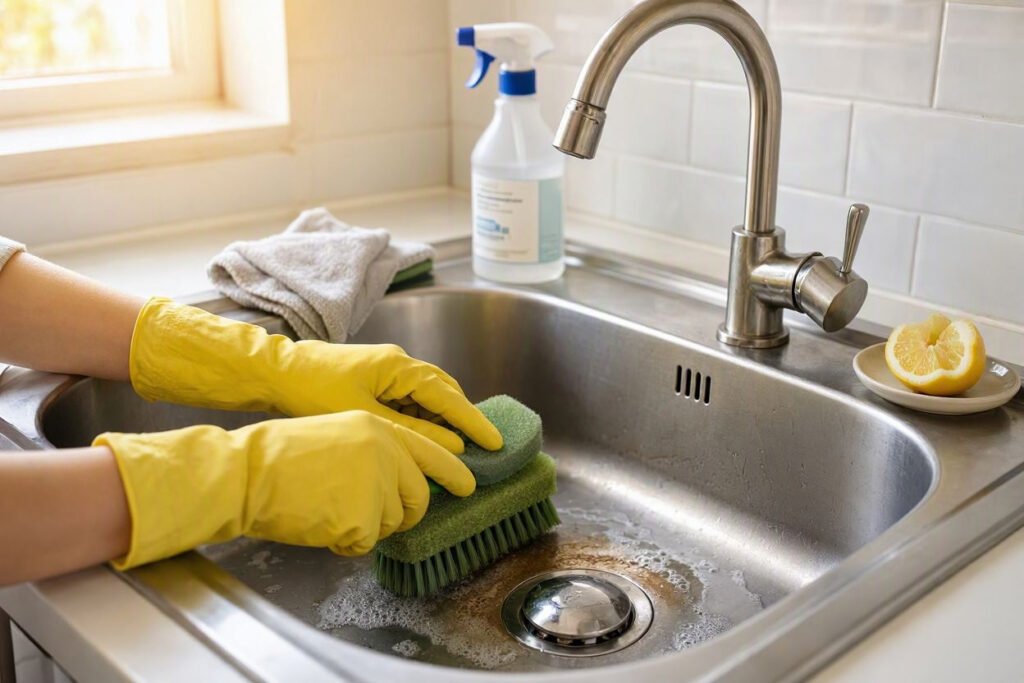
How to Remove Common Sink Stains
The safest approach to stain removal depends on both the type of stain and the sink material. Start with the gentlest suitable cleaning method rather than immediately using an aggressive cleaner.
Water Spots and Mineral Deposits
Water spots are particularly noticeable on some sink finishes. Regular rinsing and drying can help reduce them.
For existing mineral deposits, use only a cleaning method that the sink manufacturer recommends for your particular material and finish. Don’t assume an acidic household cleaner is appropriate for every sink.
Food and Beverage Stains
Coffee, tea, sauces, and other food residues can leave visible marks if they’re allowed to dry.
Start by cleaning the area with a suitable mild cleaner and soft sponge. Rinse thoroughly afterward. If the stain remains, check the manufacturer’s cleaning guidance before moving to a stronger treatment.
Grease and Oily Residue
Grease can leave a slippery film on the sink surface. A suitable dish soap or mild cleaner can often help break up everyday oily residue.
Avoid aggressive scrubbing simply because the surface feels greasy. Let the appropriate cleaner do the work, then rinse the area thoroughly.
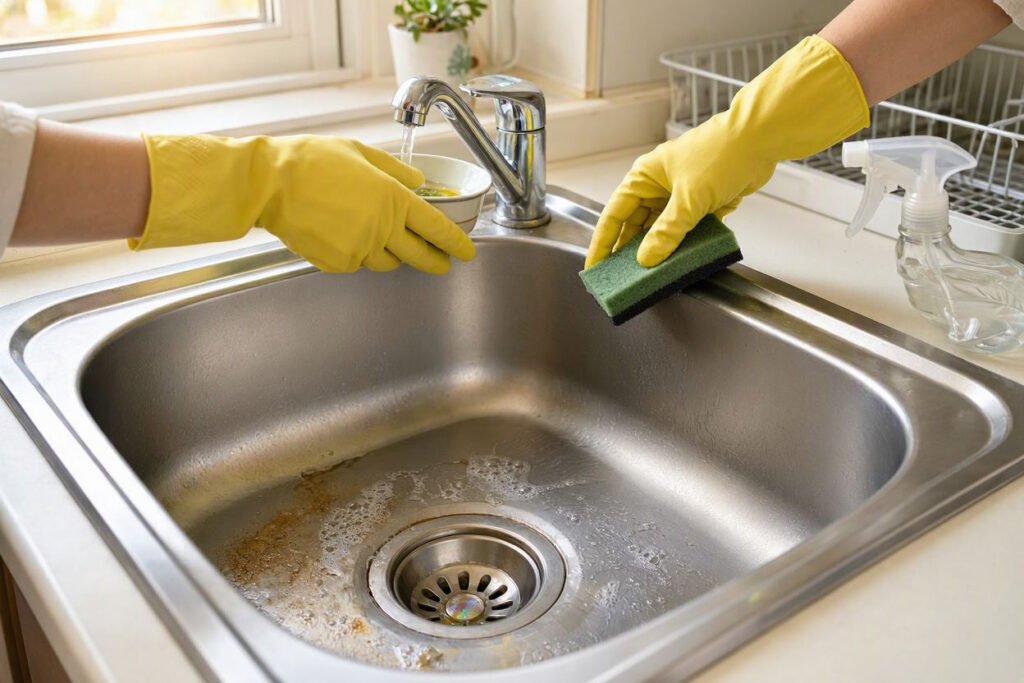
How to Prevent Scratches on a Compact Kitchen Sink
Preventing scratches is easier than trying to improve a damaged finish later.
- Use a soft sponge, cloth, or other cleaning tool recommended for your sink.
- Avoid harsh abrasive pads unless the manufacturer specifically says they are appropriate.
- Don’t drag heavy pots, pans, or metal cookware across the basin.
- Avoid using the sink as a storage area for sharp or abrasive objects.
- Follow the grain when cleaning a brushed stainless steel surface.
- Rinse away grit and food particles before wiping the surface.
A small sink can be especially vulnerable to accidental contact with cookware because there is less room to maneuver. Taking an extra moment to lift heavy items instead of sliding them can help protect the finish.
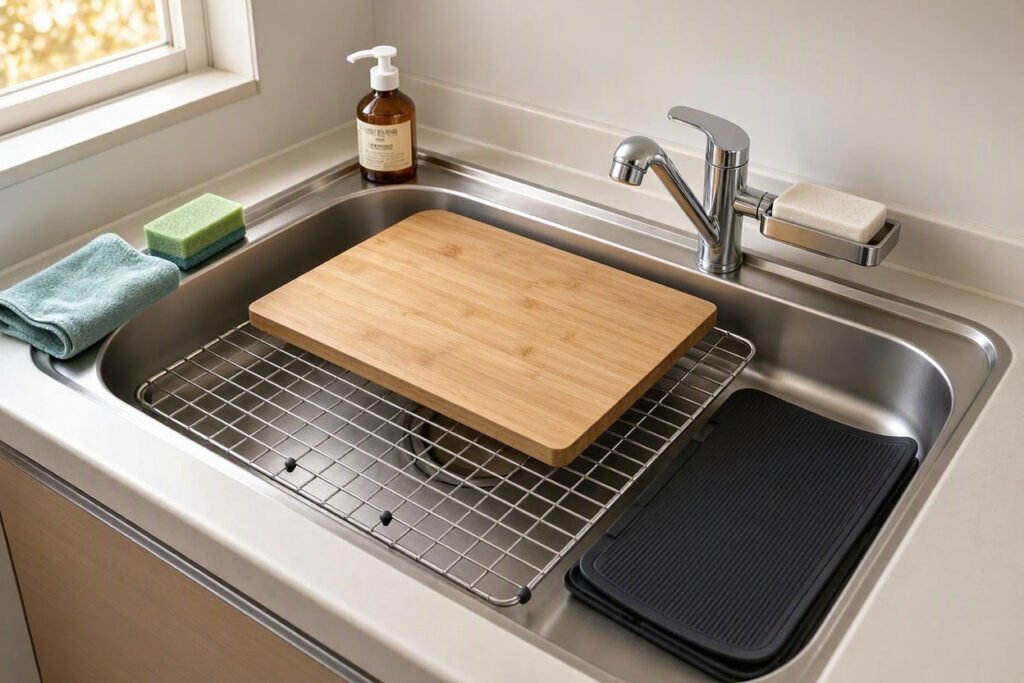
If you’re trying to make better use of limited counter space, these small sink space optimization ideas can help create a more practical work area.
How to Clean the Sink Drain Area
The drain area deserves regular attention because food particles, grease, and residue can accumulate around the opening.
Start by removing visible debris. Clean around the drain opening with a suitable cleaner and a soft cloth or brush. Pay attention to the narrow area where the basin meets the drain.
Rinse thoroughly afterward.
Don’t use cleaning chemicals simply because they are advertised as powerful drain or stain removers. The product needs to be compatible with the sink material and the manufacturer’s care requirements.

When planning changes around a compact sink, it’s also important to consider small sink clearance requirements so the faucet, counter, and surrounding workspace remain practical.
Sink Cleaning Tips by Material
Different sink materials can require different care. Always check the manufacturer’s instructions before using specialized cleaners or stain treatments.
Stainless Steel
For routine care, use a suitable mild cleaner with a soft sponge or cloth. Rinse the surface thoroughly and dry it afterward.
If your stainless steel sink has a brushed finish, wiping in the direction of the grain can help maintain its appearance.
Avoid harsh abrasive tools that may scratch or dull the finish.
Fireclay and Porcelain
Fireclay and porcelain surfaces should generally be treated gently. Use a suitable non-abrasive cleaning method and avoid aggressive scrubbing.
For stubborn stains, follow the manufacturer’s recommended cleaning procedure rather than automatically reaching for a stronger household chemical.
Granite Composite
Granite composite sinks can have specific manufacturer care requirements depending on the product and finish.
Use the cleaning method recommended for your particular sink. A soft cloth or sponge is preferable to aggressive abrasive tools for routine care.
If you’re uncertain about a cleaner, check the manufacturer’s instructions first.
Care Tip: Don’t assume that a cleaner that’s safe for one sink material is automatically safe for another. Material, finish, and manufacturer recommendations can all affect the best cleaning method.

What to Avoid When Cleaning a Compact Sink
Some cleaning mistakes can create more problems than the original stain.
Avoid harsh abrasive tools
Steel wool and aggressive abrasive pads can scratch or dull some sink finishes.
Don’t scrub unnecessarily hard
More pressure doesn’t always mean better cleaning. Start with a suitable cleaner and gentle technique.
Don’t leave cleaner residue behind
Rinse the sink thoroughly after cleaning, especially around corners, edges, and the drain.
Don’t use the same cleaner on every material
Stainless steel, fireclay, porcelain, and granite composite can have different care requirements.
Don’t mix cleaning chemicals
Never mix household cleaning chemicals unless the product manufacturer specifically provides instructions that make the combination safe.
Don’t ignore manufacturer instructions
If you’re dealing with a stubborn stain, unusual finish, or specialty sink material, the manufacturer’s care instructions should take priority over generic cleaning advice.
Don’t drag metal cookware across the basin
Lift heavy cookware when possible. Sliding pots and pans can create scratches or marks on some surfaces.
Simple Weekly Sink-Care Routine
If you want an easy maintenance schedule, use this basic routine:
Daily: Remove food debris, rinse the basin, clean visible residue, and dry the surface.
Several times a week: Pay extra attention to corners, the faucet area, and around the drain.
Weekly: Give the entire sink a more thorough cleaning, including areas that are easy to overlook.
As needed: Treat stains according to the sink manufacturer’s recommended cleaning method.
A consistent routine is usually easier than waiting until buildup becomes difficult to remove.
Frequently Asked Questions
How often should I clean a compact kitchen sink?
A quick cleaning after daily use is a good routine for keeping food residue and buildup under control. A more thorough cleaning can be done weekly or as needed based on how frequently the sink is used.
What is the safest way to remove sink stains?
Start with the gentlest cleaning method recommended for your sink material. Use a suitable mild cleaner and soft cleaning tool first, then follow the manufacturer’s instructions if the stain remains.
How can I prevent scratches on a small kitchen sink?
Use non-abrasive cleaning tools, avoid dragging metal cookware across the basin, and remove grit or food particles before wiping the surface. For brushed stainless steel, clean in the direction of the grain.
Can I use abrasive cleaners on a compact kitchen sink?
Don’t assume abrasive cleaners or pads are safe for every sink. They can scratch or dull some finishes. Check the manufacturer’s care instructions before using them.
How do I clean around the sink drain?
Remove visible debris, gently clean around the drain opening with an appropriate cleaner and soft tool, and rinse the area thoroughly. Avoid aggressive scrubbing or unsuitable chemicals.
Are cleaning methods different for fireclay and granite composite sinks?
Yes. Different sink materials and finishes can have different care requirements. Follow the manufacturer’s instructions rather than assuming a cleaning method that’s suitable for stainless steel will also be suitable for another material.
Should I dry my sink after cleaning?
Drying the sink after cleaning can help reduce visible water spots and leave less moisture on the surface. A clean microfiber cloth can be useful for this final step.
What should I avoid when cleaning a kitchen sink?
Avoid aggressive abrasive tools, unnecessary scrubbing, unsuitable chemicals, chemical mixing, and dragging heavy or sharp objects across the sink. When in doubt, follow the manufacturer’s care instructions.
Final Thoughts
Keeping a compact kitchen sink clean doesn’t require a complicated routine. Regularly removing food residue, gently cleaning the basin, paying attention to the drain, and drying the surface can help maintain its appearance and reduce everyday buildup.
The most important rule is to match your cleaning method to the sink material and finish. When dealing with stubborn stains or unfamiliar cleaning products, check the manufacturer’s care instructions before trying a stronger treatment.
Get Helpful Sink Tips
Subscribe for practical sink planning tips and helpful resources for small kitchens and compact spaces.

Khadija is the writer and founder of Tiny Sink Solution. She creates practical guides about small kitchen sinks, faucets, and compact kitchen maintenance, helping homeowners and renters choose solutions for limited spaces. Some articles contain affiliate links, and as an Amazon Associate, she earns from qualifying purchases at no extra cost to readers





One Comment