Choosing the right kitchen sink starts with your cabinet measurements. A sink may look like the perfect size, but it still needs enough cabinet space for installation, plumbing, and any required mounting hardware. This is especially important in a compact kitchen, where every inch matters.
If you’re wondering what size sink fits my cabinet, the first step is to measure your cabinet and compare those measurements with the sink manufacturer’s minimum cabinet requirements. You can then use a cabinet size checker to narrow down your options before buying.
Quick Answer: What Size Sink Fits My Cabinet?
The right sink size depends on your cabinet width, available interior space, sink dimensions, mounting type, and the manufacturer’s minimum cabinet requirement. Measure your cabinet carefully, then check the sink’s specifications before choosing a model. Your cabinet’s exterior width alone does not guarantee that a sink will fit.
Use the Cabinet Size Checker to help narrow down sink options based on your cabinet measurements.
1. How Cabinet Width Affects Sink Size
Cabinet width is one of the first measurements to check when choosing a kitchen sink. However, the cabinet measurement and the sink measurement are not interchangeable.
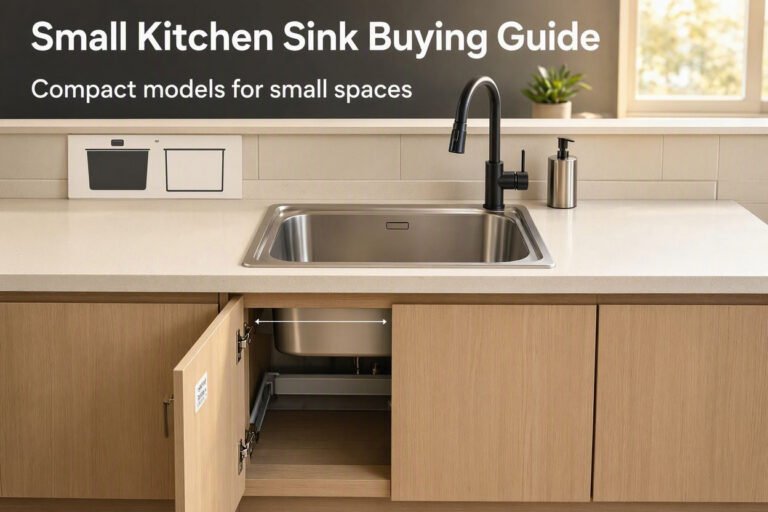
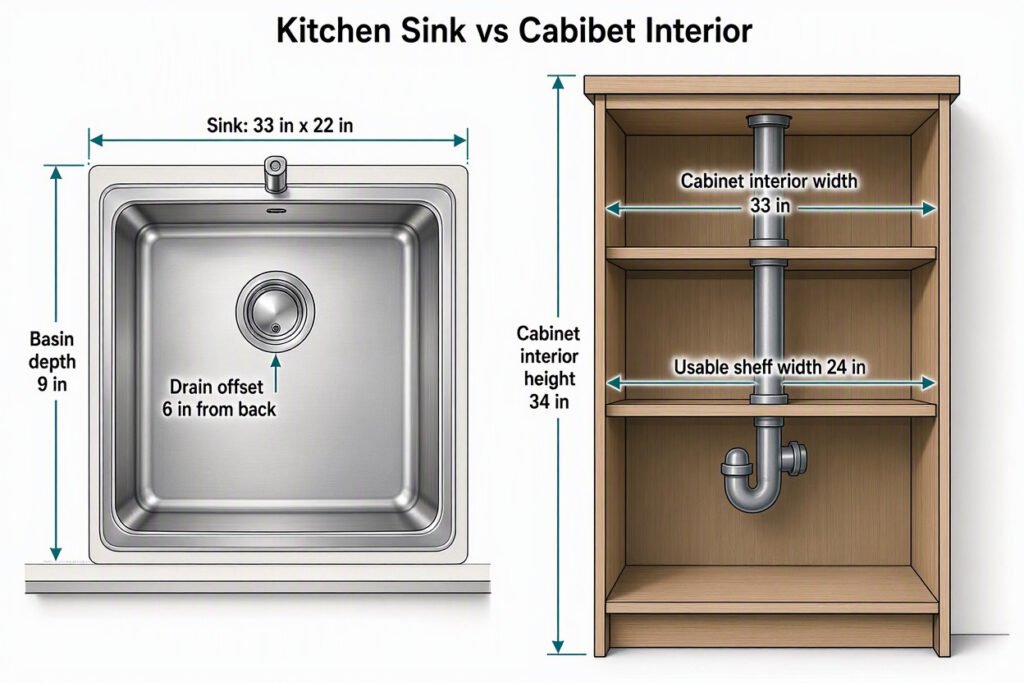
A sink’s overall width describes the sink itself, while the cabinet’s stated width usually refers to the cabinet’s exterior dimensions. The usable space inside the cabinet may be smaller because of the cabinet walls, rails, plumbing, or other obstructions.
For example, a cabinet advertised as 24 inches wide does not necessarily provide 24 inches of clear interior space. You need to check the actual cabinet construction and the sink’s installation requirements.
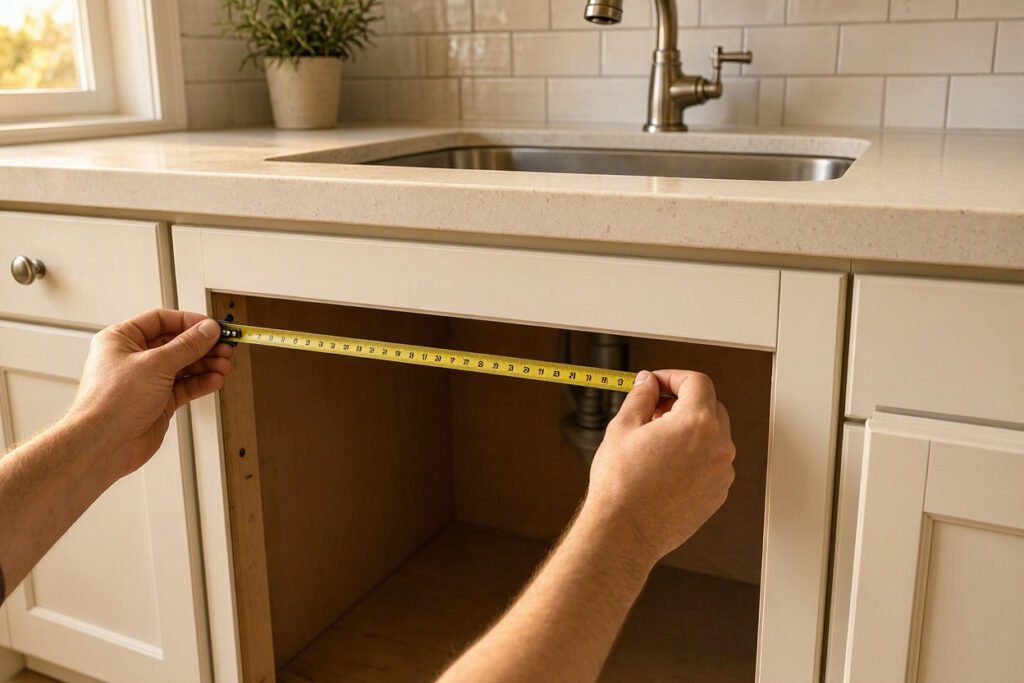
Before choosing a sink, consider:
- Cabinet exterior width: The overall width of the cabinet.
- Interior clearance: The usable space inside the cabinet.
- Sink dimensions: The sink’s overall width, front-to-back measurement, and depth.
- Mounting requirements: The space needed for the sink rim, clips, brackets, or other mounting components.
- Plumbing clearance: The room needed for the drain, faucet connections, and other components underneath.
These measurements help you avoid choosing a sink that appears to fit on paper but creates installation problems.
2. Check the Minimum Cabinet Size
The minimum cabinet size is an important specification when shopping for a replacement or compact kitchen sink.
Manufacturers may specify a minimum cabinet width for a particular sink model. That requirement should be treated as a key compatibility check rather than a general recommendation that applies to every sink.
A sink that requires a larger cabinet than the one you have may not be a suitable choice, even if its overall width seems close to your available space.
How Do I Know the Minimum Cabinet Size for a Sink?
Follow these steps:
- Measure the width of your existing cabinet.
- Identify the exact sink model you are considering.
- Check the manufacturer’s stated minimum cabinet size.
- Compare the requirement with your actual cabinet.
- Confirm that the sink’s mounting and plumbing requirements can also be met.
Do not assume that all sinks with the same outside dimensions have the same minimum cabinet requirement. Their bowl shapes, rims, mounting hardware, and installation designs can differ.
If you are comparing several sizes, the Sink Size Calculator can help you work through the measurements. Always verify the final fit against the sink manufacturer’s specifications.
3. Understand Sink Dimensions vs. Cabinet Dimensions
One common sizing mistake is comparing only the sink’s advertised width with the cabinet’s advertised width.
A sink has several dimensions, and each serves a different purpose.
“`html| Measurement | What It Tells You |
|---|---|
| Sink Overall Width | The sink’s measurement from side to side. |
| Sink Front-to-Back Measurement | How much space the sink occupies from front to back. |
| Bowl Depth | How deep the basin is. |
| Cabinet Exterior Width | The overall width of the cabinet. |
| Cabinet Interior Width | The usable space inside the cabinet. |
| Cutout Dimensions | The opening required in the countertop for the particular sink. |
| Minimum Cabinet Size | The manufacturer’s stated cabinet requirement. |
The countertop cutout is especially important when replacing an existing sink. A new sink may fit the cabinet but still require a different countertop opening.
For a broader overview of typical sink measurements and sizing considerations, read our small kitchen sink dimensions guide.
Does a Bigger Sink Always Need a Bigger Cabinet?
Not necessarily in every comparison, because sink designs and installation requirements vary. However, a wider or deeper sink can require more cabinet space or create additional clearance challenges.
Always check the specifications for the specific sink rather than relying on a general size rule.
4. Does the Mounting Type Affect Sink Fit?
Yes. The mounting style affects how a sink is installed and what must be checked before purchase.
Drop-In Sinks
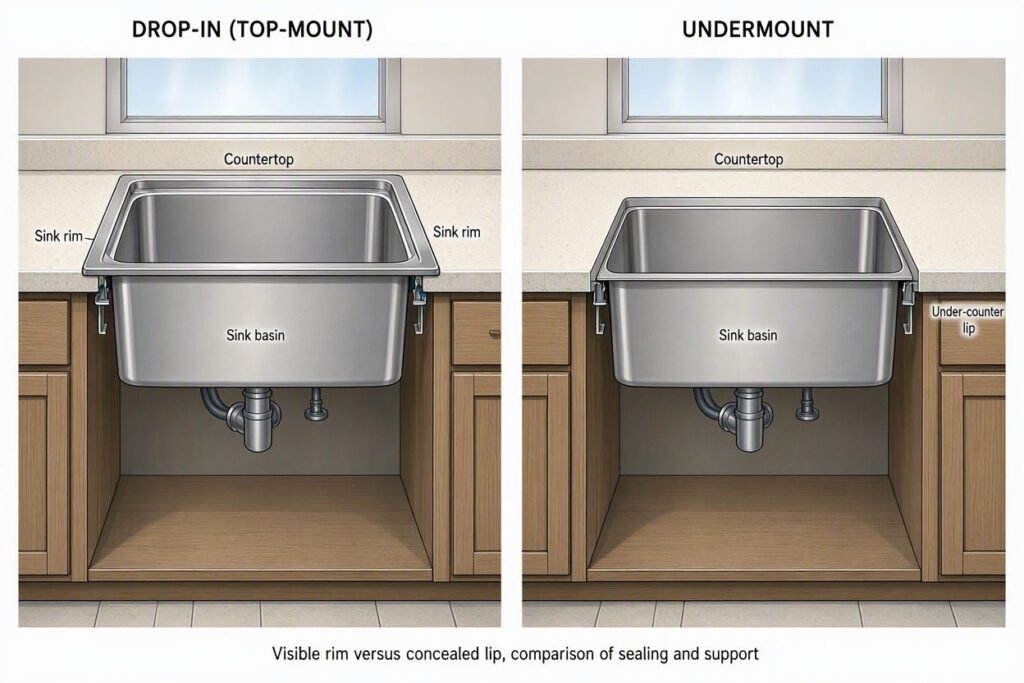
A drop-in sink, also called a top-mount sink, rests on the countertop with its rim around the cutout.
Before choosing one, check:
- The manufacturer’s minimum cabinet requirement.
- The overall sink dimensions.
- The required countertop cutout.
- The space needed for mounting components.
- Faucet and drain compatibility.
The visible rim can cover the edge of the countertop cutout, but that does not mean any opening or cabinet arrangement will work.
Undermount Sinks
An undermount sink is installed below the countertop. Its installation may require suitable countertop construction, support hardware, and adequate clearance for mounting.
Check:
- The manufacturer’s minimum cabinet requirement.
- The specified countertop opening.
- The required support and mounting hardware.
- Clearance for the bowl and plumbing.
- Compatibility with the countertop material and installation method.
Do not assume that an undermount sink and a drop-in sink with similar dimensions are interchangeable.
5. How to Measure Your Cabinet Before Buying a Sink
Accurate measurements help you eliminate unsuitable options before spending money on a new sink.
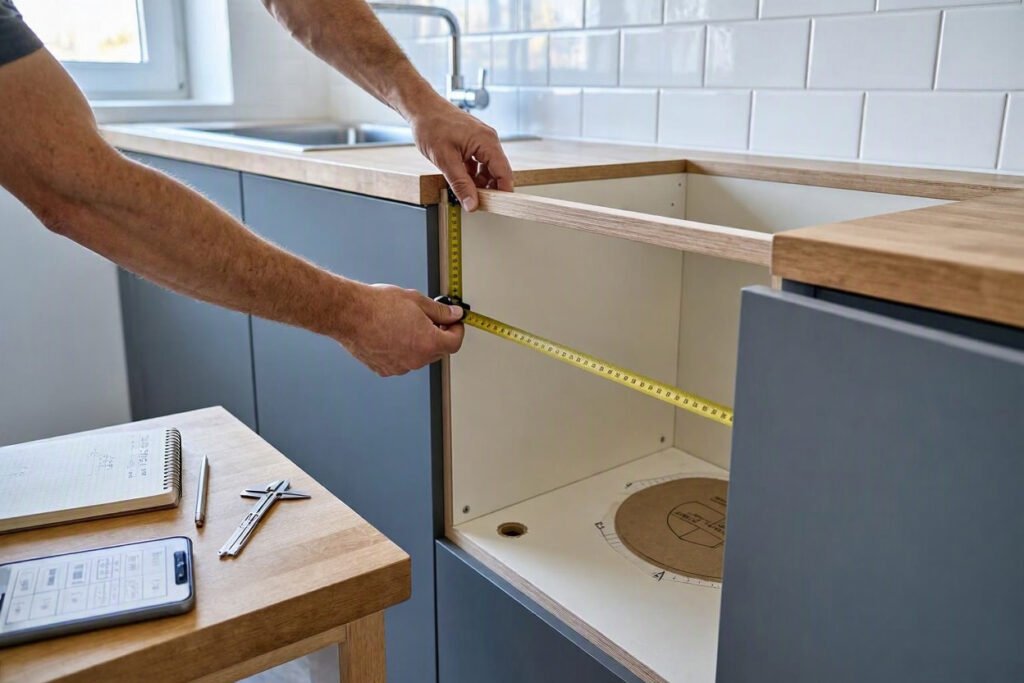
Step 1: Measure the Cabinet Width
Measure the cabinet’s exterior width from one side to the other. If you’re replacing an existing sink, do not rely only on the sink currently installed.
Step 2: Check the Interior Space
Open the cabinet and measure the usable interior width. Look for side walls, rails, braces, drawers, or other components that may affect installation.
Step 3: Measure the Available Front-to-Back Space
Check the usable space from the front of the cabinet toward the back. Consider nearby walls, countertop depth, and plumbing locations.
Step 4: Check the Countertop and Cutout
If a countertop opening already exists, measure it separately. Compare the opening with the cutout requirements for the sink you want to install.
Step 5: Review the Sink Specifications
Confirm the sink’s overall dimensions, minimum cabinet size, mounting method, bowl depth, and any special installation requirements.
Step 6: Check Plumbing and Faucet Clearance
Make sure the sink’s bowl and drain arrangement will leave room for plumbing underneath. Also check whether the faucet mounts to the sink or countertop and whether the available space accommodates the chosen arrangement.
Helpful tool: The Cabinet Size Checker is the best starting point for narrowing down options using your cabinet measurements.
6. How to Use the Cabinet Size Checker
The Cabinet Size Checker can help you move from measurements to a more focused list of potential sink sizes.
Follow These Steps
- Open the tool. Visit the Cabinet Size Checker.
- Enter your cabinet measurement. Use the measurement requested by the tool and ensure that you have measured accurately.
- Review the suggested options. Use the results to narrow down the sink sizes worth considering.
- Compare actual sink specifications. Check each candidate’s minimum cabinet requirement and overall dimensions.
- Confirm the installation details. Verify cutout, mounting, faucet, and plumbing clearance before purchasing.
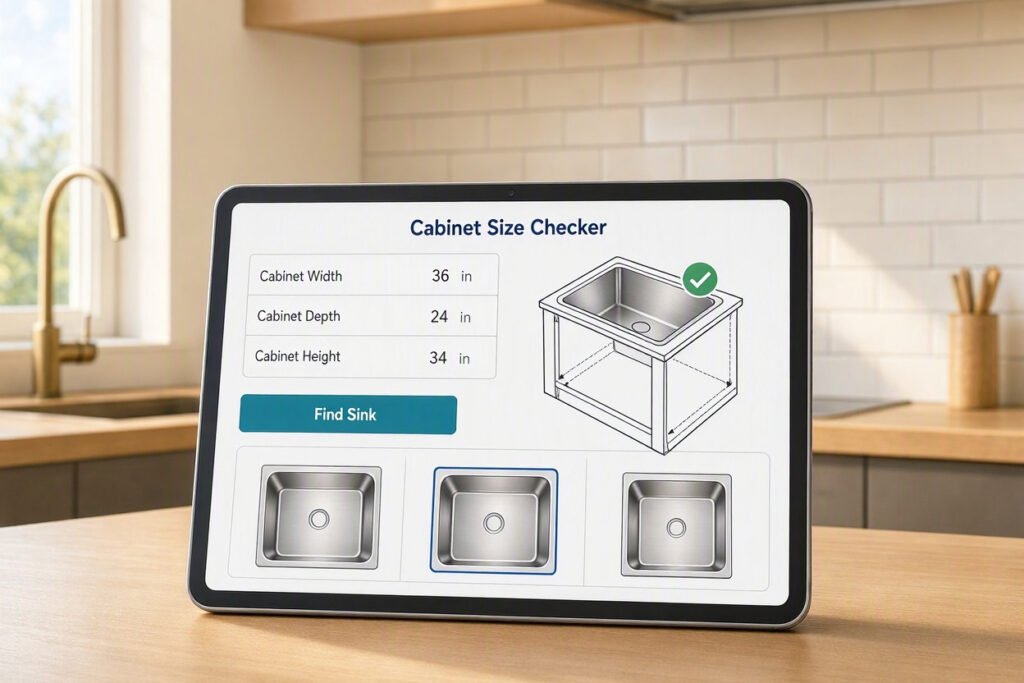
The checker is a starting point for selecting potential sizes, not a substitute for the manufacturer’s installation specifications.
If you are still deciding between different sink styles, try the Sink Size & Type Finder to explore options based on your needs.
7. Common Sink Sizing Mistakes to Avoid
Even careful shoppers can overlook details when comparing kitchen sinks.
Mistake 1: Measuring Only the Existing Sink
The current sink may have different dimensions or mounting requirements from the replacement. Measure the cabinet and countertop opening independently.
Mistake 2: Confusing Cabinet Width With Interior Space
Exterior cabinet dimensions do not tell you exactly how much usable room is available inside. Check the interior and any obstructions.
Mistake 3: Ignoring the Minimum Cabinet Requirement
A sink’s overall dimensions alone do not establish compatibility. Always check the manufacturer’s minimum cabinet specification.
Mistake 4: Forgetting the Countertop Cutout
A sink may be suitable for the cabinet but require a different countertop opening. This is particularly important when replacing an existing sink.
Mistake 5: Choosing a Sink Without Checking the Mounting Type
Drop-in and undermount sinks have different installation considerations. Make sure the selected sink is compatible with your countertop and cabinet setup.
Mistake 6: Overlooking Plumbing and Faucet Space
The basin, drain, faucet, and plumbing all need adequate room. Check these details before committing to a sink size.
8. A Simple Cabinet-to-Sink Fit Checklist
Before purchasing a sink, confirm each of the following:
- I measured the cabinet’s exterior width.
- I checked the usable interior space.
- I measured the available front-to-back space.
- I identified the sink’s mounting type.
- I checked the manufacturer’s minimum cabinet requirement.
- I verified the sink’s overall dimensions.
- I checked the countertop cutout requirements.
- I considered drain and plumbing clearance.
- I checked the faucet installation requirements.
- I reviewed the manufacturer’s installation instructions.
Before purchasing a replacement sink, check the countertop opening and confirm that the new basin will clear the existing plumbing. KOHLER’s step-by-step kitchen sink installation guide explains how to verify sink fit and prepare for installation.
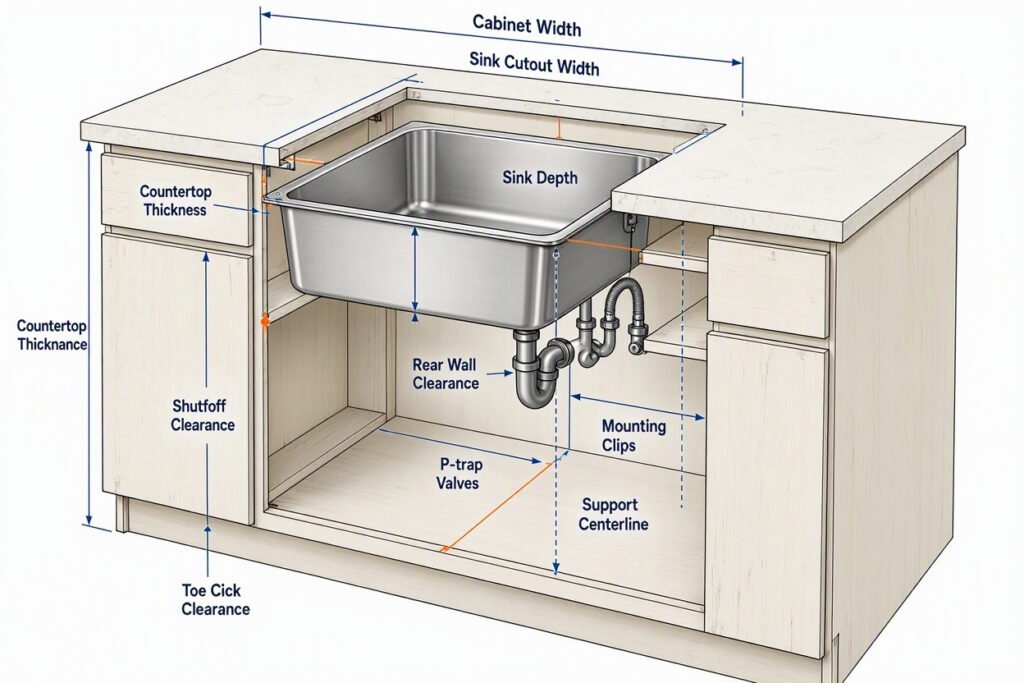
If you cannot confirm one of these requirements, pause before buying and check the sink documentation or consult a qualified installer.
Frequently Asked Questions
What size sink fits my cabinet?
The correct sink size depends on the cabinet’s dimensions, usable interior space, mounting type, and the sink manufacturer’s minimum cabinet requirement. Measure your cabinet and compare the results with the specifications of the exact sink model.
Does cabinet width determine sink size?
Cabinet width is an important starting point, but it is not the only factor. Interior clearance, the countertop opening, mounting hardware, and plumbing space can also affect compatibility.
What is the minimum cabinet size for a kitchen sink?
The minimum cabinet size varies by sink model and design. Check the manufacturer’s specification for the exact sink rather than relying on a universal cabinet-size rule.
Are sink dimensions the same as cabinet dimensions?
No. Sink dimensions describe the sink itself, while cabinet dimensions describe the cabinet. The cabinet’s usable interior space is usually smaller than its exterior width.
Does an undermount sink need a different fit than a drop-in sink?
Yes, the installation requirements differ. Undermount sinks may require specific support hardware and countertop compatibility, while drop-in sinks rest on the countertop. Check the manufacturer’s requirements for either type.
How do I measure my cabinet before buying a sink?
Measure the cabinet’s exterior width, interior clearance, and available front-to-back space. Then measure the countertop cutout if one exists and compare everything with the sink’s installation specifications.
Can I install a larger sink in my existing cabinet?
Possibly, but do not assume that it will fit. Check the manufacturer’s minimum cabinet requirement, available interior space, countertop cutout, mounting method, and plumbing clearance before selecting a larger sink.
How does the Cabinet Size Checker help?
The Cabinet Size Checker helps you narrow down potential sink sizes using your cabinet measurements. You should still confirm the selected sink’s specifications and installation requirements before purchasing.
Conclusion
Finding the right sink starts with measuring your cabinet correctly and understanding how those measurements relate to the sink itself.
Check the cabinet’s usable space, verify the manufacturer’s minimum cabinet requirement, and account for the countertop cutout, mounting type, faucet, and plumbing. These steps can help you avoid costly sizing mistakes.
Start with the Cabinet Size Checker, use the Sink Size Calculator if you need help with measurements, and explore the Sink Size & Type Finder if you are still comparing sink styles.
The final step is always to check the manufacturer’s specifications for the exact sink you plan to install.
Get Helpful Sink Tips
Subscribe for practical sink planning tips and helpful resources for small kitchens and compact spaces.

Khadija is the writer and founder of Tiny Sink Solution. She creates practical guides about small kitchen sinks, faucets, and compact kitchen maintenance, helping homeowners and renters choose solutions for limited spaces. Some articles contain affiliate links, and as an Amazon Associate, she earns from qualifying purchases at no extra cost to readers