A kitchen sink draining slowly can make everyday tasks frustrating, especially when water collects in the basin instead of flowing away. The problem may come from food particles, grease buildup, a dirty drain strainer, or a partial blockage deeper in the plumbing.
The good news is that some slow-draining sinks have simple causes you can check safely. Before taking apart any pipes or using a drain cleaner, identify the likely source of the problem.
Quick Answer: Why Is My Kitchen Sink Draining Slowly?
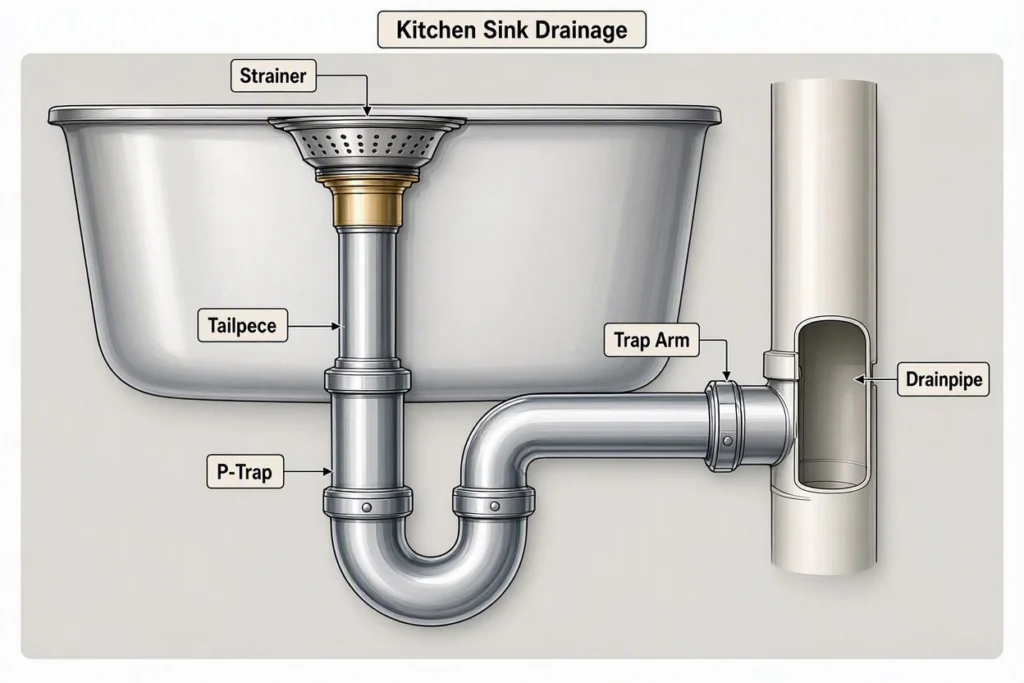
A kitchen sink draining slowly is commonly caused by food debris, grease and cooking oil, a blocked strainer, or a partial clog in the P-trap or drainpipe. Start by removing visible debris from the drain opening and checking the stopper or strainer. If the problem continues, affects multiple drains, or causes wastewater to back up, you may need a plumber to inspect the drainage system.
7 Common Reasons Your Kitchen Sink Drains Slowly
1. Food Particles Are Blocking the Drain
Small food scraps can collect around the drain opening or build up farther down the pipe. Even when the drain is not completely blocked, accumulated debris can restrict water flow.
This is more likely if you regularly rinse food scraps into the sink instead of removing them before washing dishes.
What to check:
- Look for visible food debris around the drain opening.
- Remove and clean a removable drain strainer.
- Check whether water flows more freely after removing the debris.
Avoid pushing food scraps farther into the drain with a sharp object.

2. Grease and Cooking Oil Have Built Up
Grease is a common cause of kitchen drain problems. Cooking oil and fats can coat the inside of drainpipes. Food particles may stick to this residue, gradually restricting the passage available for water.
Grease can enter the drain even when you rinse pans with hot water. As the material cools, some fats can solidify or cling to pipe surfaces.
How to help prevent grease buildup:
- Wipe greasy pans with a paper towel before washing them.
- Let used cooking oil cool and dispose of it according to local waste guidelines.
- Avoid pouring fats, oils, and grease into the sink.
- Use a drain strainer to catch food scraps.
If grease buildup is already causing persistent slow drainage, removing visible debris may not be enough.
3. The Drain Strainer or Stopper Is Dirty
A drain strainer catches food scraps, while a stopper may collect grease, soap residue, and other debris. When either becomes clogged, water may take longer to pass through the drain opening.
This is one of the simplest possibilities to check before investigating the plumbing underneath the sink.
Try these steps:
- Remove the strainer or stopper if it is designed to be removable.
- Clear away trapped food and residue.
- Wash the component with warm water and a suitable dishwashing detergent.
- Reinstall it correctly and run water to check the drainage.
Do not force a fixed or unfamiliar drain component out of place.

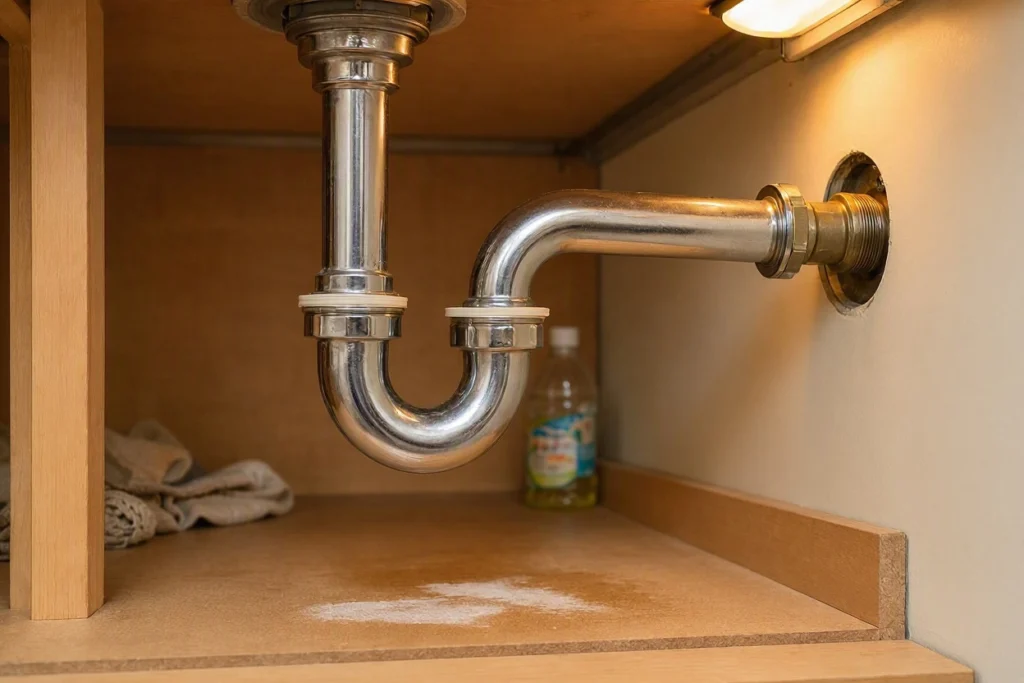
4. The P-Trap May Be Partially Blocked
The P-trap is the curved section of pipe beneath the sink. It holds a small amount of water that helps prevent sewer gases from entering the room.
Food residue, grease, and other material can accumulate in the trap or nearby pipework. A partial blockage may slow drainage without stopping it completely.
Signs that the P-trap could be involved include:
- The sink drains slowly even after the drain opening is clean.
- Water backs up when you run the faucet.
- You notice persistent unpleasant odors, although odors can have other causes.
If you are comfortable with basic plumbing, you may inspect the area for visible leaks or obvious problems. However, do not loosen the trap while chemical drain cleaner may be present in the pipes. If you are unsure how to remove and reinstall it safely, contact a plumber.
5. There Is Buildup Deeper in the Drainpipe
Sometimes the drain opening and P-trap appear clear, but water still moves slowly. The restriction may be farther along the drainpipe.
Grease deposits, accumulated debris, or another obstruction can narrow the passage inside the pipe. A blockage farther downstream may be difficult to identify without appropriate tools.
If basic cleaning does not improve drainage, avoid repeatedly trying different chemicals or pushing objects into the pipe. A plumber can determine whether the line needs professional cleaning.
6. The Plumbing Vent May Have a Problem
Plumbing drainage systems use vents to help maintain appropriate air pressure as wastewater flows through the pipes. A blocked, damaged, or otherwise malfunctioning vent can sometimes contribute to drainage problems.
Possible warning signs include gurgling sounds, unusual drain behavior, or slow drainage that does not improve after the accessible drain components have been checked.
These symptoms do not prove that the vent is the cause. Similar signs can occur with a blockage, so further inspection may be necessary.
7. The Problem May Be in a Larger Drain Line
If several fixtures drain slowly, or water backs up in more than one location, the problem may extend beyond the kitchen sink’s individual drainpipe.
For example, a restriction in a shared drain line can affect multiple fixtures. The precise cause depends on the plumbing layout and the symptoms.
Contact a plumber promptly if:
- Multiple sinks or other fixtures are draining slowly.
- Wastewater backs up into a sink or another fixture.
- The blockage keeps returning after temporary improvement.
- You notice signs of a significant leak or possible sewage backup.
Do not assume the kitchen sink itself is the source when several drains are affected.
If water rises in the sink instead of draining slowly, see the section on water backing up below.
How to Troubleshoot a Slow Kitchen Sink
Work from the simplest checks to the more involved possibilities. Stop if you encounter wastewater backup, chemical residue, leaking pipes, or anything you cannot safely inspect.
| Step | What to Check | What the Result May Suggest |
|---|---|---|
| 1 | Look for food debris around the drain | Visible debris may be restricting the opening |
| 2 | Clean the removable strainer or stopper | Residue on the component may be contributing to the problem |
| 3 | Run a small amount of water and observe the flow | Persistent slow drainage may indicate a deeper restriction |
| 4 | Listen for gurgling and watch for backup | The problem may involve a blockage or another plumbing issue |
| 5 | Check other nearby fixtures | More than one affected fixture may indicate a shared drain problem |
| 6 | Call a plumber if the cause remains unclear | Professional inspection may be needed |
Do not continue running water if the basin is filling and cannot drain. This can cause an overflow.
What If Water Is Backing Up Instead of Draining Slowly?
A slow drain lets water leave gradually. A backup is more urgent: water rises in the sink or comes up from the drain instead of going down. It usually means the drain line is blocked and the water has nowhere to go.
Stop running water and appliances first. Then check when it happens:
| What You Notice 👀 | What It May Mean 🔍 |
|---|---|
| Only this sink backs up | A blockage in the sink’s own trap or branch line |
| Water rises in the second bowl | The blockage is likely after the two bowls join |
| Water comes up when the dishwasher runs | The dishwasher drains through the same line, which may be blocked |
| Water comes up when you run the disposal | The disposal or the line after it may be clogged |
| Toilets, tubs, or other drains also back up | The problem may be in a larger drain line, not just this sink |
If other fixtures are affected, the water is dark, or you notice a sewage smell, stop using water and call a plumber. For gurgling sounds, see our guide to a gurgling kitchen sink.
Safe Ways to Address a Minor Drainage Problem
The right approach depends on what is causing the slow drainage.
Clean the Drain Opening
Remove visible food scraps and clean a removable strainer or stopper. This is a sensible first step when the restriction appears close to the opening.
Use a Sink Plunger Carefully
A sink plunger may help with some localized clogs. Follow the plunger manufacturer’s instructions, and make sure the tool is suitable for your sink and drain arrangement.
If you have a double-bowl sink, the other drain may need to be sealed appropriately to create effective pressure. Avoid plunging if chemical drain cleaner is in the system or if doing so could splash hazardous liquid.
Inspect Accessible Plumbing for Leaks
Look under the sink for signs of moisture, corrosion, or leaking connections. Do not loosen plumbing fittings unless you understand the setup and can safely manage the water and any residue inside the pipes.
Seek Professional Drain Cleaning When Needed
If the blockage is deep, persistent, or repeatedly returns, professional diagnosis may be more effective than repeated home remedies.
What Not to Do When Your Kitchen Sink Drains Slowly
Some common fixes can create additional problems or expose you to hazards.
- Do not mix drain cleaners. Combining chemical products can release dangerous gases or cause hazardous reactions.
- Do not add another cleaner to a drain containing a previous chemical product. Follow the product label and seek professional guidance if the blockage remains.
- Do not assume boiling water is safe for every sink or pipe. Very hot water can damage or stress some plumbing components, seals, or finishes. Follow the sink and plumbing manufacturers’ instructions.
- Do not push sharp objects into the drain. They may damage components or push debris deeper.
- Do not keep running water into a backed-up sink. Stop the flow to reduce the risk of overflow.
- Do not dismantle pipes containing chemical cleaner residue. This can expose you to corrosive or hazardous liquid.
If you have already used a chemical drain cleaner, tell the plumber which product was used and follow its safety instructions.
When Should You Call a Plumber?
A slow kitchen sink does not always require professional service, but some symptoms deserve prompt attention. If water is rising instead of draining, see the backup section above.
| Symptom | Recommended Action |
|---|---|
| Visible debris at the drain opening | Clean the accessible strainer or opening |
| Slow drainage that continues after basic cleaning | Arrange further inspection if the problem persists |
| Gurgling combined with repeated slow drainage | Have the drainage system checked |
| Several fixtures draining slowly | Contact a plumber to investigate a possible shared-line issue |
| Water rising in the sink, or other fixtures backing up too | Stop using water and the affected fixtures, and contact a plumber promptly |
| Leaking or damaged drain connections | Stop using the sink if necessary and arrange a repair |
| Drain cleaner has not cleared the blockage | Do not mix or add another product. Follow the label’s safety guidance and seek professional help |
If sewage is backing up, the leak is substantial, or water is threatening cabinets or flooring, treat the issue as urgent.
How to Prevent Your Kitchen Sink From Draining Slowly Again
A few everyday habits can reduce the amount of debris entering the drain.
- Scrape food scraps into the trash or compost before washing dishes.
- Use a suitable drain strainer and clean it regularly.
- Wipe excess grease from pans before washing them.
- Dispose of cooking oil and fats properly instead of pouring them down the drain.
- Clean the drain opening and removable stopper as part of your normal kitchen routine.
- Pay attention to recurring gurgling, odors, or slow drainage rather than repeatedly ignoring the symptoms.
For general sink-care guidance, read our stainless steel small kitchen sink maintenance guide if that article is published on your site. It covers routine cleaning and protecting the sink’s finish; remember that cleaning the basin and clearing a plumbing blockage are different tasks.
Frequently Asked Questions
Why is my kitchen sink draining slowly but not clogged?
A drain can be partially restricted even when no obvious blockage is visible. Grease buildup, residue inside the P-trap, a restriction farther down the pipe, or a plumbing vent issue may contribute. If cleaning the accessible drain opening does not help, further inspection may be needed.
Can grease make a kitchen sink drain slowly?
Yes. Grease and cooking fats can cling to pipe surfaces and trap food particles. Over time, this buildup may restrict water flow. Wipe greasy cookware before washing it and avoid pouring fats or oils down the drain.
Can I use boiling water to clear a slow kitchen sink?
Do not assume boiling water is safe for every sink or plumbing system. Very hot water may damage or stress some pipes, seals, and finishes. Follow the manufacturer’s guidance and choose a method appropriate for the suspected blockage.
Should I use chemical drain cleaner?
Chemical drain cleaners are not the best first step for every slow drain. They may pose safety risks, and using multiple products can cause dangerous reactions. Never mix cleaners, and never dismantle plumbing that may contain chemical residue. Follow product instructions and contact a plumber if the blockage persists.
How do I know if my P-trap is clogged?
A partially blocked P-trap may contribute to slow drainage, but symptoms alone cannot confirm it. If the drain opening is clear and water still drains slowly, the trap or another section of pipe may need inspection. Do not disassemble it if chemical cleaner may be present or you are unsure how to handle the plumbing safely.
Why does my kitchen sink gurgle when it drains?
Gurgling can indicate air-pressure changes associated with a partial blockage, venting problem, or another drainage issue. It is not a diagnosis by itself. If gurgling persists or occurs alongside slow drainage or backup, have the system checked.
Why are multiple drains in my home draining slowly?
When several fixtures are affected, the cause may be in a shared drain line or another part of the plumbing system rather than the kitchen sink alone. A plumber can inspect the system and identify the source.
When should I call a plumber for a slow kitchen sink?
Call a plumber if basic cleaning does not resolve the issue, the blockage keeps returning, several fixtures are affected, or you notice persistent gurgling, leaks, or wastewater backup. Stop using affected fixtures if wastewater is backing up.
Final Thoughts
A kitchen sink draining slowly may have a simple cause, such as debris around the strainer, or a more involved problem inside the drainpipe or shared plumbing system.
Start by checking the accessible drain opening and cleaning removable components. Avoid pouring grease down the sink, mixing chemical cleaners, or using methods that may damage the plumbing. If drainage remains slow, the problem keeps returning, or multiple fixtures are affected, professional inspection can help identify the cause.
The key is to address the likely source of the restriction rather than repeatedly treating the symptoms.
Get Helpful Sink Tips
Subscribe for practical sink planning tips and helpful resources for small kitchens and compact spaces.

Khadija is the writer and founder of Tiny Sink Solution. She creates practical guides about small kitchen sinks, faucets, and compact kitchen maintenance, helping homeowners and renters choose solutions for limited spaces. Some articles contain affiliate links, and as an Amazon Associate, she earns from qualifying purchases at no extra cost to readers