Water splashing onto your countertop every time you wash dishes can make an ordinary kitchen task frustrating. If you’re wondering how to stop kitchen sink splashing, start by checking where the faucet stream lands, how fast the water flows, and whether the aerator is producing an uneven stream. The right fix depends on your faucet, sink depth, basin shape, and daily washing habits.
Most splashing problems can be reduced with a few simple adjustments. However, if the faucet suddenly starts spraying in different directions or water pressure changes throughout your home, further inspection may be needed.
Quick Answer: How do you stop kitchen sink splashing?
Reduce the faucet flow, aim the stream toward the basin rather than the sink wall or drain edge, and check the aerator for mineral buildup. Washing dishes more gently, using a suitable sink grid, or choosing a deeper basin may also help. If the problem started suddenly or affects multiple fixtures, investigate the faucet or plumbing rather than assuming the sink itself is the cause.
Why Does My Kitchen Sink Splash So Much?
Kitchen sink splashing usually happens when moving water hits a hard surface or an object at an angle or speed that sends droplets outside the basin. The faucet stream, sink design, and items inside the sink can all affect how much water splashes.
Common causes include:
- High or forceful faucet flow: A strong stream can hit the basin, dishes, or drain area and send water back toward the countertop.
- An uneven water stream: Mineral deposits or debris in the faucet aerator can disrupt the flow and cause spraying.
- Faucet height and reach: A high spout can allow water to gain speed before reaching the sink. A stream that lands too close to the front or side wall may also splash outward.
- A shallow or compact basin: A basin with limited depth or a shape that does not contain the stream well may allow more droplets to escape.
- Dishwashing habits: Dropping dishes into the water, rinsing at full flow, or directing water against a large pot can cause sudden splashes.
- Sink and faucet compatibility: The faucet’s height, reach, and stream direction may not work well with the basin’s dimensions.
The important first step is to identify where the water is bouncing. This helps you choose a practical fix instead of replacing the sink or faucet unnecessarily.
8 Ways to Stop Kitchen Sink Splashing
1. Reduce the Faucet Flow
Start with the easiest adjustment: turn the faucet on at a lower flow rate. You may not need the maximum stream for rinsing vegetables, washing your hands, or cleaning small dishes.
A gentler stream often reduces the force of impact when water hits the sink or an object. Open the faucet gradually and find a flow that lets you rinse effectively without sending droplets over the edge.
If reducing the flow does not help, observe where the stream lands. The issue may be its direction, the aerator, or the relationship between the faucet and basin.

2. Check and Clean the Faucet Aerator
The aerator is the small component fitted at the faucet outlet. Depending on the faucet design, it mixes air into the water or shapes the stream as water exits the spout.
Mineral deposits or debris can interfere with the flow. If water suddenly sprays sideways, comes out unevenly, or behaves differently from before, the aerator is worth checking.
Follow these steps:
- Turn off the faucet.
- Inspect the outlet for visible mineral deposits or debris.
- If the aerator is removable, follow the faucet manufacturer’s instructions for removing it.
- Clean it using the recommended method.
- Reinstall it securely and test the water at a low flow.
Do not force a stuck aerator or use a tool that could damage the finish. Some faucets use integrated spray outlets or other designs that require a different cleaning procedure.
If cleaning does not correct the stream, the aerator may be damaged, or the problem may have another cause.

3. Aim the Water Stream Toward the Basin
Watch where the stream hits when the faucet is running. Water that strikes the front rim, a steep side wall, or a dish at a sharp angle may bounce onto the countertop.
If your faucet allows you to adjust the stream direction, position it so the water lands in a useful area of the basin. Avoid aiming directly at the edge or at a surface that sends water outward.
For pull-down or pull-out faucets, keep the spray head at a comfortable distance from the dishes. When rinsing, hold the item low enough to keep the water inside the sink.
The ideal landing point depends on the faucet’s reach and the sink’s shape. Aiming for the center can be a useful starting point, but it is not a universal solution for every basin.
4. Check the Faucet Height and Reach
Faucet height affects the distance water travels before it reaches the sink. A taller faucet may provide more room for filling large pots, but the stream can also fall farther and strike the basin with greater impact.
Faucet reach matters too. If the spout is too short, water may land near the back wall. If it reaches too far forward, the stream may land close to the front of the basin.
If you’re considering a replacement faucet, compare its spout height and reach with your sink’s dimensions before buying. Check the manufacturer’s specifications and installation requirements rather than relying on appearance alone.
A faucet change may help when the current faucet consistently directs water to a poor landing point. However, replacing the faucet is not the first step if a simple flow adjustment or aerator cleaning solves the problem.
5. Change How You Rinse Dishes
The way you use the sink can contribute to splashing, particularly when washing large pots, pans, and plates.
Try these practical adjustments:
- Lower dishes into the basin instead of dropping them into standing water.
- Begin rinsing at a low flow and increase it only when needed.
- Angle plates and bowls so water runs back into the sink.
- Avoid directing the stream at the curved interior of a large pot.
- Keep the faucet stream inside the basin when rinsing produce.
- Move dishes away from the direct stream if they cause water to bounce toward the edge.
These habits cost nothing to try and can make a noticeable difference when the faucet and sink are otherwise working properly.
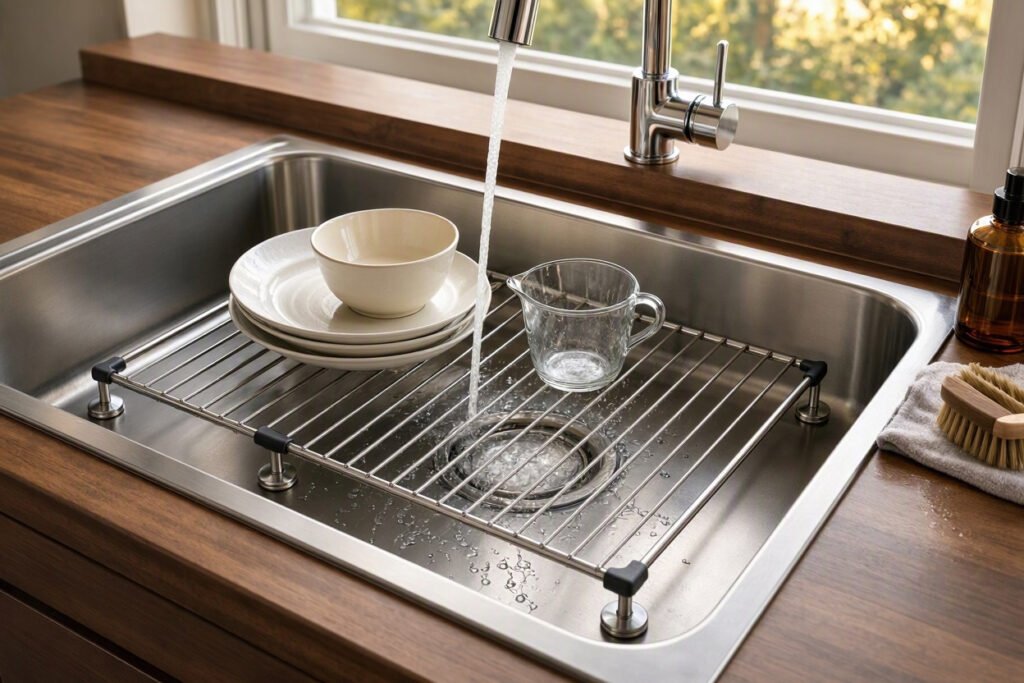
6. Consider a Compatible Sink Grid
A sink grid sits at the bottom of some kitchen sinks and provides a raised surface for dishes or cookware. Depending on its design and how you use the sink, it may change the way water hits the basin and help keep items from sitting directly on the bottom.
A grid is not a guaranteed anti-splash solution. Water can still splash off dishes, the grid itself, or the sink walls.
Before choosing one, check the sink’s interior dimensions, drain location, and compatibility with the basin. The grid should sit securely without interfering with drainage or the garbage disposal opening, if one is installed.
7. Evaluate the Sink’s Depth and Shape
If splashing is a persistent problem, the basin itself may contribute. A shallow bowl has less vertical space to contain water than a deeper bowl, although depth alone does not determine how much splashing occurs.
The shape of the basin, faucet placement, stream direction, and items being washed all matter. A deeper sink may contain more of the water that rebounds from dishes, but it can also reduce the cabinet space available underneath and may require more reaching.
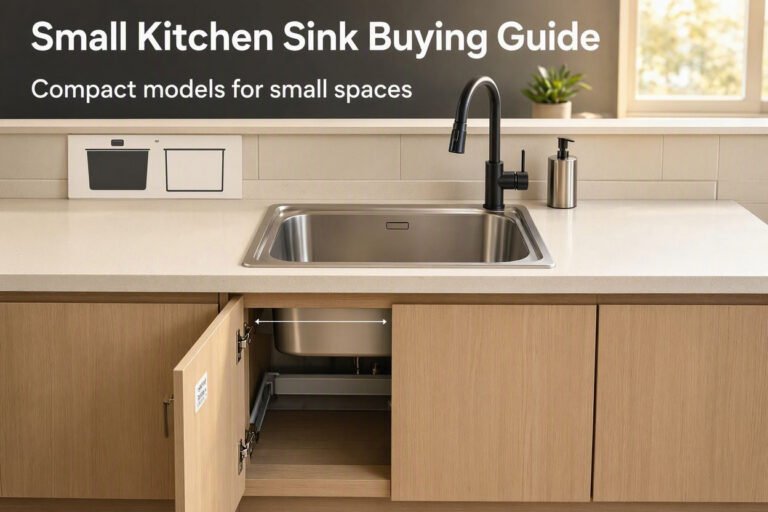
Before replacing a sink, measure the available cabinet and countertop space and review the sink’s interior dimensions. Make sure the faucet can direct water into a useful area of the basin.
For help understanding sink dimensions and fit, see the Small Kitchen Sink Dimensions: Complete Size Guide.
For a broader look at sink depth, shape, and configuration, consult Elkay’s Kitchen Sink Buying Guide.

8. Investigate Sudden Changes in Water Flow
If the splashing began suddenly, do not assume that the sink is too shallow or the faucet is the wrong size.
Check whether the stream is uneven, the faucet produces less water than usual, or other fixtures have also changed. Debris in the faucet outlet or a developing plumbing issue may affect flow.
You can use the Kitchen Sink Troubleshooting Tool to help narrow down common sink problems.
If several fixtures have unusual pressure or flow, or if you notice leaks, persistent sputtering, or other plumbing symptoms, consider contacting a qualified plumber. Avoid dismantling faucet or plumbing components unless you know how to do so safely.
Which Fix Should You Try First?
The best starting point depends on what you observe. Use this table to narrow down the likely cause.
| What You Notice | What to Check First | Practical Next Step |
|---|---|---|
| Water splashes only at full flow | Faucet flow rate | Reduce the flow and test again. |
| Water sprays in several directions | Aerator or outlet | Inspect and clean according to the manufacturer’s instructions. |
| Water hits the front or back wall | Faucet reach and stream direction | Adjust the stream if possible. |
| Splashes occur while rinsing plates | Dish angle and washing technique | Hold dishes lower and redirect the stream. |
| Water escapes from a shallow basin | Basin shape and depth | Try flow adjustments before considering a replacement. |
| The problem started suddenly | Aerator, faucet, or plumbing | Inspect the outlet and seek professional help if needed. |
| Several faucets have changed | Home water supply or plumbing | Contact a qualified plumber if the change persists. |
When Should You Call a Plumber?
Occasional splashing during dishwashing is usually a usability issue, but some symptoms deserve closer attention.
Consider professional help if:
- Water flow has changed suddenly and cleaning the faucet outlet does not help.
- Multiple fixtures have unusual flow or pressure.
- The faucet base or supply connections are leaking.
- The faucet or shutoff valve is difficult to operate or appears damaged.
- You suspect a plumbing fault and cannot identify the cause.
Do not assume that splashing by itself proves high household water pressure. A faucet’s stream pattern, outlet condition, and position can also cause splashes.
Frequently Asked Questions
1. How do I stop my kitchen sink from splashing when I turn on the faucet?
Start with a lower flow rate and observe where the water lands. If the stream is uneven, inspect the aerator according to the faucet manufacturer’s instructions. Also check whether the faucet directs water toward the sink edge or a dish that causes rebound.
2. Why does my kitchen faucet spray water everywhere?
A faucet may spray unevenly because of mineral deposits, debris, a damaged outlet component, or another flow-related problem. If the stream changed suddenly, inspect the aerator or spray head where appropriate. Follow the manufacturer’s cleaning instructions.
3. Can high water pressure cause kitchen sink splashing?
Strong flow can contribute to splashing, but splashing alone does not prove that household water pressure is too high. Faucet design, stream direction, basin shape, and aerator condition can also be responsible. If pressure seems unusually high across several fixtures, ask a qualified plumber to assess it.
4. Does a deeper kitchen sink reduce splashing?
A deeper basin may help contain some water that rebounds from dishes or the sink bottom. However, depth is only one factor. Faucet height, spout reach, stream direction, and basin shape also affect splashing.
5. Can a sink grid prevent water from splashing?
A compatible sink grid may change how dishes sit in the basin and how water hits the bottom. It cannot guarantee that splashes will stop, particularly if water is striking the sink wall or flowing too forcefully.
6. Why does my kitchen sink splash when I wash dishes?
Dishes can redirect water toward the countertop, especially when a plate or pot is held directly under a forceful stream. Lower the dish into the basin, use a gentler flow, and angle the surface so water runs back into the sink.
7. Should I replace my faucet if the sink keeps splashing?
Not necessarily. Try adjusting the flow, checking the aerator, and observing the stream direction first. Consider a different faucet only if the current spout height, reach, or spray pattern is unsuitable for the sink and simpler adjustments do not resolve the problem.
8. Can a small kitchen sink cause more splashing?
A compact or shallow sink can provide less room to contain water, but size alone does not determine splashing. The faucet and basin must work together. A carefully directed stream may perform better than a forceful stream aimed at the wrong part of a larger sink.
9. Why did my kitchen sink suddenly start splashing?
A sudden change may be related to debris or mineral buildup at the faucet outlet, a damaged component, or a plumbing issue. Check the stream and aerator first if safe to do so. If the change affects other fixtures or continues after basic checks, seek professional help.
10. Is kitchen sink splashing a sign of a plumbing problem?
Not always. Many splashing problems come from faucet flow, stream direction, dishwashing habits, or sink design. Persistent changes in flow, leaks, or unusual behavior across multiple fixtures are stronger reasons to investigate the plumbing.
Final Thoughts
Learning how to stop kitchen sink splashing starts with identifying where the water is bouncing and why. Reduce the faucet flow, check for an uneven stream, aim water into the basin, and adjust your dishwashing technique before considering a replacement.
If splashing continues, review the relationship between faucet height, spout reach, basin shape, and sink depth. Make changes based on the actual cause, and seek professional help when the problem points to a plumbing fault.
A few targeted adjustments may make your everyday kitchen cleanup more comfortable without requiring a new sink or faucet.
Get Helpful Sink Tips
Subscribe for practical sink planning tips and helpful resources for small kitchens and compact spaces.

Khadija is the writer and founder of Tiny Sink Solution. She creates practical guides about small kitchen sinks, faucets, and compact kitchen maintenance, helping homeowners and renters choose solutions for limited spaces. Some articles contain affiliate links, and as an Amazon Associate, she earns from qualifying purchases at no extra cost to readers