Disclosure: This article may contain affiliate links. If you purchase through links on this page, we may earn a commission at no extra cost to you.
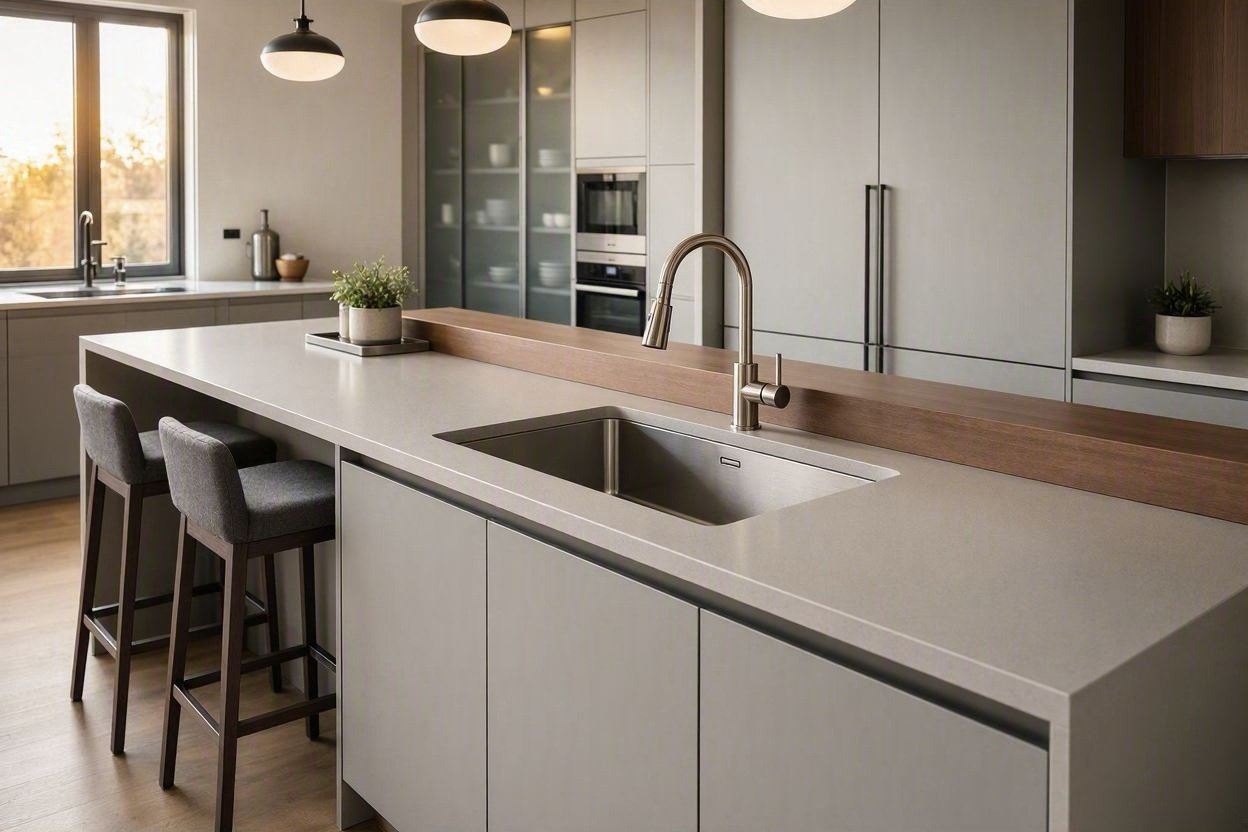
A well-planned kitchen island can improve both workflow and style, especially when it includes an island bar sink. This compact fixture provides a convenient space for rinsing produce, washing glasses, preparing ingredients, or handling quick cleanup without relying on the main sink. However, choosing the right model requires more than finding an attractive design. You need to consider sink size, cabinet dimensions, countertop space, bowl depth, installation type, and plumbing requirements. The right choice can make your island more functional without sacrificing valuable workspace. In this guide, we’ll explore practical sink ideas, smart dimensions, popular materials, installation options, and essential buying tips to help you choose a sink that fits your kitchen.
What Is an Island Bar Sink?
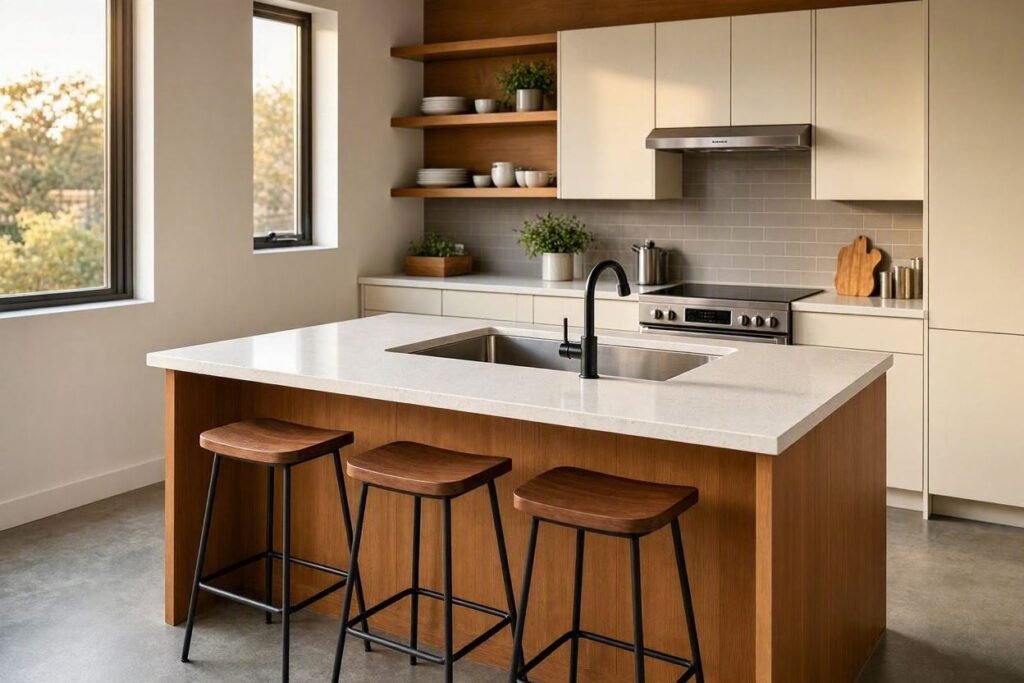
An island bar sink is a compact sink installed in a kitchen island rather than against a wall. It is often smaller than a standard kitchen sink and is designed for tasks such as food preparation, rinsing, washing glasses, and filling containers.
These sinks are also called prep sinks, compact sinks, or wet bar sinks, depending on their intended use.
A kitchen island sink can be especially useful in open-plan kitchens. It allows you to prepare food or serve drinks without constantly moving between the island and the main sink.
However, adding a sink to an island also uses valuable countertop space. For that reason, choosing the correct sink size is particularly important in a compact kitchen.
7 Best Island Bar Sink Ideas for Different Kitchens
Not every kitchen island needs the same type of sink. Your choice should depend on the island’s size, cabinet configuration, countertop material, and how you plan to use the sink.
1. Compact Stainless Steel Island Bar Sink
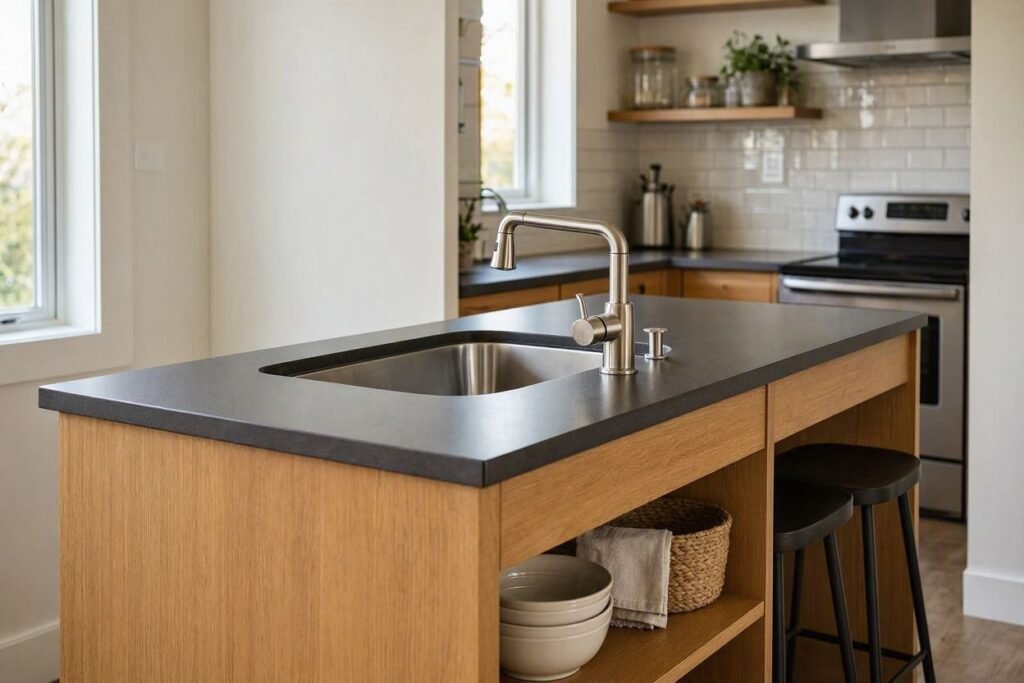
A compact stainless steel sink is one of the most practical choices for a kitchen island. Stainless steel is durable, relatively easy to maintain, and works with many kitchen styles.
A small single-bowl model can provide enough space for rinsing vegetables, washing glasses, and handling small food-preparation tasks without taking over the countertop.
Look for a model with suitable bowl depth and a cabinet requirement that matches your island.
Best for: Small kitchens, modern kitchens, busy households, and homeowners who want easy maintenance.
What to check: Sink dimensions, gauge or material specifications, bowl depth, mounting style, and cabinet clearance.
2. Undermount Island Bar Sink
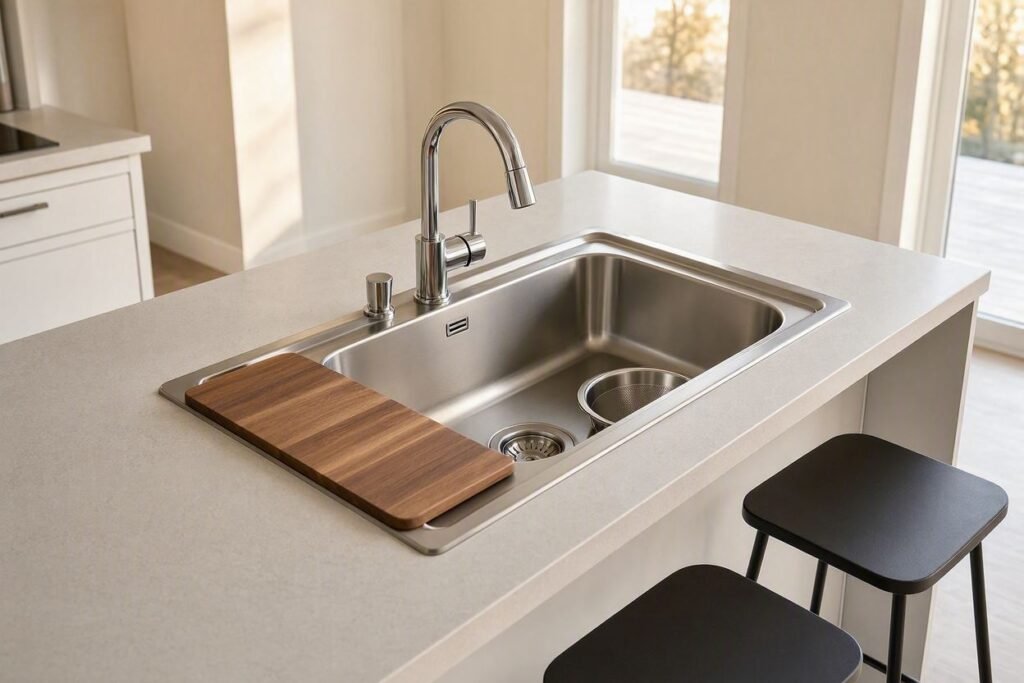
An undermount sink is installed below the countertop surface. This creates a clean transition between the counter and sink bowl.
One major benefit is easier countertop cleaning. Crumbs and water can be pushed directly into the sink without getting caught around a raised rim.
An undermount island sink can look particularly attractive with granite, quartz, or other solid-surface countertops. However, installation requirements can be more demanding than those of some drop-in models.
Best for: Modern kitchens and homeowners who prefer a clean, seamless appearance.
What to check: Countertop compatibility, cabinet clearance, sink cutout, and professional installation requirements.
3. Drop-In Island Bar Sink
A drop-in or top-mount sink sits on top of the countertop with its rim resting around the opening.
This style can be a practical choice when installation simplicity is important. The visible rim also gives the sink a more traditional appearance.
Before choosing a drop-in model, make sure the countertop has enough room for the sink rim and faucet.
Best for: Renovations, traditional kitchens, and homeowners looking for a relatively straightforward installation option.
4. Deep-Bowl Island Bar Sink
A deeper bowl can be useful when you regularly wash larger utensils, containers, or cookware at the island.
However, deeper does not always mean better. A deep bowl can require more space underneath the countertop and may interfere with plumbing or cabinet storage.
For a compact island, check the actual bowl depth and total sink depth before purchasing.
Best for: Food preparation and homeowners who need extra bowl capacity.
5. Small Single-Bowl Island Sink
A small single-bowl sink can be an excellent solution when countertop space is limited.
Instead of dividing a small basin into two sections, a single bowl provides one continuous washing area. This can make the available space more practical.
It is particularly useful for rinsing produce, washing glasses, and preparing ingredients.
Best for: Small islands, apartments, compact kitchens, and limited cabinet spaces.
6. Farmhouse-Style Island Bar Sink
A farmhouse-style sink can add a distinctive design element to a kitchen island. Its visible front can become a focal point, especially in traditional or country-style kitchens.
However, this style often requires more planning than a standard compact sink. The cabinet must be designed or modified to accommodate the sink.
Best for: Design-focused kitchens where appearance is as important as functionality.
7. Composite or Granite Island Bar Sink
Composite sinks can provide a different appearance from stainless steel. Many homeowners choose them because they can complement stone countertops and modern kitchen designs.
Before buying, check the manufacturer’s care instructions and specifications. Material composition, weight, installation requirements, and maintenance can vary between models.
Best for: Contemporary kitchens and homeowners who want an alternative to stainless steel.
Check This Sink on AmazonWhat Size Should an Island Bar Sink Be?
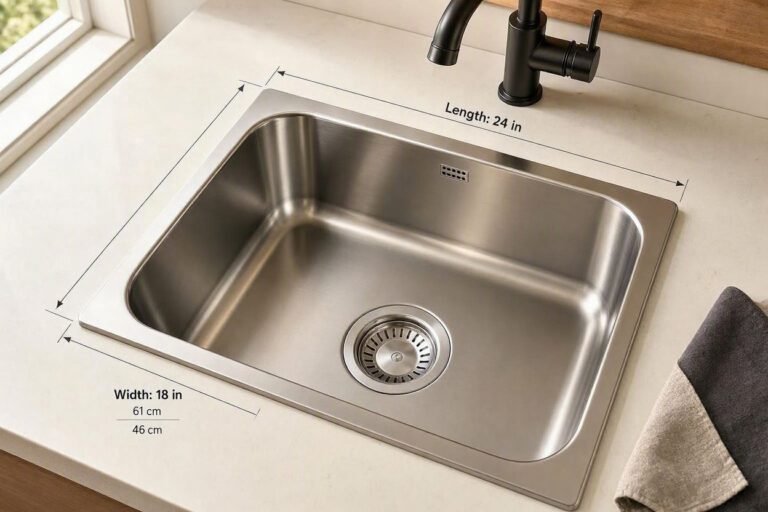
There is no single ideal size for every kitchen island. The correct island bar sink size depends on the available countertop area, cabinet dimensions, plumbing, and intended use.
Compact bar sinks are commonly smaller than standard kitchen sinks, but actual dimensions vary considerably between manufacturers.
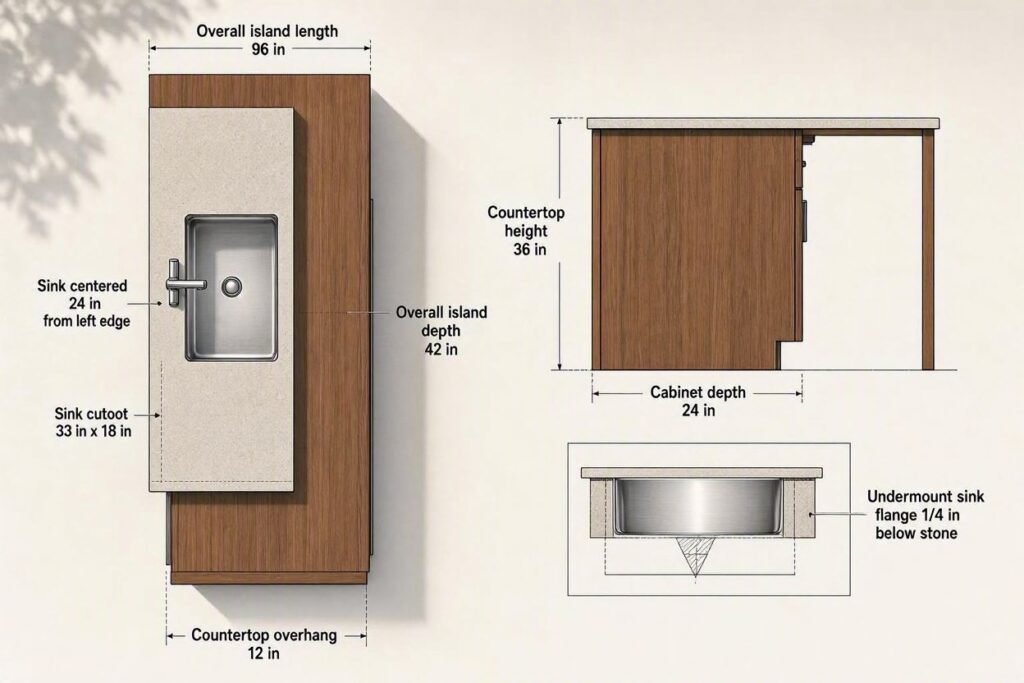
Common Island Bar Sink Dimensions
When comparing sinks, look at three main measurements:
- Width: The side-to-side measurement of the sink.
- Front-to-back depth: How much countertop space the sink occupies.
- Bowl depth: How deep the basin is below the countertop.
Do not choose a sink based only on its advertised width. The overall dimensions and required cutout can be different.
How Much Counter Space Do You Need?
Your island should still provide enough usable countertop space around the sink.
If most of the island is already occupied by appliances, seating, or food-preparation areas, a large sink may make the space less practical.
Think about how you will actually use the island. A small prep sink may be enough if you mainly rinse vegetables or wash glasses.
How Cabinet Size Affects Sink Choice
The cabinet underneath the island is just as important as the countertop above it.
A sink may fit the countertop opening but still fail to work with the cabinet below. Plumbing connections, waste pipes, garbage disposal equipment, and storage space all need consideration.
Always compare the manufacturer’s minimum cabinet size with your actual cabinet dimensions before buying.
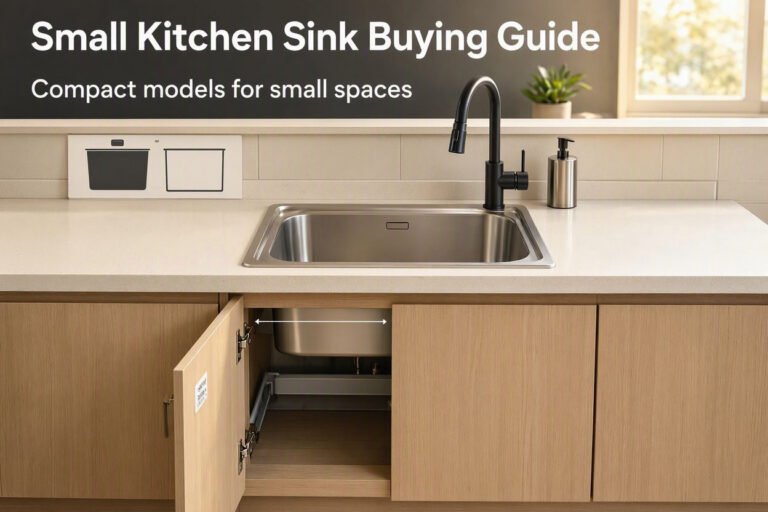
How to Measure for an Island Bar Sink
Correct measurements can prevent expensive installation problems. Before choosing a model, follow these steps.
1. Measure the Cabinet Width
Measure the inside and outside dimensions of the cabinet according to the manufacturer’s instructions.
Do not assume an advertised sink width automatically means it will fit your cabinet.
2. Check Countertop Depth
Measure the available front-to-back space. You need enough room for the sink, faucet, countertop edge, and comfortable workspace.
3. Check the Sink Cutout
If replacing an existing sink, measure the current opening. For a new installation, use the manufacturer’s cutout template rather than guessing the opening size.
4. Check Plumbing Location
Make sure water supply lines and drainage can reach the planned sink location.
An island sink may require plumbing to run through the island cabinet or floor, so installation should be planned before cutting the countertop.
5. Check Faucet Clearance
Leave enough space behind or beside the sink for the faucet and handles.
6. Compare All Measurements
Before ordering, compare your measurements with the manufacturer’s installation specifications.
Which Sink Material Is Best for a Kitchen Island?
The best material depends on your budget, kitchen style, maintenance preferences, and expected use.
Stainless Steel
Stainless steel remains a popular option because it is durable, versatile, and relatively easy to clean.
It works particularly well in modern kitchens and pairs with many countertop styles.
Granite Composite
Granite composite sinks can provide a solid, contemporary appearance. They are available in different colors and can complement stone-style countertops.
Always check the manufacturer’s maintenance instructions because care requirements can vary.
Fireclay or Ceramic
Fireclay and ceramic sinks can create a classic appearance. They may work well in traditional or farmhouse-style kitchens.
However, their weight and installation requirements should be considered before purchase.
Undermount vs. Drop-In Island Bar Sink
Choosing the right mounting style affects both appearance and installation.
| Feature | Undermount Sink | Drop-In Sink |
|---|---|---|
| Appearance | Clean and modern | Traditional and practical |
| Installation | Usually more involved | Often simpler |
| Countertop cleaning | Easy around the edge | Rim requires cleaning |
| Countertop compatibility | More important | Generally flexible |
| Best for | Modern designs | Renovations and traditional kitchens |
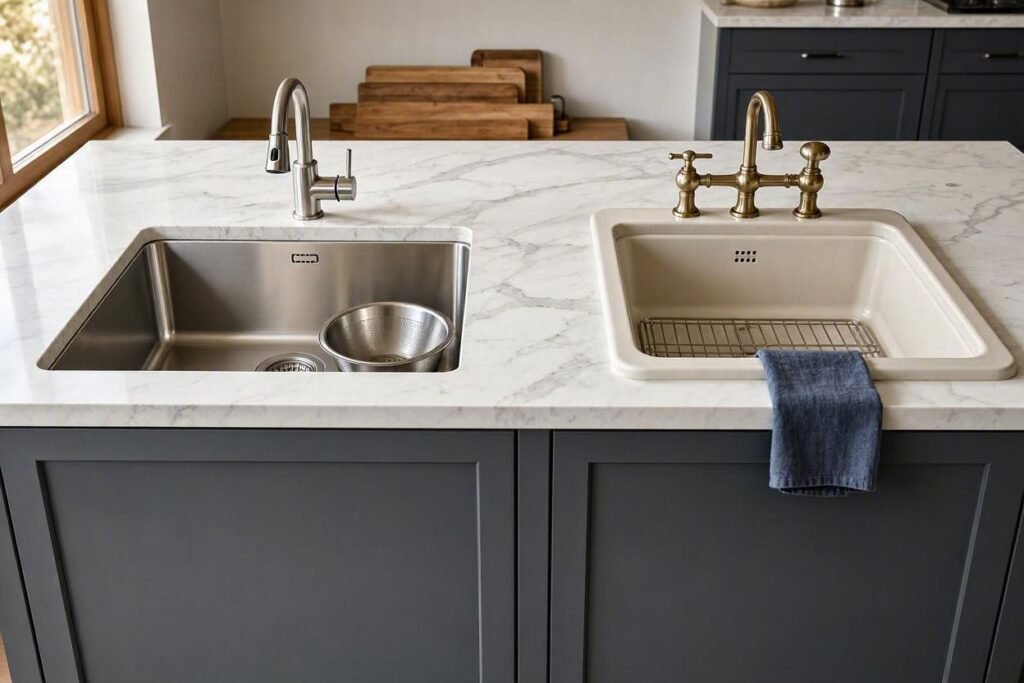
Neither option is automatically better. The right choice depends on your countertop material, installation requirements, budget, and preferred appearance.
7 Things to Check Before Buying an Island Bar Sink
Before ordering a sink, check these seven factors.
1. Cabinet Size
Make sure the sink’s minimum cabinet requirement matches your island cabinet.
2. Overall Sink Dimensions
Check width, depth, height, and cutout measurements.
3. Countertop Space
Do not sacrifice too much useful preparation space for an oversized sink.
4. Installation Type
Decide whether an undermount, drop-in, or another mounting style suits your countertop and project.
5. Bowl Depth
A deeper bowl can be useful, but it may reduce storage or interfere with plumbing.
6. Faucet and Drain Location
Confirm that the faucet and drain configuration works with your island layout.
7. Maintenance and Durability
Consider how often the sink will be used and how much cleaning you are willing to do.
Check This Sink on AmazonCommon Island Bar Sink Mistakes to Avoid
Choosing a sink without measuring first is one of the most common mistakes.
Other problems include selecting a sink that is too large for the island, ignoring cabinet clearance, and forgetting about plumbing access.
Some homeowners also focus heavily on appearance while overlooking bowl depth and countertop workspace.
Another mistake is assuming that all sinks with the same advertised width have the same installation requirements. Different manufacturers can have different cutout dimensions and cabinet requirements.
Always review the manufacturer’s specifications before purchasing.
Is an Island Bar Sink Worth It?
An island bar sink can be worth it if you regularly use your island for food preparation, entertaining, or drink preparation.
It can make an open kitchen more convenient and reduce trips to the main sink.
However, an island sink also takes away some countertop space and may make plumbing more complicated. In a very small kitchen, that trade-off matters.
If your island has limited space, a compact bar sink for a kitchen island may provide enough functionality without overwhelming the countertop.
The key is to choose a size that matches your actual needs rather than choosing the largest sink that will physically fit.
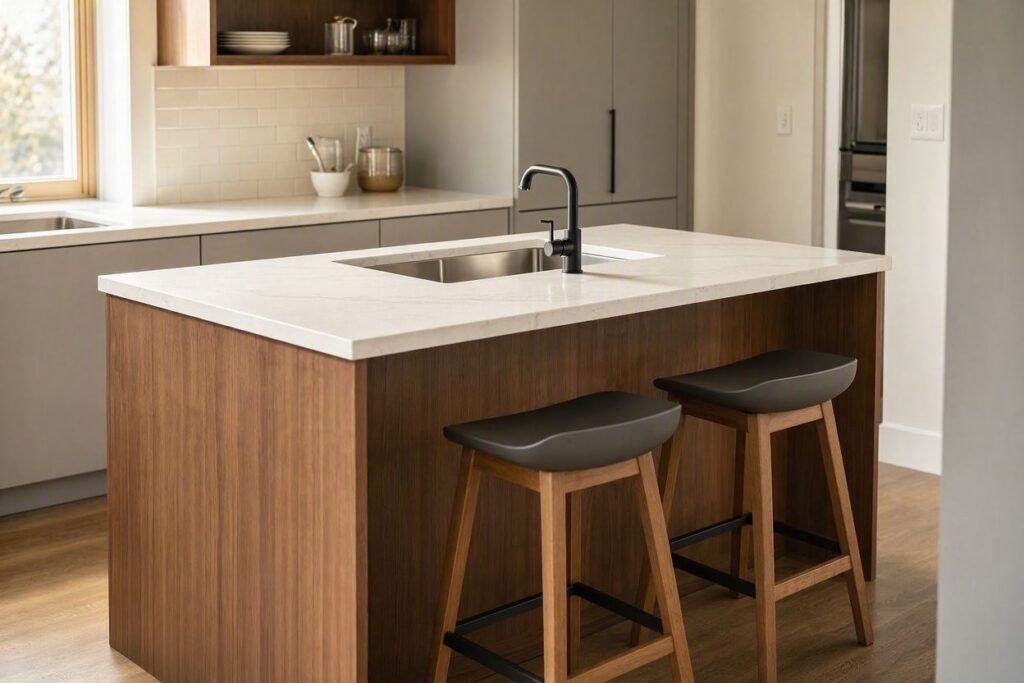
Frequently Asked Questions About Island Bar Sinks
What is the ideal size for an island bar sink?
The ideal size depends on your island, cabinet, and intended use. A compact sink is usually more practical when countertop space is limited. Always check the actual dimensions and minimum cabinet requirement before purchasing.
Can you put a bar sink in a kitchen island?
Yes. A bar sink can be installed in a kitchen island if the cabinet, countertop, drainage, water supply, and installation requirements can accommodate it. Plumbing should be planned before installation.
What size cabinet is needed for an island bar sink?
The required cabinet size varies by sink model. Check the manufacturer’s minimum cabinet requirement instead of relying only on the sink’s advertised width.
Is an undermount or drop-in sink better for an island?
Both can work well. An undermount sink provides a clean appearance and easy countertop cleanup, while a drop-in sink can offer simpler installation and broader countertop compatibility.
How deep should an island bar sink be?
The appropriate bowl depth depends on how you plan to use the sink and how much clearance is available below the countertop. A deeper bowl provides more washing capacity but may require additional cabinet space.
Do island bar sinks need special plumbing?
They may require additional planning because the water supply and drainage must reach the island. Plumbing requirements depend on the home’s layout and the sink installation.
Final Verdict: Choosing the Right Island Bar Sink
The best island bar sink is not necessarily the biggest or most expensive model. It is the one that fits your cabinet, countertop, plumbing layout, and everyday needs.
Start by measuring the available space. Then compare sink dimensions, bowl depth, mounting style, material, and installation requirements.
For a compact kitchen, a small single-bowl or stainless steel sink can provide useful functionality without taking over the island. For larger or design-focused islands, an undermount, farmhouse-style, or composite option may be more suitable.
Before purchasing, always compare the sink’s actual specifications with your available cabinet and countertop space. Taking a few extra measurements can help you avoid installation problems and choose a sink that works well for years.

Khadija is the writer and founder of Tiny Sink Solution. She creates practical guides about small kitchen sinks, faucets, and compact kitchen maintenance, helping homeowners and renters choose solutions for limited spaces. Some articles contain affiliate links, and as an Amazon Associate, she earns from qualifying purchases at no extra cost to readers
![Top [count] Gardening Blogs - OnToplist.com](https://www.ontoplist.com/images/ontoplist32.png?id=6aa4d0c493161)