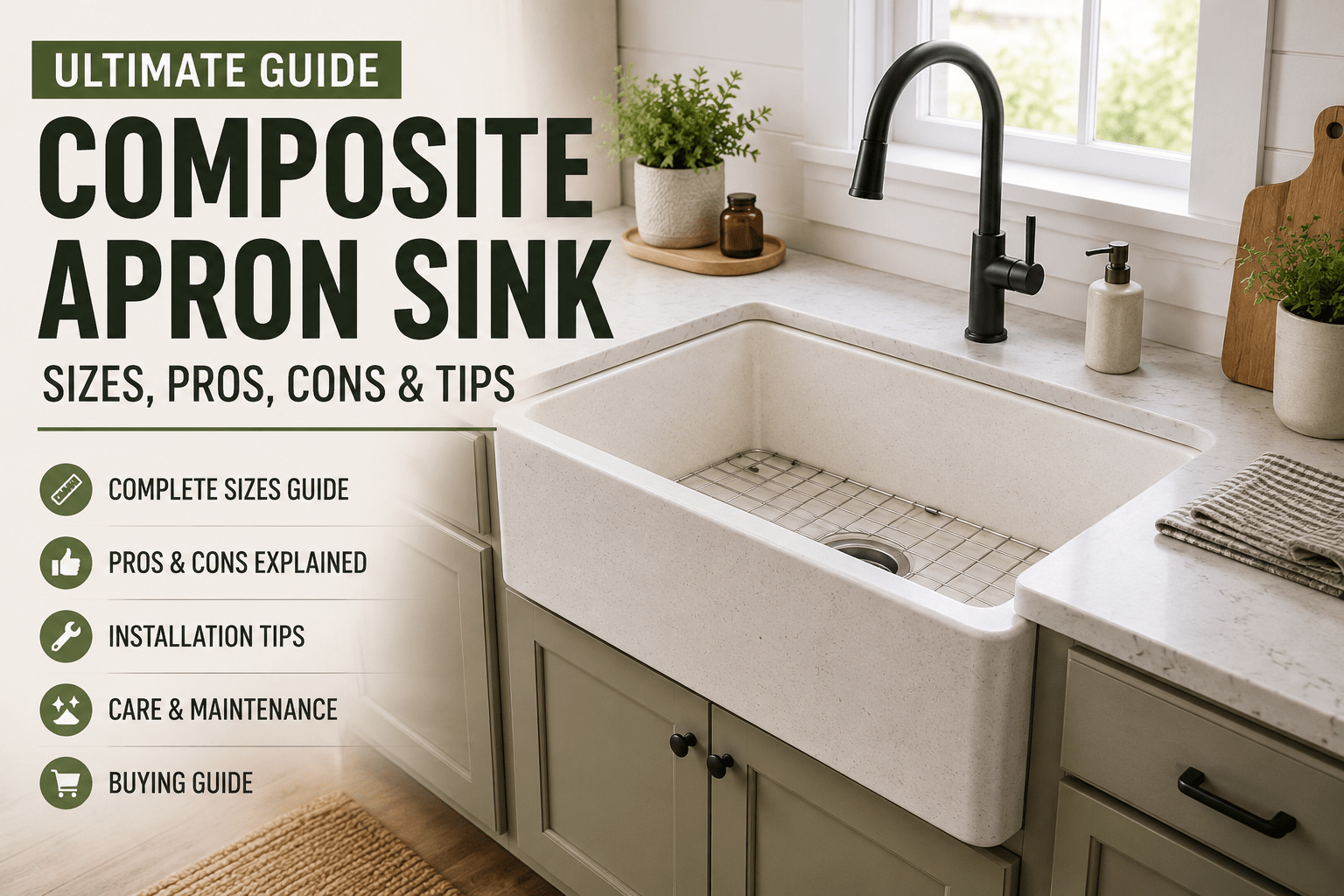
Quick Answer: What Is a Composite Apron Sink?
A composite apron sink is a farmhouse-style kitchen sink made from a combination of mineral materials and resin, with an exposed front panel. It offers a stone-like appearance, multiple design options, and good everyday durability, depending on the material. Before buying, check its exact dimensions, minimum cabinet size, installation requirements, and manufacturer care instructions.
Introduction
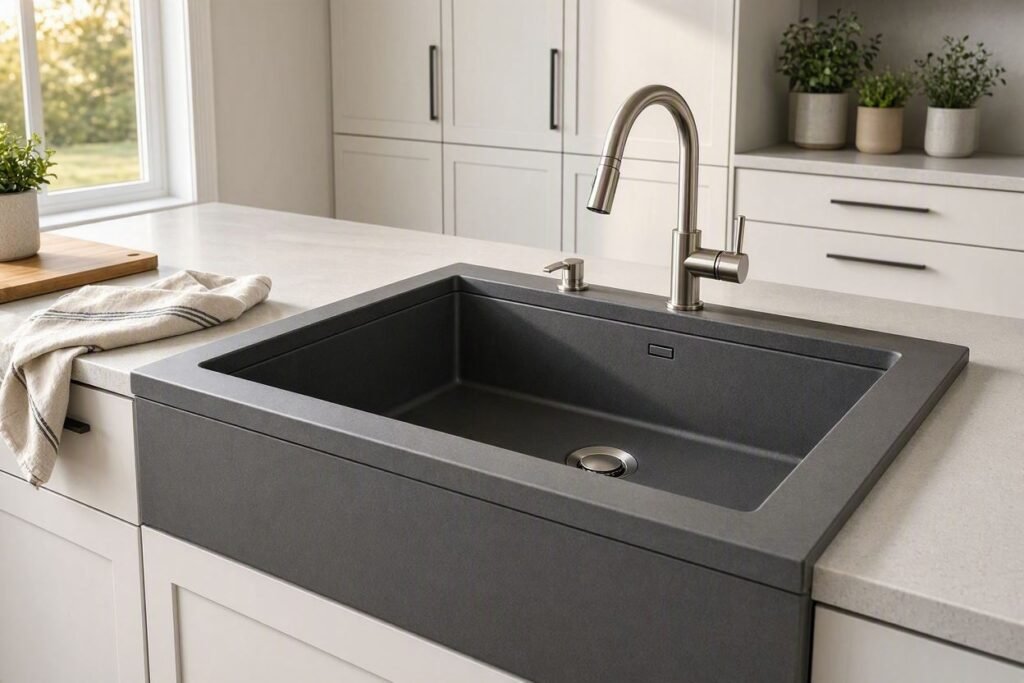
A composite apron sink can bring farmhouse charm, practical functionality, and a distinctive stone-like appearance to your kitchen. Choosing the right composite apron sink requires more than selecting an attractive color or style. You need to consider cabinet size, bowl depth, installation requirements, material composition, and daily maintenance. A well-chosen composite apron sink can complement modern, traditional, and transitional kitchen designs while providing a substantial, durable surface for everyday tasks. However, not every model fits every cabinet. In this guide, we’ll explain composite apron sink sizes, benefits, drawbacks, installation considerations, and buying tips to help you select the right composite apron sink for your kitchen.
What Is a Composite Apron Sink?
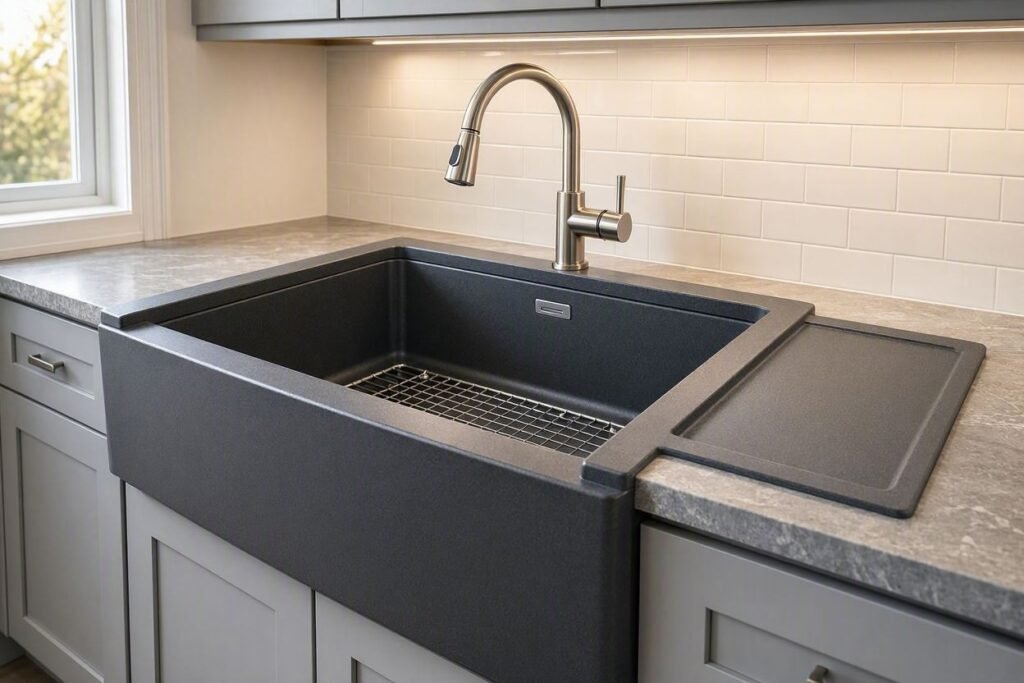
A composite apron sink combines an exposed farmhouse-style front with a manufactured composite material. The visible apron sits at the front of the cabinet, making the sink an important part of the kitchen’s overall design.
The word composite does not describe one universal formula. Manufacturers use different combinations of mineral materials and binding resins, so properties such as heat resistance, scratch resistance, color stability, and maintenance requirements can vary.
How Is a Composite Apron Sink Different From a Standard Sink?
The biggest differences are the exposed front and the material used to construct the basin.
| Feature | Composite Apron Sink | Standard Sink |
|---|---|---|
| Front | Exposed apron | Usually concealed |
| Material | Mineral/stone + resin composite | Varies |
| Appearance | Stone-like or matte | Depends on material |
| Installation | Apron-front | Undermount, top-mount, etc. |
| Cabinet planning | Important | Usually simpler |
| Color choices | Often multiple | Depends on material |
Before choosing an apron sink, it’s helpful to understand how to measure the cabinet correctly. Our guide on [How to Measure a Cabinet for a Replacement Kitchen Sink] explains the measurements you should take before ordering.
Check current composite apron sink options
Check Current Price on AmazonWhat Sizes Do Composite Apron Sinks Come In?
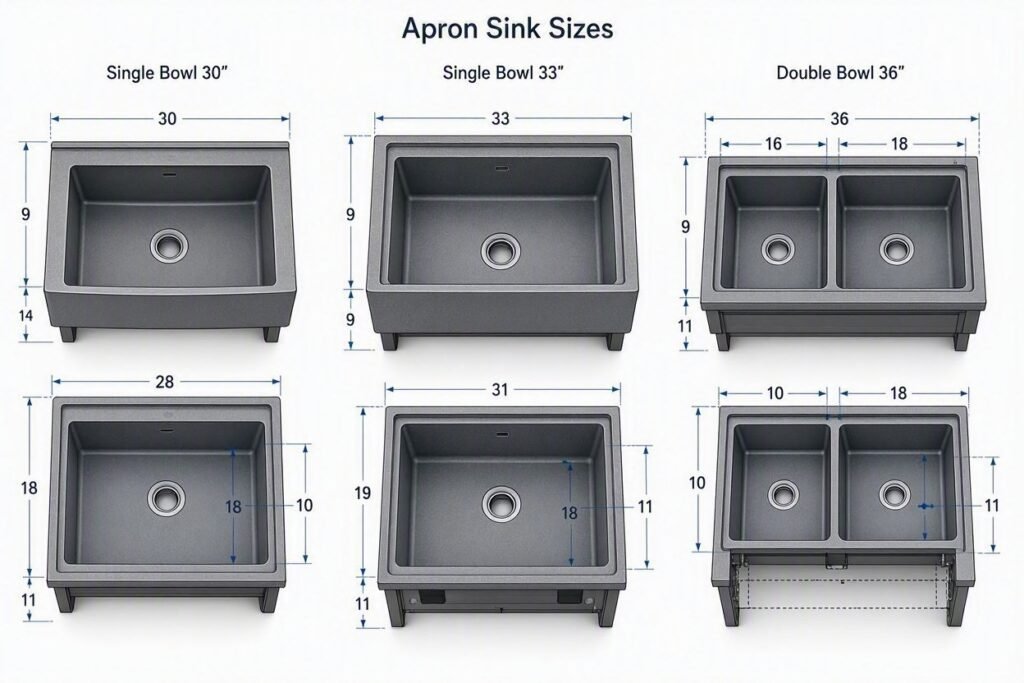
Composite apron sinks are available in different widths, with approximately 30-, 33-, 34-, and 36-inch models commonly found in farmhouse-style designs.
However, the advertised sink width should never be treated as the required cabinet size.
Some 33-inch apron sinks require a 36-inch base cabinet, while other models have different requirements. Always check the manufacturer’s installation specifications for the exact model.
Common Composite Apron Sink Sizes
| Sink Width | Suitable For | Important Consideration |
|---|---|---|
| 30 inches | Smaller kitchens | Verify minimum cabinet size |
| 33 inches | Medium and larger kitchens | May require a 36-inch cabinet |
| 34 inches | Spacious kitchen layouts | Check cabinet opening carefully |
| 36 inches | Larger kitchens | Requires substantial cabinet space |
These are general size categories rather than universal installation standards.
How Do You Choose the Right Composite Apron Sink Size?
The right size depends on your cabinet, countertop, available workspace, and plumbing configuration.
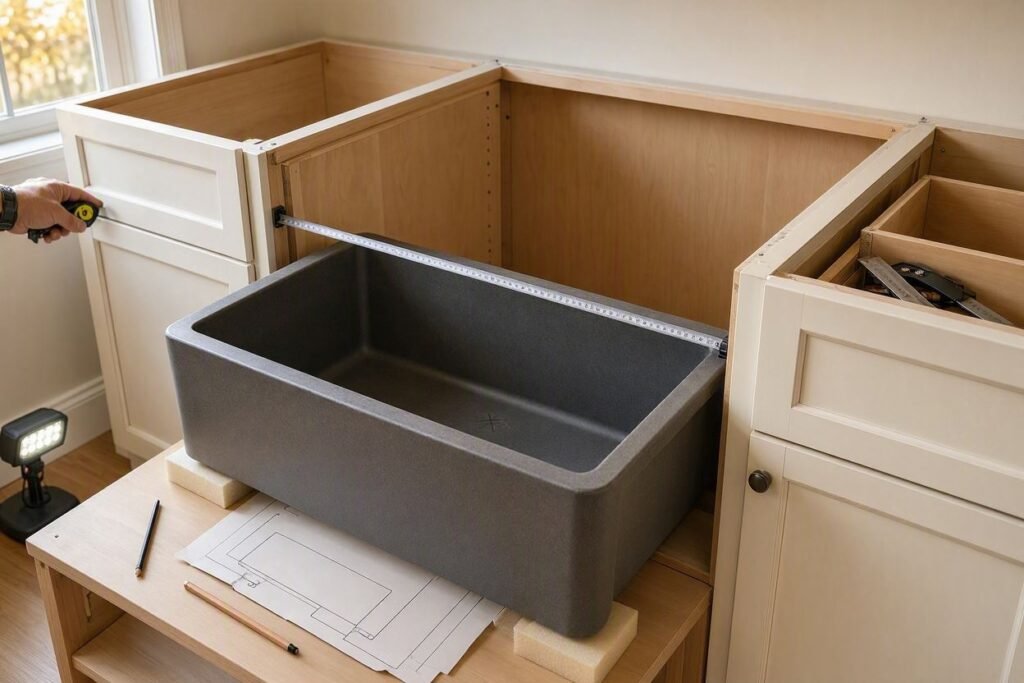
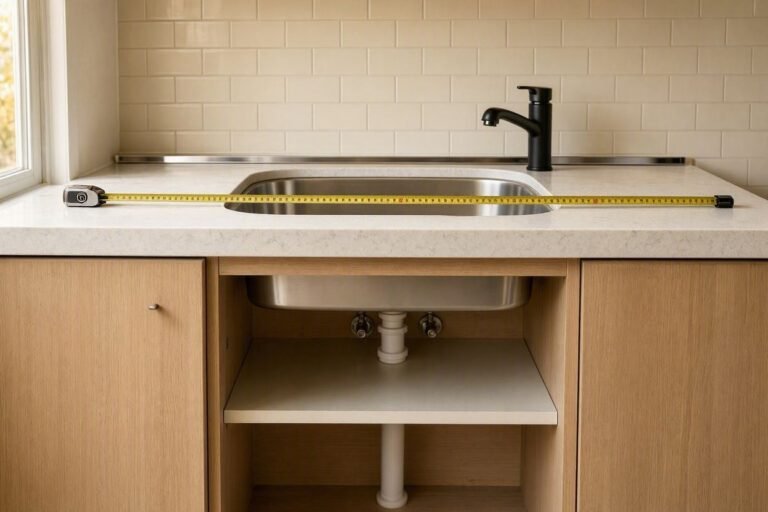
1. Measure Your Sink Base Cabinet
Start by measuring the cabinet where the sink will be installed.
Record:
- Overall cabinet width
- Interior cabinet width
- Face-frame opening
- Cabinet depth
- Available height
- Plumbing clearance
Do not measure only the outside of the cabinet.
For more detailed instructions, read our guide on [How to Measure a Cabinet for a Replacement Kitchen Sink] before ordering your new sink.
2. Check the Manufacturer’s Minimum Cabinet Size
This is one of the most important specifications to verify.
If a product requires a 36-inch cabinet, installing it in a smaller cabinet could require significant modification or may simply be impossible.
3. Check Front-to-Back Depth
Sink depth is just as important as width.
A deep farmhouse sink can affect:
- Cabinet storage
- Drain placement
- Garbage disposal clearance
- Plumbing connections
- Countertop space
4. Consider Bowl Depth
A deeper bowl can make washing large pots and pans easier, but it can also affect the space underneath the sink.
Think about how you normally use your kitchen before choosing the deepest model available.
What Are the Pros of a Composite Apron Sink?
A composite apron sink can offer several benefits for homeowners who want farmhouse styling and a stone-inspired appearance.
1. Attractive Farmhouse Appearance
The exposed apron creates a strong visual focal point.
Composite finishes can complement:
- White cabinets
- Wood cabinetry
- Quartz countertops
- Granite countertops
- Modern farmhouse kitchens
- Transitional kitchens
2. Stone-Like Appearance
Many composite sinks have a matte, stone-inspired appearance that differs from the reflective surface of stainless steel.
This can make them appealing when you want the sink to blend with a natural or contemporary kitchen design.
3. Good Everyday Durability
Many composite formulations are designed to withstand common kitchen use, including exposure to stains, scratches, heat, and impact.
However, performance varies by manufacturer and material composition.
4. Multiple Color Options
Composite apron sinks are available in a range of neutral finishes, including:
- White
- Black
- Gray
- Anthracite
- Other stone-inspired colors
5. Sound-Reducing Construction
Mineral-based composite materials can help reduce some of the noise associated with running water and washing dishes.
What Are the Cons of a Composite Apron Sink?
Despite their advantages, composite apron sinks have some limitations.
1. Installation Can Be More Complicated
Apron-front sinks can require cabinet modification and proper structural support.
This is particularly important when replacing a conventional undermount sink with a farmhouse-style model.
2. They Can Be Heavy
Stone-based composite sinks can be considerably heavier than some stainless steel alternatives.
The cabinet and support system should therefore be appropriate for the specific sink.
3. Cabinet Compatibility Can Be Limited
A sink may look perfect but still be unsuitable for your existing cabinet.
Always verify the manufacturer’s minimum cabinet size before ordering.
4. Repairs Vary by Material
Composite products are not all made from the same formula. Repair options for scratches, chips, or other damage can therefore vary.
Check the manufacturer’s care and repair guidance before attempting DIY repairs.
5. Dark Finishes Can Show Mineral Deposits
Black and other dark finishes can make water spots or mineral residue more visible, particularly in areas with hard water.
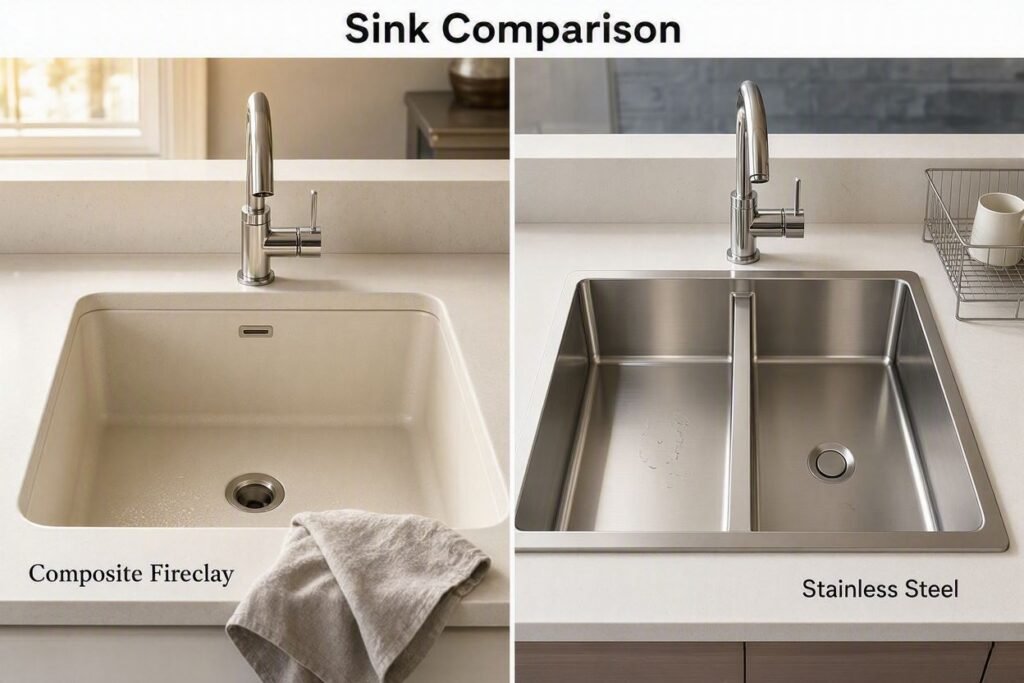
Composite vs. Fireclay vs. Stainless Steel: Which Is Better?
There is no single best sink material for every kitchen.
The right choice depends on your preferred appearance, maintenance expectations, cabinet structure, and installation requirements.
| Feature | Composite | Fireclay | Stainless Steel |
|---|---|---|---|
| Appearance | Stone-like, matte | Traditional farmhouse | Metallic |
| Color choices | Usually several | Often limited | Mostly metallic |
| Weight | Often heavy | Heavy | Usually lighter |
| Scratch resistance | Generally good | Good, but can chip | Can scratch |
| Heat resistance | Depends on formulation | Generally high | High |
| Maintenance | Usually straightforward | Straightforward | Straightforward |
| Farmhouse style | Excellent | Excellent | Excellent |
Composite vs. Fireclay
Choose composite if you prefer a stone-inspired matte finish, multiple color choices, and a substantial appearance.
Fireclay may be better if you want the classic glossy white farmhouse look.
Composite vs. Stainless Steel
Composite is worth considering if you want a quieter, matte, stone-like sink.
Stainless steel can be preferable if you want a lightweight, widely available option with a modern metallic appearance.
For another material option, see our guide to [Stainless Steel Sinks for Small Kitchens].
Compare current composite sink options
🔗 Buy on AmazonWhat Cabinet Do You Need for a Composite Apron Sink?
The required cabinet depends on the exact sink model.
Some composite apron sinks need a cabinet larger than the sink’s advertised width because additional space may be required for installation and support.
Before purchasing, check:
- Minimum cabinet width
- Cabinet interior dimensions
- Face-frame configuration
- Apron height
- Sink depth
- Required support
- Plumbing clearance
Can a Composite Apron Sink Fit an Existing Cabinet?
Sometimes.
A retrofit apron sink may be designed specifically for replacing an existing sink while minimizing cabinet modifications.
Other full-apron models can require more extensive changes.
If you are working with a particularly small cabinet, our guide to [Best Sink Options for an 18-Inch Cabinet] can help you compare compact alternatives.
How Is a Composite Apron Sink Installed?
Installation requirements differ between products, but the process generally involves careful cabinet and countertop preparation.
Step 1: Confirm the Measurements
Compare the sink specification sheet with the cabinet dimensions.
Step 2: Prepare the Cabinet
The cabinet’s front section may need modification to accommodate the exposed apron.
Step 3: Install Proper Support
The sink should be supported according to the manufacturer’s installation instructions.
Step 4: Prepare the Countertop
The countertop opening should follow the manufacturer’s template and specifications.
Step 5: Position and Level the Sink
Make sure the sink sits securely and is properly aligned.
Step 6: Seal the Installation
Use the sealant recommended by the manufacturer where required.
Step 7: Connect the Plumbing
Connect the drain, water lines, and garbage disposal if applicable, then check carefully for leaks.
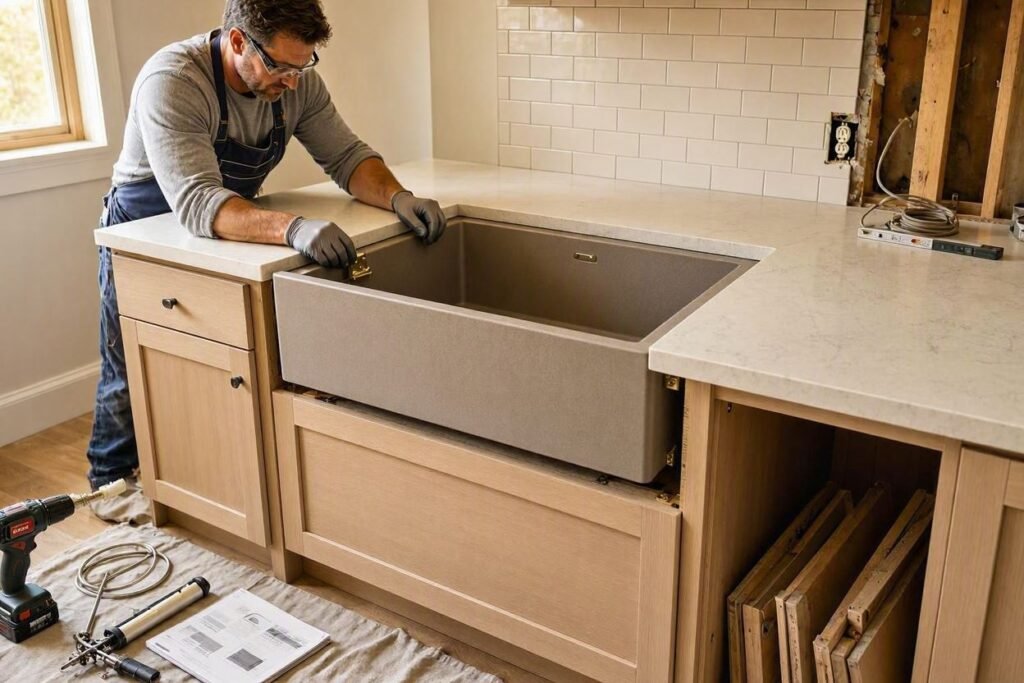
Installation tip: If cabinet or stone-countertop modifications are required, professional installation can help prevent expensive mistakes.
How Do You Clean a Composite Apron Sink?
Most composite sinks are relatively easy to maintain when cleaned according to the manufacturer’s instructions.
Simple Cleaning Routine
- Remove food debris.
- Rinse the basin.
- Wipe with a soft cloth or sponge.
- Use a manufacturer-approved cleaner when needed.
- Rinse thoroughly.
- Dry the surface to reduce water spots.
Avoid assuming that every composite sink can tolerate the same cleaners.
Some abrasive products or harsh chemicals may damage certain finishes.

What Features Should You Look for When Buying a Composite Apron Sink?
Don’t choose a sink based only on its color or appearance.
Material Composition
Check what the manufacturer means by “composite.”
Different formulations can have different performance characteristics.
Exterior Dimensions
Confirm the sink’s:
- Length
- Width
- Height
- Apron dimensions
Interior Bowl Dimensions
A large exterior sink does not automatically provide a large usable bowl.
Minimum Cabinet Size
This specification should be checked before almost anything else.
Bowl Depth
Consider whether you frequently wash large cookware or prefer easier access.
Drain Position
Some drain configurations can improve usable cabinet space.
Installation Type
Confirm whether the model is intended for:
- Apron-front installation
- Undermount installation
- Retrofit installation
- Another specific mounting method
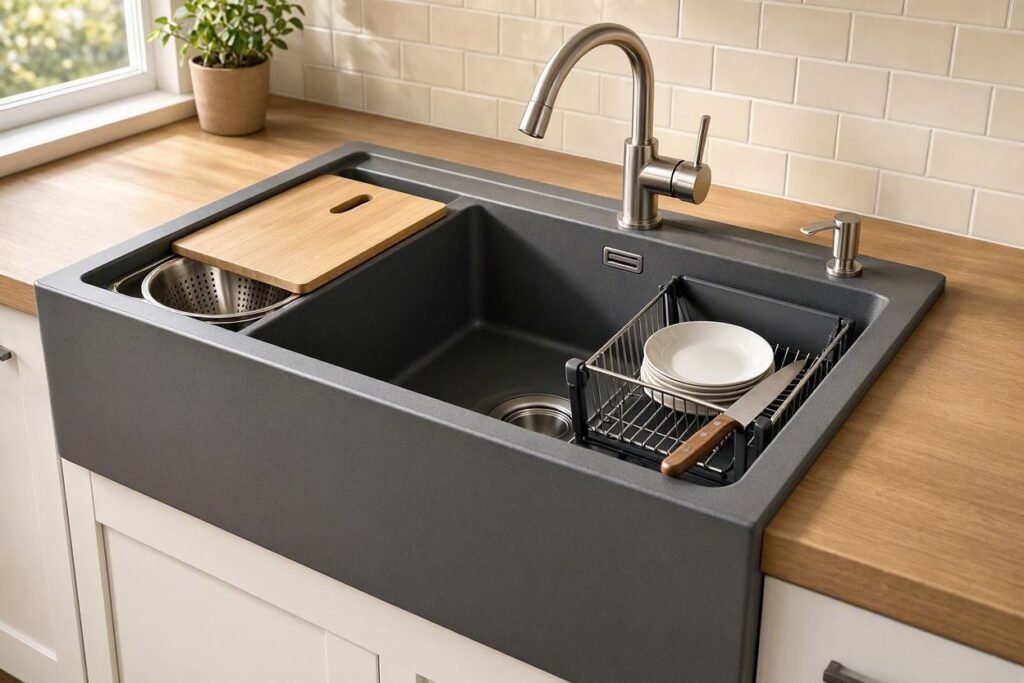
Included Accessories
Some models may include:
- Bottom grids
- Strainers
- Cutting boards
- Drying racks
- Colanders
Common Composite Apron Sink Buying Mistakes
Mistake 1: Buying Based Only on Width
A 33-inch sink does not necessarily fit a 33-inch cabinet.
Mistake 2: Ignoring Apron Height
The apron height affects cabinet modifications and the final appearance.
Mistake 3: Forgetting Sink Depth
Front-to-back dimensions can affect plumbing and cabinet storage.
Mistake 4: Cutting the Countertop Too Early
Always confirm the exact sink model and manufacturer’s template first.
Mistake 5: Ignoring Support Requirements
A heavy sink needs appropriate structural support.
Mistake 6: Assuming All Composite Sinks Are Identical
Composite is a broad category. Material formulas and care requirements can vary.
Mistake 7: Choosing Appearance Before Compatibility
A sink should fit your cabinet and installation plan before you make the final style decision.
Is a Composite Apron Sink Worth It?
For many kitchens, yes.
A composite apron sink can be a good choice if you want farmhouse styling combined with a stone-inspired finish and a range of colors.
However, installation requirements should not be overlooked.
If the cabinet is incompatible, modifying the kitchen may be more complicated than expected.
The smartest approach is simple:
Measure first → verify specifications → compare materials → check installation requirements → then buy.
Key Takeaways
- A composite apron sink combines an exposed farmhouse front with a composite material.
- Composite formulations vary between manufacturers.
- Common widths include approximately 30, 33, 34, and 36 inches.
- Sink width does not automatically determine cabinet compatibility.
- Some models require a larger base cabinet than their nominal sink width.
- Composite sinks can offer a matte, stone-inspired appearance.
- Durability and heat resistance vary by formulation.
- Apron-front installation may require cabinet modification and structural support.
- Always verify dimensions, minimum cabinet size, installation type, and care instructions before purchasing.
- Retrofit models may be easier to install in an existing kitchen.
Frequently Asked Questions
Are composite apron sinks durable?
Many composite apron sinks are designed for regular kitchen use and offer good resistance to common wear. However, durability varies according to the material formulation, manufacturing process, and care routine. Always check the manufacturer’s specifications for the exact model.
What is the most common composite apron sink size?
A 33-inch width is a common option for farmhouse-style sinks, although 30-, 34-, and 36-inch models are also available. The appropriate size depends on your cabinet dimensions and kitchen layout.
Does a 33-inch apron sink fit a 33-inch cabinet?
Not necessarily. Some 33-inch apron sinks require a 36-inch base cabinet. Always check the manufacturer’s minimum cabinet requirement instead of assuming the sink and cabinet widths should match.
Are composite sinks better than fireclay?
Neither material is automatically better. Composite is attractive for its stone-like appearance and color choices, while fireclay is popular for its traditional farmhouse style. Compare durability, weight, maintenance, appearance, and installation requirements.
Do composite apron sinks scratch easily?
Many composite sinks are designed to resist everyday scratches, but performance varies. Avoid harsh abrasive tools and follow the manufacturer’s cleaning instructions to protect the finish.
Can you put hot pans in a composite sink?
Heat resistance varies between composite formulations. Some products are designed to tolerate high temperatures, but you should follow the specific manufacturer’s instructions instead of assuming every composite sink has the same heat rating.
Are composite apron sinks hard to clean?
Generally, no. Routine rinsing, wiping, and drying can keep most composite sinks looking clean. Use only cleaning products recommended for the particular material and finish.
Do composite apron sinks need a special cabinet?
Many apron-front sinks require cabinet preparation and proper structural support. Some retrofit models are designed to work with existing cabinets, but compatibility must be confirmed for the specific sink.
Are composite apron sinks heavy?
Many stone-based composite sinks are relatively heavy compared with stainless steel models. Check the manufacturer’s product weight and make sure the cabinet support is appropriate.
Should a composite apron sink be professionally installed?
Professional installation is worth considering when the project requires cabinet modification, countertop cutting, or additional structural support. It can be especially useful with heavy sinks and expensive stone countertops.
Conclusion
A composite apron sink can combine farmhouse character with a modern stone-inspired appearance, making it an attractive choice for many kitchen designs.
But choosing the right sink requires more than selecting a color and size.
Start by measuring your cabinet. Then check the exact sink dimensions, minimum cabinet requirement, apron height, bowl depth, installation method, support requirements, and care instructions.
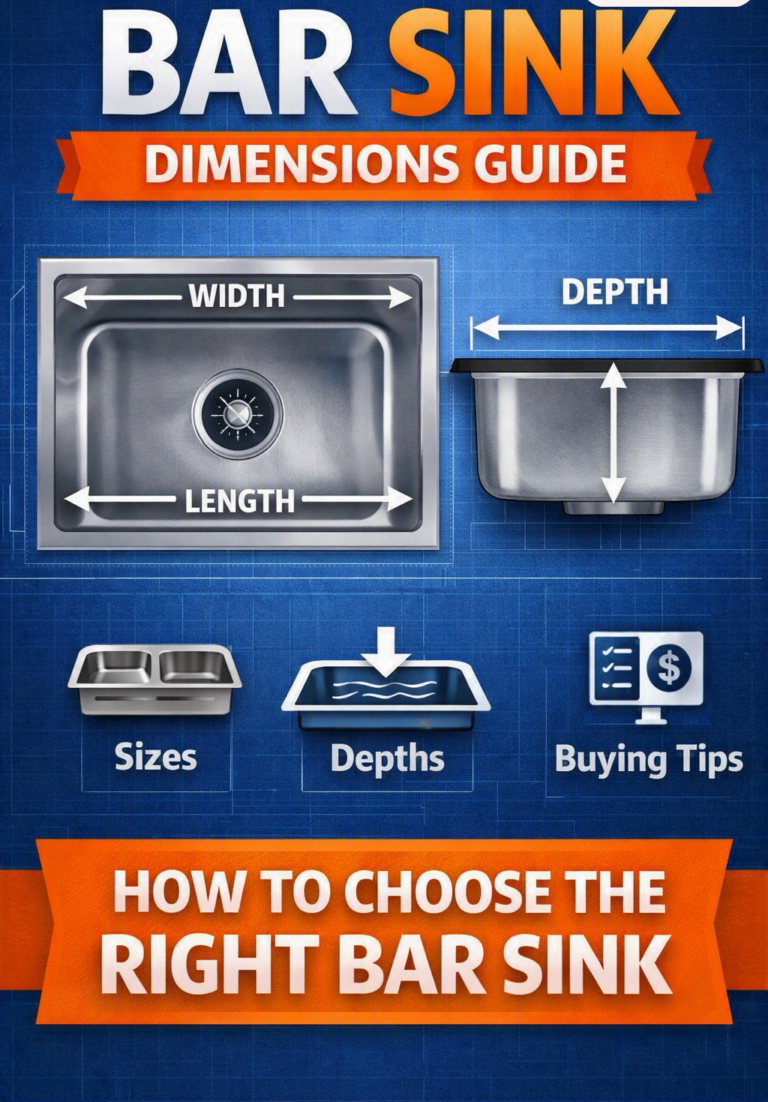
If you’re comparing smaller sink solutions, you can also explore our guide to [Bar Sink Dimensions & Buying Guide] for another space-conscious option.
⭐ Recommended Kitchen Sink
Discover this stylish and durable sink perfect for small kitchens. Click below to check the latest price on Amazon.
🔗 View on Amazon
Khadija is the writer and founder of Tiny Sink Solution. She creates practical guides about small kitchen sinks, faucets, and compact kitchen maintenance, helping homeowners and renters choose solutions for limited spaces. Some articles contain affiliate links, and as an Amazon Associate, she earns from qualifying purchases at no extra cost to readers

![Top [count] Gardening Blogs - OnToplist.com](https://www.ontoplist.com/images/ontoplist32.png?id=6aa4d0c493161)