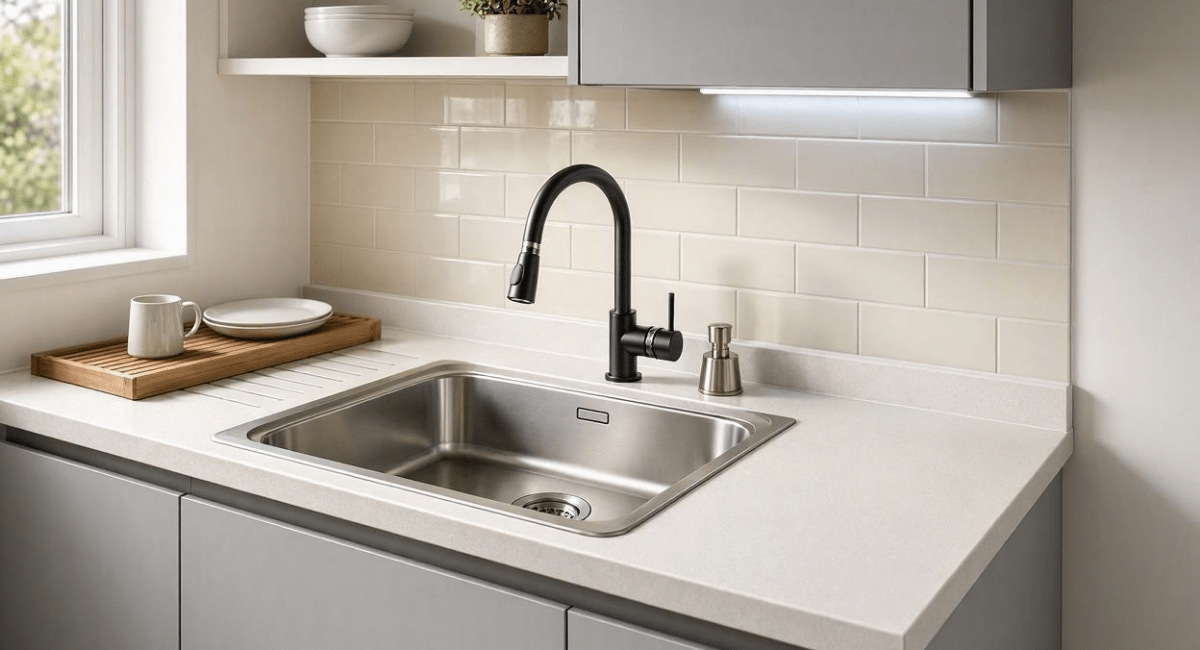
A shallow kitchen sink can be a practical choice when space, accessibility, or easier reach matters more than maximum bowl capacity. Most shallow kitchen sinks have a bowl depth of about 6 to 8 inches, although there is no universal industry cutoff.
For small kitchens, choosing the right depth is just as important as choosing the sink’s width and length. A shallower bowl can make everyday tasks easier, but it may not provide enough room for large pots and bulky cookware.
Quick Answer: A shallow kitchen sink is generally around 6–8 inches deep. It can work well in small kitchens when easier reach and accessibility are priorities, but it provides less capacity for large cookware than a deeper sink.
What Is a Shallow Kitchen Sink?
A shallow kitchen sink is a sink with a relatively low bowl depth compared with deeper kitchen sinks. The depth refers to the vertical distance from the top edge of the sink to the bottom of the basin.
A shallow sink is generally easier to reach into because the bottom of the bowl is closer to the countertop. This can be useful for people who prefer less bending or reaching while washing dishes.
However, sink depth is only one part of the overall size. A sink can have a shallow bowl while still being relatively wide or long. For a small kitchen, you need to consider the sink’s overall dimensions, cabinet size, countertop space, and installation requirements together.
How Deep Is a Shallow Kitchen Sink?
There is no single measurement that officially defines a shallow kitchen sink. In practical terms, sinks around 6 to 8 inches deep are commonly considered shallow compared with deeper kitchen sinks.
Here is a simple way to think about different depths:
- 5–6 inches: Very shallow and easy to reach, but limited for large cookware.
- 6–7 inches: A useful middle ground for compact kitchens and easier access.
- 7–8 inches: Still relatively shallow while providing more usable bowl capacity.
- 9–10 inches: Generally deeper and better suited to washing large pots and dishes.
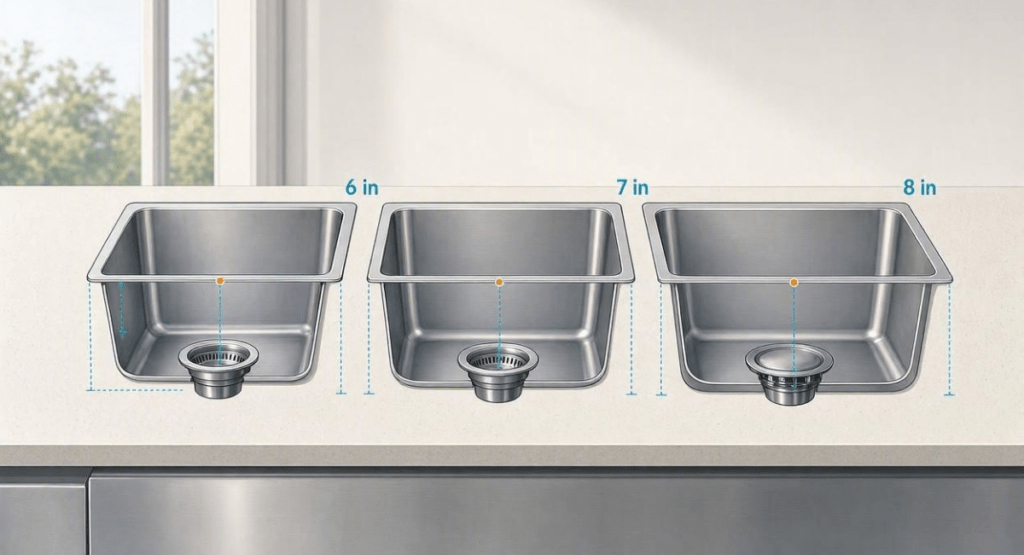
These ranges are guidelines rather than strict industry standards. The best depth depends on how you use your sink and how much space is available beneath the countertop.
Why Choose a Shallow Kitchen Sink for a Small Space?
A smaller kitchen does not automatically require a shallow sink. However, a shallow bowl can solve certain usability problems that are common in compact spaces.
Easier Reach
Because the bottom of the bowl is closer to the countertop, a shallow sink requires less reaching downward. This can make routine tasks such as rinsing dishes and preparing food more comfortable.
Less Bending
A shallower bowl can reduce the amount of bending needed when working at the sink. This can be particularly useful for people who find deeper sinks uncomfortable to use.
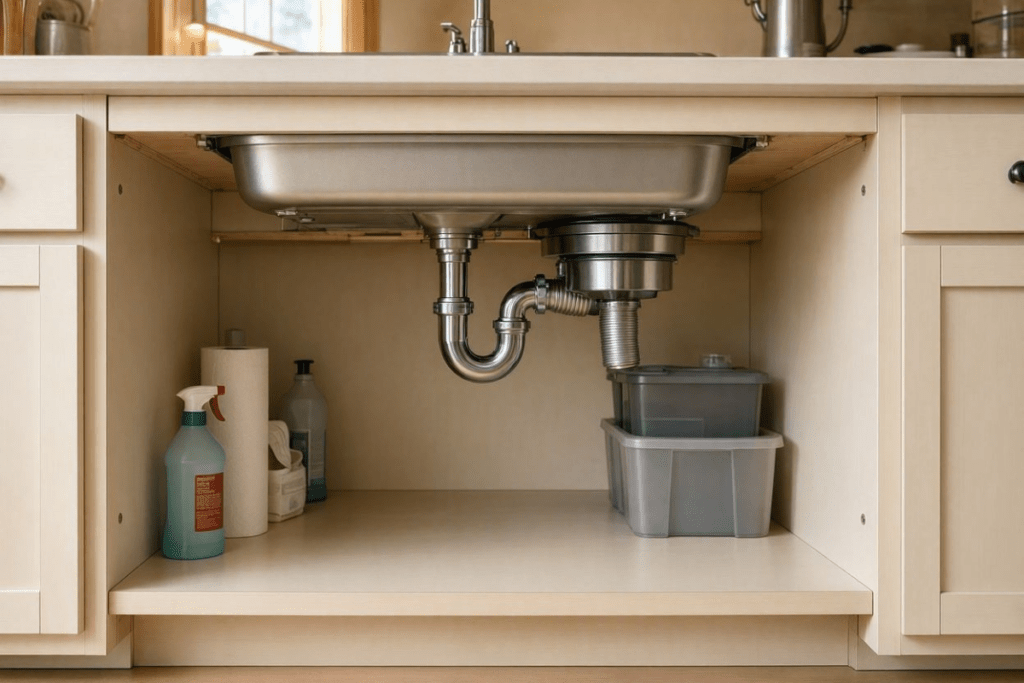
Potential Under-Sink Clearance
The shape and depth of the sink can affect the space available beneath it. In some layouts, a shallower bowl can leave more vertical room for plumbing or storage.
However, actual clearance depends on the sink design, drain position, plumbing configuration, and whether a garbage disposal is installed.
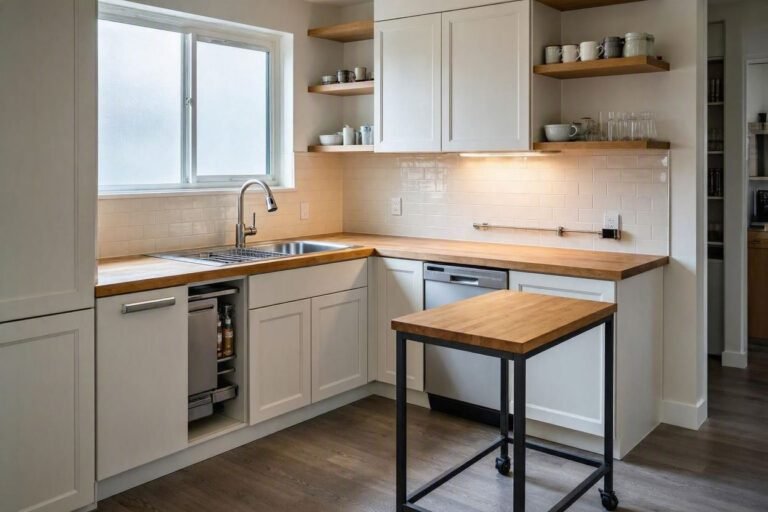
Practical for Compact Kitchens
Small kitchens often require compromises between countertop space, storage, sink capacity, and usability. A shallow sink can be a sensible option when easy access is more important than having a deep basin for oversized cookware.
Shallow Kitchen Sink Options to Consider
Different sink configurations can be available with shallower bowl depths. The right option depends on your cabinet, countertop, installation method, and daily needs.
Single-Bowl Shallow Sinks
A shallow single-bowl sink provides one continuous basin without a center divider.
This can make the available bowl space easier to use for washing and rinsing dishes. It can also be practical when countertop space is limited and you do not need separate compartments.
Compact Shallow Sinks
Compact sinks combine a smaller overall footprint with a relatively shallow bowl.
They can work well in apartments, small kitchens, accessory kitchens, and other spaces where both counter and cabinet space are limited.
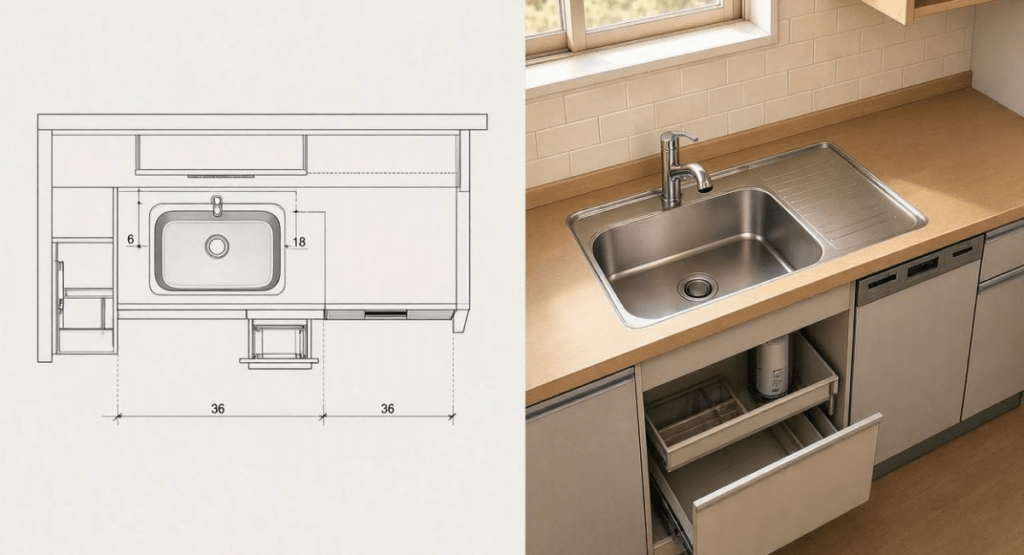
Before choosing one, check the minimum cabinet size and required countertop cutout rather than relying only on the sink’s advertised dimensions.
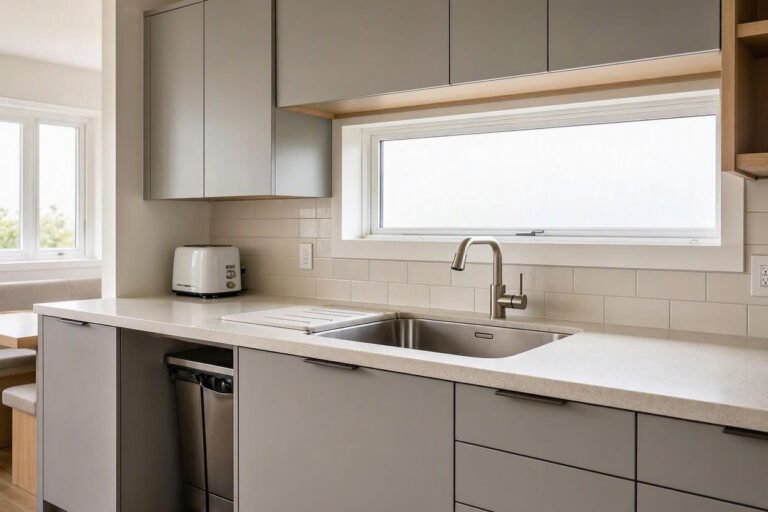
Shallow Undermount Sinks
An undermount sink is installed beneath the countertop rather than sitting on top of it.
A shallow undermount sink can provide a clean countertop transition and make it easier to wipe crumbs directly into the bowl. However, installation requirements can be more demanding than with some drop-in designs.
Shallow Drop-In Sinks
Drop-in sinks sit within a countertop opening with the sink rim resting on the counter.
They can be practical for certain remodeling or replacement projects because the installation approach can be simpler than with some undermount installations, depending on the existing countertop and sink configuration.
If you’re working with an RV or another highly compact kitchen, see our guide to the best sink for RV kitchens for additional space-saving considerations.
Small Prep or Bar Sinks
Small prep and bar sinks are another option when the sink is primarily used for food preparation, rinsing, or occasional washing.
They are not necessarily a replacement for a primary kitchen sink, but their compact dimensions can make them useful where space is extremely limited.
Benefits of a Shallow Kitchen Sink
A shallow sink can offer several advantages, particularly when ease of access is a priority.
Easier to Reach
The shorter distance to the bottom of the bowl can make washing and rinsing more comfortable for some users.
Better Accessibility for Some Users
People with limited reach or mobility may find a shallow bowl easier to use than a deep one. Sink design, countertop height, and the surrounding workspace still matter, so depth alone does not determine accessibility.
Can Work Well in Compact Layouts
A shallow bowl can be useful when a kitchen needs to balance sink usability with plumbing, storage, or clearance requirements underneath the counter.
Easier to See the Bottom of the Bowl
A shallower basin can make it easier to see and reach items sitting at the bottom of the sink.
Drawbacks of a Shallow Kitchen Sink
Shallow sinks are not ideal for every kitchen.
Less Capacity for Large Cookware
Large stockpots, roasting pans, and tall containers may be harder to wash in a shallow bowl because there is less vertical space.
Potential for More Noticeable Splashing
A shallow basin provides less depth to contain water and dishes. Depending on the faucet, water pressure, bowl shape, and how the sink is used, splashing may be more noticeable.
Limited Space for Soaking
If you frequently soak large pots, pans, or multiple dishes at once, a deeper sink may be more convenient.
Not Always the Best Choice for Heavy Cooking
Households that regularly prepare large meals may benefit from the additional capacity of a deeper sink.
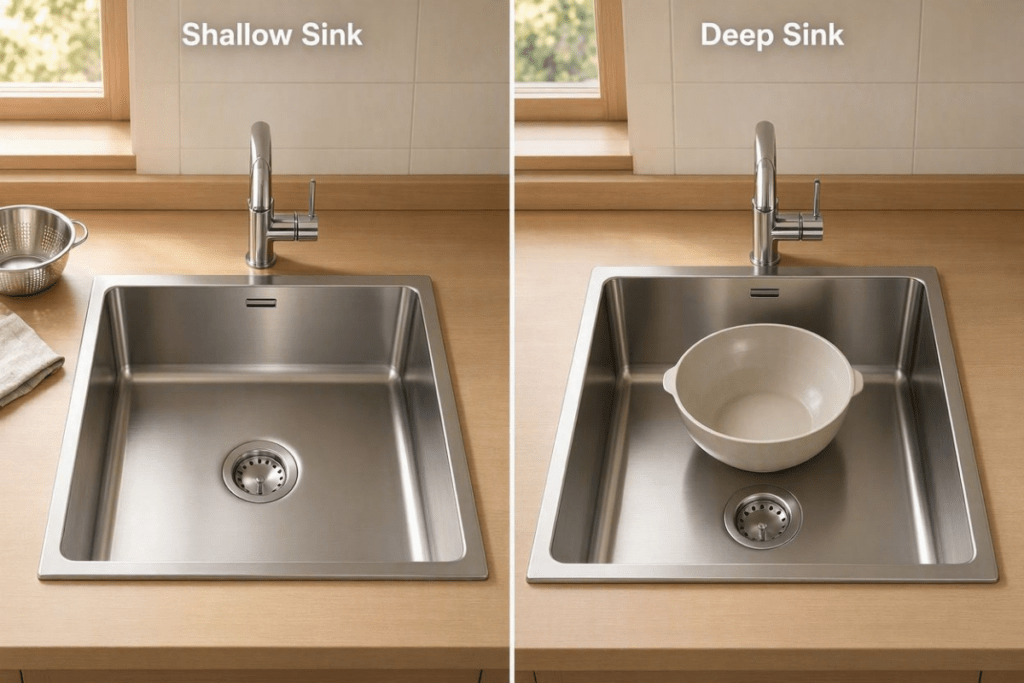
Shallow vs. Deep Kitchen Sink: Which Is Better?
Neither is universally better. The right choice depends on your priorities.
| Feature | Shallow Sink | Deep Sink |
|---|---|---|
| Reach | Easier for many users | Requires more reaching |
| Bowl capacity | Lower | Higher |
| Large pots | Less convenient | More convenient |
| Accessibility | Can be easier for some users | May require more reach |
| Soaking dishes | More limited | Better |
| Under-sink space | May provide more clearance in some layouts | Bowl can extend farther downward |
If you mainly wash smaller dishes and want easier access, a shallow kitchen sink may be the better fit.
If you regularly wash large cookware or need plenty of soaking space, a deeper sink may be more practical.
Who Is a Shallow Kitchen Sink Best For?
A shallow kitchen sink may be a good fit for:
- Small kitchens where usability and available space need to be balanced.
- People who prefer easier reach into the bottom of the basin.
- Light-to-moderate dishwashing routines that do not involve many large pots.
- Compact households with limited cookware.
- Some accessibility-focused layouts, where a shallower bowl may make reaching easier.
A deeper sink may be a better choice if you frequently wash large cookware by hand or rely on the sink for soaking multiple dishes.
What Depth Is Best for a Small Kitchen?
There is no single best depth for every small kitchen.
A 6–7-inch sink can be a good choice when easy reach and compact usability are priorities. An 8-inch sink may provide a useful compromise if you still need additional capacity for everyday cookware.
Before choosing a depth, consider:
- How often you wash large pots
- Whether you use a dishwasher
- Your preferred working height
- How far you can comfortably reach
- Available cabinet space
- Plumbing and drain clearance
- Whether you use a garbage disposal
- The sink’s overall width and length
For a broader look at sink length, width, depth, cabinet requirements, and other measurements, see our Small Kitchen Sink Dimensions: Complete Size Guide.
The best shallow kitchen sink is the one that fits both your space and your daily routine.
How to Choose the Right Shallow Kitchen Sink
1. Measure the Cabinet
Start with the sink base cabinet rather than the countertop opening. The cabinet determines the maximum sink size that can be accommodated.
If you’re replacing an existing sink, our guide on how to measure a cabinet for a replacement kitchen sink can help you determine the available space before choosing a new sink.
2. Check the Countertop Space
Make sure the sink leaves enough room for surrounding countertop work areas, especially in a compact kitchen.
The sink’s required cutout can differ from its outside dimensions. Always follow the manufacturer’s installation specifications. For additional guidance, see KOHLER’s kitchen sink installation guide.
3. Compare Bowl Depths
Do not choose based on overall sink dimensions alone. Check the actual bowl depth and consider whether you need more capacity or easier reach.
4. Check the Cutout Requirements
The sink’s required cutout can differ from its outside dimensions. Always follow the manufacturer’s installation specifications.
5. Consider Drain and Plumbing Placement
The drain location can affect the space available beneath the sink. Check plumbing clearance before installation.
6. Think About Your Cookware
If you regularly wash large pots and baking dishes by hand, make sure the shallow bowl provides enough usable space.
7. Consider the Mounting Type
Undermount, drop-in, and other sink styles have different installation requirements. Choose a style that works with your existing or planned countertop.
Are Shallow Kitchen Sinks Good for Everyday Use?
Yes, a shallow kitchen sink can work well for everyday use when its capacity matches your needs.
It may be particularly practical for smaller households, compact kitchens, lighter dishwashing routines, and users who prefer easier access to the bottom of the bowl.
However, households that frequently wash large cookware by hand may find a deeper sink more convenient.
The key is not simply choosing the shallowest sink available. Instead, choose a depth that provides a comfortable balance between reach, capacity, clearance, and everyday usability.
Frequently Asked Questions
What depth is considered shallow for a kitchen sink?
Kitchen sinks around 6 to 8 inches deep are commonly considered shallow compared with deeper sink bowls. The exact classification varies because there is no universal cutoff.
Is a 6-inch kitchen sink too shallow?
Not necessarily. A 6-inch sink can be useful when easy reach and accessibility are priorities. However, it provides less room for large pots and deep soaking.
Is a shallow sink good for a small kitchen?
It can be. A shallow sink may improve accessibility and help with certain under-sink clearance considerations, but overall sink width, cabinet size, and countertop space are equally important.
What is the best sink depth for a small kitchen?
For many compact kitchens, a depth around 6 to 8 inches can provide a practical balance between accessibility and capacity. Your cooking habits should determine the final choice.
Do shallow kitchen sinks splash more?
They can, depending on the faucet, water pressure, bowl shape, and how the sink is used. A shallow bowl has less vertical space to contain water and dishes.
Are shallow sinks easier to use?
For many people, yes. The bottom of the bowl is easier to reach, which can make washing and rinsing more comfortable.
Can a shallow sink fit a standard kitchen cabinet?
It can, but sink depth alone does not determine cabinet compatibility. You must also check the sink’s overall dimensions, minimum cabinet requirement, cutout, plumbing, and installation specifications.
Final Takeaway
A shallow kitchen sink can be an excellent option when easy reach, compact usability, and accessibility are more important than maximum bowl capacity.
A depth of around 6 to 8 inches is a useful starting point, but the right choice depends on your cabinet, countertop, plumbing, cookware, and everyday washing habits.
For a small kitchen, don’t choose a sink based on depth alone. Consider the complete installation space and how you actually use the sink before making a decision.

Khadija is the writer and founder of Tiny Sink Solution. She creates practical guides about small kitchen sinks, faucets, and compact kitchen maintenance, helping homeowners and renters choose solutions for limited spaces. Some articles contain affiliate links, and as an Amazon Associate, she earns from qualifying purchases at no extra cost to readers
![Top [count] Gardening Blogs - OnToplist.com](https://www.ontoplist.com/images/ontoplist32.png?id=6aa4d0c493161)