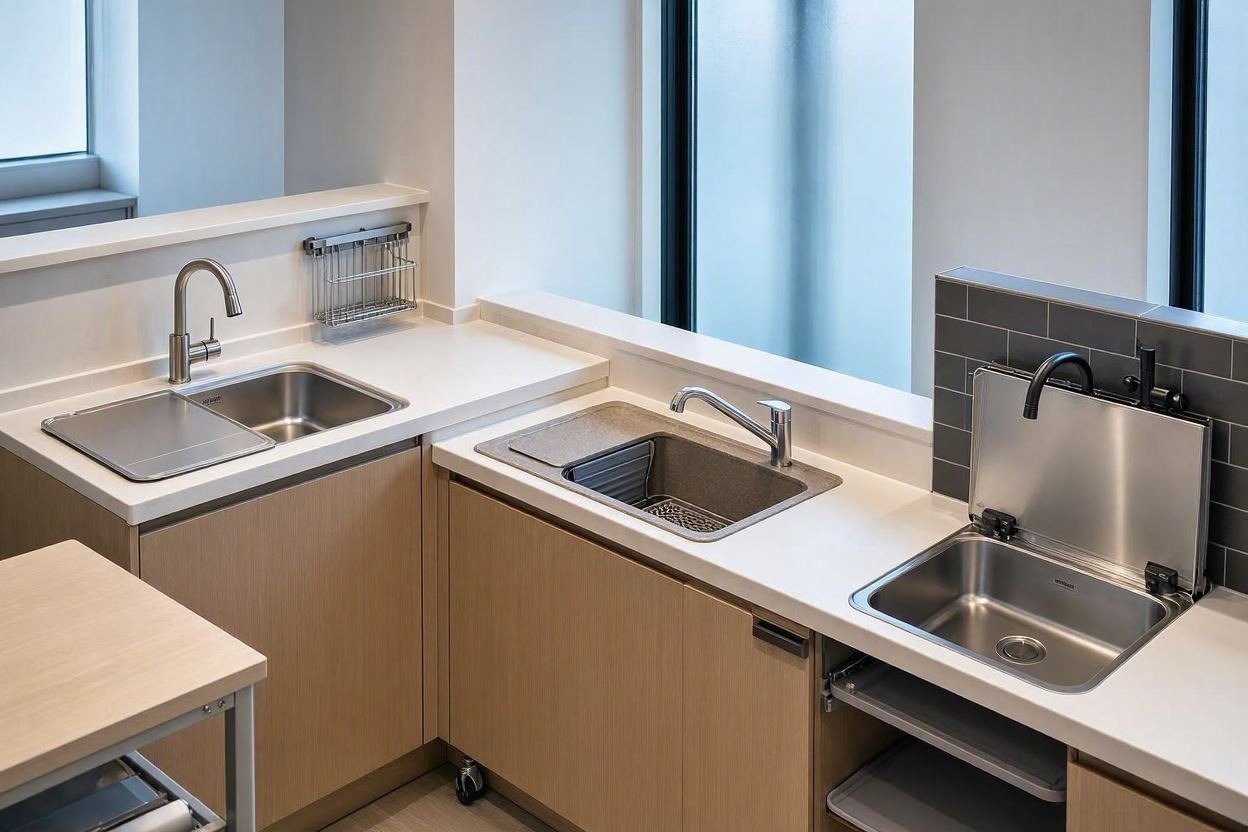
Choosing the right sinks for studio kitchens can make a major difference in a compact cooking area. Studio apartments often have limited countertop space, smaller cabinets, and restricted plumbing layouts. Therefore, the sink needs to provide useful washing space without consuming too much of the surrounding work area. The best sinks for studio kitchens balance basin size, cabinet compatibility, installation style, durability, and everyday convenience. Single-bowl, bar, corner, and workstation designs can all work well when matched with the kitchen layout. Before purchasing, check the sink dimensions, minimum cabinet size, sink depth, faucet placement, drain position, and countertop clearance. Careful planning can create a practical kitchen workflow while preserving valuable storage and preparation space.
Why Choosing the Right Sink Matters in a Studio Kitchen
In a studio apartment, the kitchen usually shares space with other living areas. This makes efficient planning especially important. The right sinks for studio kitchens should support daily tasks without overwhelming the available countertop or cabinet area.
A poorly sized sink can reduce preparation space and make washing dishes uncomfortable. Conversely, an efficiently designed basin can improve the kitchen workflow while keeping the layout visually balanced.
Limited Countertop Space
Countertop space is extremely valuable in a small kitchen. A large basin can occupy an area that could otherwise be used for chopping vegetables, preparing meals, or placing appliances.
Compact designs provide useful countertop space around the basin. However, choosing the smallest model available is not always practical. The sink should still accommodate everyday dishes and cookware.
Cabinet and Storage Limitations
The cabinet beneath the basin is equally important. Internal supports, drawers, rails, shelves, and plumbing can reduce usable cabinet space.
Before buying sinks for studio kitchens, compare the manufacturer’s minimum cabinet requirements with the actual interior measurements. This helps prevent installation problems and protects valuable under-sink storage.
Sink Size vs. Functionality
A small basin should still perform its intended tasks comfortably. Single-bowl designs often provide uninterrupted washing space, while workstation models can combine washing and preparation functions.
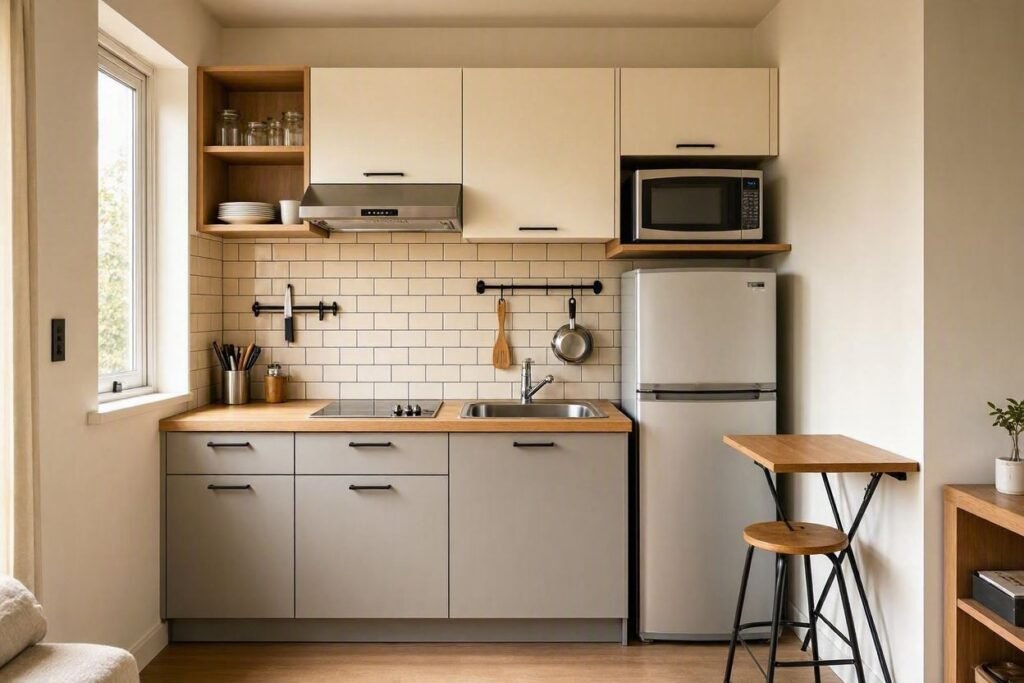
The goal is not simply to choose a small sink. It is to select a model that makes the best use of limited kitchen space.
What Size Sink Is Best for a Studio Kitchen?
There is no universal size that suits every studio apartment. The appropriate sink dimensions depend on cabinet construction, countertop depth, plumbing location, and household needs.
When comparing sinks for studio kitchens, never rely only on the advertised width. Examine the complete product dimensions and installation specifications.
Ideal Compact Sink Dimensions
Compact kitchen sinks are available in several widths and configurations. A narrow basin can work well in a galley-style kitchen, while a slightly wider single bowl may be better for larger cookware.
The ideal sink size for a small kitchen should leave sufficient countertop space for food preparation while providing a useful washing area.
Minimum Cabinet Size
The minimum cabinet size is one of the most important specifications to verify.
A sink advertised as 18 inches wide does not necessarily fit an 18-inch cabinet. Cabinet walls, supports, and internal construction reduce the actual installation space.
Always compare the sink’s required cabinet size with the cabinet’s usable interior dimensions.
Sink Depth and Countertop Space
Sink depth affects both basin capacity and the space underneath. A deep basin may accommodate large pots but could interfere with plumbing or reduce under-sink storage.
For many sinks for studio kitchens, moderate depth offers a practical balance between washing capacity and installation clearance.
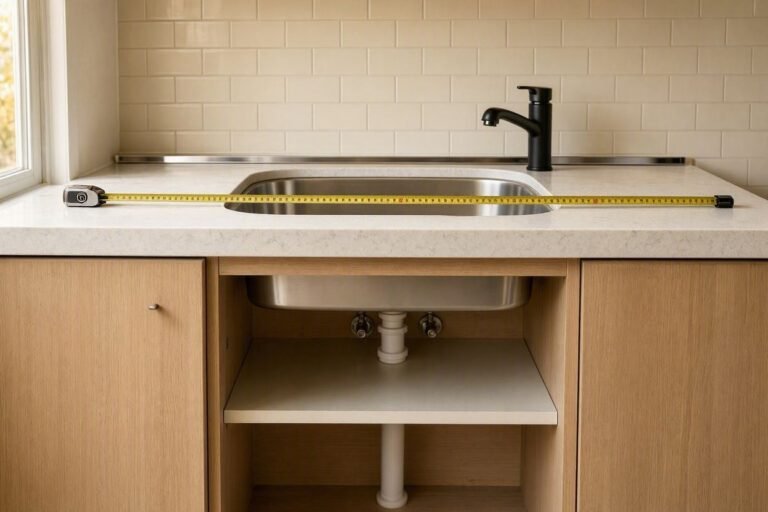
How to Measure Before Buying
Before purchasing, measure:
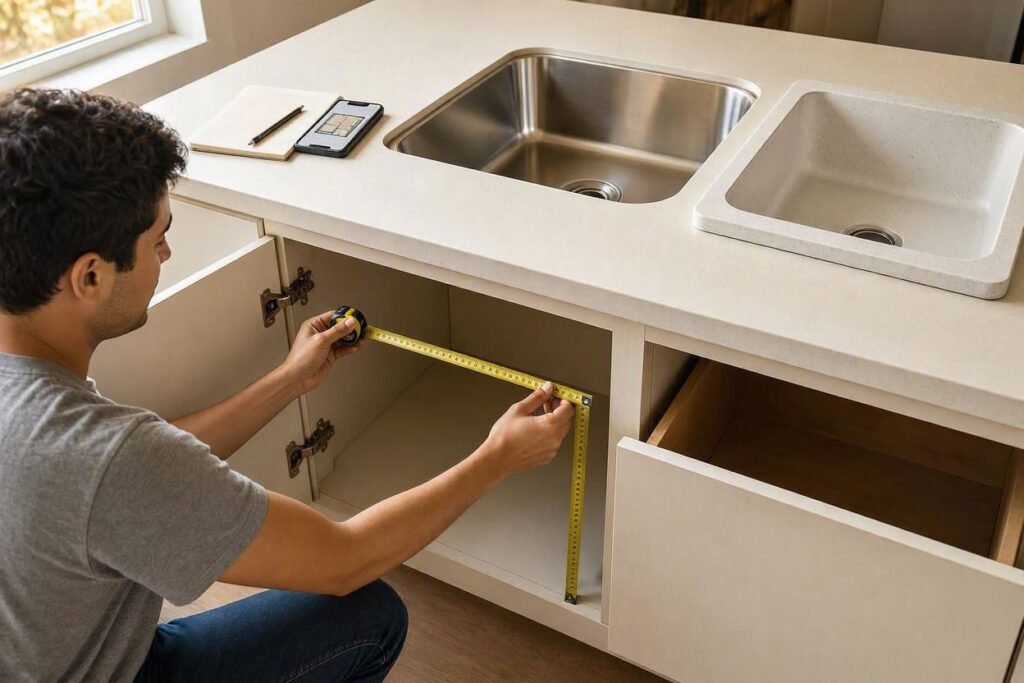
- Cabinet opening width
- Interior cabinet width
- Cabinet depth
- Available vertical clearance
- Countertop depth
- Existing cutout
- Plumbing location
- Faucet holes
- Drain position
These measurements help determine whether a compact sink will fit properly.
Best Types of Sinks for Studio Kitchens
Different sink configurations provide different benefits. Understanding each option makes it easier to match the basin to a compact kitchen layout.
Single-Bowl Sinks
A single-bowl sink provides one uninterrupted basin. This configuration can be especially useful for washing large pots, pans, and cookware.
Because there is no center divider, the available basin space can feel generous even when the exterior dimensions remain compact.
Double-Bowl Sinks
A double-bowl sink separates the basin into two sections. This arrangement can help with washing and rinsing simultaneously.
However, dividing the available width may make each bowl relatively narrow. For many studio apartments, a larger single basin can be more useful.
Bar and Prep Sinks
A bar sink or prep sink is designed for smaller tasks. These models can work well where available cabinet and countertop space is extremely restricted.
They can be used for rinsing produce, preparing beverages, or handling light cleanup.
Corner Sinks
A corner sink can use an otherwise awkward part of a countertop. This makes it worth considering for unusual small kitchen layouts.
However, corner cabinets can have complex internal construction. Plumbing access and cabinet dimensions should be checked carefully.
Workstation Sinks
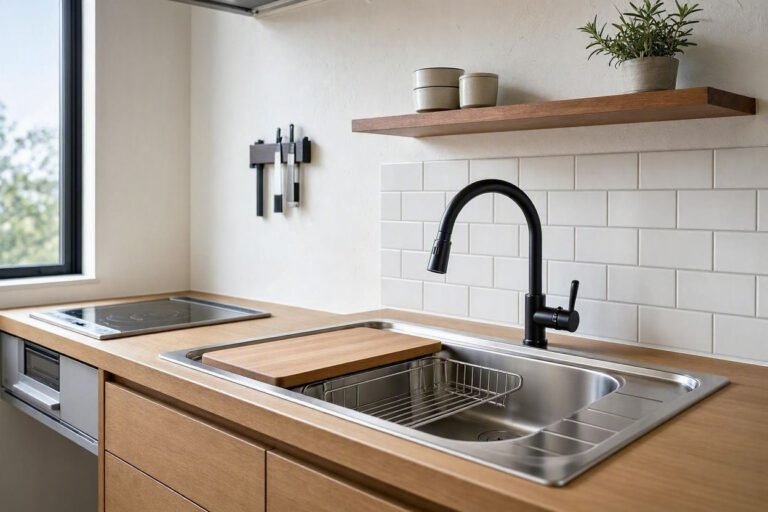
A workstation sink combines the basin with accessories such as a cutting board, drying rack, or sink grid.
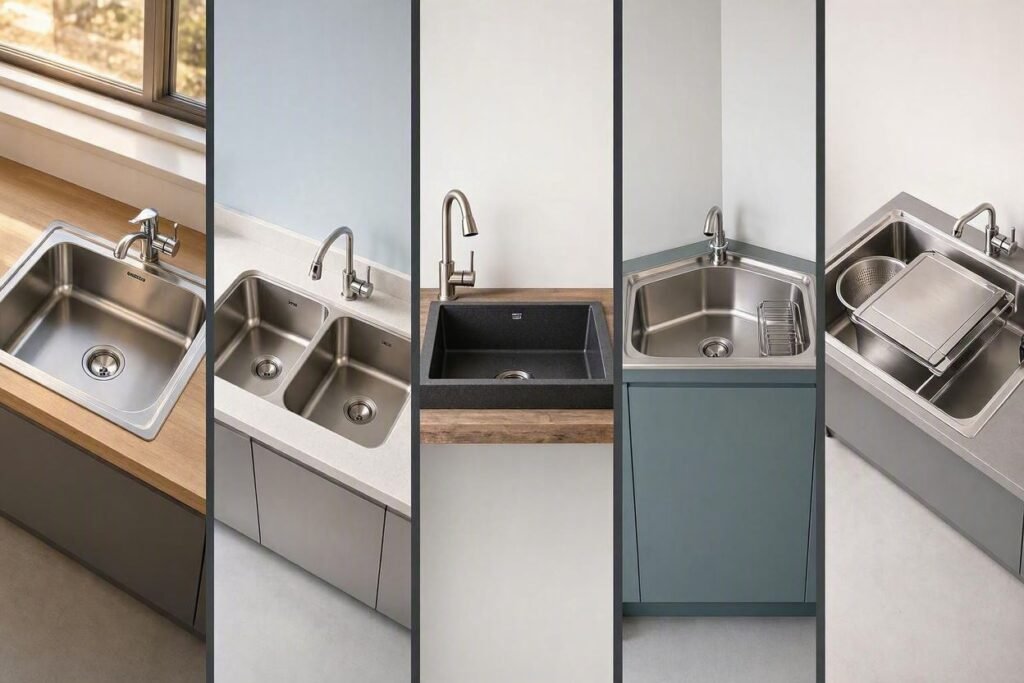
For homeowners comparing sinks for studio kitchens, this configuration can be attractive because one fixture can support several kitchen tasks.
How to Choose a Space-Saving Sink for a Studio Apartment
Selecting sinks for studio kitchens requires more than comparing exterior dimensions. Shape, faucet placement, drain position, and cabinet configuration all influence practical usability.
Sink Shape
Rectangular sinks are common because they fit efficiently into many countertop designs. Square and corner models can also work well in unusually restricted layouts.
Choose a shape that complements the existing cabinet arrangement rather than forcing unnecessary modifications.
Faucet Placement
Faucet placement can affect countertop clearance and ease of use. Check the number and position of faucet holes before purchasing.
A faucet with excessive reach may interfere with nearby walls, windows, backsplashes, or cabinets.
Drain Position
The drain position affects plumbing compatibility and under-sink storage.
Some sinks use offset drains that can create additional room underneath. However, compatibility with the existing plumbing should always be verified.
Countertop Clearance
Adequate countertop clearance helps maintain a comfortable preparation area around the basin.
In a studio kitchen, even a small increase in usable counter space can improve the overall workflow.
Cabinet Configuration
Inspect cabinet doors, drawers, support rails, shelves, and internal partitions before choosing the sink.
These features can reduce the usable installation area even when the cabinet looks large enough from the outside.
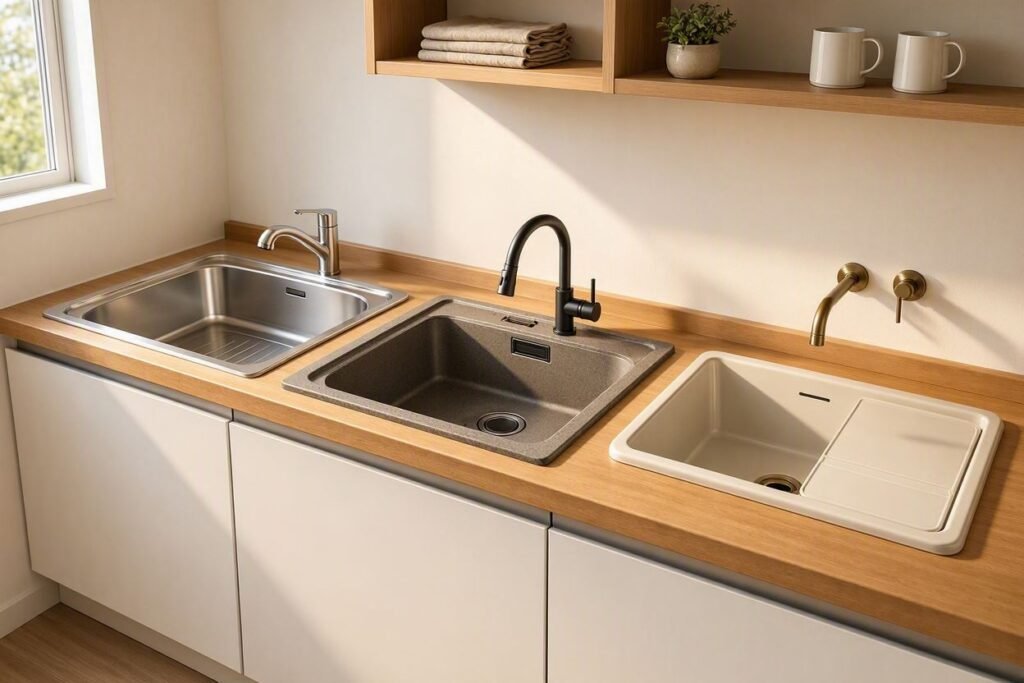
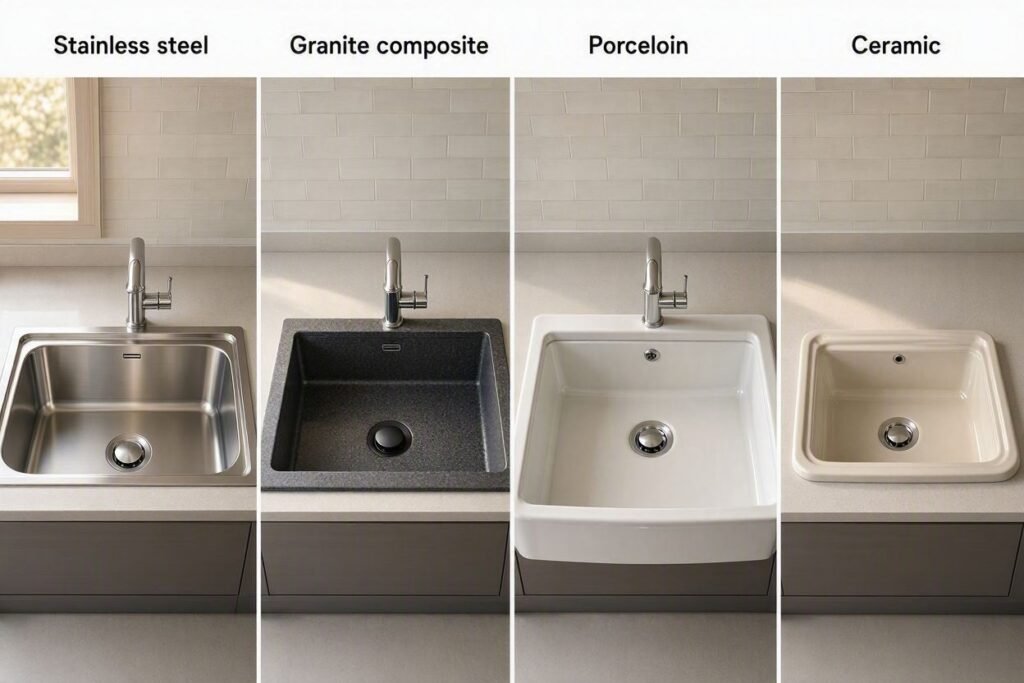
Stainless Steel vs. Other Sink Materials for Studio Kitchens
Sink material affects durability, appearance, cleaning requirements, and long-term maintenance. Consider both performance and visual compatibility when selecting sinks for studio kitchens.
Stainless Steel
A stainless steel sink is a versatile option for many compact kitchens. It works well with modern appliances and is available in numerous sizes and configurations.
However, water spots and fine scratches can become noticeable without appropriate care.
Granite Composite
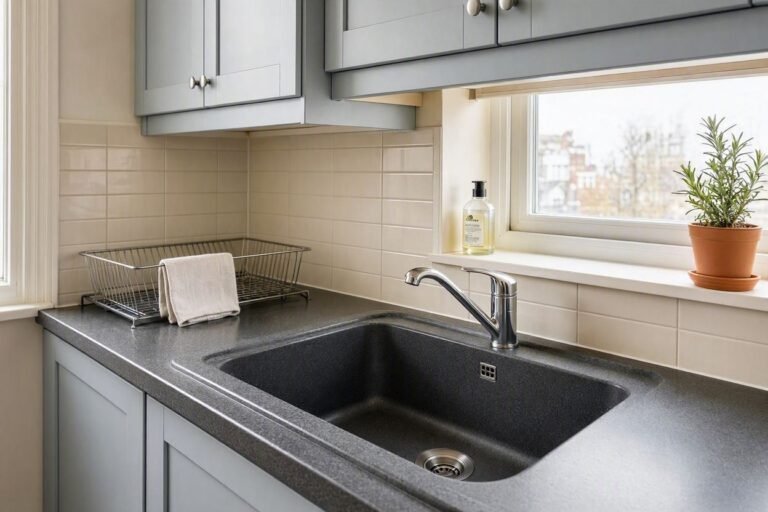
A granite composite sink offers a substantial appearance and can complement contemporary countertops.
Its heavier construction should be considered when evaluating cabinet support and installation requirements.
Porcelain
A porcelain sink provides a classic appearance that can complement traditional or transitional kitchen designs.
The surface should be cleaned according to manufacturer recommendations to protect the finish.
Ceramic
A ceramic sink offers another traditional option. Its smooth finish can suit kitchens where appearance is a major design consideration.
As with porcelain, appropriate cleaning products should be used.
Pros and Cons of Each Material
| Sink Material | Advantages | Considerations |
|---|---|---|
| Stainless steel | Durable, versatile, modern | Can show water spots and scratches |
| Granite composite | Attractive and substantial | Heavier construction |
| Porcelain | Classic appearance | Requires suitable care |
| Ceramic | Traditional appearance | Finish needs careful maintenance |
Best Sink Installation Options for Small Studio Kitchens
Installation style affects appearance, countertop cleaning, maintenance, and compatibility. The countertop material must also support the chosen installation method.
Drop-In Sinks
A drop-in sink rests on top of the countertop and has a visible rim.
This configuration can be practical for many replacement projects and may simplify certain installations.
Undermount Sinks
An undermount sink attaches below the countertop. This creates a cleaner transition between the countertop and basin.
The smooth surface can make it easier to sweep crumbs and water directly into the sink.
Integrated Sinks
An integrated sink forms part of the countertop system. This creates a streamlined appearance with fewer visible transitions.
However, installation depends heavily on the countertop material and fabrication process.
Which Installation Saves the Most Usable Space?
The installation type alone does not determine the sink’s physical footprint. Actual sink dimensions and cabinet requirements are more important.
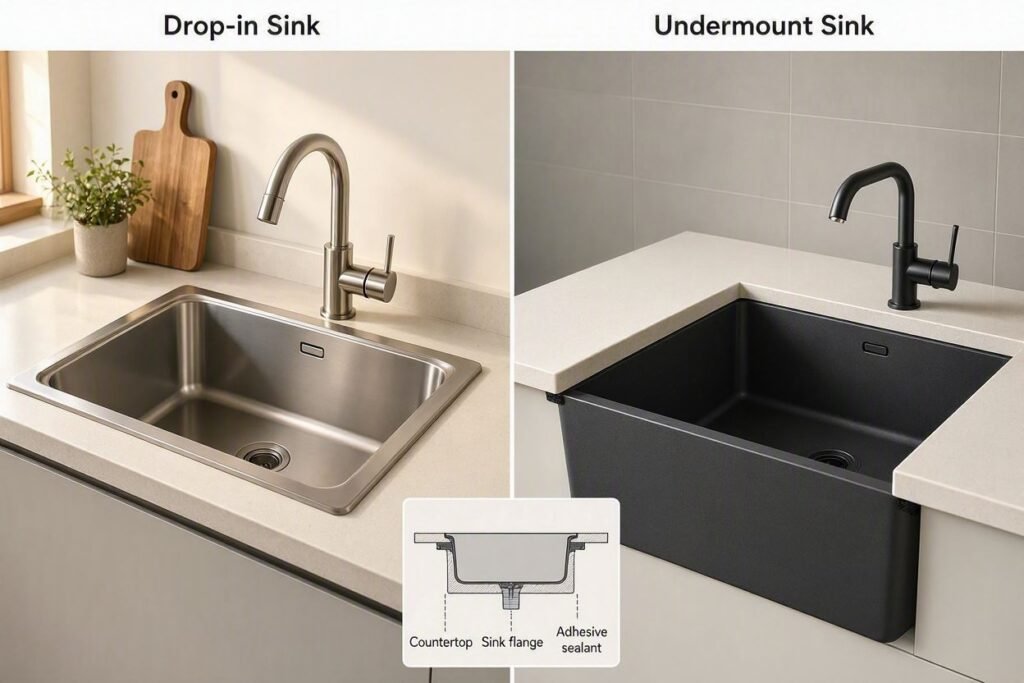
For sinks for studio kitchens, choose an installation method that fits the countertop, cabinet structure, plumbing, and maintenance preferences.
Smart Sink Features That Maximize Small Kitchen Space
Useful accessories can make compact sinks for studio kitchens significantly more versatile. Multifunctional features are particularly valuable when additional countertop space is unavailable.
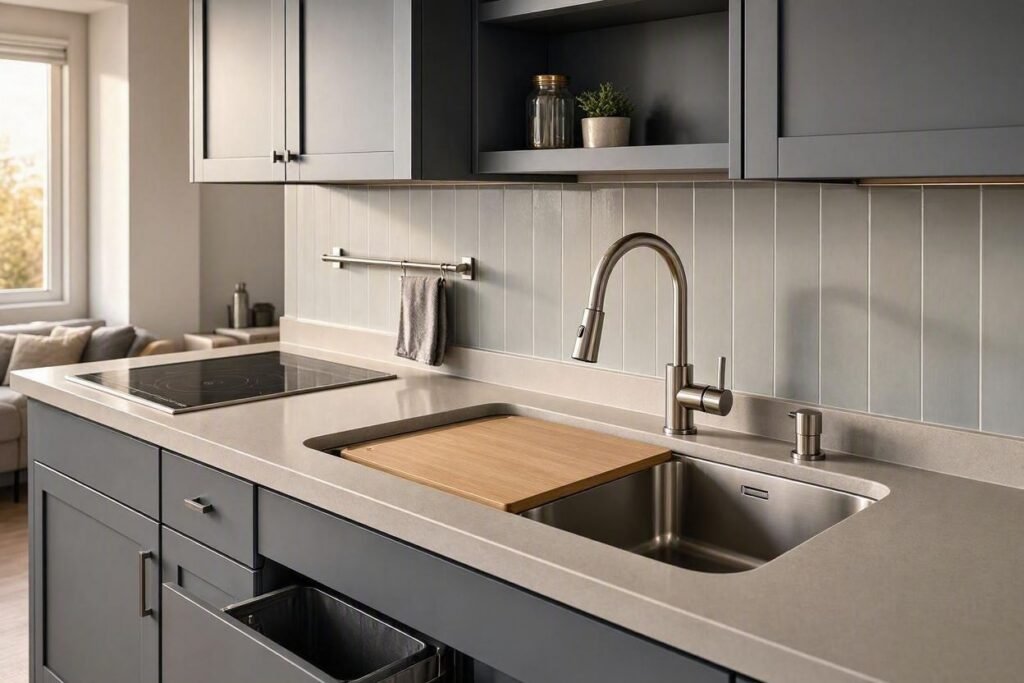
Built-In Cutting Boards
A cutting board designed to fit over the basin can create a temporary food preparation surface.
This allows part of the sink area to serve another purpose without permanently occupying the countertop.
Roll-Up Drying Racks
A roll-up drying rack can be placed over the basin for drying dishes or rinsing produce.
It can then be rolled away when additional basin space is needed.
Sink Grids
A sink grid protects the basin bottom from direct contact with cookware.
It can also allow water to move around dishes while reducing impact from heavy pots.
Sink Covers
A sink cover can temporarily create additional preparation space when the basin is not being used.
This feature can be particularly useful in kitchens with very limited countertops.
Compact Faucets
A compact faucet should provide adequate reach without interfering with surrounding cabinets or walls.
Consider spout height, reach, handle movement, and faucet holes before purchase.
Workstation Accessories
Workstation accessories can combine washing, draining, and food preparation.
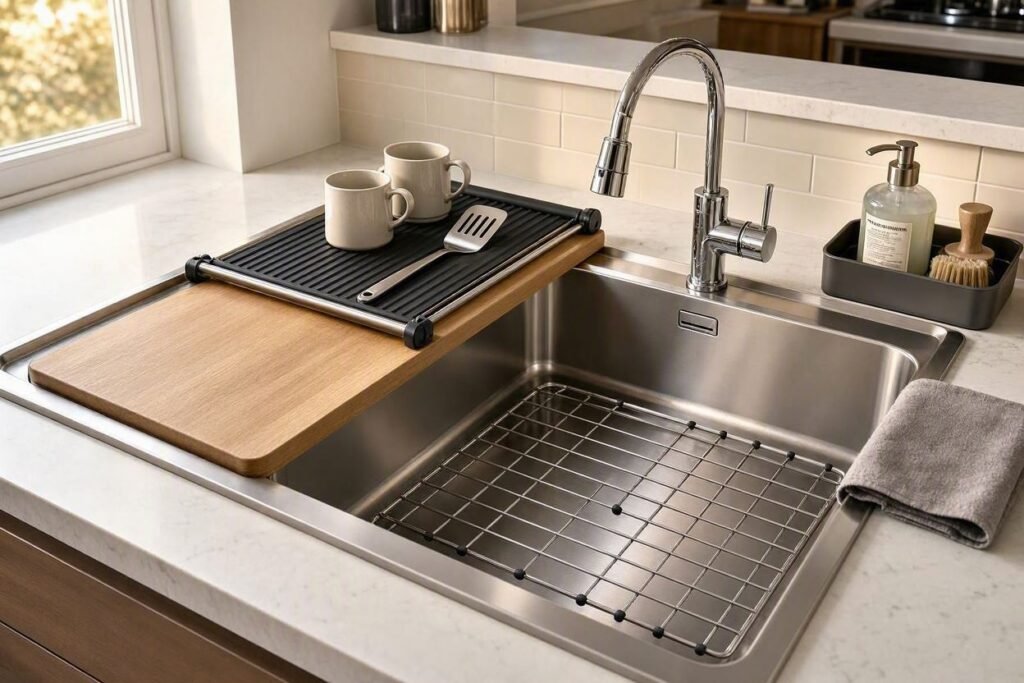
These additions can improve kitchen functionality while reducing the need for separate countertop tools.
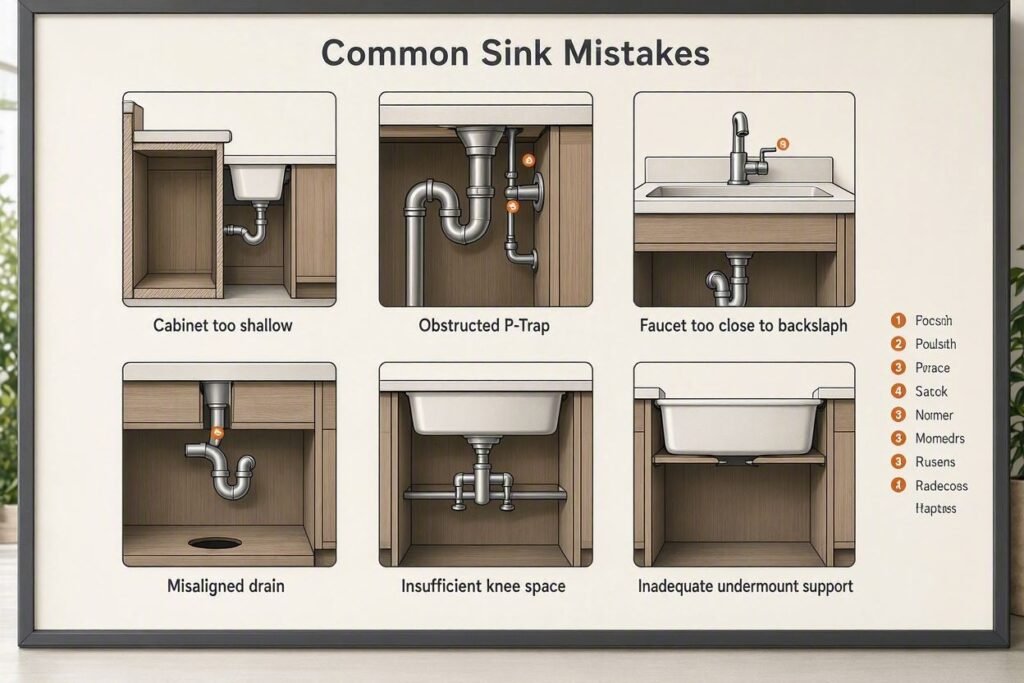
Common Sink Mistakes to Avoid in a Studio Kitchen
Because studio kitchens have limited space, small measurement errors can create significant problems.
Choosing a Sink That Is Too Large
An oversized sink can consume valuable countertop space and reduce the area available for food preparation.
Compare the basin footprint with the complete countertop layout before purchasing.
Ignoring Cabinet Dimensions
Never assume that the sink will fit simply because its listed width appears suitable.
Check interior cabinet measurements, support structures, and minimum cabinet requirements.
Forgetting Plumbing Clearance
The drain assembly needs sufficient space beneath the basin.
Existing pipes may also interfere with installation. Measure plumbing locations before ordering.
Choosing Excessive Bowl Depth
A very deep basin may reduce storage space beneath the sink and complicate plumbing connections.
Choose a depth based on actual usage rather than assuming deeper always means better.
Overlooking Faucet Placement
Poor faucet positioning can interfere with walls, windows, cabinets, and backsplashes.
Check faucet holes and spout reach before finalizing the sink.
How to Maintain a Sink in a Small Studio Kitchen
Regular sink maintenance protects the finish and supports good kitchen hygiene. A consistent cleaning routine can also prevent common surface problems.
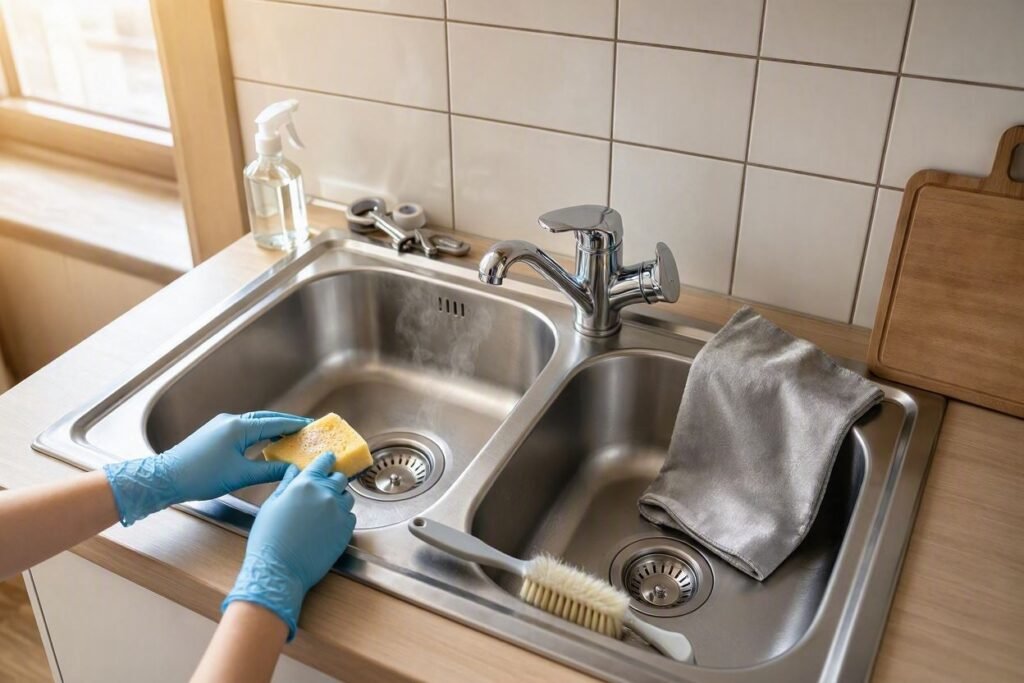
Daily Cleaning
Remove food residue after cooking and rinse the basin thoroughly.
For many materials, mild dish soap and a soft sponge are suitable for routine cleaning. Always follow the manufacturer’s recommendations.
Drying the sink after use can reduce water spots and mineral residue.
Preventing Stains and Scratches
Avoid leaving food residue, coffee, tea, or soap residue on the surface for long periods.
Abrasive cleaners, abrasive scrubbers, and steel wool can damage certain finishes. Use only products recommended for the specific sink material.
Hard-Water Buildup
Hard water can leave mineral deposits around the basin, faucet area, and drain.
Regular cleaning helps prevent hard water stains from becoming difficult to remove. White vinegar may be suitable for certain materials, but compatibility should be confirmed first.
Keeping the Drain Clear
Food particles and soap residue can accumulate around the drain.
A suitable strainer can help reduce debris entering the plumbing. Regular cleaning also supports better kitchen hygiene.
Protecting Stainless Steel
For stainless steel sink cleaning, choose a non-abrasive cleaning solution and soft sponge or microfiber cloth.
Rinse thoroughly and dry the surface after cleaning. Following the direction of the stainless steel grain can help maintain a consistent finish.
Final Thoughts
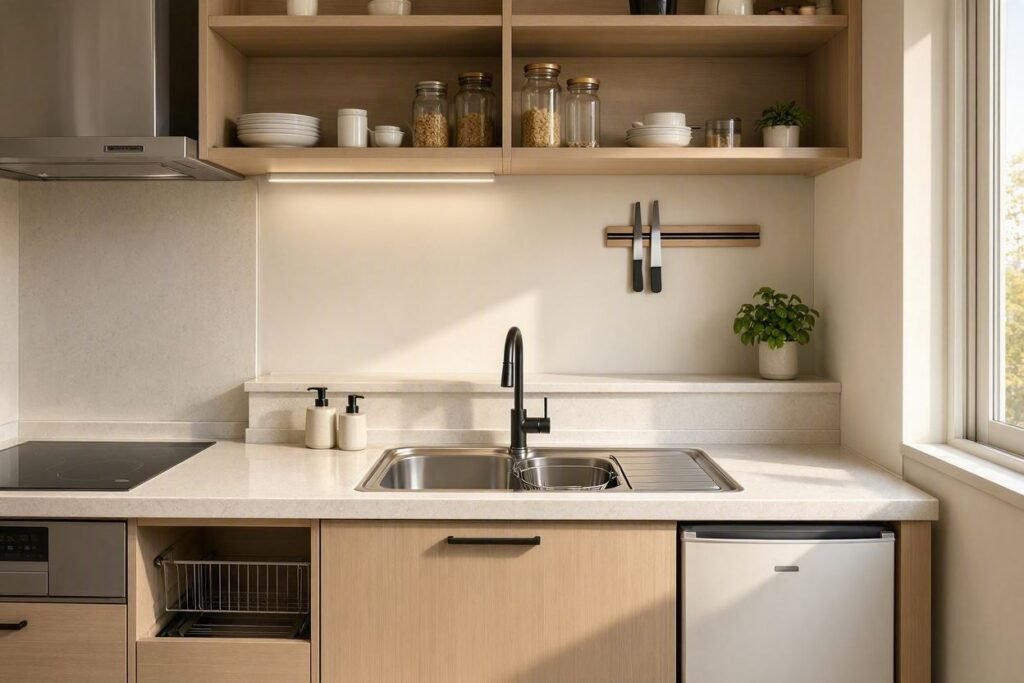
The best sinks for studio kitchens balance size, functionality, durability, and efficient use of limited space. Choosing the smallest basin is not necessarily the best approach. Instead, focus on how the sink interacts with the countertop, cabinet, plumbing, and daily kitchen workflow.
Before purchasing, compare the complete sink dimensions with the available cabinet space and countertop opening. Consider sink depth, faucet placement, drain position, installation type, and material.
Features such as cutting boards, drying racks, sink grids, and covers can also make a compact basin more versatile. When selected carefully, these features can improve functionality without requiring additional permanent countertop space.
For many studio apartments, a single-bowl or workstation design provides an effective combination of washing capacity and space efficiency. Accurate measurements and manufacturer specifications should always guide the final purchase.
With the right dimensions, configuration, material, and accessories, sinks for studio kitchens can support everyday cooking and cleanup while preserving the valuable workspace that small apartments need.
Frequently Asked Questions About Sinks for Studio Kitchens
What Is the Best Sink Size for a Studio Kitchen?
The best size depends on cabinet dimensions, countertop space, plumbing, and everyday needs. A compact single-bowl model often provides a practical balance between basin capacity and workspace.
Is a Single-Bowl Sink Better for a Studio Apartment?
A single-bowl design can provide more uninterrupted washing space while maintaining a relatively compact footprint. It can be especially useful for larger pots and pans.
Are Workstation Sinks Worth It in Small Kitchens?
A workstation sink can be worthwhile when its accessories replace separate countertop equipment. Cutting boards and drying racks can add useful functionality without permanently consuming workspace.
What Is the Best Sink Material for a Studio Kitchen?
There is no universal answer. Stainless steel offers versatility and durability, while granite composite, porcelain, and ceramic provide different aesthetic and maintenance characteristics.
Can a Large Sink Fit in a Small Cabinet?
A larger model can only fit when its dimensions, minimum cabinet requirements, countertop opening, and plumbing clearance are compatible. Always verify manufacturer specifications before purchasing.
learn about the : Sinks for Studio Kitchens: Best Space-Saving OptionsTop 7 Amazing Outdoor Kitchen Sinks for Patio Kitchens 2026
Farmhouse Sinks 2026: Rustic Charm Meets Modern Living
https://www.haecker-kuechen.com/en/kitchen-magazine/kitchen-sink

Khadija is the writer and founder of Tiny Sink Solution. She creates practical guides about small kitchen sinks, faucets, and compact kitchen maintenance, helping homeowners and renters choose solutions for limited spaces. Some articles contain affiliate links, and as an Amazon Associate, she earns from qualifying purchases at no extra cost to readers

![Top [count] Gardening Blogs - OnToplist.com](https://www.ontoplist.com/images/ontoplist32.png?id=6aa4d0c493161)