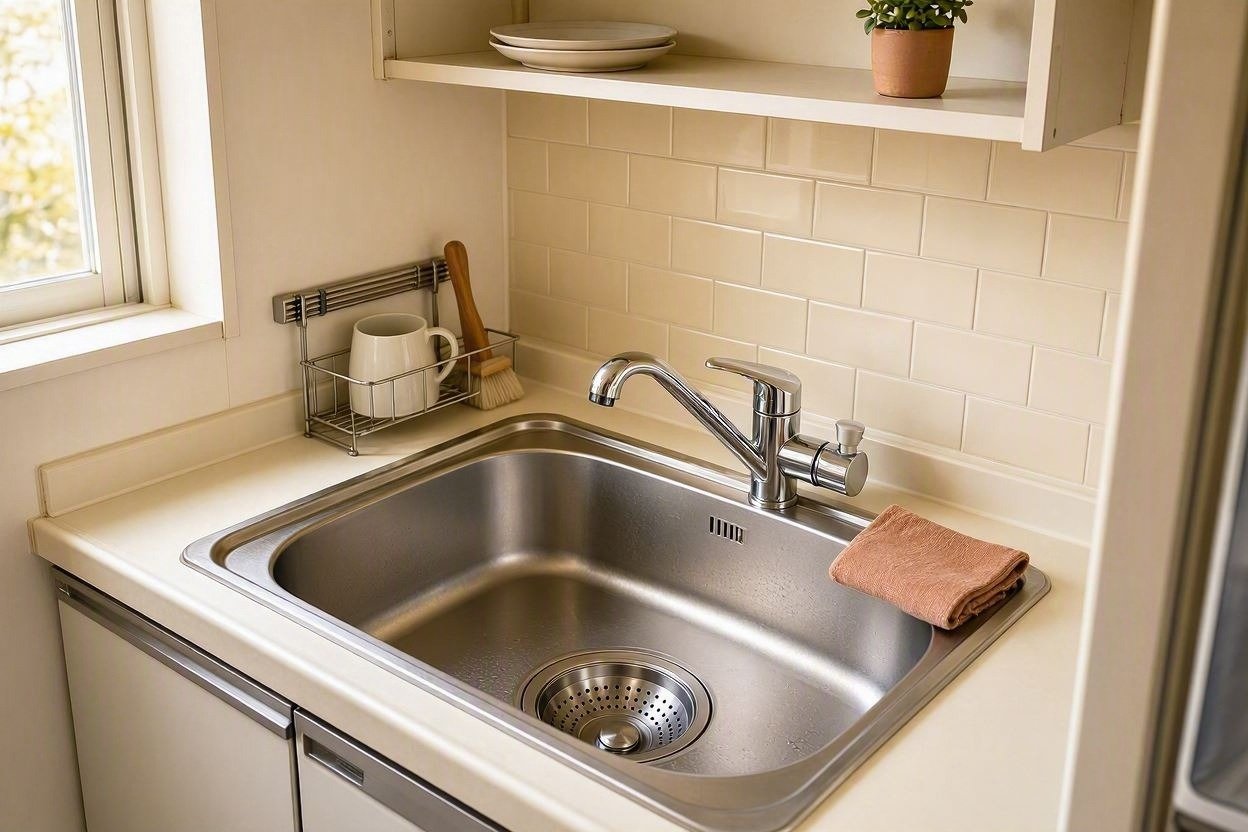
Choosing the right sink for a compact kitchen involves more than finding a model that looks good. You need to consider the cabinet width, countertop opening, sink depth, rim size, and available plumbing space.
A drop-in kitchen sink can be a practical option because it installs from above the countertop and works with many kitchen layouts. Compact models are also available in stainless steel, quartz composite, and different bowl sizes.
This guide explains drop-in sink sizes, installation, rim requirements, cabinet compatibility, pros and cons, and important buying considerations. It also compares five compact drop-in sink options for different kitchen needs.
If you’re unsure which sink size or type fits your space, use our [Sink Size & Type Finder] to narrow down your options before comparing individual models.
Affiliate Disclosure: This article contains affiliate links. If you purchase through links in this article, Tiny Sink Solutions may earn a commission at no additional cost to you.
Quick Answer
A drop-in kitchen sink is a top-mounted sink that fits into a countertop opening, with its rim resting on the countertop surface. Compact drop-in sinks commonly range from about 15 to 25 inches wide, but the correct size depends on your cabinet, countertop opening, and the manufacturer’s requirements. Before buying, check the sink’s exterior dimensions, cutout size, bowl depth, rim dimensions, and minimum cabinet size.
Drop-In Kitchen Sink: At a Glance
- Installation: Top-mount/drop-in
- Common compact sizes: About 15–25 inches wide
- Main advantage: Straightforward top-mounted installation
- Main drawback: Visible countertop rim
- Most important fit check: Cabinet size and countertop cutout
- Common materials: Stainless steel and quartz composite
- Best for: Compact kitchens, apartments, RVs, bars, prep areas, and replacement projects
What Is a Drop-In Kitchen Sink?
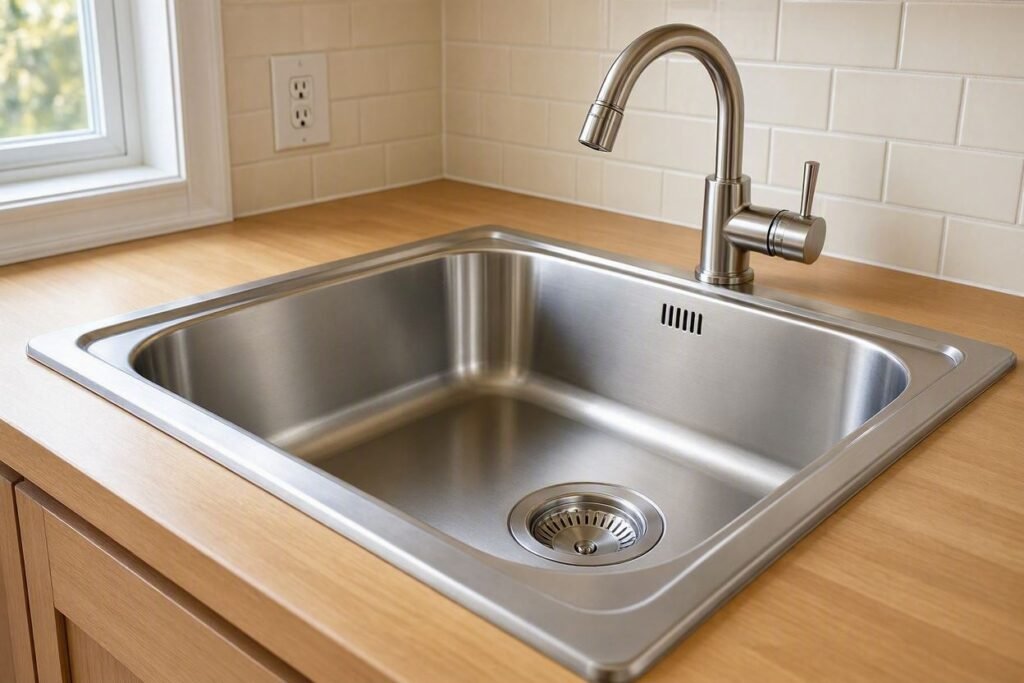
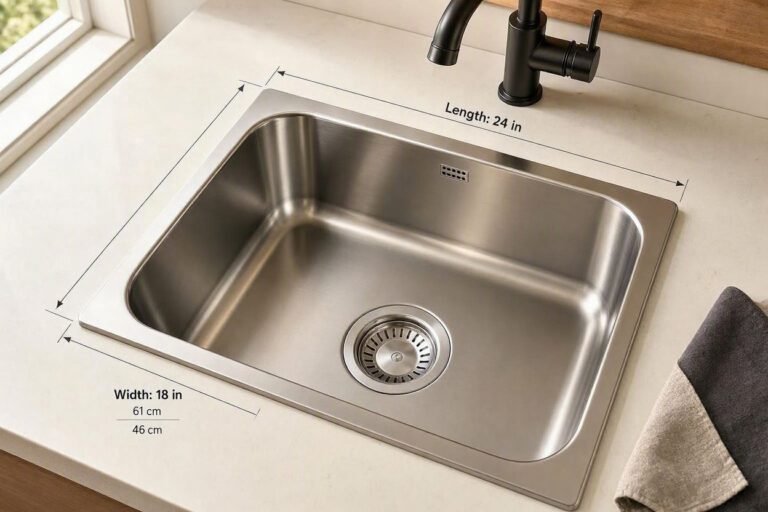
A drop-in kitchen sink is installed from above the countertop. The sink bowl sits inside a prepared opening while the outer rim rests on top of the counter.
This style is also commonly called a top-mount or overmount kitchen sink.
Unlike an undermount sink, which attaches underneath the countertop, a drop-in sink has a visible lip around the opening. The rim provides support and can cover the edge of the countertop cutout.
For compact kitchens, drop-in sinks are available in relatively small dimensions, making them useful when cabinet and countertop space are limited.
How Does a Drop-In Sink Work?
A typical drop-in sink installation involves several components:
- Countertop opening: The opening must meet the manufacturer’s cutout specifications.
- Sink rim: The outer deck rests on the countertop.
- Mounting hardware: Clips or brackets may secure the sink underneath.
- Sealant: A suitable sealant helps create a watertight seal.
- Cabinet space: The bowl extends into the cabinet below.
One important point is that sink width does not automatically tell you whether the sink will fit.
You need to compare the sink’s external dimensions, required cutout, bowl depth, and minimum cabinet requirement.
Drop-In Kitchen Sink Sizes
Compact drop-in sinks come in several sizes. The right size depends on your cabinet, countertop, available workspace, and how you use the sink.
| Sink Size | Typical Use |
|---|---|
| 15–18 inches | Very compact kitchens, bars, and prep areas |
| 19–22 inches | Small kitchens, apartments, RVs, and utility areas |
| 23–25 inches | Compact full-use kitchens |
| 26–30 inches | Larger kitchens with more cabinet space |
These are general planning ranges, not universal fitting rules.
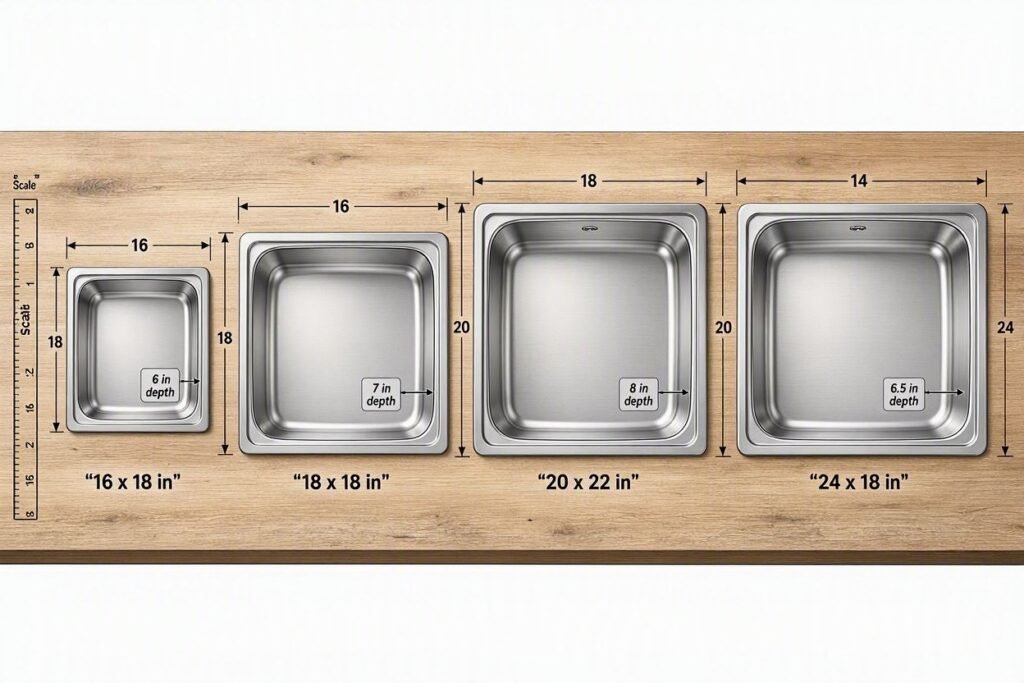
Two sinks with the same exterior width can have different cabinet requirements because their bowl dimensions, rim designs, and mounting structures can vary.
For a more detailed breakdown of compact sink measurements, see our guide to [Small Kitchen Sink Dimensions].
20-Inch vs. 22-Inch Drop-In Sinks
A 20-inch sink can be useful when countertop depth or cabinet space is limited. A 22-inch model generally provides a little more washing area but needs more room.
For example, the Beleeb 20 × 16-inch sink has a 9-inch-deep single bowl and a compact footprint.
The VC CUCINE 22 × 18-inch sink provides a larger footprint while retaining a 9-inch bowl depth.
The best choice depends on your actual available space rather than simply choosing the larger sink.
What Cabinet Size Do You Need for a Drop-In Sink?
Cabinet compatibility is one of the most important considerations when buying a drop-in kitchen sink.
The bowl needs enough space underneath the countertop without interfering with cabinet walls, drawers, plumbing, or other components.
Before buying, check:
- Cabinet width
- Interior cabinet width
- Countertop depth
- Sink exterior dimensions
- Required cutout dimensions
- Bowl depth
- Drain position
- Plumbing clearance
- Manufacturer’s minimum cabinet size
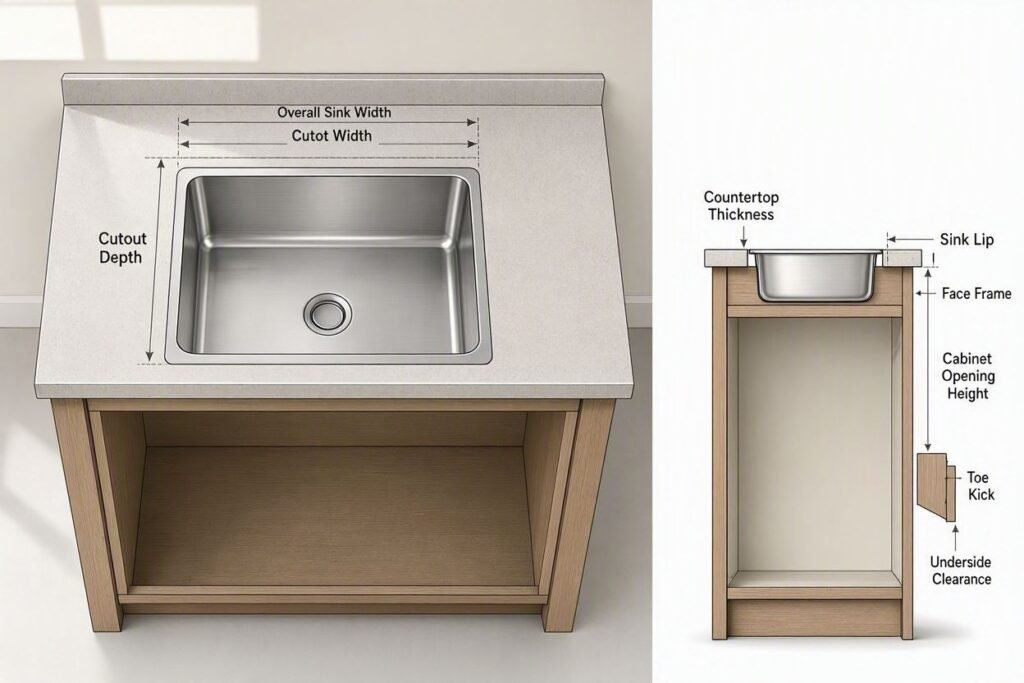
For an initial planning assessment, use our Small Kitchen Sink Size Calculator – Find the Right Sink Size
Use the calculator as a planning tool, then verify the specific sink manufacturer’s requirements before installation.
Why Minimum Cabinet Size Matters
The minimum cabinet requirement can be larger than the sink’s exterior width.
For example, the KRAUS Quarza 24-inch sink has an external width of 24 inches but lists a 27-inch minimum cabinet size.
This is why measuring only the sink width can lead to a poor fit.
Always check the manufacturer’s specifications before purchasing.
Before choosing a model, follow our guide on [How to Measure a Cabinet for a Replacement Kitchen Sink] to measure the available space correctly.
Drop-In Sink Rim Requirements
The rim is one of the defining features of a drop-in kitchen sink.
Because the rim rests on the countertop, enough countertop surface must remain around the opening to support the sink properly.
What Should You Check?
1. Countertop cutout
The opening should follow the manufacturer’s supplied template or specified dimensions.
2. Rim coverage
The rim needs adequate countertop contact around the opening.
3. Countertop condition
The area surrounding the cutout should be stable, clean, and suitable for installation.
4. Faucet configuration
Check whether the sink includes faucet holes and whether their location works with your faucet.
5. Sealant requirements
Use a suitable sealant according to the sink and countertop manufacturer’s instructions.
A drop-in sink may cover minor imperfections around a countertop opening, but you should never assume that a new sink will fit an existing cutout without measuring it.
Five Compact Drop-In Kitchen Sinks to Consider
These five options cover different sizes, materials, and design features.
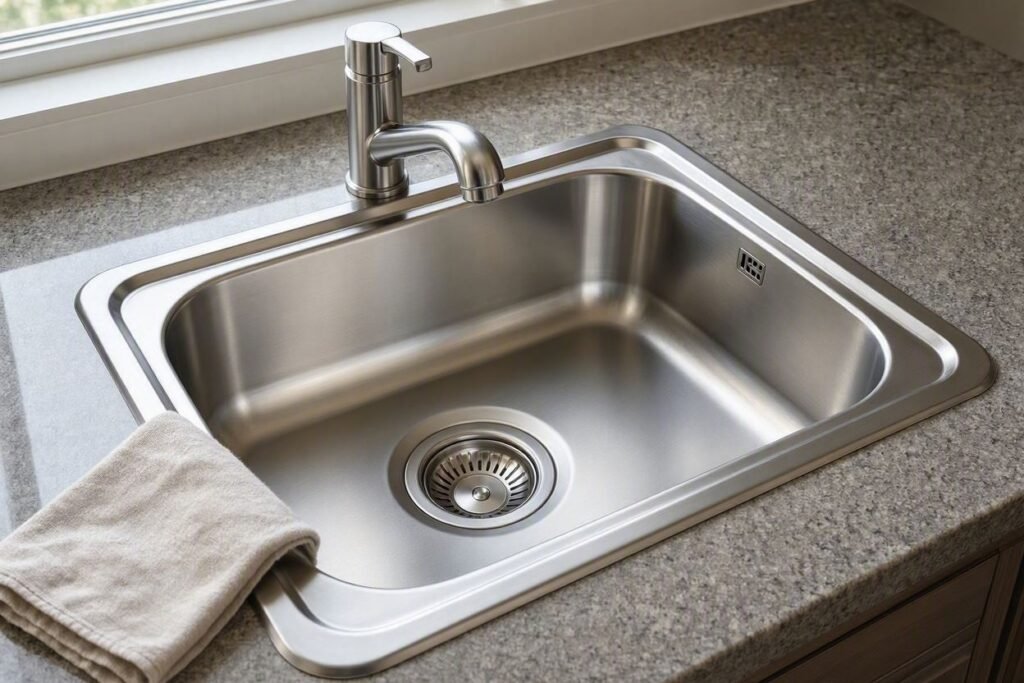
1. Beleeb 20 × 16-Inch 3D Embossed Stainless Steel Sink
The Beleeb 20 × 16-inch drop-in kitchen sink is the smallest option in this comparison.
It has a 9-inch-deep single bowl and is made from 18-gauge T304 stainless steel. Its 3D micro-pebble embossed surface is designed to help reduce the visibility of minor marks and scratches.
The sink includes a cutout template, drain assembly with strainer, and bottom drying rack.
Key specifications:
- Size: 20 × 16 inches
- Depth: 9 inches
- Material: 18-gauge T304 stainless steel
- Installation: Drop-in/top mount
- Bowl: Single
- Finish: 3D embossed
- Accessories: Drain assembly, strainer, drying rack
Best for: Compact kitchens where countertop depth is limited.
Fit consideration: Check the listed cutout dimensions and cabinet clearance against your available space before purchasing.
2. VC CUCINE 22 × 18-Inch Stainless Steel Drop-In Sink
The VC CUCINE 22 × 18-inch drop-in sink provides more countertop coverage than the 20-inch option while maintaining a 9-inch bowl depth.
It uses 16-gauge stainless steel and includes sound-dampening pads and undercoating designed to reduce noise and condensation.
The sink also has a standard 3.5-inch drain opening and includes a drain assembly and strainer.
Key specifications:
- Size: 22 × 18 inches
- Depth: 9 inches
- Material: 16-gauge stainless steel
- Installation: Top mount/drop-in
- Bowl: Single
- Finish: Brushed nickel
- Drain opening: 3.5 inches
Best for: Small kitchens, RVs, bar areas, and prep spaces where a 22-inch footprint fits.
Fit consideration: Confirm the countertop cutout and available cabinet space before ordering.
3. KRAUS Quarza 24-Inch Granite Composite Sink
The KRAUS Quarza 24-inch sink offers a different material option from the stainless steel models above.
It uses a quartz-composite construction with a Black Onyx finish and can be installed as either a drop-in or undermount sink, depending on the countertop and installation requirements.
Its external dimensions are 24 × 18 1/8 × 8 5/8 inches, with a listed minimum cabinet size of 27 inches.
Key specifications:
- Size: 24 inches
- External dimensions: 24 × 18 1/8 × 8 5/8 inches
- Material: Quartz composite
- Color: Black Onyx
- Bowl: Single
- Installation: Drop-in or undermount
- Minimum cabinet size: 27 inches
Best for: Kitchens where a dark quartz-composite sink is preferred and sufficient cabinet space is available.
Fit consideration: The 27-inch minimum cabinet requirement is particularly important when planning a compact installation.
4. MENATT 22 × 18-Inch 304 Stainless Steel Drop-In Sink
The MENATT 22 × 18-inch drop-in sink combines a 9-inch-deep single bowl with T-304 stainless steel construction and a brushed finish.
This model lists a 24-inch minimum cabinet size.
It also features noise-reduction pads, anti-condensation coating, and an X-slot drainage design intended to direct water toward the drain.
Key specifications:
- Size: 22 × 18 inches
- Depth: 9 inches
- Material: T-304 stainless steel
- Installation: Drop-in/top mount
- Bowl: Single
- Minimum cabinet size: 24 inches
- Drain opening: 3.5 inches
Best for: Compact kitchen or replacement projects with at least a 24-inch cabinet.
Fit consideration: Because the bowl is 9 inches deep, check the existing drain plumbing when replacing a shallower sink.
This type of compact sink can also work well in RV applications. See our guide to [Best Sinks for RV Kitchens] for more RV-specific considerations.
5. Comllen 22 × 18-Inch Stainless Steel Drop-In Workstation Sink
The Comllen 22 × 18-inch drop-in sink provides a compact footprint with a 9-inch depth.
It has a brushed nickel finish, soundproofing pads, and included mounting hardware. Its workstation-style design can also provide additional functionality for food preparation and cleanup.
Key specifications:
- Size: 22 × 18 × 9 inches
- Material: Stainless steel
- Finish: Brushed nickel
- Installation: Drop-in/top mount
- Bowl: Single
- Depth: 9 inches
- Includes: Mounting hardware and accessories
Best for: Small kitchens, laundry rooms, bar areas, and prep spaces.
Fit consideration: Verify the current product dimensions and countertop cutout requirements before ordering, especially for a replacement installation.
Quick Comparison of These Drop-In Sinks
| Product | Size | Material | Depth | Notable Feature |
|---|---|---|---|---|
| Beleeb | 20 × 16 in. | 18-gauge T304 stainless steel | 9 in. | Compact footprint, embossed surface |
| VC CUCINE | 22 × 18 in. | 16-gauge stainless steel | 9 in. | Sound dampening |
| KRAUS Quarza | 24 × 18 1/8 in. | Quartz composite | 8 5/8 in. | Drop-in or undermount |
| MENATT | 22 × 18 in. | T-304 stainless steel | 9 in. | 24-inch minimum cabinet |
| Comllen | 22 × 18 in. | Stainless steel | 9 in. | Workstation-style design |
Note: Product specifications and availability can change. Verify the current Amazon listing and manufacturer’s specifications before purchasing.
How to Install a Drop-In Kitchen Sink
A drop-in sink can be relatively straightforward to install because the sink is positioned from above the countertop. However, the countertop opening must still be accurate.
Step 1: Measure the Existing Space
Measure the cabinet width, countertop depth, existing cutout, and available clearance underneath.
If you’re replacing an existing sink, don’t assume the new model will use the same opening.
Step 2: Check the Manufacturer’s Template
Use the supplied cutout template whenever one is provided.
Remember that the sink’s exterior dimensions and countertop cutout dimensions are not necessarily identical.
Step 3: Prepare the Countertop
Make sure the cutout is clean and properly sized.
Avoid unnecessary modifications that could damage the countertop.
Step 4: Apply Sealant
Apply the recommended sealant around the sink rim according to the manufacturer’s installation instructions.
Step 5: Lower the Sink Into Position
Carefully lower the sink into the opening and make sure the rim sits evenly against the countertop.
Step 6: Secure the Sink
Install the supplied clips or mounting hardware as directed by the manufacturer.
Step 7: Connect the Plumbing
Install the drain assembly and reconnect the plumbing.
A deeper replacement sink may require plumbing adjustments underneath the cabinet.
Step 8: Check for Leaks
Run water through the sink and inspect the drain connections and surrounding area.
If you’re not comfortable modifying countertops or plumbing, professional installation may be appropriate.
Pros of Drop-In Kitchen Sinks
1. Straightforward Installation
The top-mounted design can make installation more accessible than some undermount configurations.
2. Broad Countertop Compatibility
Drop-in sinks can work with many countertop materials when the manufacturer’s requirements are followed.
3. Visible Rim Provides Coverage
The rim covers the edge of the countertop cutout, which can be useful during replacement projects.
4. Many Compact Sizes Are Available
Small drop-in sinks are available for compact kitchens, apartments, RVs, bars, and utility spaces.
5. Replacement Can Be Simpler
Because the sink mounts from above, replacing an existing drop-in sink can sometimes be easier than replacing an undermount model.
Cons of Drop-In Kitchen Sinks
1. The Rim Is Visible
The raised rim creates a visible transition between the countertop and sink.
2. More Edges Need Cleaning
Food particles and water can collect around the rim if it isn’t cleaned regularly.
3. The Rim Uses Countertop Space
The sink deck and rim occupy some of the countertop around the opening.
4. Cutout Accuracy Still Matters
The rim may cover the countertop edge, but the opening still needs to meet the manufacturer’s specifications.
5. Deep Bowls Can Affect Plumbing
A deeper sink can reduce available plumbing clearance when replacing a shallower sink.
Drop-In vs. Undermount Kitchen Sinks
Both installation styles can work well in compact kitchens, but they have different characteristics.
| Feature | Drop-In | Undermount |
|---|---|---|
| Installation | Above countertop | Beneath countertop |
| Visible rim | Yes | No |
| Countertop edge | Covered by rim | Exposed |
| Cleaning around sink | More rim area | More seamless |
| Replacement potential | Often simpler | Can be more involved |
| Countertop requirements | Broad compatibility | Depends on countertop |
| Compact kitchen suitability | Excellent | Excellent when properly fitted |
If you prioritize top-mounted installation and easier replacement potential, a drop-in sink may be a practical choice.
If you prefer a seamless countertop appearance, an undermount sink may be worth considering.
How to Choose the Right Drop-In Kitchen Sink
1. Start With Your Cabinet Width
Measure your cabinet before shopping for a sink.
Then compare the available space with the manufacturer’s minimum cabinet requirement.
2. Measure Your Countertop Space
A larger sink can provide more washing space but may reduce your available countertop workspace.
3. Check Sink Depth
A 9-inch bowl can provide useful capacity for large cookware, but deeper bowls can affect plumbing clearance.
4. Choose the Right Material
Stainless steel is widely used in compact drop-in sinks and is available in different gauges and finishes.
Quartz composite provides a different appearance and surface feel.
5. Decide Whether You Need a Workstation
A workstation sink can provide additional functionality for food preparation and cleanup.
However, make sure the included accessories fit your actual needs.
6. Check the Cutout
Compare the manufacturer’s required cutout with your existing countertop opening before buying.
7. Check Faucet Configuration
Verify whether the sink has faucet holes and whether their location works with your faucet setup.
Common Drop-In Sink Buying Mistakes
Buying Based Only on Sink Width
A 22-inch sink does not automatically fit every 22-inch space.
Ignoring Minimum Cabinet Size
Always check the manufacturer’s minimum cabinet requirement.
Forgetting Sink Depth
A deeper bowl can change the available plumbing space underneath.
Assuming the Existing Cutout Will Fit
Replacement sinks may require different cutout dimensions even when their exterior sizes look similar.
Not Checking the Rim
Make sure enough countertop surface remains around the opening to support the sink.
Choosing Only by Appearance
Finish and style are important, but fit and installation requirements should come first.
Frequently Asked Questions
What is a drop-in kitchen sink?
A drop-in kitchen sink is installed from above the countertop, with its rim resting on the counter around the opening.
Are drop-in sinks good for small kitchens?
Yes. Compact drop-in sinks are available in smaller dimensions and can work well when cabinet and countertop space are limited.
What cabinet size do I need for a drop-in sink?
It depends on the specific sink. Check the manufacturer’s minimum cabinet requirement rather than relying only on the sink’s width.
How much countertop space does a drop-in sink need?
The required space depends on the sink’s exterior dimensions and rim design. Check the manufacturer’s installation specifications before cutting.
Is a drop-in sink easier to install than an undermount sink?
It can be simpler because it installs from above the countertop, but accurate cutout and plumbing work are still important.
Can a drop-in sink be installed in any countertop?
Not necessarily. Countertop material, thickness, cutout requirements, and manufacturer instructions all need to be considered.
Final Buying Tips
A drop-in kitchen sink can be a practical solution for a compact kitchen, especially when you need a straightforward top-mounted installation.
Before buying, measure your cabinet width, countertop depth, existing cutout, plumbing clearance, and available workspace.
Then compare those measurements with the sink manufacturer’s specifications.
If you’re choosing among compact models, don’t automatically choose the smallest sink. Instead, select the largest model that comfortably fits your cabinet, countertop, plumbing, and everyday needs.
For an initial cabinet-fit assessment, use the What Size Sink Fits My Cabinet? Cabinet Size Checker, then verify the final measurements against the specific sink manufacturer’s requirements.
The best drop-in kitchen sink is not necessarily the largest or cheapest option. It is the one that fits correctly and provides enough usable basin space for your kitchen.

Khadija is the writer and founder of Tiny Sink Solution. She creates practical guides about small kitchen sinks, faucets, and compact kitchen maintenance, helping homeowners and renters choose solutions for limited spaces. Some articles contain affiliate links, and as an Amazon Associate, she earns from qualifying purchases at no extra cost to readers

![Top [count] Gardening Blogs - OnToplist.com](https://www.ontoplist.com/images/ontoplist32.png?id=6aa4d0c493161)