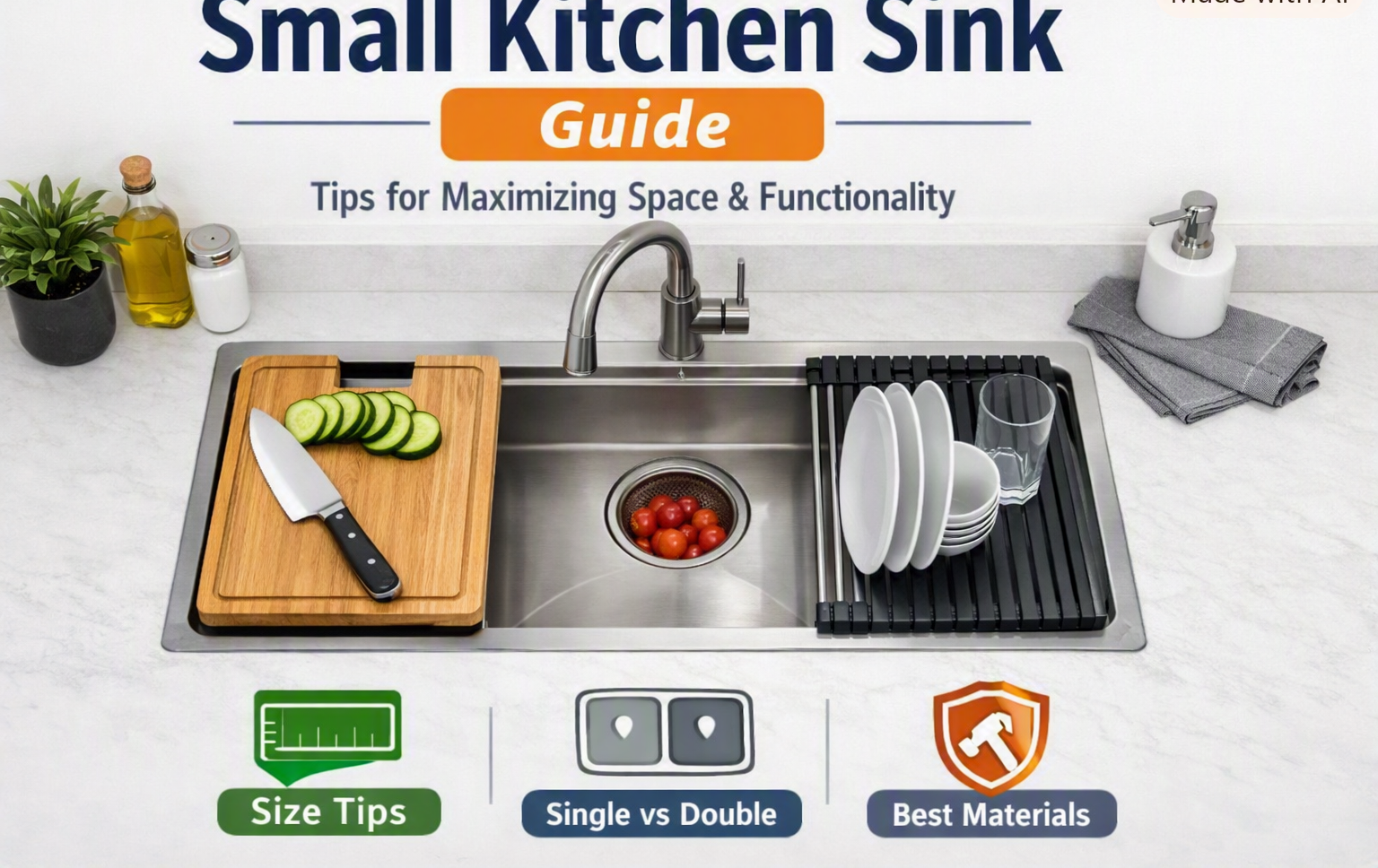
Designing a compact kitchen requires smart planning, and one of the most important choices is selecting the right small kitchen sink. In apartments, studios, RVs, or tiny homes, every inch of counter and cabinet space matters, and the small kitchen sink becomes the centerpiece of daily cooking and cleaning. The wrong size or style can make your kitchen feel cramped, while the right small kitchen sink improves workflow, efficiency, and design. Choosing wisely means measuring cabinet space, comparing single vs. double bowls, evaluating materials, and considering installation styles. With careful planning, the small kitchen sink transforms limited space into a functional, stylish, and practical hub for everyday tasks
1. Measure Your Cabinet and Countertop First
Before choosing a sink, measure the space where it will be installed. One of the most common mistakes is choosing a sink based only on its exterior dimensions without checking the cabinet underneath.
The sink must fit both the countertop opening and the available cabinet space.
How to Measure for a Small Kitchen Sink
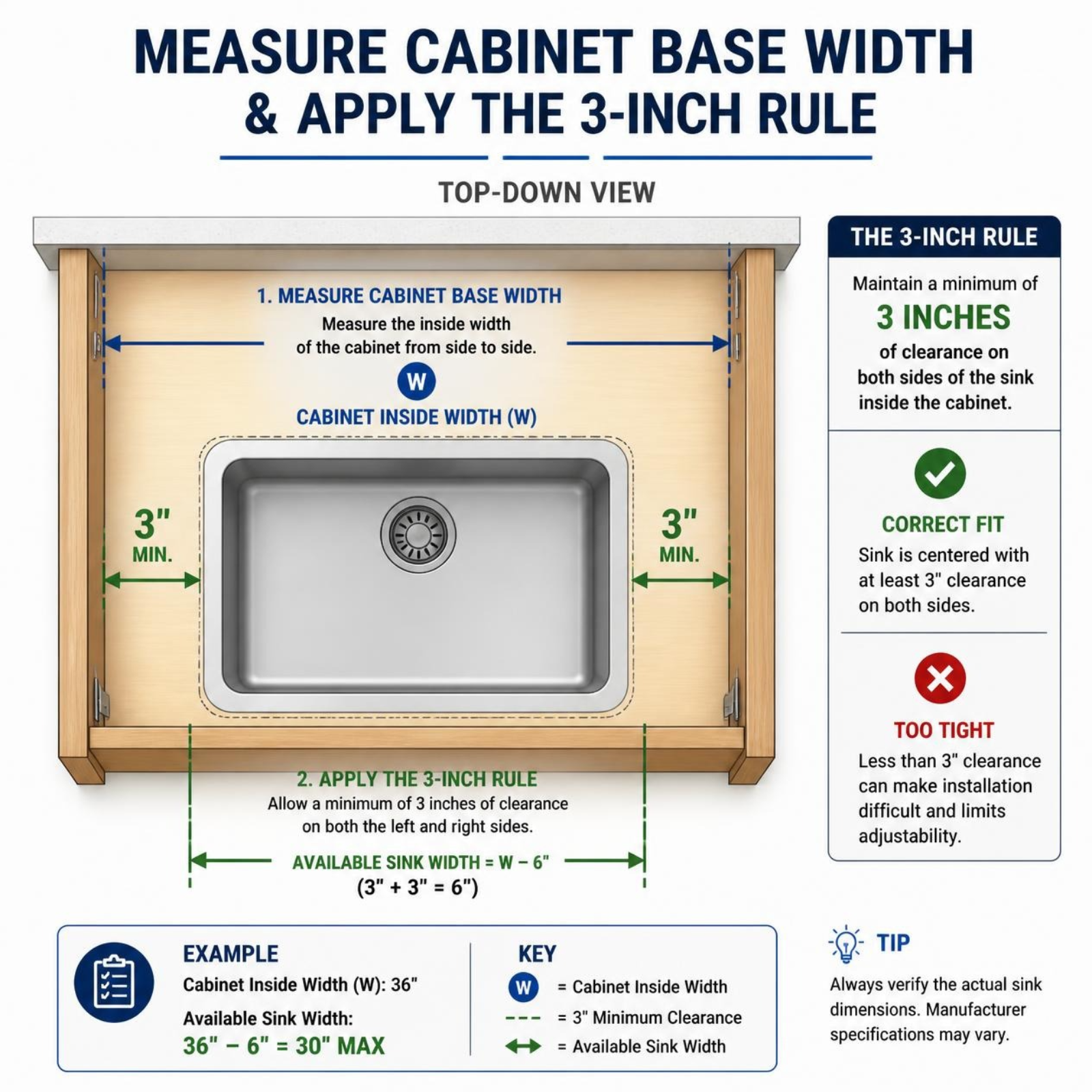
1. Measure the cabinet base width
Open the cabinet doors and measure the available interior width. This gives you an idea of how much space is available for the sink and plumbing.
2. Check the manufacturer’s minimum cabinet size
Do not rely only on a general measurement rule. Different sinks have different installation requirements, so always check the manufacturer’s specifications before ordering.
3. Measure front-to-back space
Make sure there is enough room for the sink, faucet, backsplash, and any other fixtures behind it.
4. Check the countertop
For an existing countertop, the available cutout and countertop material can affect which sink installation styles are possible.
What About Sink Depth?
Small kitchen sinks commonly come in different bowl depths.
– 7–8 inches: A practical range for everyday washing while keeping the basin relatively compact.- 9–10 inches: Provides more vertical space and can help contain splashes, but may require more comfortable access depending on the user’s height and cabinet configuration.
Pro Tip: Measure twice before purchasing. A sink that looks perfect online may not fit your cabinet, countertop cutout, faucet location, or plumbing.
2. Single Bowl vs. Double Bowl: Which Is Better?
For a small kitchen, bowl configuration can make a major difference.
Single-Bowl Sinks
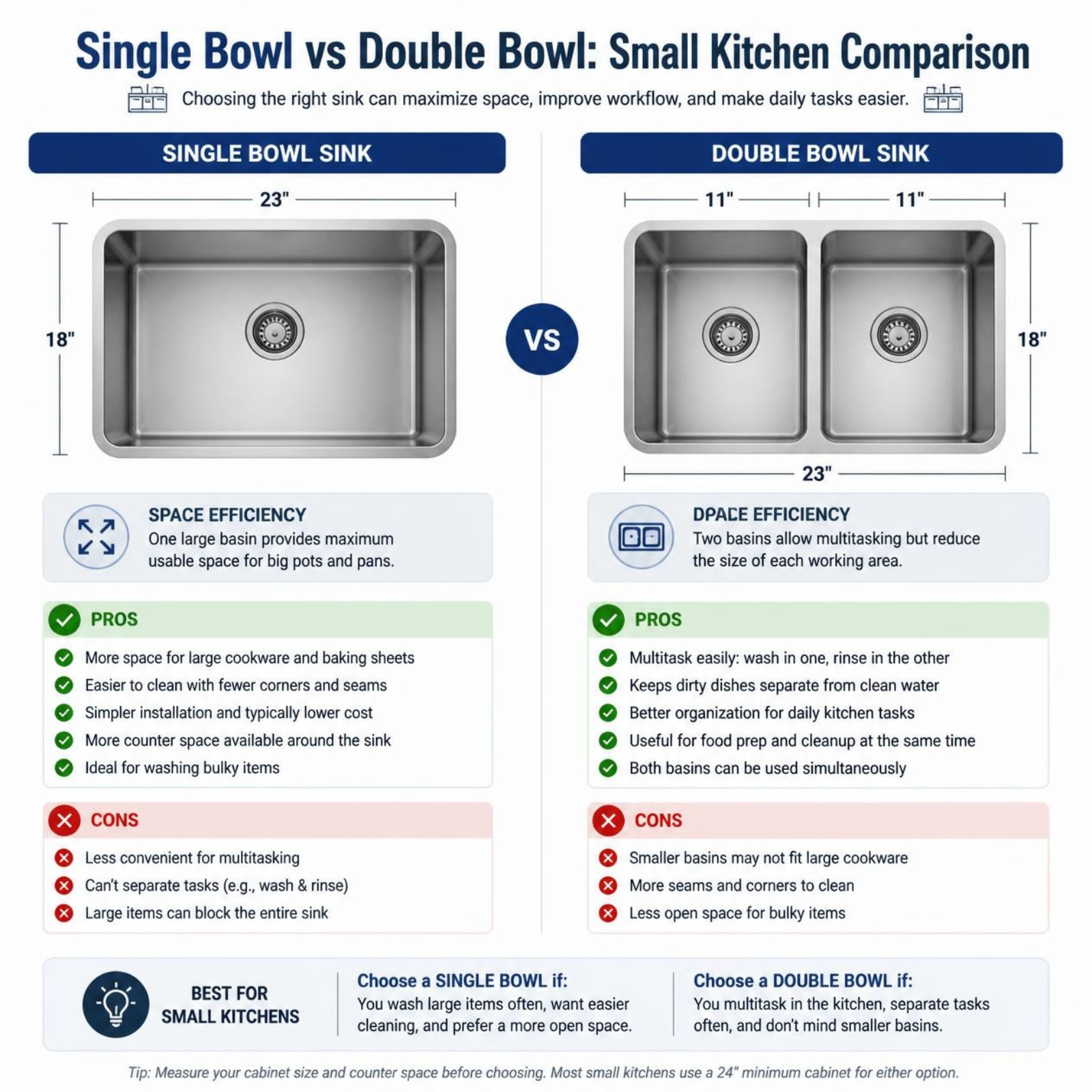
A single bowl is often the most practical choice when counter and cabinet space are limited. The uninterrupted basin gives you more usable space for larger cookware, baking sheets, and pots.
For example, a compact 20-inch single-bowl sink can provide more practical washing space than a similarly sized sink divided into two small compartments.
Best for:
– Apartments
– Studio kitchens
– RVs and tiny homes
– Small households
– People who regularly wash large cookware
Double-Bowl Sinks
Double-bowl sinks provide separate areas for washing, rinsing, or soaking. However, dividing a small sink into two compartments can make each basin too narrow for larger dishes.
If you prefer a double-bowl sink, pay close attention to the dimensions of each individual bowl rather than looking only at the sink’s overall width.
Bottom line: For many compact kitchens, a single bowl provides more usable basin space. However, the best configuration depends on how you wash and organize your dishes.
3. Choose the Right Sink Material
The material affects durability, maintenance, appearance, weight, and price.
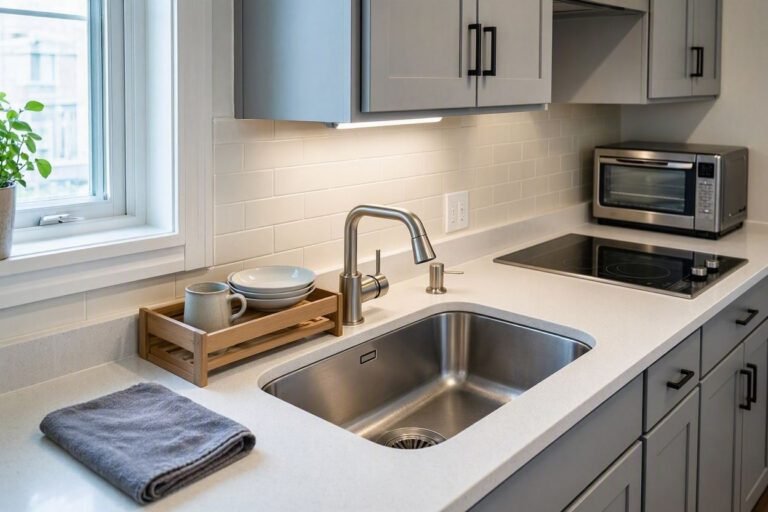
Stainless Steel
Stainless steel is a popular choice for compact kitchens because it is lightweight, heat-resistant, and generally easy to maintain.
Pros:
– Lightweight
– Heat-resistant
– Affordable options available
– Easy to clean
– Works well with modern kitchens
Cons:
– Can scratch
– Some models can be noisy without adequate sound insulation
For stainless steel, pay attention to the manufacturer’s construction and gauge specifications rather than assuming that gauge alone determines overall quality.
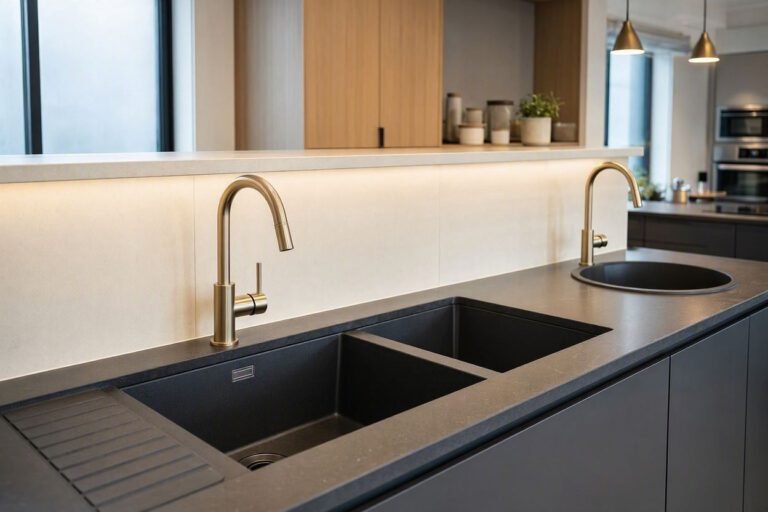
Granite Composite
Granite composite sinks are known for their durable surface and matte appearance.
Pros:
– Resistant to everyday scratches
– Heat-resistant
– Modern matte finish
– Suitable for frequently used kitchens
Cons:
– Heavier than stainless steel
– May require non-abrasive cleaning products
– Cabinet support should be checked because of the additional weight
Fireclay
Fireclay sinks have a smooth appearance and are commonly associated with farmhouse-style kitchens.
Pros:
– Smooth finish
– Attractive traditional appearance
– Chip-resistant surface
Cons:
– Heavy
– May require additional cabinet support
– Installation can be more demanding
Cast Iron with Enamel
Enamel-coated cast iron can provide a glossy, traditional appearance.
Pros:
– Long-lasting
– Glossy finish
– Classic or vintage appearance
Cons:
– Very heavy
– Enamel can chip if damaged
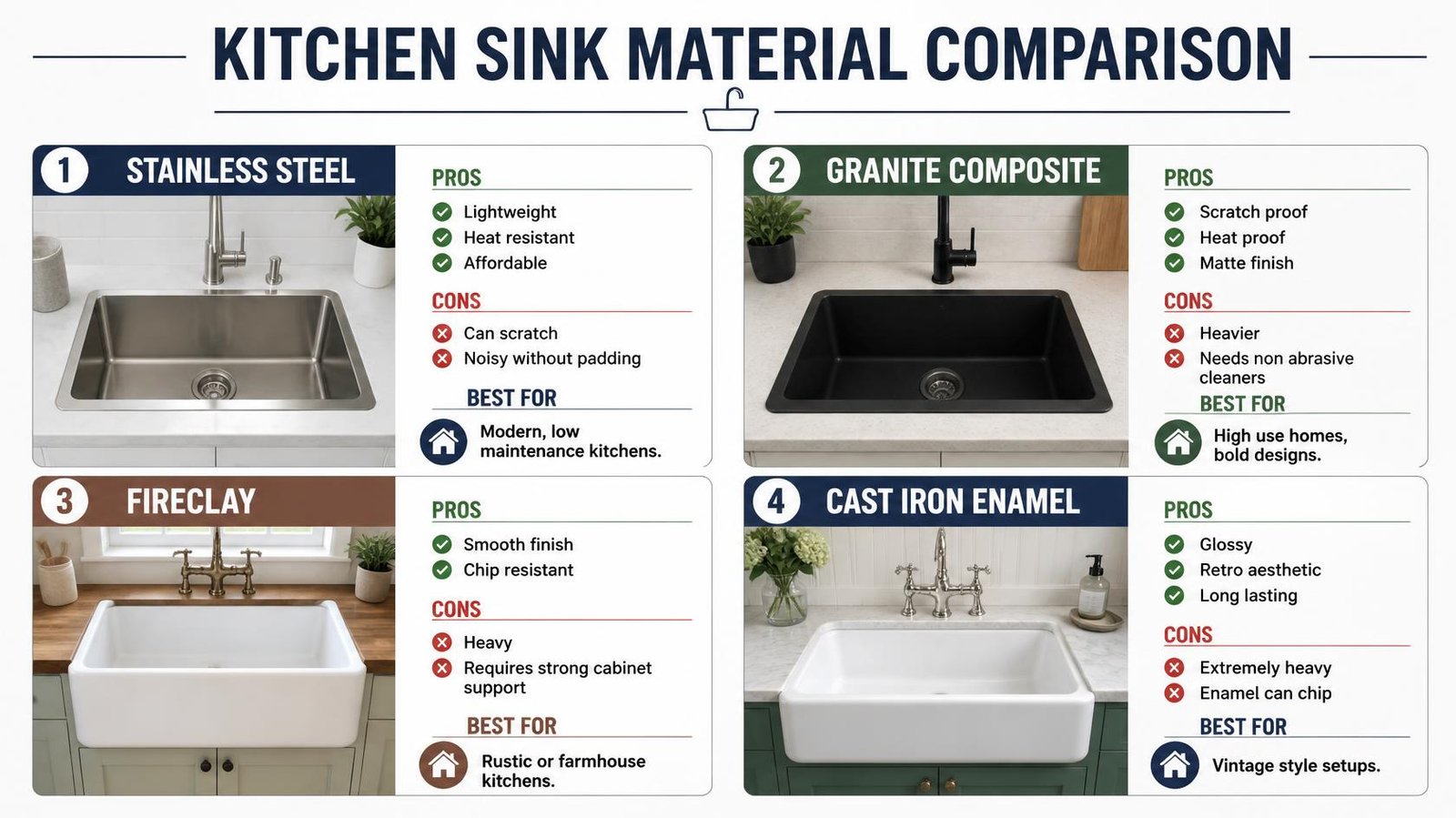
Quick Material Comparison table
| Material | Pros | Cons |
|---|---|---|
| Stainless Steel | Lightweight, heat‑resistant, affordable, easy to clean, modern look | Can scratch, may be noisy without insulation |
| Granite Composite | Scratch‑resistant, heat‑resistant, durable matte finish | Heavy, needs non‑abrasive cleaners, cabinet support required |
| Fireclay | Smooth finish, traditional farmhouse style, chip‑resistant surface | Very heavy, demanding installation, cabinet modifications may be needed |
| Cast Iron (Enamel) | Long‑lasting, glossy finish, classic/vintage appearance | Extremely heavy, enamel can chip if damaged |
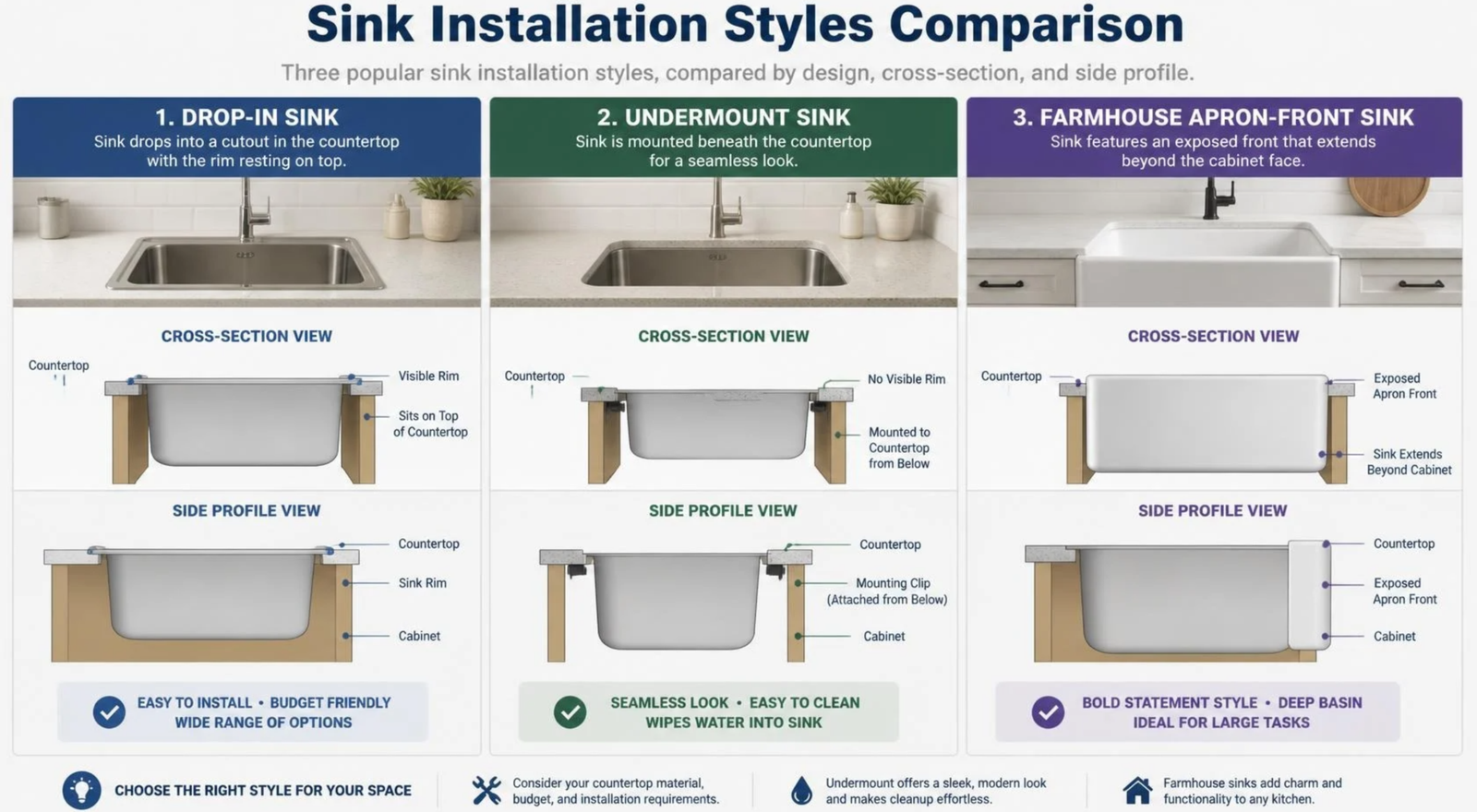
4. Consider the Installation Style
Your sink’s mounting style affects appearance, countertop compatibility, installation difficulty, and maintenance.
Drop-In or Top-Mount
A drop-in sink sits on top of the countertop with a visible rim.
Pros:
– Relatively straightforward installation
– Suitable for many countertop types
– Often a practical choice for renovations
Cons:
– The raised rim can collect crumbs and debris
– Less seamless appearance than an undermount sink
Undermount
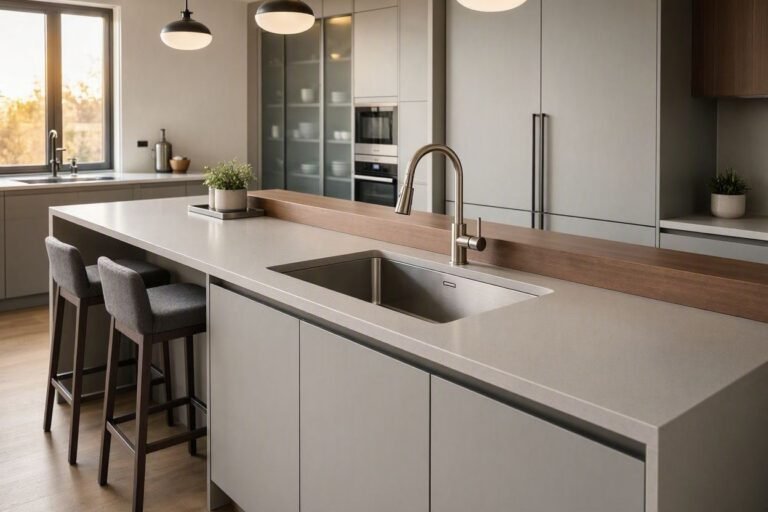
An undermount sink is installed beneath the countertop.
Pros:
– Clean, seamless appearance
– Makes it easier to sweep water and crumbs directly into the basin
Cons:
– Requires suitable countertop construction
– Professional installation may be necessary
– Installation requirements vary by countertop material
Farmhouse or Apron-Front
A farmhouse sink has a visible front apron and can become a strong design feature.
Pros:
– Distinctive appearance
– Works well with traditional and farmhouse designs
Cons:
– May require cabinet modifications
– Requires careful measurement before installation
Pro Tip: If you want a straightforward installation, a compatible drop-in model can be a practical choice. If appearance and easy countertop cleanup are priorities, an undermount sink may be worth considering when your countertop supports it.
5. Look for Space-Saving Features
A small sink can do more than provide a place to wash dishes. The right features can turn the basin into a useful preparation area.
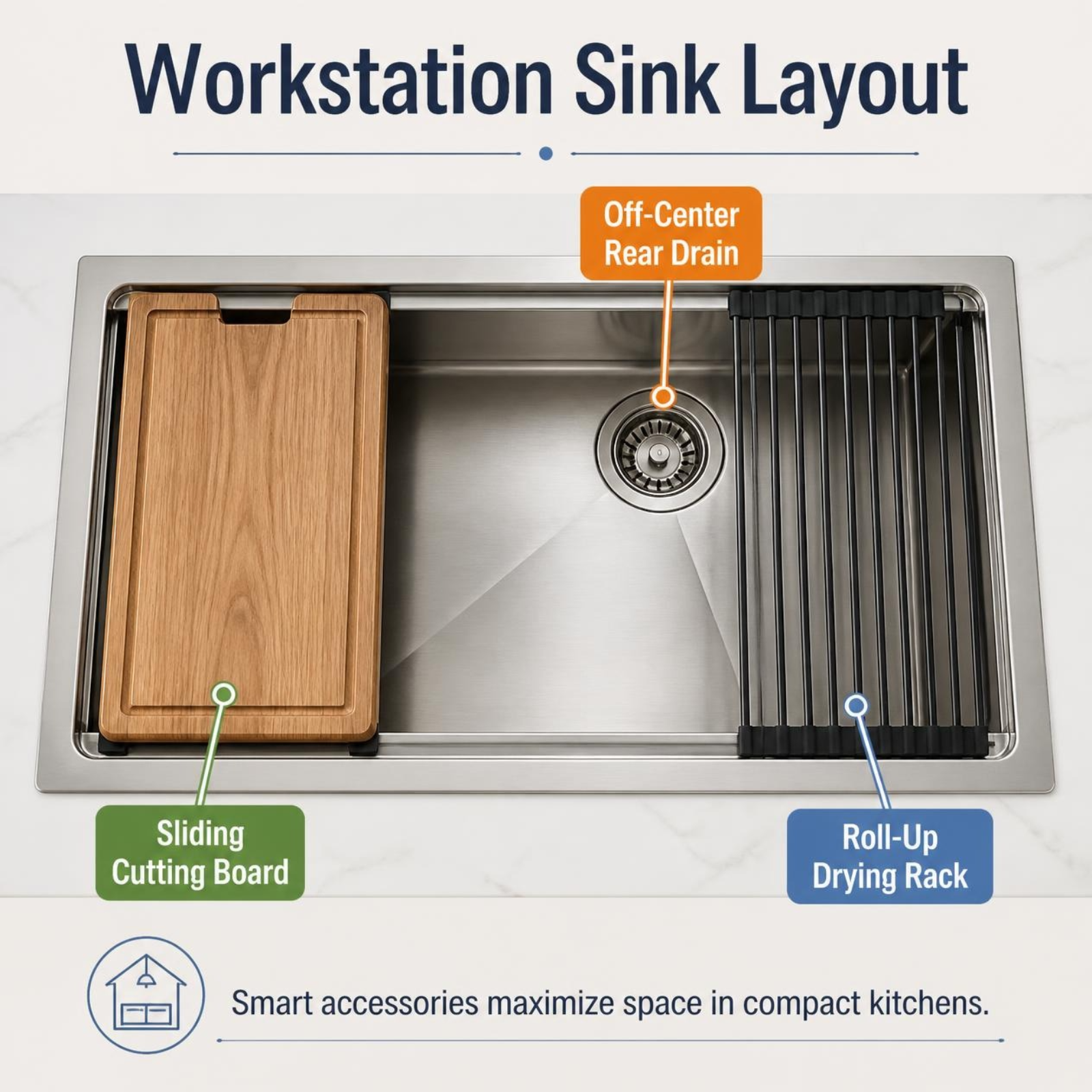
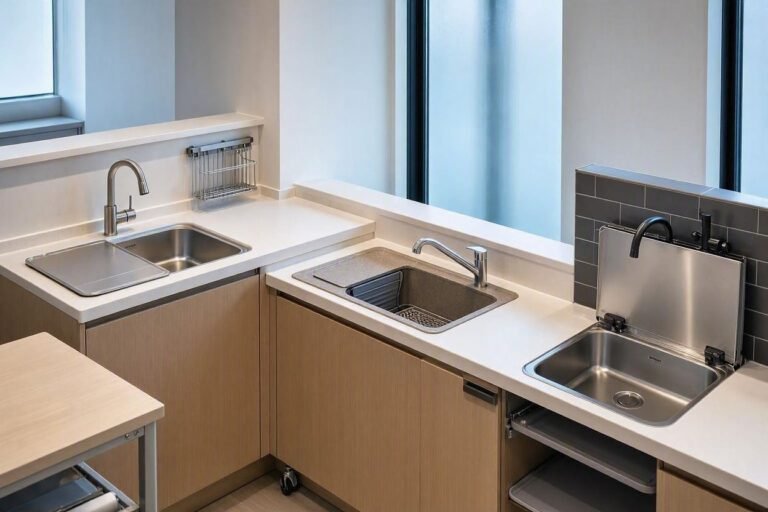
Workstation Ledges
Some workstation sinks include built-in ledges that allow accessories such as cutting boards, colanders, and drying racks to sit over the basin.
This can provide additional workspace when countertop area is limited.
Rear Drain Placement
A rear-positioned drain can help increase usable basin space and may also leave additional room beneath the sink for storage, depending on the plumbing layout.
Sound Insulation
Sound-reducing pads or coatings can make stainless steel sinks quieter during everyday use.
Built-In Accessories
Some sinks are supplied with accessories such as:
– Cutting boards
– Colanders
– Drying racks
– Bottom grids
These can be particularly useful in small kitchens because one sink can perform several functions.
6. Don’t Forget Faucet and Plumbing Clearance
Sink size is only one part of the installation.
Before purchasing, check:
– Faucet height
– Faucet hole configuration
– Wall or window clearance
– Existing drain position
– Water supply connections
– Plumbing space underneath
– Cabinet doors and drawers
– Countertop material
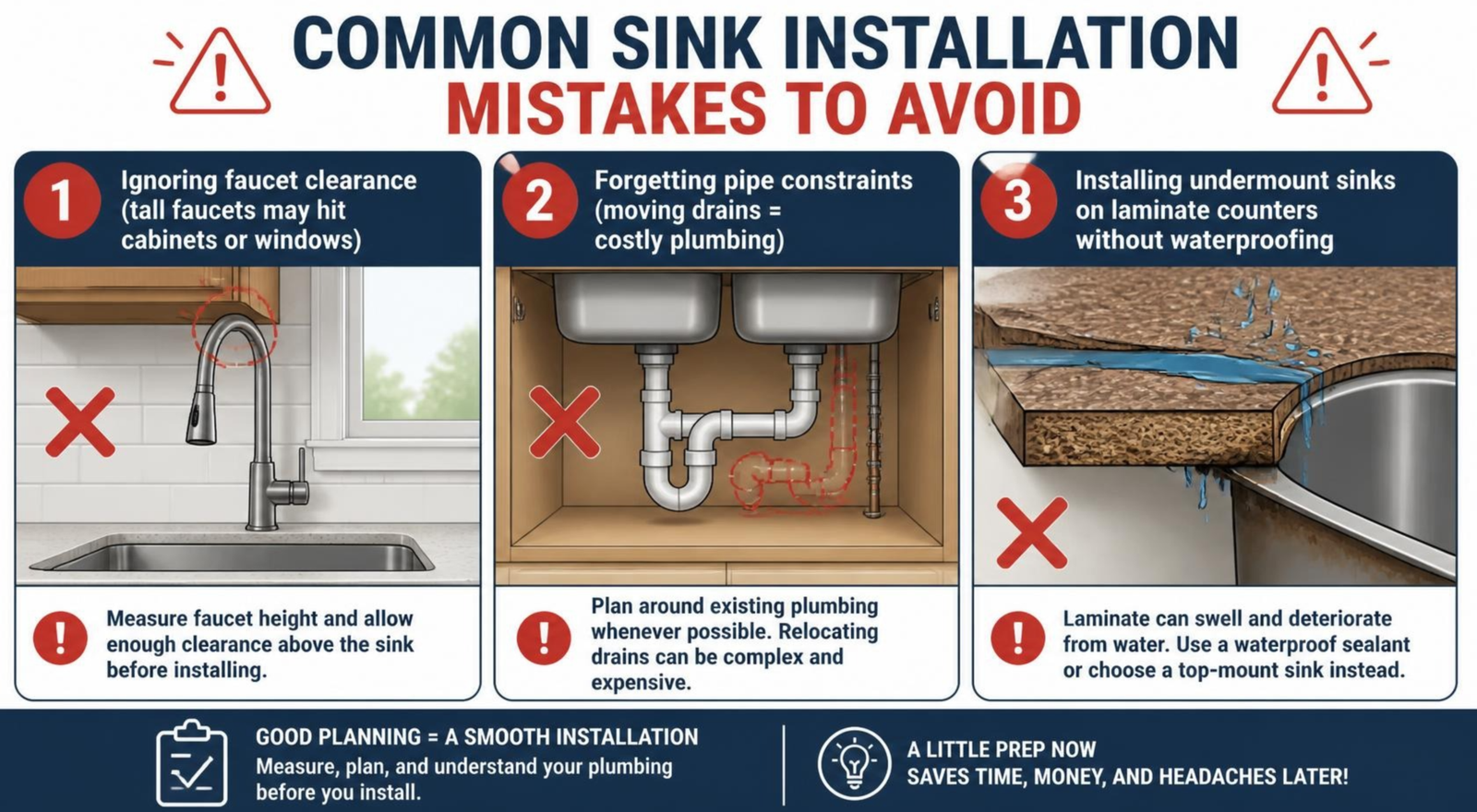
A tall faucet, for example, may interfere with a cabinet or window behind the sink.
Similarly, changing the existing drain position can increase plumbing work and installation costs.
7. Common Small Kitchen Sink Mistakes to Avoid
Choosing the Sink Before Measuring
Never assume that a sink will fit because its advertised width looks suitable. Check cabinet and countertop requirements first.
Choosing a Double Bowl That Is Too Small
Two tiny bowls may provide less practical washing space than one larger single bowl.
Ignoring Faucet Clearance
Check the space behind the sink before selecting a tall or extended faucet.
Forgetting Plumbing Constraints
The existing drain and water connections can affect installation. Moving plumbing may require additional work.
Installing an Incompatible Undermount Sink
Not every countertop material is suitable for every undermount installation. Always confirm compatibility and waterproofing requirements.
Choosing a Heavy Sink Without Checking Cabinet Support
Materials such as fireclay, granite composite, and cast iron can be substantially heavier than stainless steel.
8. What Is the Best Small Kitchen Sink Size?
There is no single size that is ideal for every small kitchen.
An 18-inch single-bowl sink can be a practical option when space is extremely limited. A 20- to 21-inch sink can provide more usable basin space when the cabinet and countertop allow it.
The best size depends on:
– Cabinet width
– Countertop dimensions
– Available plumbing space
– Your cookware
– Number of people using the kitchen
– Installation type
Instead of choosing the smallest sink possible, choose the largest practical sink that fits your space and installation requirements.
9. Which Small Kitchen Sink Is Best for You?
Your ideal sink depends on how you use your kitchen.
For maximum usable basin space: Choose a single-bowl sink.
For a modern, low-maintenance kitchen: Consider stainless steel.
For a durable matte appearance: Consider granite composite.
For farmhouse-style kitchens: Consider fireclay or an apron-front design.
For extra preparation space: Look for a workstation sink.
For a simple renovation: A compatible drop-in sink may be easier to install.
Final Thoughts
Choosing the right small kitchen sink is about finding the best balance between size, functionality, durability, installation, and style.
Start by measuring your cabinet and countertop. Then decide whether a single or double bowl suits your cooking habits. Compare materials, choose an installation style that works with your countertop, and look for space-saving features such as workstation accessories and sound insulation.
Most importantly, don’t simply choose the smallest sink available. Choose the largest practical sink that comfortably fits your kitchen and installation requirements.
With careful measurement and planning, even a very small kitchen can have a sink that is functional, attractive, and easy to use.
Frequently Asked Questions
What is the smallest practical kitchen sink size?
An 18-inch-wide single-bowl sink can be practical for very compact kitchens, provided it fits the cabinet, countertop, faucet, and plumbing requirements.
Is a single bowl better for a small kitchen?
Often, yes. A single bowl gives you an uninterrupted washing area and can make it easier to clean large cookware.
Are double-bowl sinks bad for small kitchens?
Not necessarily, but very small double-bowl sinks can leave each compartment too narrow for large dishes. Check the dimensions of each bowl before buying.
What sink material is best for a small kitchen?
There is no universal best material. Stainless steel is lightweight and practical, while granite composite, fireclay, and enamel cast iron offer different combinations of durability and style.
Is a 20-inch sink good for a small kitchen?
A 20-inch sink can be a practical choice for a compact kitchen, but you should confirm the required cabinet size and installation specifications before purchasing.
Can an undermount sink be installed on laminate?
Compatibility depends on the specific countertop construction and installation method. Check the countertop manufacturer’s recommendations and the sink manufacturer’s installation requirements before proceeding.
Should I choose a deep sink for a small kitchen?
A deeper basin can provide additional vertical washing space, but it may also affect comfort and the space available underneath the sink. Consider both basin depth and cabinet/plumbing clearance.
What should I check before buying a small kitchen sink?
Check the sink’s overall dimensions, required cabinet size, countertop cutout, bowl dimensions, faucet configuration, drain location, installation style, material, weight, and manufacturer’s installation instructions.
https://www.thisoldhouse.com/: How to Choose the Right Small Kitchen Sink – complete guide 2026The 9 Best Kitchen Sink Materials: The Ultimate Guide
about us
Khadija is the writer and founder of Tiny Sink Solution. She creates practical guides about small kitchen sinks, faucets, and compact kitchen maintenance, helping homeowners and renters choose solutions for limited spaces. Some articles contain affiliate links, and as an Amazon Associate, she earns from qualifying purchases at no extra cost to readers
![Top [count] Gardening Blogs - OnToplist.com](https://www.ontoplist.com/images/ontoplist32.png?id=6aa4d0c493161)
3 Comments