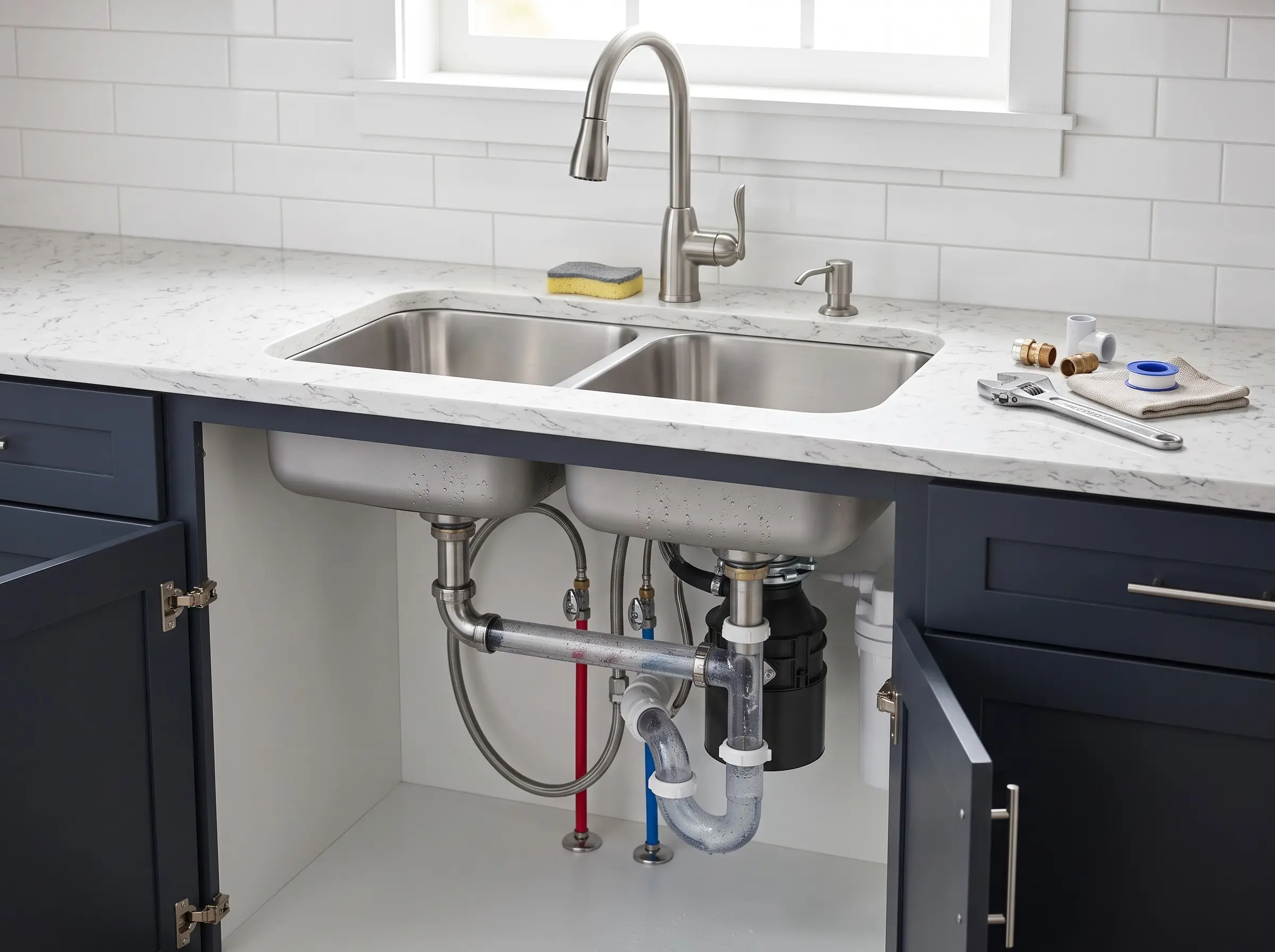
Kitchen Sink Problem Troubleshooter
A kitchen sink that drains slowly, smells unpleasant, leaks under the cabinet, or has low water pressure can disrupt your daily routine. The first step is to identify the symptoms and check whether the problem is safe to investigate yourself.
This kitchen sink troubleshooting tool helps you explore common sink problems, understand their possible causes, and find practical next steps. Select your symptoms in the tool below to get guidance on what to check and when to contact a qualified plumber.
Quick answer: Start by identifying the exact symptom, checking whether other fixtures are affected, and looking for visible signs of leakage or blockage. Stop using the sink if water is backing up, a major leak is present, or there is a potential electrical hazard. Never put your hand inside a garbage disposal.
Kitchen Sink Troubleshooting Tool
Kitchen Sink Problem Troubleshooter
Having trouble with your kitchen sink? Select the problem, answer a few quick questions, and explore possible causes and practical next steps.
Free interactive tool · No special equipment required to get started
Step 1: What is happening?
Choose the problem that best matches your situation.
Step 2: Tell us a little more
Your answers are processed in this page. This tool does not send them to a plumber or provide a confirmed diagnosis.
When should you call a plumber?
- Water is leaking heavily or damaging cabinets, floors, or nearby electrical equipment.
- Sewage-like water is backing up or several drains are affected.
- A blockage persists despite safe, basic checks.
- There is recurring pipe leakage, suspected pipe damage, or an unexplained loss of water pressure.
Safety first: Do not mix drain cleaners, reach into a garbage disposal, or dismantle plumbing while it is pressurized.
Use the tool to select your problem, answer the follow-up questions, and review the recommended next steps. Its suggestions are general troubleshooting guidance, not a confirmed diagnosis of your plumbing.
Common Kitchen Sink Problems and Possible Causes
Different symptoms can point to different plumbing issues. The table below provides a starting point before you investigate further.
Kitchen Sink Troubleshooting Guide
Identify common sink problems and find the right first step.
| Kitchen Sink Problem | Possible Cause | Recommended First Step |
|---|---|---|
| Slow-draining sink | Debris or an obstruction in the drain | Check the accessible strainer for debris. |
| Completely blocked drain | A substantial drain obstruction | Stop adding water to prevent overflow. |
| Bad sink odor | Food residue, trap issues, or a drainage problem | Clean accessible components and investigate persistent odors. |
| Water leaking under the sink | Supply line, drain connection, or faucet leak | Stop using the sink and isolate the water supply if safe. |
| Low faucet pressure | Aerator blockage or a water supply issue | Compare hot and cold flow and check other faucets. |
| Gurgling drain | Partial blockage or a venting issue | Note whether other fixtures are affected. |
| Garbage disposal not working | Power interruption, jam, or mechanical fault | Switch it off and follow the manufacturer’s safety instructions. |
| Water backing up | Blockage farther along the drain line | Stop using affected fixtures and seek professional help if wastewater is present. |
Safety reminder: Never put your hand inside a garbage disposal or mix drain-cleaning chemicals. If wastewater backs up, a major leak occurs, or water is near electrical equipment, prioritize safety and seek professional assistance.
These are possible explanations rather than definitive diagnoses. Similar symptoms can have different causes, depending on the plumbing system.
1. How to Troubleshoot a Slow-Draining Kitchen Sink
A slow-draining sink may have a buildup of food particles, grease, or other debris in the strainer or drain line.
What you can check
- Stop running water if the basin is close to overflowing.
- Remove visible debris from an accessible strainer.
- Clean removable components according to the sink manufacturer’s care instructions.
- Observe whether the drain improves or the problem returns.
Avoid pouring boiling water into a sink without checking the manufacturer’s guidance, especially if the plumbing contains plastic components or the sink material may be sensitive to sudden temperature changes.
If the drain remains blocked, other fixtures are affected, or wastewater returns into the basin, arrange a professional inspection. Never mix drain-cleaning chemicals or dismantle a drain containing potentially hazardous chemical residue.
2. Why Does My Kitchen Sink Smell Bad?
An unpleasant kitchen sink odor can come from food residue, buildup around accessible drain components, a dry trap, or a plumbing problem.
Steps to investigate the odor
- Clean the sink basin and removable strainer.
- Remove accessible food debris without reaching into unsafe plumbing or disposal parts.
- Check whether the smell returns shortly after cleaning.
- Notice whether the odor resembles sewage or appears when other fixtures drain.
A persistent sewage-like odor may indicate a trap, drain, or venting problem that requires further investigation. Cleaning the sink surface alone may not resolve the underlying cause.
For more maintenance advice, read our guide to cleaning tips for compact kitchen sinks.
3. How to Check for a Kitchen Sink Leak
Water under a kitchen sink may come from the faucet supply lines, drain connections, sink strainer, or another plumbing component. The location of the water can help narrow down the possibilities, but it does not always reveal the source.
What to do first
- Stop using the sink.
- If the area is safe, remove stored items to check for visible water.
- If a pressurized supply line appears to be leaking, close the accessible hot and cold shutoff valves if you can do so safely.
- Keep water away from electrical outlets and equipment.
- Contact a plumber if the leak continues, the source is unclear, or the damage is significant.
If water is near electrical equipment, do not touch wet equipment or enter an unsafe area. Keep people away and seek urgent professional assistance.
Do not tighten or dismantle plumbing connections while the system is pressurized unless you are qualified to do so.
4. What Causes Low Kitchen Faucet Water Pressure?
Low faucet pressure can be caused by a clogged aerator, a partially closed shutoff valve, a supply problem, or a damaged pipe.
Check these symptoms
- Only one faucet is affected: The issue may be localized to that faucet or its connections.
- Only hot water is affected: The problem may involve the hot-water supply or faucet components.
- Both hot and cold water are weak: A blocked aerator, shared supply issue, or another plumbing restriction may be responsible.
- Several faucets are affected: The issue may extend beyond the kitchen sink.
If the faucet has a removable aerator, follow the manufacturer’s instructions for cleaning it. Do not force a stuck valve or dismantle a supply line if you are unsure how to isolate the water safely.
Sudden or persistent pressure loss should be investigated, particularly if it affects several fixtures.
5. Why Is My Kitchen Sink Gurgling?
A gurgling sound may occur when air moves through a partially obstructed drain or when the plumbing venting system is not working correctly.
Pay attention to when the noise happens. Does it occur while the kitchen sink drains, when the dishwasher empties, or when another fixture is used?
Persistent gurgling accompanied by slow drainage, recurring backups, or sewage-like odors warrants professional inspection. If multiple fixtures are affected, avoid continued use when it could worsen a wastewater backup.
6. Garbage Disposal Troubleshooting and Safety
A garbage disposal that hums, makes unusual noises, or does not start may have a jam, an interrupted power supply, an activated overload protector, or a mechanical fault.
Safe first steps
- Switch the disposal off.
- If it hums or appears jammed, do not repeatedly attempt to run it.
- Disconnect electrical power before inspecting the unit, following its manufacturer’s instructions.
- Never put your hand or fingers inside the disposal.
- Use only the manufacturer-approved procedure and tools for clearing a jam.
If the unit continues to trip the breaker, produces a burning smell, or remains jammed, leave it switched off and contact a qualified service professional.
See the manufacturer’s garbage disposal troubleshooting instructions for model-specific guidance.
7. What Should You Do if Water Backs Up Into the Sink?
Water returning into the sink may indicate a blocked drain or an issue affecting a shared plumbing line.
Stop running water and avoid operating appliances that drain into the affected line. Do not keep plunging or dismantling a drain if chemical cleaner may be present.
If wastewater or sewage is backing up, avoid direct contact and keep children and pets away. Contact a plumber promptly, especially if several drains are affected.
When Should You Call a Plumber?
Some basic checks may be appropriate for minor problems, but not every sink issue is suitable for DIY repair.
Kitchen Sink Repair: When to Get Help
Know when a simple check is enough and when professional help is needed.
| Situation | Recommended Response |
|---|---|
| Visible debris in a removable strainer | Clean it according to the manufacturer’s instructions. |
| Minor issue that resolves after safe cleaning | Monitor the sink for recurring symptoms. |
| Repeated slow drainage or blockage | Arrange a plumbing inspection. |
| Persistent leak or unexplained pressure loss | Contact a qualified plumber. |
| Wastewater backup or several affected drains | Seek prompt professional help and avoid contact with wastewater. |
| Major leak or water near electrical equipment | Prioritize safety, stay clear of electrical hazards, and seek urgent assistance. |
| Disposal jam or repeated electrical tripping | Keep the unit switched off and seek qualified service. |
Safety first: Do not attempt repairs that require unsafe electrical contact or dismantling pressurized plumbing. If the water supply cannot be safely isolated, or a leak is severe, get professional assistance.
A professional may need to inspect the drain line, supply connections, faucet, trap, venting system, or disposal to establish the cause.
How to Prevent Common Kitchen Sink Problems
Routine maintenance can help reduce some avoidable problems.
- Remove food scraps from plates before washing them.
- Avoid pouring cooking grease or oil down the drain.
- Clean the sink strainer and accessible components regularly.
- Follow the manufacturer’s care instructions for your sink, faucet, and disposal.
- Investigate small leaks before they damage cabinet materials.
- Avoid forcing objects into the drain or using incompatible cleaning products.
The U.S. Environmental Protection Agency provides additional guidance on protecting household drains and septic systems in its article on how to care for your septic system.
Frequently Asked Questions
1. What is the most common cause of kitchen sink problems?
Common causes include drain obstructions, food residue, loose or damaged connections, and faucet supply issues. The likely cause depends on the symptoms and plumbing setup.
2. How can I troubleshoot my kitchen sink at home?
Identify the symptom, check whether other fixtures are affected, and look for visible debris or leakage. Only perform checks that are safe and consistent with the manufacturer’s instructions.
3. Why is my kitchen sink draining slowly?
Food particles, grease, or an obstruction in the drain may restrict water flow. A persistent or complete blockage may need professional attention.
4. Why does my kitchen sink smell like sewage?
Possible causes include a dry or faulty trap, a drainage issue, or a venting problem. A persistent sewage-like odor should be investigated rather than masked with fragrance or cleaner.
5. Why is water leaking under my kitchen sink?
Possible sources include faucet supply lines, drain connections, or the sink strainer. Stop using the sink and isolate the supply if safe when a supply leak is suspected.
6. Why is my kitchen faucet pressure suddenly low?
A clogged aerator, a supply issue, or a plumbing restriction may be responsible. Compare hot and cold flow and check whether other faucets are affected.
7. Is it safe to use a chemical drain cleaner?
Chemical drain cleaners can present risks to people and plumbing materials. Never mix products, follow label instructions, and do not plunge or dismantle a drain that may contain hazardous cleaner.
8. When should I stop troubleshooting?
Stop if there is a major leak, wastewater backup, a possible electrical hazard, repeated disposal failure, or a problem that requires dismantling plumbing beyond your experience.
9. Can this troubleshooting tool diagnose plumbing problems?
No. The tool provides general information based on the symptoms selected. It cannot inspect pipes, test water pressure, or confirm the cause of a plumbing fault.
Final Takeaway
The right way to troubleshoot a kitchen sink starts with identifying the symptoms and understanding the limits of safe home checks. Use the interactive tool to explore possible causes, follow the relevant manufacturer’s instructions, and call a qualified professional when the problem persists or creates a safety risk.
Disclaimer: This page provides general educational information and is not a substitute for an on-site plumbing inspection or qualified professional advice.
Get Helpful Sink Tips
Subscribe for practical sink planning tips and helpful resources for small kitchens and compact spaces.