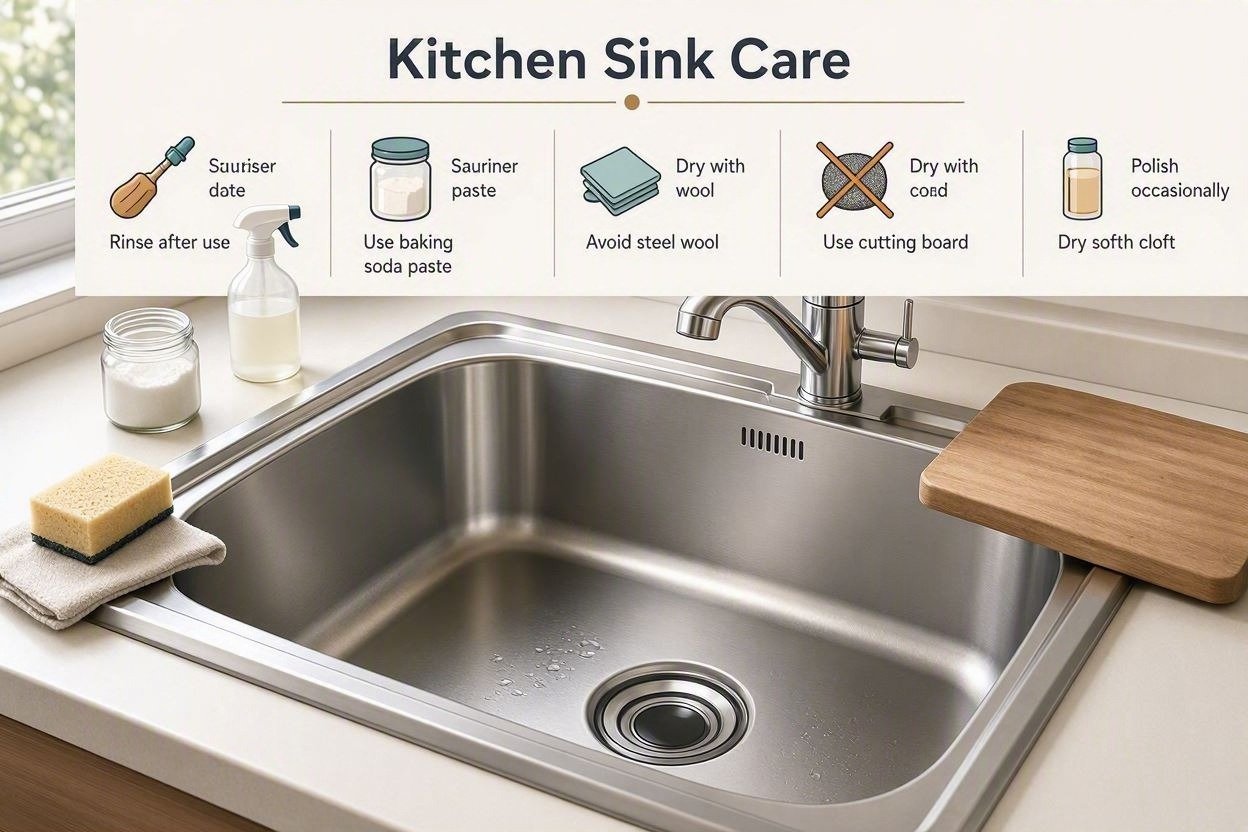
Proper kitchen sink care keeps one of the busiest areas of the home clean, functional, and attractive. Daily exposure to food residue, grease, soap, hard water, and cookware can gradually cause stains, scratches, odors, and surface buildup. Without a consistent routine, even a durable sink can lose its original appearance over time. Fortunately, effective sink maintenance does not require expensive products or complicated techniques. Simple habits such as rinsing the basin, removing residue promptly, using suitable cleaning tools, and drying the surface can make a noticeable difference. This guide explains practical ways to clean different sink materials, prevent common damage, remove stubborn buildup, and maintain a fresh-looking kitchen sink for longer.
Why Proper Sink Care Matters
Regular sink maintenance helps preserve both appearance and everyday functionality. A sink that remains wet and dirty for long periods can develop water spots, mineral deposits, unpleasant odors, and stubborn stains.
Proper kitchen sink maintenance is also important for kitchen sink hygiene. Food particles and residue can accumulate around the sink basin, drain, faucet area, and other difficult-to-reach locations.
Consistent care is particularly valuable for frequently used sinks. Removing residue before it dries makes cleaning easier and reduces the need for aggressive scrubbing.
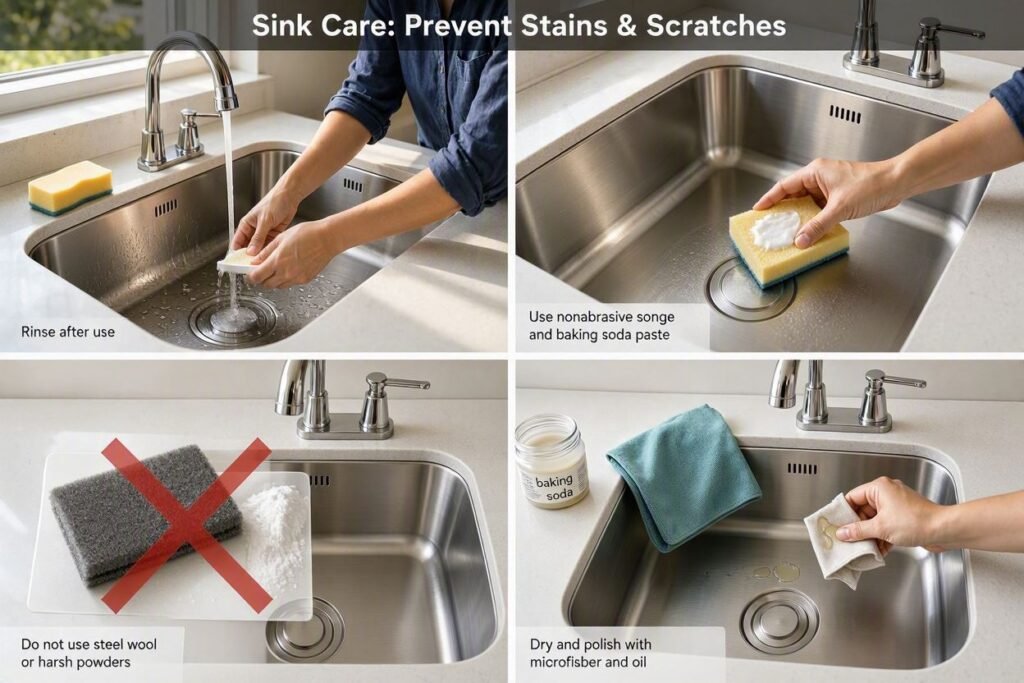
How Regular Sink Care Prevents Stains and Scratches
Many kitchen sink stains develop because food, beverages, soap residue, or hard water remain on the surface. Prompt rinsing removes these substances before they become difficult to clean.
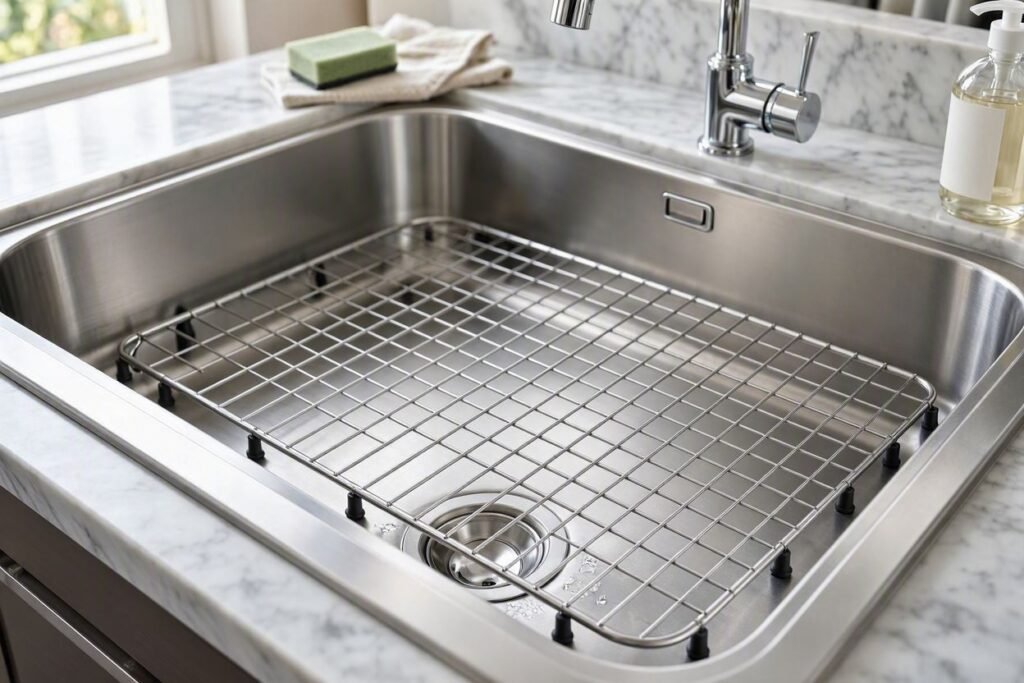
Scratch prevention requires a slightly different approach. Heavy cookware should not be dragged across the sink surface. A sink grid can also provide useful sink surface protection by separating cookware from the basin.
Common Causes of Sink Damage
Several everyday habits can contribute to premature wear:
- Leaving food residue inside the sink
- Allowing standing water to remain on the surface
- Using abrasive cleaners
- Scrubbing with abrasive scrubbers
- Using steel wool
- Dragging heavy cookware across the basin
- Ignoring hard water buildup
- Using unsuitable sink cleaning products
A consistent sink care routine can reduce these problems without requiring extensive effort.
How to Clean Your Kitchen Sink Properly
Effective kitchen sink cleaning begins with removing debris and rinsing the entire basin. The exact cleaning method should depend on the sink material and finish.
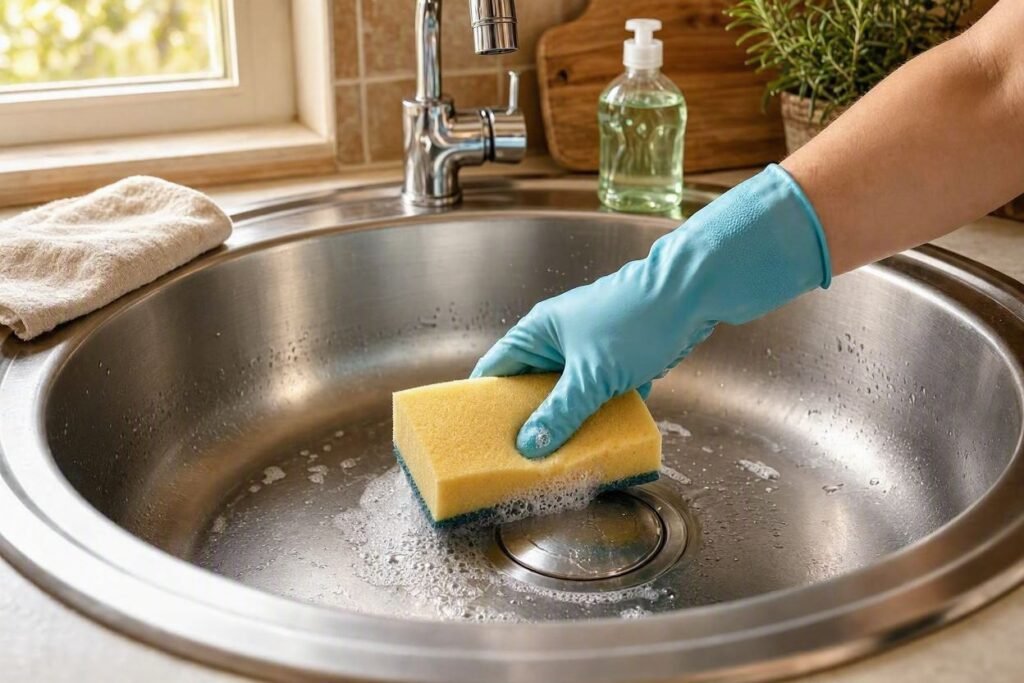
For routine cleaning, mild dish soap, water, and a soft sponge are often practical choices for many sink surfaces. A microfiber cloth can then be used for drying the sink and reducing water spots.
What to Do Before Cleaning a Kitchen Sink
Remove dishes, utensils, food particles, and other items from the basin. Rinse the surface thoroughly to loosen loose debris.
Check the sink drain and faucet area because food residue and soap residue often collect around these locations. If a removable sink grid is present, clean it separately.
Step-by-Step Kitchen Sink Cleaning Method
- Remove food residue and loose debris.
- Rinse the sink basin with water.
- Apply an appropriate cleaning solution.
- Gently clean the surface with a soft sponge.
- Pay attention to the drain and faucet area.
- Rinse away all remaining soap residue.
- Dry the surface with a clean microfiber cloth.
This process creates a simple sink cleaning routine that can be adapted to most kitchens.
How Often Should a Kitchen Sink Be Cleaned?
Daily cleaning helps remove food residue, soap residue, and standing water before they accumulate. A more thorough weekly cleaning can address areas that receive less attention during everyday use.
High-use kitchens may benefit from more frequent cleaning, while lightly used sinks may require less intensive maintenance.
How to Prevent Stains on a Kitchen Sink
Sink stain prevention starts with removing substances that can discolor or mark the surface. Coffee, tea, tomato-based foods, grease, minerals, and standing water can contribute to kitchen sink stains.
Rinsing the sink after meal preparation and drying it afterward can help keep the surface cleaner.
Common Types of Kitchen Sink Stains
Common sink stains include:
- Water spots
- Hard water stains
- Rust stains
- Food stains
- Soap residue
- Mineral deposits
- Grease marks
Different stains require different cleaning approaches. Identifying the cause before choosing a cleaning product can help prevent unnecessary surface damage.
How to Prevent Food and Beverage Stains
Strongly colored foods and beverages should not be left sitting in the sink. Coffee, tea, tomato sauce, and similar substances can leave residue when allowed to dry.
Rinse the basin promptly after food preparation. This simple habit supports both stain prevention and kitchen sink hygiene.
How to Prevent Water Spots and Soap Residue
Water spots can become particularly visible on polished surfaces. After cleaning or heavy use, wipe away remaining moisture with a microfiber cloth.
Soap residue can also create a cloudy appearance. Thoroughly rinse the sink after applying cleaning products to prevent residue from accumulating.
How to Prevent Rust Stains on Stainless Steel Sinks
Rust stains on a stainless steel sink can sometimes result from iron-containing particles left on the surface. Wet metal objects and steel wool particles may contribute to these marks.
Avoid leaving metal cookware or cleaning materials sitting in the basin for extended periods. For existing rust stains, use a method specifically recommended for the sink’s finish.
How to Prevent Scratches on Your Kitchen Sink
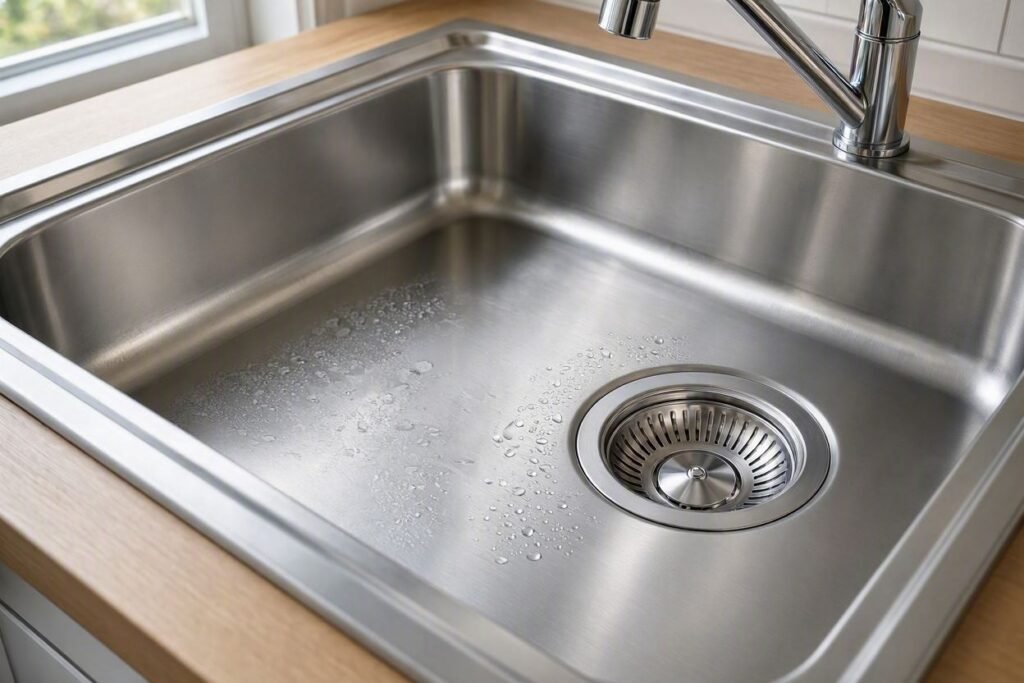
Sink scratch prevention is important because repeated surface damage can affect the appearance of a sink over time.
Stainless steel is durable but can still develop visible marks. Other sink materials may also be vulnerable to scratching or surface damage from unsuitable cleaning tools.
What Causes Scratches on Kitchen Sinks?
Common causes include:
- Dragging heavy pots and pans
- Using steel wool
- Using abrasive scrubbers
- Scrubbing too aggressively
- Dropping sharp utensils
- Placing rough cookware directly on the surface
Some fine marks naturally develop on frequently used sinks. However, unnecessary scratches can often be reduced with careful handling.
How to Protect a Sink From Pots, Pans, and Utensils
Lift heavy cookware instead of sliding it across the basin. Avoid dropping sharp utensils onto the sink surface.
A compatible sink grid can create a barrier between cookware and the basin. Other protective accessories may also help, provided they are suitable for the specific sink.
Why Abrasive Cleaners Can Scratch Sink Surfaces
Abrasive cleaners and abrasive scrubbers can contain particles designed to remove stubborn deposits. On certain finishes, repeated use may leave visible marks.
For routine cleaning, choose products recommended by the sink manufacturer. Gentler cleaning methods are generally preferable when aggressive scrubbing is unnecessary.
How to Clean a Scratched Sink Without Making Damage Worse
Do not aggressively scrub existing scratches in an attempt to remove them. This can create additional marks and make the damaged area more noticeable.
Instead, clean the surface gently and follow the manufacturer’s recommendations for the particular sink material and finish.
Best Cleaning Methods for Stainless Steel Sinks
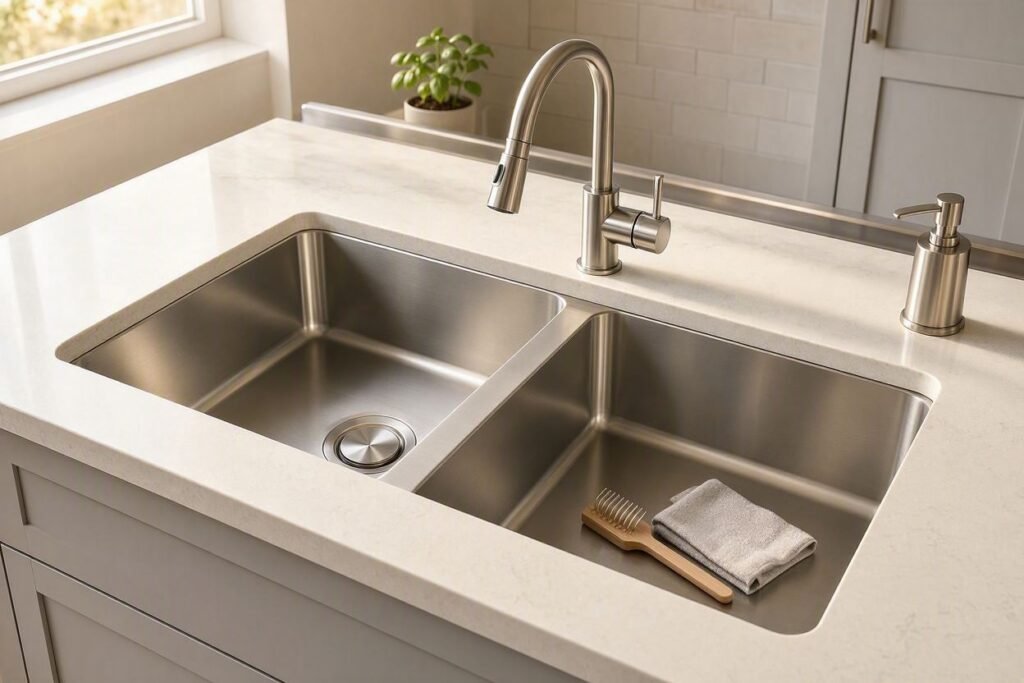
Proper stainless steel sink care can help maintain the finish and reduce visible stains, water spots, and mineral buildup.
Although stainless steel is durable, its surface can still be scratched by unsuitable tools. Cleaning should therefore focus on removing residue without unnecessary abrasion.
How to Clean Stainless Steel Sink Surfaces Safely
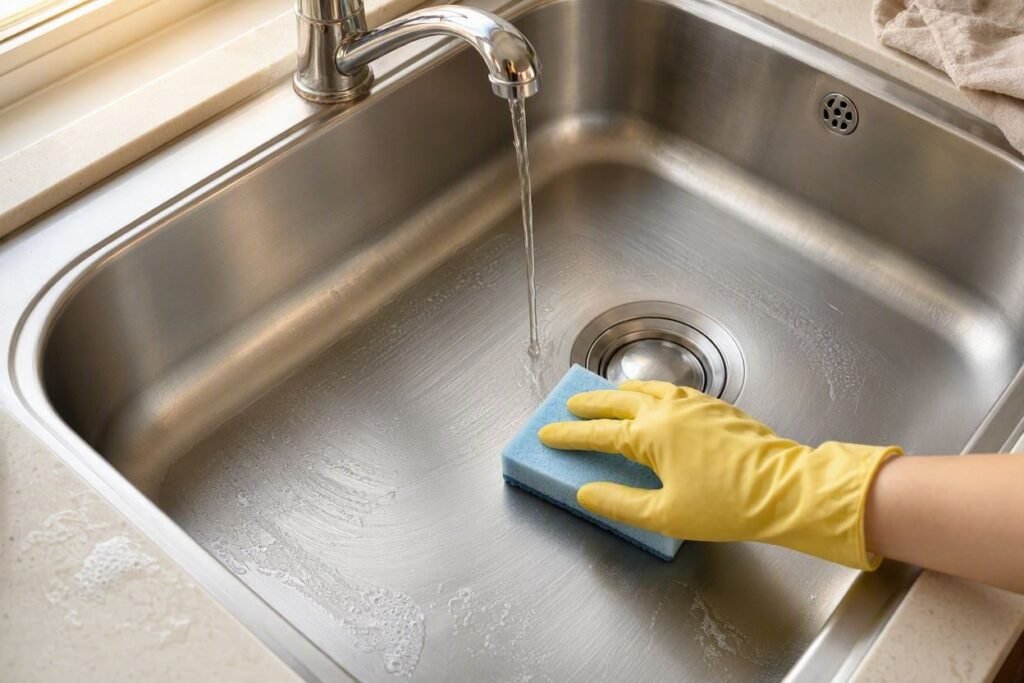
Start with warm water and mild dish soap for routine cleaning when permitted by the manufacturer. Apply the solution using a soft sponge and clean gently.
Rinse the surface thoroughly after cleaning. Remaining cleaning solution can leave residue or affect the appearance of the finish.
Cleaning With the Stainless Steel Grain
Many stainless steel sinks have a brushed grain that runs in a particular direction. Cleaning along this grain can help maintain a more consistent appearance.
Avoid aggressive circular scrubbing, especially when removing stubborn residue.
Suitable Household Cleaning Methods
For routine stainless steel sink cleaning, mild dish soap, warm water, a soft sponge, and a microfiber cloth are useful options.
Baking soda may be appropriate for some cleaning situations, but it should be applied gently and only when compatible with the manufacturer’s care instructions.
White vinegar is sometimes used for mineral deposits. However, it should not automatically be considered suitable for every stainless steel finish or sink material.
What to Avoid When Cleaning Stainless Steel
Avoid steel wool and highly abrasive scrubbers. These can create scratches and may leave behind particles that contribute to rust-colored marks.
Also avoid using strong chemicals without checking whether they are compatible with the sink finish.
Never mix cleaning products unless the manufacturer specifically confirms that the combination is safe.
How to Restore Shine After Cleaning
After rinsing, dry the surface using a clean microfiber cloth. Removing remaining moisture helps reduce water spots and leaves the sink looking cleaner.
Regular drying can be particularly helpful in areas where hard water is common.
How to Remove Hard Water Stains and Mineral Deposits
Hard water contains dissolved minerals that remain behind when water evaporates. Over time, these mineral deposits can create cloudy or white marks around the basin, drain, and faucet.
What Causes Hard Water Stains on Kitchen Sinks?
When hard water dries naturally, dissolved minerals can remain on the sink surface. Repeated exposure may create noticeable hard water stains on sink surfaces.
The problem can become more obvious when standing water is allowed to evaporate repeatedly.
How to Remove White Mineral Deposits Safely
Choose a cleaning method appropriate for the sink material. Avoid aggressive scrubbing when a gentler method can remove the buildup.
Some homeowners use diluted white vinegar for mineral deposits on compatible surfaces. However, prolonged exposure may not be appropriate for every finish or material.
Always follow the manufacturer’s instructions, rinse thoroughly, and dry the surface afterward.
How to Clean Around Faucets and Drains
Mineral deposits often accumulate around the faucet area and sink drain because moisture remains there longer.
Use a soft sponge or cloth to clean these areas carefully. Avoid forcing cleaning tools into openings or plumbing connections.
How to Prevent Hard Water Buildup
Regular drying is one of the simplest prevention methods. Wipe away standing water after cleaning and heavy use.
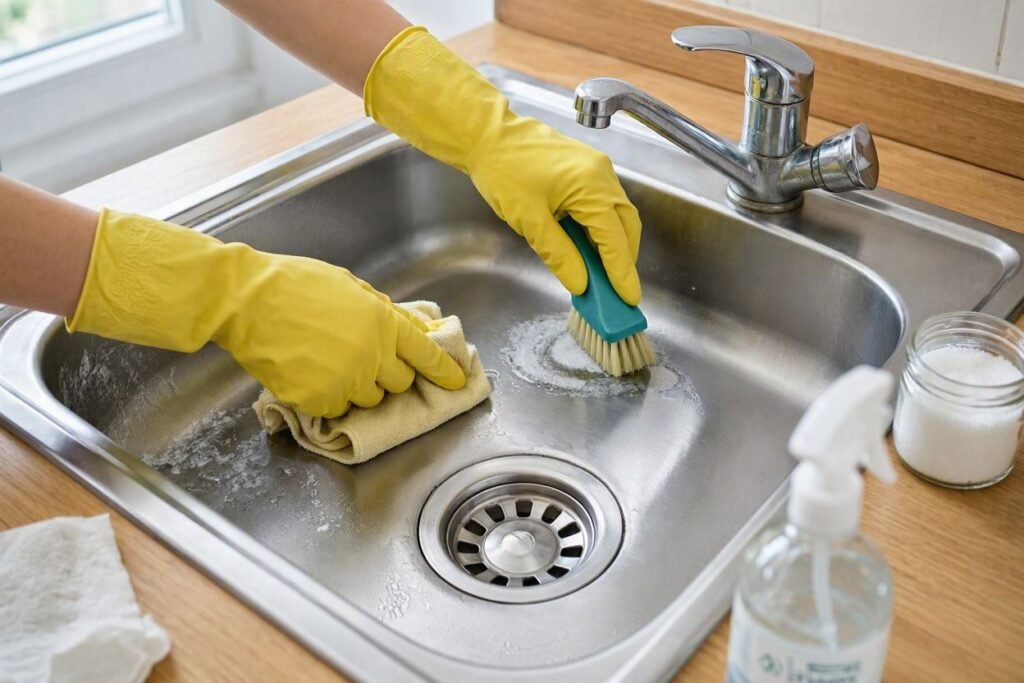
A consistent sink cleaning routine can reduce the amount of hard water buildup that develops over time.
Kitchen Sink Cleaning Mistakes to Avoid
Even regular cleaning can cause damage when unsuitable methods are used. Understanding common mistakes is an important part of effective sink maintenance.
Using Steel Wool or Highly Abrasive Scrubbers
Steel wool can scratch many sink finishes. Small metal particles may also contribute to rust stains when they remain on a wet surface.
For routine cleaning, a soft sponge or manufacturer-approved cleaning tool is usually a safer choice.
Leaving Food, Soap, or Water Sitting in the Sink
Standing water can leave water spots and mineral deposits. Food residue can also create unpleasant odors and make later cleaning more difficult.
Rinsing and drying the sink after use helps reduce these problems.
Using Harsh Chemicals Incorrectly
Stronger chemicals are not necessarily better cleaning products. Some can damage finishes or cause discoloration when used incorrectly.
Read product labels carefully and follow the sink manufacturer’s instructions.
Using Bleach Without Checking Manufacturer Guidance
Bleach may be suitable for certain applications but is not appropriate for every sink material or finish.
Never mix bleach with other cleaning products. Always check manufacturer guidance before using it.
Mixing Different Cleaning Products
Never mix household cleaning products unless their labels specifically indicate that the combination is safe.
Some chemical combinations can release hazardous fumes or create dangerous reactions.
Ignoring the Sink Drain and Faucet Area
The sink basin is not the only area requiring attention. Food residue, soap residue, and mineral deposits can accumulate around the drain and faucet.
Include these areas in the regular cleaning process.
How to Keep Your Sink Looking New Longer
A simple sink care routine can help preserve the appearance of a kitchen sink for years.
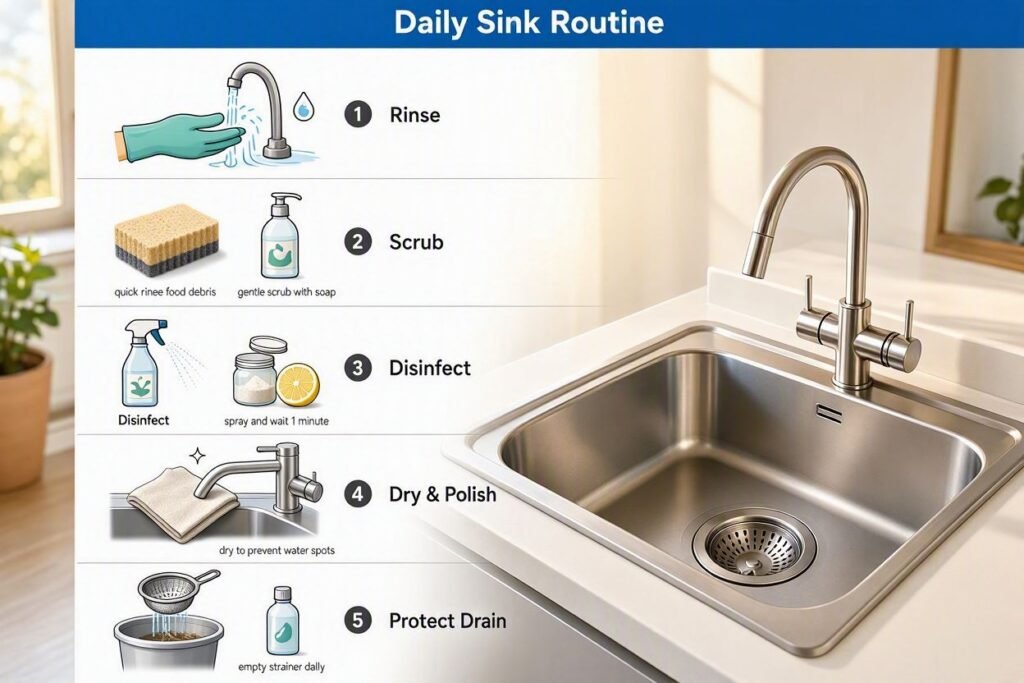
Create a Simple Daily Sink Care Routine
After washing dishes or preparing food:
- Remove food residue
- Rinse the sink basin
- Remove visible soap residue
- Check the sink drain
- Wipe the faucet area
- Dry the sink surface
These small habits make daily cleaning easier while supporting long-term sink protection.
Dry the Sink After Cleaning and Use
Drying the sink can help reduce water spots and mineral deposits, particularly in hard-water areas.
A microfiber cloth works well for drying smooth sink surfaces without introducing unnecessary abrasion.
Clean Spills and Food Residue Promptly
Do not allow acidic foods, strongly colored liquids, or greasy residue to remain on the surface longer than necessary.
Prompt cleaning reduces the likelihood of persistent kitchen sink stains.
Use Sink Accessories That Reduce Surface Damage
A sink grid can protect the basin from direct contact with pots and pans. Other protective accessories may also be useful depending on the sink design.
Accessories should allow proper drainage and should themselves be cleaned regularly.
Inspect the Sink Regularly for Early Signs of Damage
During weekly cleaning, check for discoloration, rust marks, chips, cracks, or changes in the finish.
Early attention can prevent minor problems from becoming harder to manage.
Sink Care Tips for Different Sink Materials
The correct cleaning method depends heavily on the sink material. A product suitable for stainless steel may not be appropriate for porcelain, ceramic, granite composite, or cast iron.
Stainless Steel Sink Care
A stainless steel sink generally benefits from mild cleaning products, a soft sponge, thorough rinsing, and regular drying.
Avoid steel wool and aggressive abrasive scrubbers. Drying the surface after cleaning can also reduce water spots and mineral deposits.
Porcelain and Ceramic Sink Care
A porcelain sink and ceramic sink can have smooth surfaces that show stains and discoloration.
Use products recommended for the particular finish. Avoid harsh scrubbing that could damage the surface or coating.
Granite Composite Sink Care
A granite composite sink should be cleaned using methods appropriate for its specific composition and manufacturer’s recommendations.
Remove food residue and mineral buildup regularly. Avoid assuming that every stainless steel cleaning method is suitable for composite surfaces.
Cast Iron Sink Care
A cast iron sink commonly has an enamel surface that can withstand everyday use but may still be affected by heavy impact and unsuitable abrasive cleaners.
Use gentle cleaning methods and avoid dropping heavy cookware into the basin.
How Cleaning Methods Differ by Sink Material
There is no universal cleaning product that is ideal for every kitchen sink.
Before using a new cleaning solution, identify the sink material and review the manufacturer’s care instructions. This approach supports safer cleaning and better long-term maintenance.
Kitchen Sink Care Checklist + FAQs
A simple checklist makes it easier to maintain a consistent kitchen sink care routine.
Daily Kitchen Sink Care Checklist
- Remove food residue
- Rinse the sink basin
- Remove visible soap residue
- Rinse around the sink drain
- Check the faucet area
- Dry the sink surface
Weekly Kitchen Sink Cleaning Checklist
- Clean the entire sink basin
- Clean the drain area
- Wash the sink grid
- Remove visible mineral deposits
- Check for water spots
- Inspect for scratches or discoloration
- Clean around faucet fittings
Monthly Sink Maintenance Checklist
- Inspect the entire sink surface
- Check accessible plumbing areas for visible leaks
- Clean protective accessories
- Examine difficult-to-reach areas
- Review the manufacturer’s recommended care routine
Final Thoughts
Effective kitchen sink care depends more on consistency than complicated cleaning techniques. Removing food residue, rinsing the basin, avoiding abrasive tools, and drying the surface can prevent many common problems.
Stains, scratches, water spots, and mineral deposits become easier to manage when addressed early. The correct cleaning approach also depends on whether the sink is stainless steel, porcelain, ceramic, granite composite, or cast iron.
A few minutes of daily cleaning, combined with regular weekly maintenance, can help preserve a sink’s appearance and functionality. Most importantly, check the manufacturer’s care instructions before using unfamiliar sink cleaning products or household cleaning solutions.
FAQS
What Is the Best Way to Clean a Kitchen Sink?
The best method depends on the sink material and finish. For many sinks, mild dish soap, water, and a soft sponge provide a practical starting point.
Always follow the manufacturer’s cleaning and maintenance instructions before using specialized products.
How Do You Prevent Scratches on a Stainless Steel Sink?
Avoid steel wool, abrasive scrubbers, and aggressive cleaning methods. Lift heavy cookware instead of dragging it across the basin.
A compatible sink grid can also provide additional surface protection.
How Do You Remove Stains From a Kitchen Sink?
First identify the stain and sink material. Water spots, mineral deposits, food stains, and rust marks may require different cleaning approaches.
Use a method recommended for the specific surface rather than relying on a single universal cleaner.
Can Vinegar Damage a Stainless Steel Sink?
White vinegar can help dissolve some mineral deposits, but it should not be considered universally safe for every finish.
Follow the manufacturer’s instructions, avoid prolonged contact, and rinse the surface thoroughly after use.
How Often Should a Kitchen Sink Be Cleaned?
Daily cleaning helps remove food residue, soap residue, and standing water. A more thorough weekly cleaning provides additional maintenance.
High-use kitchens may require more frequent cleaning.
What Should Never Be Used on a Stainless Steel Sink?
Steel wool and highly abrasive scrubbers should generally be avoided because they can scratch the surface.
Also avoid incompatible chemicals and never mix household cleaning products unless the manufacturer confirms that the combination is safe.
learn more about the : Ultimate Guide to Sink Care: Prevent Stains & ScratchesCabinet Size for Kitchen Sink: 1 How to Measure Correctly
Are Black Kitchen Sinks the Hottest Trend of 2026?
Comprehensive Sink Care Tips & Maintenance Solutions
How to care for your kitchen sinks and kitchen faucets

Khadija is the writer and founder of Tiny Sink Solution. She creates practical guides about small kitchen sinks, faucets, and compact kitchen maintenance, helping homeowners and renters choose solutions for limited spaces. Some articles contain affiliate links, and as an Amazon Associate, she earns from qualifying purchases at no extra cost to readers





![Top [count] Gardening Blogs - OnToplist.com](https://www.ontoplist.com/images/ontoplist32.png?id=6aa4d0c493161)