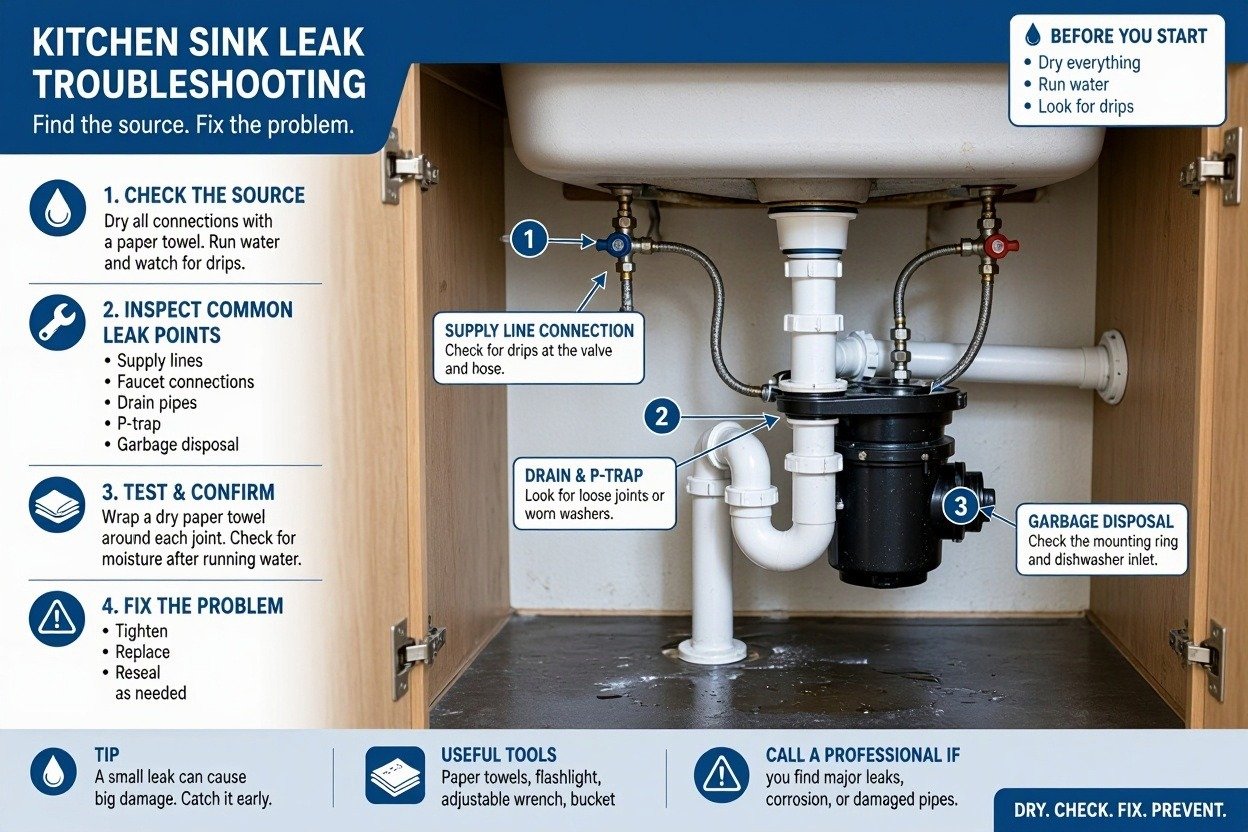
Kitchen Sink Leak Troubleshooting Tool: Find the Cause
Small kitchen sink leaks can be frustrating because water does not always appear where the problem starts. A loose connection, damaged seal, drain fitting, or supply line issue can allow water to travel before becoming visible.
This kitchen sink leak troubleshooting tool helps you identify common leak symptoms, understand possible causes, and find the safest next steps. Select where you notice water, when the leak happens, and the signs you see to narrow down what area may need attention.
Note: This checklist provides general guidance only and does not replace professional plumbing inspection.
Kitchen Sink Leak Troubleshooting Tool
Use the checklist below to explore possible causes of your kitchen sink leak.
Kitchen Sink Leak Troubleshooter
Find possible causes of your sink leak. Choose your symptoms below to get practical next steps and know when to call a plumber.
Possible Leak Sources
These are possible explanations based on your selections, not a confirmed diagnosis.
🔎 What may be happening
✅ Recommended next steps
Still unsure where the water starts? Read our guide: How to Find and Fix a Leak Under the Kitchen Sink.
This free checklist provides general educational information. It cannot inspect plumbing or confirm the source of a leak. Serious, persistent, or hidden leaks may need a licensed plumber.
How to Use This Kitchen Sink Leak Checklist
Finding the source of a kitchen sink leak usually starts with three simple questions:
1. Where is the water appearing?
The location of visible water can provide clues about the possible source.
Common areas include:
- Under the sink cabinet
- Around the faucet base
- Around the sink rim
- Near the drain opening
- Around the garbage disposal
- Near the dishwasher connection
Remember that water can travel along pipes, cabinet surfaces, and other parts before dripping.
2. When does the leak happen?
The timing of the leak can help separate different plumbing problems.
Leak happens even when the faucet is off
This may suggest a supply-side issue, such as:
- Faucet supply connection
- Shutoff valve connection
- Water supply hose
Check visible connections carefully and avoid tightening fittings excessively.
Leak happens when running water
If water appears while the faucet is running, possible areas include:
- Faucet connections
- Supply lines
- Drain components
- Sink basin area
Dry the area first, then observe where moisture appears.
Leak happens only when draining water
A drain-related leak may involve:
- Sink strainer
- Drain gasket
- P-trap connection
- Drain pipe joints
If your sink also has slow drainage, you may want to read our guide on
Why Is My Kitchen Sink Gurgling? Causes & Troubleshooting.
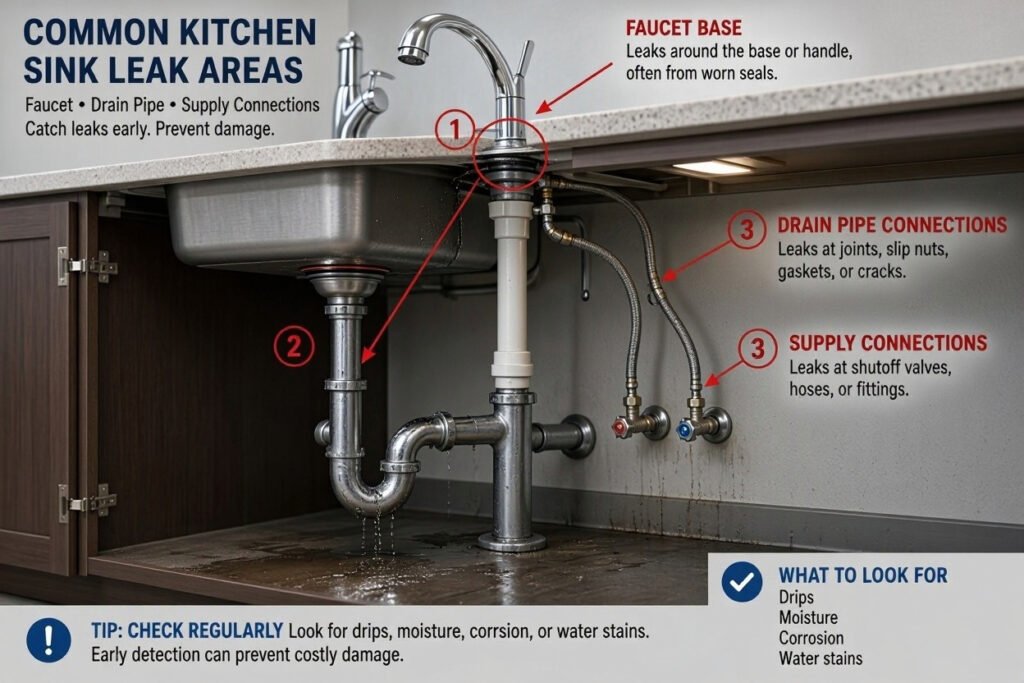
Common Causes of Kitchen Sink Leaks
1. Loose Drain Connections
Drain pipes under a kitchen sink contain several connection points. A loose fitting or worn seal can allow water to escape when water flows through the drain.
Possible signs:
- Water appears only during draining
- Moisture around pipe joints
- Dripping below the sink
2. Faucet Supply Line Problems
The water supply lines connect your faucet to the home’s water supply. A loose connection or damaged hose can cause leaks even when the drain is not being used.
Possible signs:
- Water appears when the faucet runs
- Moisture near shutoff valves
- Dripping from above the cabinet floor
3. Sink Strainer or Drain Seal Issues
The sink drain opening depends on proper sealing between components. A worn or damaged seal may allow water to leak underneath the sink.
Possible signs:
- Leak appears around drain connections
- Water appears during draining
- Moisture near the top drain area
4. Garbage Disposal Connection Leaks
If your sink has a garbage disposal, leaks may occur around:
- Disposal mounting area
- Drain connections
- Dishwasher hose connection
Always disconnect power before inspecting or working near a garbage disposal.
5. Sink Rim or Countertop Seal Problems
Sometimes water enters around the sink edge instead of coming from pipes underneath.
Possible signs:
- Moisture around sink edges
- Cabinet damage near the sink opening
- Water appearing after washing dishes
What To Check Before Calling a Plumber
Before professional repair, you can safely check:
Step 1: Dry the Area
Remove standing water and dry visible pipes and connections.
Step 2: Look for the First Wet Point
The first place that becomes wet is often closer to the source.
Step 3: Check Visible Connections
Look for:
- Loose connections
- Damaged hoses
- Cracks
- Worn seals
Do not remove plumbing parts unless you understand how they are connected.
For more detailed repair steps, read:
How to Find and Fix a Leak Under the Kitchen Sink
When Should You Stop Troubleshooting?
Some situations require extra caution.
Stop and seek professional help if:
- Water is flowing quickly
- Water is near electrical equipment
- You notice major cabinet damage
- You cannot locate the leak source
- A pipe or fitting appears cracked
A small leak can become a bigger problem if water damage continues over time.
How To Prevent Future Kitchen Sink Leaks
Regular maintenance can help catch problems early.
Helpful habits include:
- Check visible plumbing connections occasionally
- Avoid forcing or over-tightening fittings
- Clean the sink area and remove standing water
- Fix small moisture signs before they worsen
- Avoid putting excessive pressure on drain pipes
- For general plumbing safety and maintenance information:
- EPA WaterSense Home Maintenance
- This Old House Plumbing Guides
Frequently Asked Questions
How do I find where my kitchen sink is leaking?
Start by drying the area completely, then observe when water appears. Check visible connections, drain fittings, supply lines, and areas around the faucet.
Why is my kitchen sink leaking underneath?
Leaks under a kitchen sink commonly come from drain connections, supply lines, sink strainers, P-traps, or water traveling from another area.
Why does my kitchen sink only leak when draining?
A leak that appears only during draining is often related to drain-side components such as the sink strainer, drain gasket, or pipe connections.
Can I fix a small kitchen sink leak myself?
Some simple loose connections may be manageable, but hidden leaks, damaged pipes, and electrical hazards may require professional help.
How can I prevent kitchen sink leaks?
Regularly checking visible plumbing connections and fixing small moisture problems early can help prevent larger issues.
Related Kitchen Sink Guides
Continue learning with these helpful resources:
- How to Find and Fix a Leak Under the Kitchen Sink
Detailed troubleshooting steps for leaks below your sink. - Why Is My Kitchen Sink Gurgling? Causes & Troubleshooting
Learn about drainage sounds and possible causes. - Kitchen Sink Maintenance Guide
Tips for keeping your sink and plumbing working properly.
Get Helpful Sink Tips
Subscribe for practical sink planning tips and helpful resources for small kitchens and compact spaces.