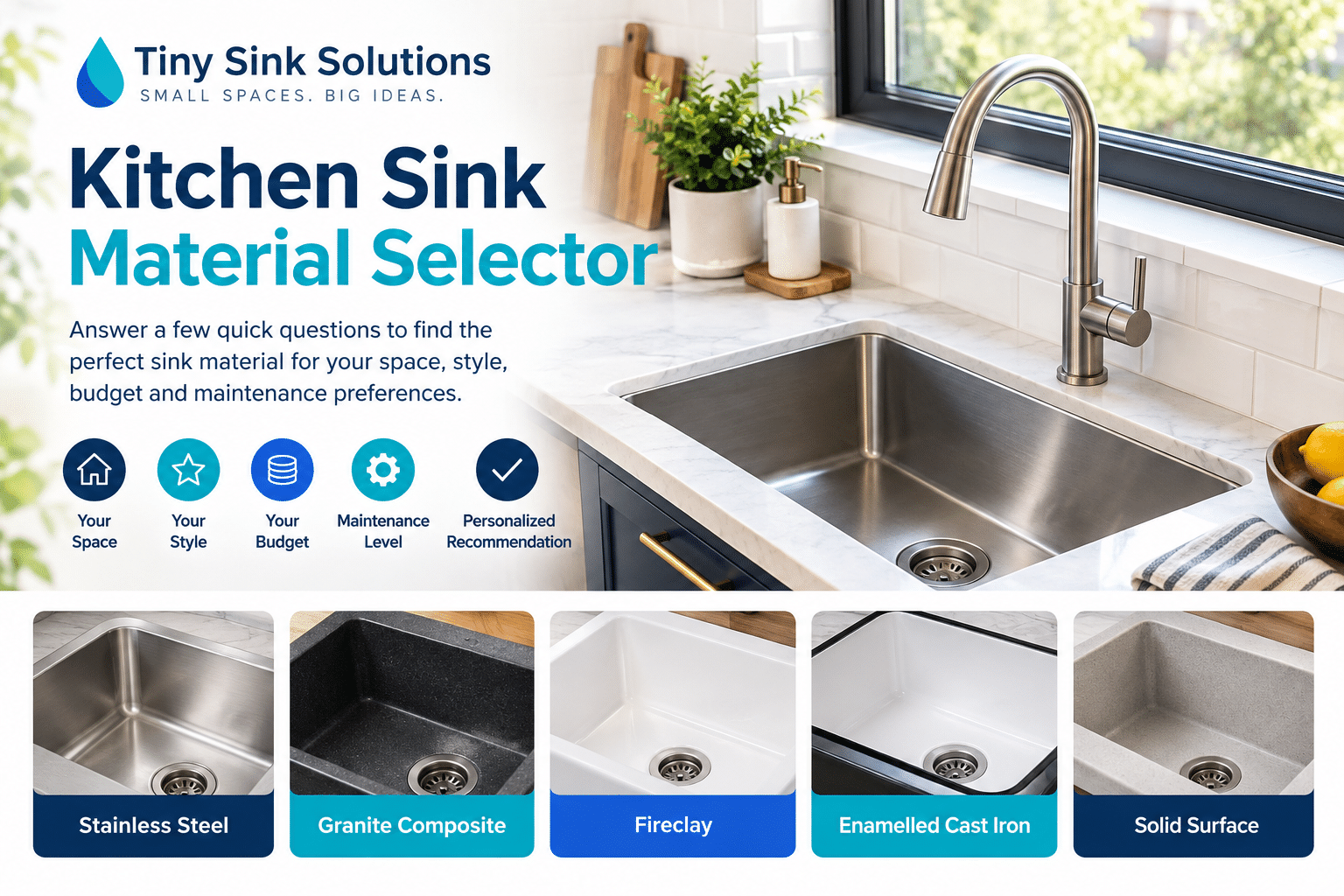
Kitchen Sink Material Selector: Find the Right Sink
Choosing the right kitchen sink material affects how your sink looks, how you clean it, and how well it suits your kitchen layout. This kitchen sink material selector helps you compare stainless steel, granite composite, fireclay, enamelled cast iron, and solid-surface materials according to your priorities.
Whether you’re planning a small kitchen, an RV kitchen, a bar area, or a farmhouse-style renovation, the right material depends on your available space, budget, preferred appearance, and maintenance expectations.
Use the interactive selector below to narrow your choices. Then verify the sink’s dimensions, weight, installation requirements, and manufacturer care instructions before buying.
✨ Kitchen Sink Material Selector ✨
Answer the questions about your installation space, preferred style, maintenance needs, weight concerns, and budget. The tool will suggest a material to investigate and provide an alternative.
Remember that the recommendation is a starting point, not a laboratory-tested durability ranking. The specifications of the actual sink you choose matter more than a general material label.
How to Choose the Right Kitchen Sink Material
The best material should match your daily routine and installation conditions. Consider the following factors before making your decision.
1. Durability and Everyday Use
Think about how frequently you use your sink and what you put into it. Stainless steel, granite composite, fireclay, and enamelled cast iron each have different characteristics.
Stainless steel can develop visible scratches and water spots. Composite sinks vary in impact and heat resistance, while glazed materials can chip if struck hard. The exact construction, finish, and manufacturer guidance determine how a particular sink performs.
2. Cleaning and Maintenance
If you want a sink that is straightforward to clean, stainless steel is a practical starting point. However, water spots and fingerprints may be noticeable, particularly on certain finishes.
Granite composite, fireclay, enamelled cast iron, and solid-surface materials have their own care requirements. Use suitable cleaning products and follow the manufacturer’s instructions to protect the finish.
3. Weight and Cabinet Support
Sink weight is especially important when replacing an existing sink or installing one in a small cabinet or recreational vehicle.
Fireclay and enamelled cast iron can be considerably heavier than many stainless steel models. Granite composite and solid-surface products also vary in weight.
Check the actual sink weight, mounting method, and required cabinet or countertop support before installation.
4. Appearance and Kitchen Style
Stainless steel works with many contemporary kitchen designs. Granite composite is available in different colors and finishes, while fireclay and enamelled cast iron often suit traditional or farmhouse kitchens.
Solid-surface systems may offer a coordinated appearance with compatible countertops.
Choose a finish that complements your kitchen, but also consider how easily it shows scratches, water marks, and everyday wear.
5. Budget and Installation Costs
The purchase price is only one part of the total cost. Installation, cabinet modifications, countertop compatibility, plumbing adjustments, and additional support may affect your budget.
Compare the complete installation requirements instead of choosing a sink based on price alone.
Kitchen Sink Material Comparison
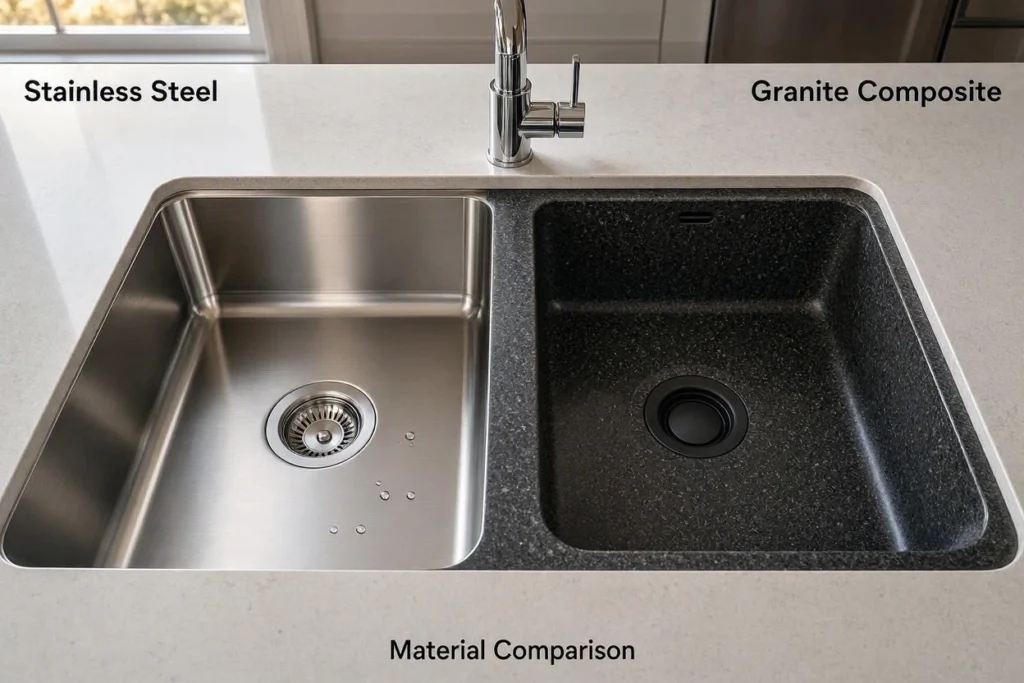
Kitchen Sink Materials Compared
Compare common sink materials by their potential advantages and the factors to check before choosing one for your kitchen.
| Material | Potential Advantages | Main Considerations |
|---|---|---|
| Stainless Steel | Versatile, widely available, and often relatively lightweight. | Scratches, water spots, and noise may be noticeable. |
| Granite Composite | Contemporary appearance and a range of colors. | Weight, cleaning requirements, and impact resistance vary by product. |
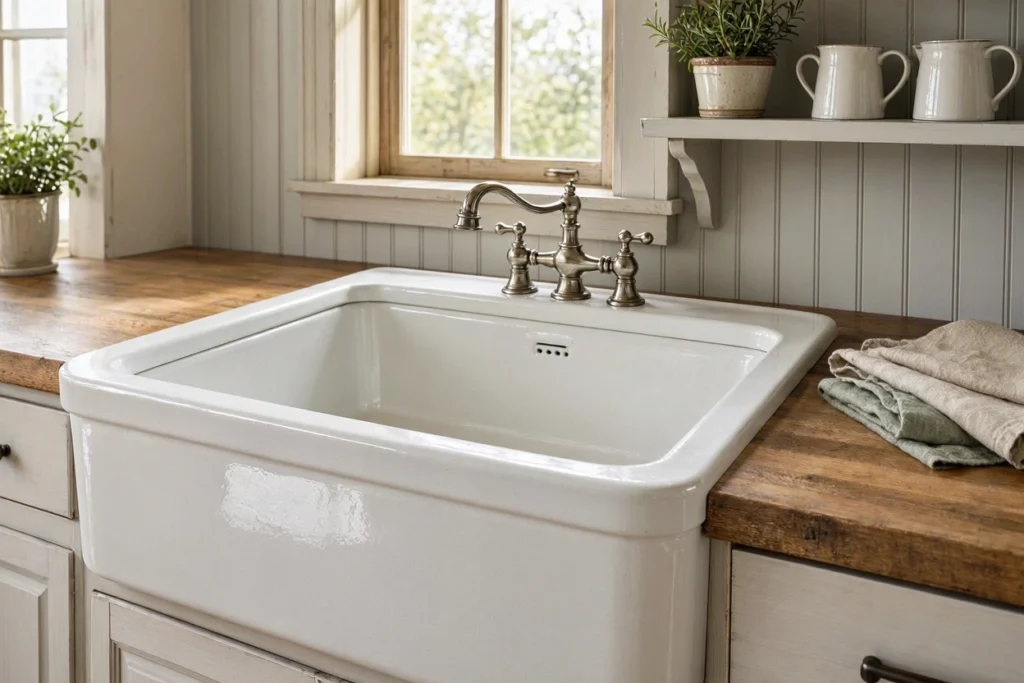
| Fireclay | Classic glazed finish for traditional and farmhouse kitchens. | Heavy construction and potential impact damage. |
| Enamelled Cast Iron | Smooth finish and traditional styling. | Very heavy; the enamel surface can chip. |
| Solid Surface | Coordinated or integrated sink designs. | Heat resistance, repair options, and installation methods vary. |
These are general characteristics, not guarantees for every sink. Manufacturing quality, finish, construction, and installation can affect performance.
Which Sink Material Is Best for a Small Kitchen?
For many small kitchens, stainless steel is a useful material to consider because compact models are widely available and many are relatively lightweight. However, the best option also depends on cabinet dimensions, countertop construction, bowl depth, and installation type.
Start by measuring the available cabinet width, countertop opening, bowl dimensions, and usable space beneath the sink.
Read our Small Kitchen Sink Dimensions guide for help understanding sink measurements. You can also use our Sink Size Calculator to plan a suitable size.
If you are concerned about nearby drawers, cabinet doors, or plumbing clearance, try the Small Kitchen Sink Clearance Checker.
Which Sink Material Is Best for an RV?

RV kitchens have additional constraints, including limited cabinet space, travel weight, and plumbing compatibility.
Stainless steel is often worth considering because many models are relatively lightweight. However, the sink’s actual weight, bowl dimensions, drain location, mounting method, and countertop opening must be checked before choosing a replacement.
For more installation guidance, read our RV Kitchen Sink Guide.
Can You Use Stainless Steel or Composite Sinks Outdoors?
Both materials may be suitable for some outdoor installations, but suitability depends on the specific product and environment.
For stainless steel, verify the steel grade, finish, and suitability for exposure to moisture, salt, and other corrosive conditions. For composite materials, check the manufacturer’s guidance on outdoor use, sunlight exposure, temperature changes, and cleaning.
Do not assume that every indoor sink is designed for outdoor conditions. Check the manufacturer’s installation and care documentation before purchasing.
Before choosing a kitchen sink material, review the manufacturer’s information about its properties, installation requirements, and care. The Sink Material Information KOHLER sink material guide explains several common materials, including stainless steel, fireclay, and enameled cast iron.
How to Maintain Different Kitchen Sink Materials
Stainless Steel
- Clean regularly with a suitable non-abrasive cleaner.
- Follow the manufacturer’s instructions for removing water spots.
- Avoid harsh chemicals or abrasive pads unless approved.
- Check the care guidance for your sink’s particular finish.
Granite Composite
- Use cleaners recommended by the manufacturer.
- Avoid unapproved abrasive products and chemicals.
- Follow specific guidance for heat exposure and stain removal.
- Check whether the sink requires any special maintenance.
Fireclay and Enamelled Cast Iron
- Clean with products suitable for the glazed surface.
- Avoid hard impacts that could chip or damage the finish.
- Do not use abrasive cleaners unless explicitly permitted.
- Follow manufacturer recommendations for stains and repairs.
Solid-Surface Materials
- Follow the cleaning instructions for the specific material.
- Check heat limits and whether hot cookware can damage the surface.
- Confirm approved methods for repairing scratches or surface damage.
Frequently Asked Questions
What is the best material for a kitchen sink?
There is no single best material for every kitchen. Stainless steel is versatile, granite composite offers contemporary finishes, and fireclay or enamelled cast iron may suit traditional designs. Your installation, budget, style, and maintenance preferences should guide the decision.
Is stainless steel better than granite composite?
Stainless steel is often lighter and widely available, while granite composite offers a substantial appearance and different color options. Neither is automatically better for everyone. Compare the specific products, their installation requirements, and their care instructions.
Which kitchen sink material is easiest to clean?
Stainless steel is generally straightforward to clean with appropriate products, although water spots may be visible. Other materials can also be easy to maintain when cleaned according to the manufacturer’s instructions.
Which sink material is best for a small kitchen?
Stainless steel is a practical option to investigate because compact models are widely available. However, sink width, bowl depth, cabinet clearance, and mounting type are just as important as material.
Are granite composite sinks durable?
Many granite composite sinks are designed for regular kitchen use. Their resistance to impacts, scratches, heat, and staining varies by product composition and construction. Review the manufacturer’s specifications before choosing one.
Are fireclay sinks difficult to maintain?
Fireclay sinks generally have a glazed surface that can be cleaned with suitable products. They can be heavy, and hard impacts may chip or damage the finish. Proper support and manufacturer-approved care are important.
Can stainless steel sinks be used outdoors?
Some stainless steel sinks are suitable for outdoor kitchens. Check the steel grade, finish, exposure conditions, and the manufacturer’s approval for outdoor use before installing one.
Does sink material affect noise?
Yes. The sound produced by a sink depends on its material, construction, mounting, and sound-dampening features. Some stainless steel models may benefit from sound pads or coatings. Compare the complete sink design rather than judging by material alone.
Final Thoughts
The right kitchen sink material balances appearance, cleaning, durability, weight, and installation requirements. Use this kitchen sink material selector to narrow your choices, then check the actual sink’s dimensions, specifications, and care instructions before making a final decision.
Get Helpful Sink Tips
Subscribe for practical sink planning tips and helpful resources for small kitchens and compact spaces.