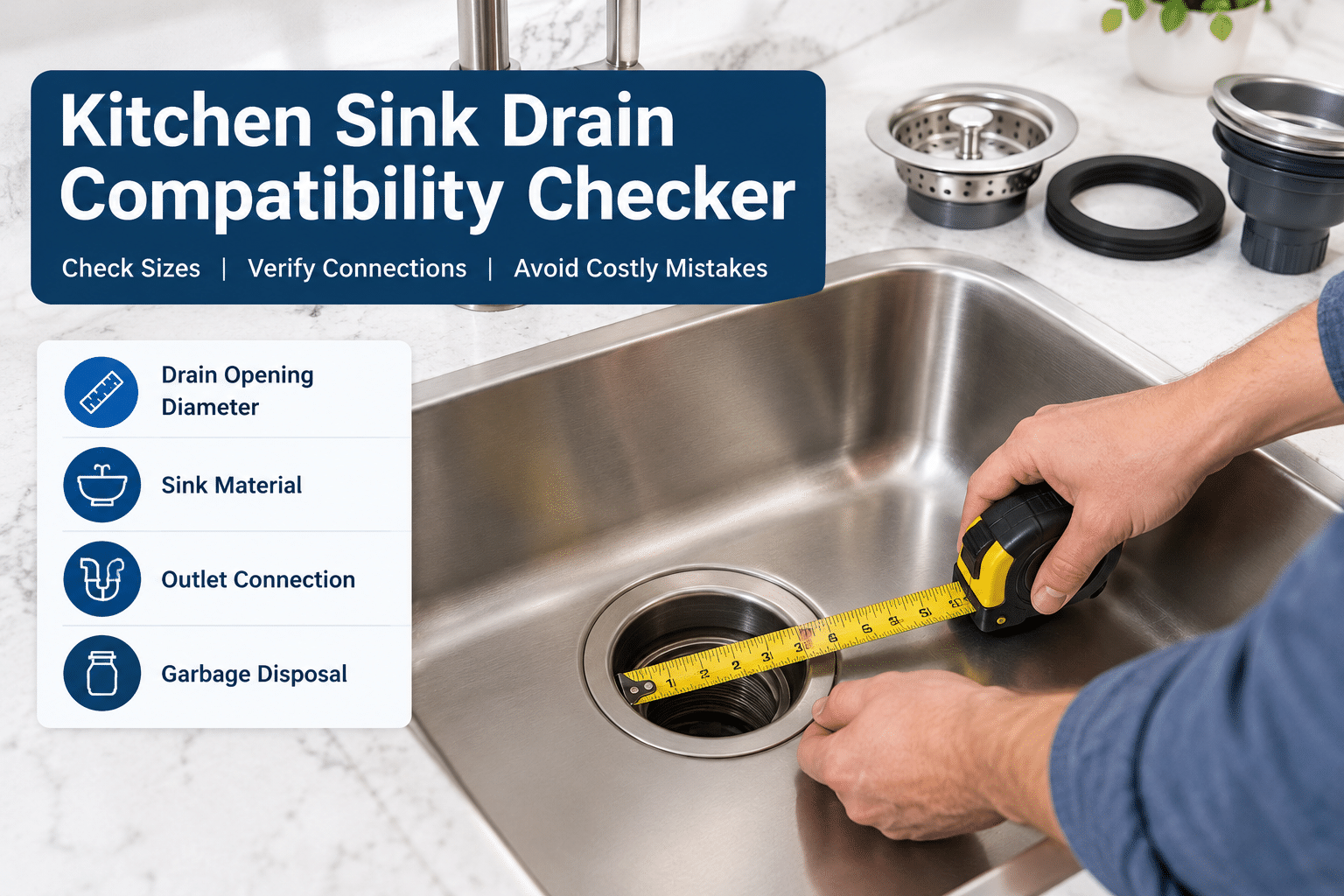
Kitchen Sink Drain Compatibility Checker: Check Sizes and Connections
Replacing a kitchen sink drain or buying a new basket strainer can be confusing when you are unsure whether the parts will fit together. The Kitchen Sink Drain Compatibility Checker helps you compare your sink’s drain opening with the opening requirements listed for a drain assembly and identify details that need further verification.
Before purchasing a replacement drain, check the opening diameter, sink thickness, drain flange requirements, outlet connection, and any garbage disposal mounting requirements. A matching diameter is a useful starting point, but it does not guarantee that every component will fit.
Quick Answer: How Do You Check Kitchen Sink Drain Compatibility?
To check kitchen sink drain compatibility, measure the sink’s drain opening and compare it with the drain assembly manufacturer’s required opening dimensions. Then verify the sink thickness, flange fit, sealing method, outlet connection, and garbage disposal requirements, if applicable.
Use the checker below for a preliminary comparison. Always confirm the final fit using the sink and drain manufacturer’s specifications before buying or installing parts.
Kitchen Sink Drain Compatibility Checker
Use this free tool to compare drain opening measurements and identify possible connection mismatches.
Kitchen Sink Drain Compatibility Checker
Compare your sink drain opening with the drain assembly specifications. This preliminary check can help identify possible size mismatches.
Important: This tool compares user-entered dimensions and connection details only. It does not verify manufacturer specifications, sealing requirements, sink thickness, disposal mounting systems, or local plumbing codes. Confirm these details with the sink and drain manufacturers before purchasing or installing components.
Note: This tool provides a preliminary screening result based on the information you enter. It cannot verify a product’s actual specifications or guarantee installation compatibility.
What Determines Kitchen Sink Drain Compatibility?
Several measurements and connection details affect whether a drain assembly will work with a kitchen sink.
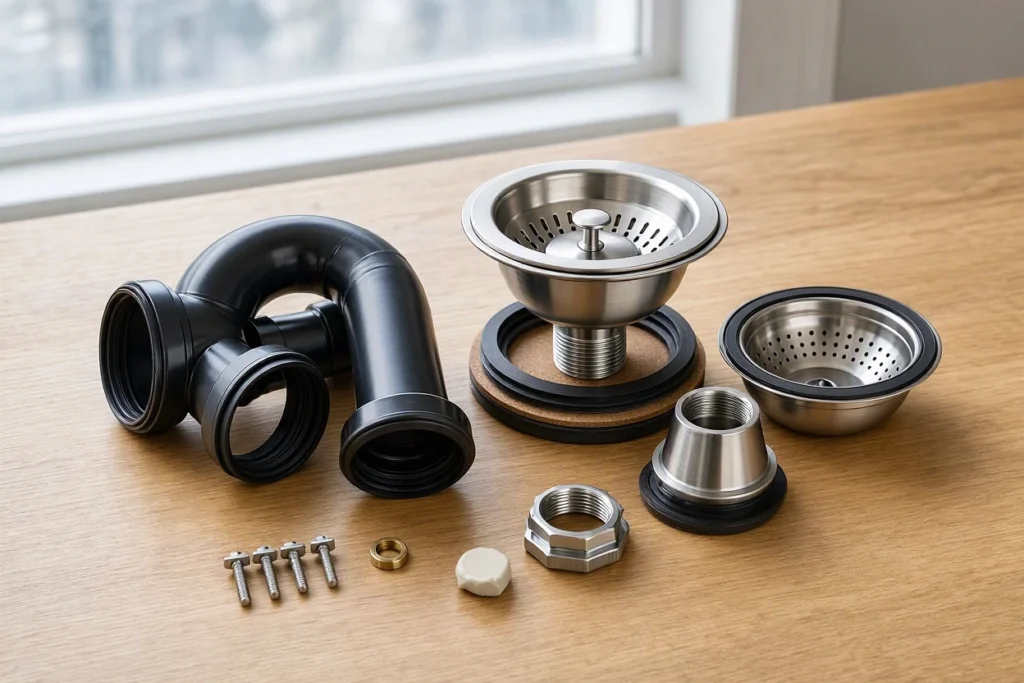
1. Drain Opening Diameter
The drain opening is the hole in the sink where the drain assembly is installed. Measure the opening according to the sink manufacturer’s instructions, and compare it with the drain assembly’s specified opening requirements.
Do not assume that two products are compatible simply because their listings use similar nominal size descriptions. The actual required opening and installation design matter.
2. Sink Thickness
Sink material and thickness can affect how the drain assembly’s mounting hardware and flange fit.
For example, a thin stainless steel sink and a thicker fireclay or composite sink may require different installation considerations. Check the drain manufacturer’s permitted sink-thickness range and mounting instructions before purchasing.
3. Drain Flange and Strainer Design
The flange is the visible upper portion of many drain assemblies. It must fit the sink opening and work with the sink’s shape and installation requirements.
Also check the strainer basket, mounting hardware, gaskets, and sealing method. Some assemblies are designed for specific sink types or installation conditions.
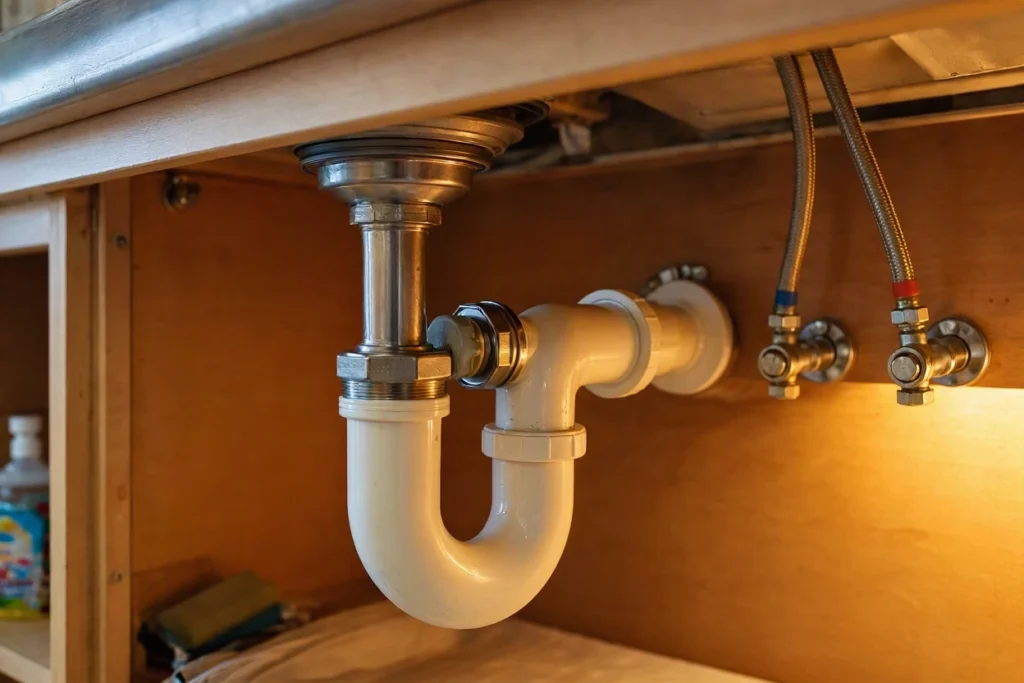
4. Drain Outlet Connection
The drain assembly’s outlet must connect properly to the downstream drain plumbing. Compare the outlet size and connection type with the existing plumbing or the new parts you intend to install.
Do not rely on appearance alone. Verify the actual dimensions and connection requirements listed by the manufacturers.
5. Garbage Disposal Compatibility
If you plan to install a garbage disposal, confirm that the sink, disposal mounting assembly, drain opening, and surrounding cabinet space are suitable for the installation.
A standard basket strainer and a garbage disposal mounting system are not necessarily interchangeable. Check the disposal manufacturer’s installation instructions and the sink manufacturer’s requirements.
How to Measure a Kitchen Sink Drain Opening
Follow these steps before ordering a replacement drain or strainer.
- Identify the sink model. If possible, locate the manufacturer’s model number and installation guide.
- Clean the drain area. Remove the strainer basket or existing drain parts if the manufacturer’s instructions allow it.
- Measure the opening. Measure the actual sink opening, not just the outside diameter of the removable basket or flange.
- Record the sink thickness. Check the relevant area where the drain assembly mounts.
- Review the replacement assembly. Find its required opening dimensions, permitted sink thickness, outlet size, and mounting instructions.
- Compare the specifications. Confirm that the parts are designed to work together before purchasing.
- Check the plumbing connection. Verify the outlet connection and available space beneath the sink.
If you cannot identify the required dimensions, contact the sink or drain manufacturer rather than guessing.
Before installation, review the sink manufacturer’s instructions and KOHLER’s kitchen sink installation guide to understand fit checks, plumbing connections, and leak testing.
Kitchen Sink Drain Compatibility by Sink Material
Stainless Steel Sinks
Check the opening diameter, material thickness, flange fit, and mounting hardware. Thin stainless steel sinks may require particular attention to the drain assembly’s specified thickness range and sealing instructions.
Granite Composite Sinks
Check the exact opening dimensions, sink thickness, flange design, and approved sealing method. Follow the sink manufacturer’s installation guidance to avoid damage or leaks.
Fireclay Sinks
Fireclay sinks may have different thicknesses and drain-area designs from metal sinks. Verify the opening dimensions, flange clearance, and drain assembly instructions before selecting replacement parts.
Other Sink Materials
For other materials, use the sink manufacturer’s documentation to confirm the permitted drain assembly, sealing method, and installation requirements.
Common Kitchen Sink Drain Compatibility Problems
| Problem | What to Check | Recommended Next Step |
|---|---|---|
| Drain assembly does not fit the opening | Actual opening and required opening dimensions | Recheck measurements and manufacturer specifications |
| Drain flange does not sit correctly | Flange diameter, sink shape, and clearance | Confirm the assembly is suitable for the sink |
| Mounting hardware cannot tighten properly | Sink thickness and mounting range | Find an assembly approved for the sink thickness |
| Drain outlet will not connect | Outlet dimensions and connection type | Verify compatible plumbing fittings |
| Garbage disposal will not mount | Disposal mounting system and sink requirements | Check the disposal and sink installation guides |
| Water leaks around the drain | Gaskets, sealing surfaces, and installation method | Follow the manufacturer’s sealing and tightening instructions |
A leak should not be treated as a size issue automatically. Damaged gaskets, incorrect assembly, poor sealing, or improper tightening may also cause problems.
How to Choose a Compatible Replacement Drain
Before ordering a replacement, collect the following information:
- Sink brand and model, if available
- Drain opening diameter
- Sink thickness at the drain opening
- Required drain assembly opening dimensions
- Drain flange and mounting requirements
- Outlet connection size and type
- Garbage disposal model, if applicable
- Manufacturer-approved sealing and installation instructions
Use these details to compare products accurately. If a listing does not provide the measurements you need, request the specifications from the manufacturer before purchasing.
Frequently Asked Questions
Are all kitchen sink drains the same size?
No. Drain openings, drain assemblies, mounting designs, and outlet connections can vary. Compare the actual dimensions and installation requirements for your specific sink and replacement assembly.
How do I measure a kitchen sink drain opening?
Measure the sink opening itself according to the sink manufacturer’s instructions. Do not substitute the outside diameter of a removable basket or flange for the opening measurement.
Will any basket strainer fit my kitchen sink?
No. A basket strainer must match the sink opening and be suitable for the sink’s thickness, flange design, and installation requirements. Check the product specifications before buying.
Can I use a garbage disposal with my kitchen sink?
Possibly, but compatibility depends on the sink design, drain opening, disposal mounting system, plumbing connection, and available cabinet space. Verify all requirements with the manufacturers.
Does sink material affect drain compatibility?
It can. Stainless steel, granite composite, fireclay, and other sink materials may differ in thickness, opening design, and installation requirements. Follow the instructions for the exact sink model.
What if my drain opening and drain assembly measurements do not match?
Recheck the measurements and confirm that both refer to the correct dimensions. If they still differ, do not force the parts together. Look for an approved compatible assembly or ask the manufacturer for guidance.
How do I know if my drain outlet matches my plumbing?
Compare the outlet’s specified size and connection type with your existing plumbing or replacement fittings. If the connection is unclear, consult the plumbing component manufacturer or a qualified plumber.
Can this checker guarantee that a drain will fit?
No. It provides a preliminary comparison based on the details entered. It cannot independently verify product specifications, sealing surfaces, mounting hardware, installation clearances, or local plumbing requirements.
Explore More Sink Planning Resources
Choosing a compatible drain is only one part of planning a functional sink installation. These resources can help with related decisions:
- Kitchen Sink Troubleshooting Tool — explore common sink problems and possible next steps.
- Sink Size & Type Finder — narrow down sink options based on your needs.
- Small Kitchen Sink Dimensions — review dimensions when planning a compact kitchen.
Final Checklist Before Buying
Before purchasing or installing a drain assembly, confirm that:
- The drain opening dimensions match the assembly’s stated requirements.
- The sink thickness is within the assembly’s permitted range.
- The flange, mounting hardware, and sealing method suit the sink.
- The outlet connection matches the plumbing or approved fittings.
- Garbage disposal requirements have been checked, if applicable.
- The manufacturer’s installation instructions have been reviewed.
The right kitchen sink drain assembly must fit the sink opening, mounting area, and plumbing connection. Measure carefully, compare manufacturer specifications, and confirm the installation requirements before purchasing replacement parts.
Get Helpful Sink Tips
Subscribe for practical sink planning tips and helpful resources for small kitchens and compact spaces.