Sink Cutout Size Calculator: How to Measure a Kitchen Sink Cutout
A sink cutout size calculator can help you estimate the countertop opening needed for a kitchen sink before installation. But the sink’s overall dimensions are not necessarily the same as the countertop cutout dimensions.
The correct opening depends on the sink design, installation type, rim or reveal, corner radius, and the manufacturer’s installation requirements. Use the calculator below for planning, then verify the final measurements against the sink manufacturer’s installation template before cutting the countertop.
Quick Answer: What Is a Sink Cutout Size?
A sink cutout size is the size and shape of the opening made in a countertop for a sink.
It is not always the same as the sink’s advertised length and width.
A drop-in sink typically has a rim that rests on top of the countertop, while an undermount sink is installed below the countertop. Because the installation methods are different, their countertop cutout requirements can also differ.
For an exact installation, the manufacturer’s template should take priority over a general calculator or measurement rule.
Sink Cutout Size Calculator
Use the calculator below to estimate a kitchen sink cutout based on the sink’s outer dimensions and installation details.
This calculator is for planning purposes only. Final cutout dimensions should always be confirmed with the sink manufacturer’s installation template.
Sink Cutout Size Calculator
Estimate the countertop opening needed for your kitchen sink and understand the key measurements before fabrication.
Enter Your Sink Dimensions
Use the sink’s outside dimensions from the manufacturer.
Choose Installation Type
The installation method affects how the opening is planned.
Use this calculator for planning. Always compare the result with your sink manufacturer’s current installation template.
Estimated Cutout
Based on the measurements you entered.
—
This is a planning estimate, not a certified fabrication template. Sink cutout requirements can vary by model, manufacturer, installation method, countertop material, reveal and corner geometry.
Always confirm the final dimensions with the sink manufacturer’s current installation instructions or template.
Sink Size vs. Cutout Size
Understanding the difference between these two measurements can prevent a costly mistake.
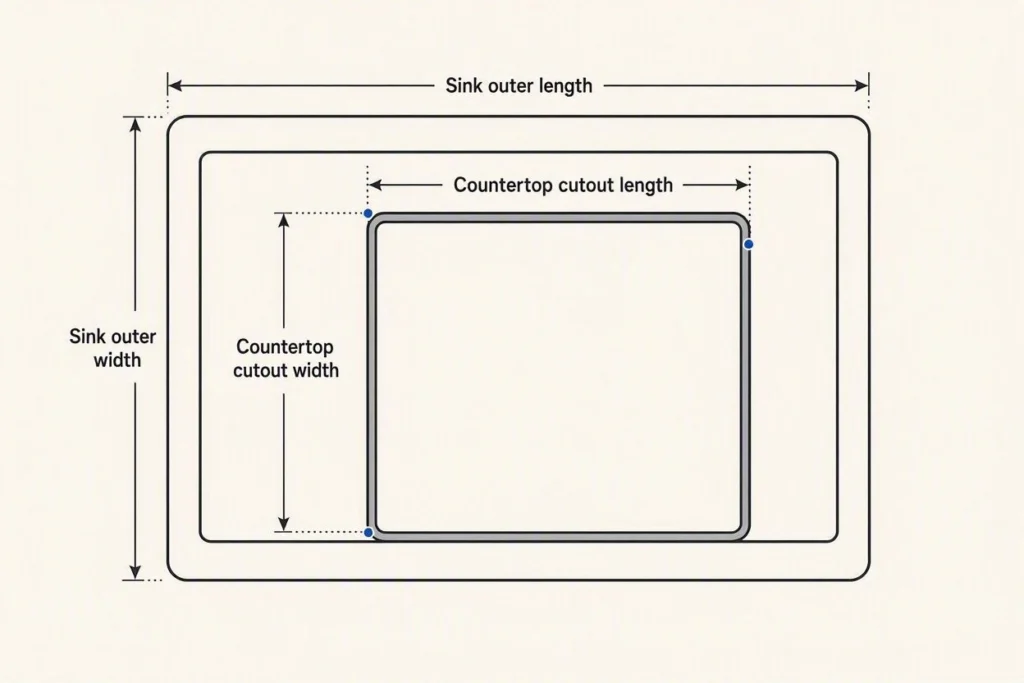
Sink size refers to the physical dimensions of the sink. Depending on the manufacturer, these dimensions may describe the sink’s outside length, outside width, bowl dimensions, or another measurement.
Cutout size refers to the opening that is actually made in the countertop.
For example, a drop-in sink can have an outside rim that overlaps the countertop. The countertop opening therefore does not necessarily need to match the sink’s complete outside dimensions.
An undermount sink has a different relationship with the countertop because the sink is attached beneath it. The required opening can also depend on the desired reveal.
That’s why you should check the sink model’s installation information rather than assuming that a sink advertised as 30 inches by 18 inches automatically needs a 30-by-18-inch countertop opening.
Before choosing a sink, it also helps to understand common small kitchen sink dimensions and how sink size relates to available cabinet and countertop space.
How to Measure a Kitchen Sink Cutout
If you are replacing an existing sink, measure the actual countertop opening before choosing the replacement.
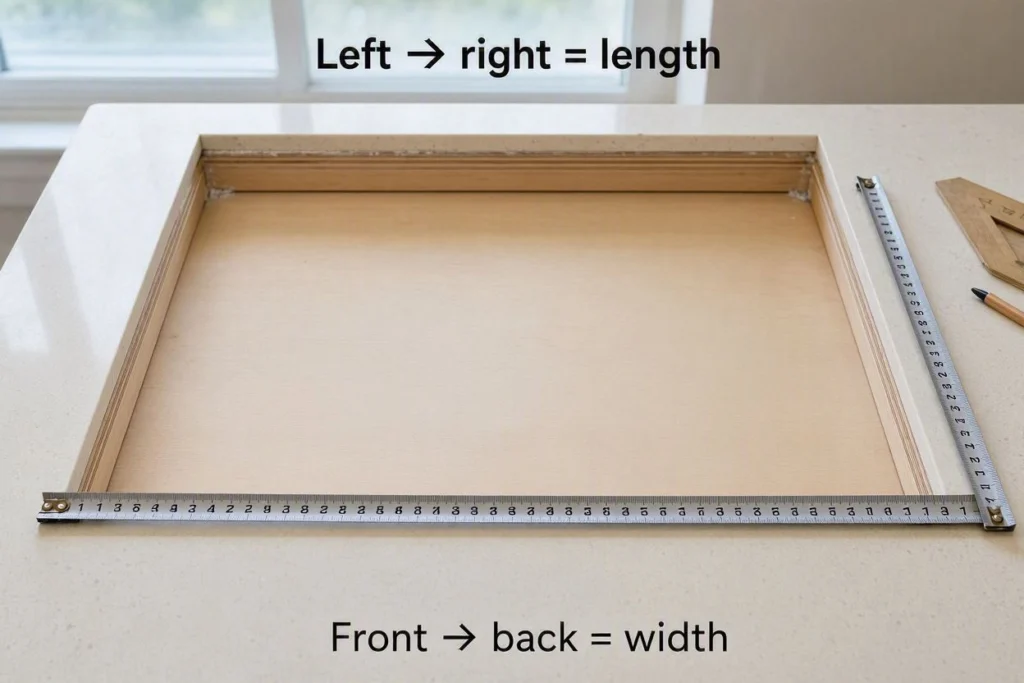
1. Measure the opening length
Measure the countertop opening from left to right.
Take the measurement at more than one point if possible. This can help identify an opening that is not perfectly uniform.
2. Measure the opening width
Measure from the front edge of the opening toward the back.
Record this measurement separately from the length.
3. Measure the sink’s outside dimensions
If the sink has already been removed, measure its outside length and width.
If you’re buying a new sink, use the manufacturer’s dimensional drawing rather than estimating from the product name or listing title.
4. Identify the installation type
Determine whether the sink is designed for:
- Drop-in installation
- Undermount installation
- Another installation method specified by the manufacturer
Do not assume that a sink designed for one installation method will use the same cutout requirements as another.
5. Check the corner radius
Some sink cutouts have rounded corners rather than sharp 90-degree corners.
If the manufacturer specifies a corner radius, record that measurement. It can be important when preparing a countertop template.
6. Check the front setback
The front setback describes the distance between the front countertop edge and the relevant sink or cutout reference point.
This measurement can be useful during countertop planning, especially when working with a sink that needs a particular position relative to the cabinet and countertop edge.
If you’re still deciding which sink size will work with your cabinet, use our check what size sink fits your cabinet tool before finalizing your countertop opening.
Drop-In vs. Undermount Sink Cutouts
The installation method is one of the most important factors when planning a sink cutout.
| Feature | Drop-In Sink | Undermount Sink |
|---|---|---|
| Installation | Sink sits into the countertop opening | Sink is mounted below the countertop |
| Visible rim | Usually visible | No top-mounted sink rim |
| Cutout relationship | Rim overlaps the countertop | Opening follows the sink and specified reveal |
| Reveal | Not normally described in the same way | May use positive, zero, or negative reveal |
| Final measurement | Manufacturer’s template | Manufacturer’s template |
These are general installation differences. The exact cutout dimensions depend on the specific sink model.
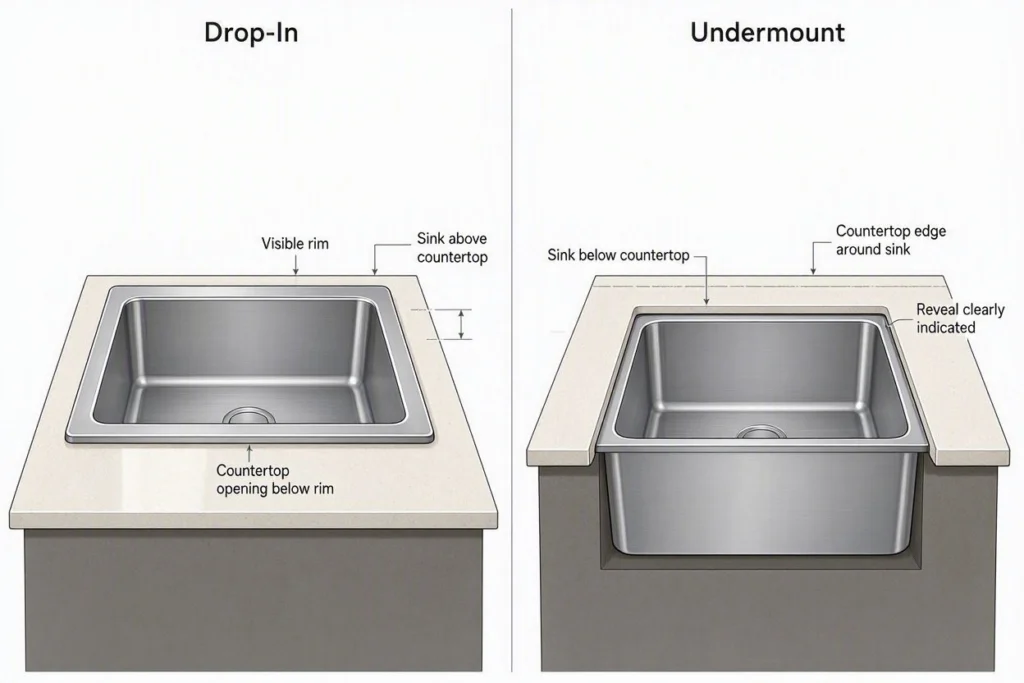
How Rim and Reveal Affect the Cutout
Drop-In Sink Rim
A drop-in sink has a rim or flange that sits over the countertop.
The rim covers part of the countertop around the opening. Therefore, the countertop opening may be smaller than the sink’s overall outside dimensions.
The exact amount depends on the sink design.
Do not assume that a particular rim measurement applies to every drop-in sink.
Undermount Sink Reveal
With an undermount sink, the countertop edge can be positioned relative to the sink edge in different ways.
Common reveal configurations include:
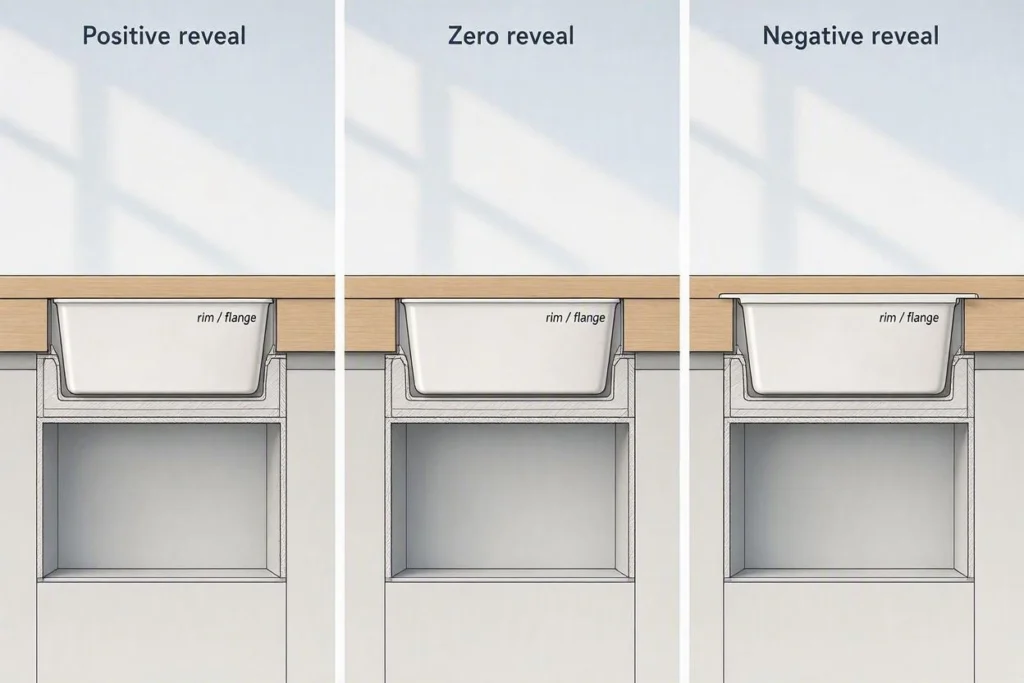
- Positive reveal: The countertop stops slightly outside the sink edge.
- Zero reveal: The countertop and sink edges are aligned.
- Negative reveal: The countertop extends slightly over the sink edge.
The appropriate reveal depends on the sink, countertop, installation method, and manufacturer’s instructions.
For that reason, the reveal should be treated as a model-specific installation detail rather than a universal measurement.
Why the Manufacturer’s Template Matters
A calculator can help with planning, but it should not replace the installation template supplied for the specific sink.
A manufacturer’s template may specify details such as:
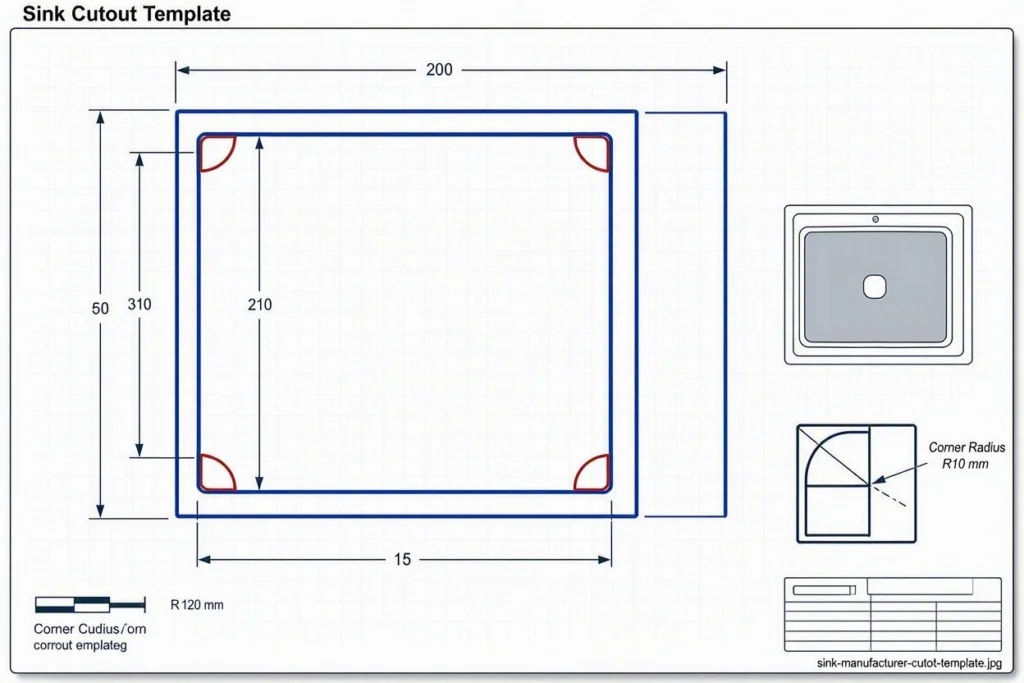
- Cutout length
- Cutout width
- Corner radius
- Reveal
- Sink positioning
- Mounting requirements
- Required clearances
Two sinks with similar overall dimensions can still have different cutout requirements.
Because cutout dimensions can vary by sink model, always compare your calculated estimate with the manufacturer’s installation instructions and template. For example, KOHLER installation instructions provide model-specific installation information.
Always use the current manufacturer-provided installation instructions or template when preparing the final countertop cutout.
Common Sink Cutout Measuring Mistakes
Mistake 1: Assuming sink size equals cutout size
The sink’s outside dimensions and countertop opening are different measurements.
Mistake 2: Measuring only one direction
A cutout requires both its length and front-to-back width.
Mistake 3: Ignoring the corner radius
A cutout can have rounded corners, so length and width alone may not describe the complete opening.
Mistake 4: Forgetting the installation type
Drop-in and undermount sinks have different installation relationships with the countertop.
Mistake 5: Using another sink’s template
A template from a different model may not match the new sink.
Mistake 6: Cutting before checking the manufacturer’s instructions
The countertop should not be cut based solely on an online calculator or general measurement rule.
Mistake 7: Relying only on advertised sink dimensions
A product’s listed length and width may not tell you the exact countertop cutout required.
How to Use the Sink Cutout Size Calculator
Our calculator is designed to help you organize the measurements needed during the planning stage.
Enter:
- Sink outer length
- Sink outer width
- Installation type
- Rim or reveal
- Corner radius
- Front setback
The calculator then provides an estimated:
- Cutout length
- Cutout width
- Corner radius
- Front setback
What does the calculator actually estimate?
The calculator uses the information you enter to create a planning estimate.
The result is not intended to replace the manufacturer’s cutout template because sink designs and installation requirements vary.
For an existing countertop, compare the calculated result with the actual opening. For a new countertop, use the result as an early planning reference and then confirm the final dimensions with the sink manufacturer.
When Should You Confirm the Cutout With a Professional?
Extra care is appropriate when the countertop is expensive, difficult to replace, or made from a material that requires specialized cutting.
Consider professional confirmation if:
- The countertop needs a completely new opening.
- The sink has unusual dimensions or installation requirements.
- You are changing from one installation type to another.
- You are unsure how the reveal should be handled.
- The countertop material requires specialized cutting.
- The manufacturer’s instructions are unclear.
- Cabinet or countertop modifications may be required.
The calculator can help you organize measurements, but it cannot inspect the physical countertop or account for every installation condition.
Conclusion
Getting the sink cutout size right is an important part of planning a kitchen sink installation. The sink’s overall dimensions are only one part of the process.
Before cutting a countertop, consider the installation type, rim or reveal, corner radius, front setback, and the sink manufacturer’s installation requirements.
The Sink Cutout Size Calculator can help you estimate the opening during the planning stage, but always verify the final dimensions against the manufacturer’s current installation template before cutting.
Frequently Asked Questions
Is sink size the same as cutout size?
No. Sink size describes the sink itself, while cutout size describes the opening made in the countertop. The exact relationship depends on the sink design and installation method.
How do I measure a kitchen sink cutout?
Measure the opening from side to side and from front to back. Also check the corner shape, installation type, and manufacturer’s requirements for the replacement sink.
Does a drop-in sink need a different cutout from an undermount sink?
The installation methods are different, so the cutout requirements can also differ. A drop-in sink uses a rim over the countertop, while an undermount sink is installed below it.
What is a sink reveal?
A sink reveal describes the relationship between the countertop edge and the edge of an undermount sink. Common configurations include positive, zero, and negative reveal.
Can I use a calculator instead of the manufacturer’s template?
No. A calculator can provide a planning estimate, but the manufacturer’s installation template should be used to confirm the final cutout dimensions.
Why does corner radius matter?
Corner radius describes how rounded the corners of the cutout are. A sink may require a particular radius, so measuring only length and width may not be sufficient.
Can I use my old sink’s dimensions for a new sink?
Not automatically. A new sink can have different cutout requirements even if its overall dimensions are similar. Check the new sink’s installation documentation before modifying the countertop.
Do all kitchen sinks use the same cutout formula?
No. Cutout requirements vary by sink design, installation type, manufacturer, and model. The manufacturer’s installation instructions should be treated as the final reference.
![Top [count] Gardening Blogs - OnToplist.com](https://www.ontoplist.com/images/ontoplist32.png?id=6aa4d0c493161)